Textile Reinforced Conveyor Belting
CN → US| HS编码 | 关税税率 | 原产国 | 目的国 | 文档 |
|---|---|---|---|---|
| 5910009000 | 37.6% | CN | US | 官方文档 |
| 5910001070 | 39.0% | CN | US | 官方文档 |
| 8431390010 | 35.0% | CN | US | 官方文档 |
| 4010364500 | 41.4% | CN | US | 官方文档 |
| 4010354500 | 41.4% | CN | US | 官方文档 |
商品图片
AI分析
🌐 Textile-Reinforced Conveyor Belting
📌 HS Code Classification & Duty Guide | 2026 Latest Tariff Breakdown | Pro-Level Customs Clearance Strategy
🧩 I. Product Definition & Classification: What Exactly Is Textile-Reinforced Conveyor Belting?
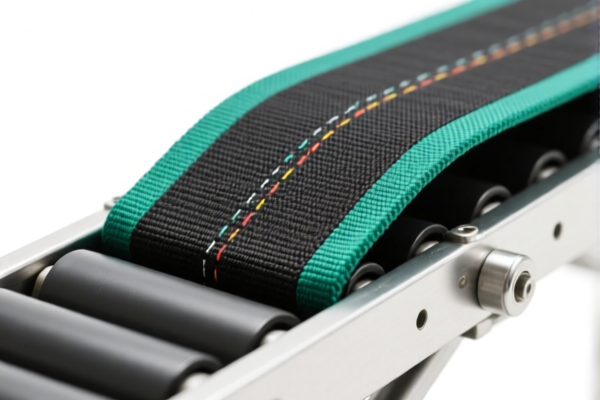
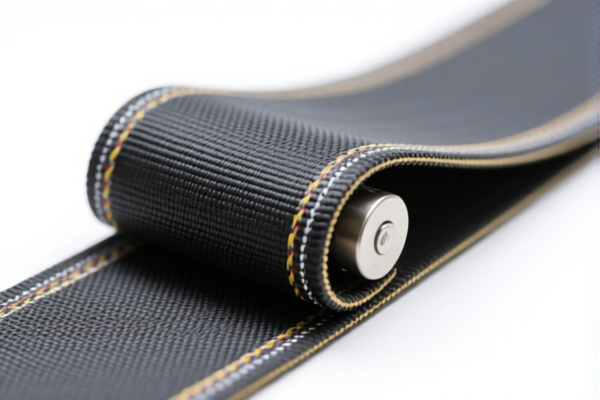
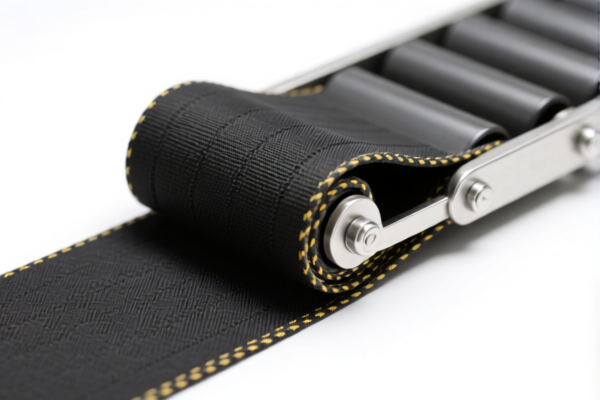
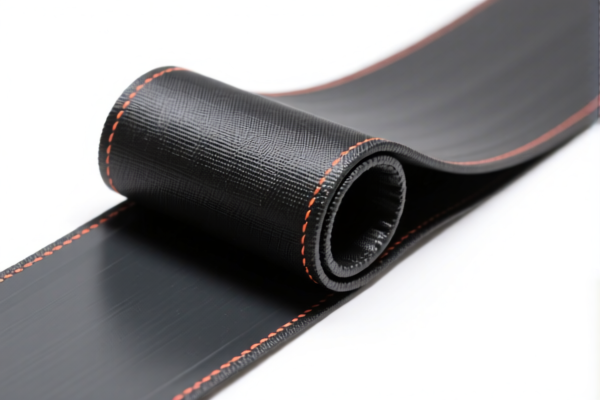
Textile-reinforced conveyor belting is a high-performance industrial belt designed for continuous material transport in mining, manufacturing, logistics, and bulk handling. It features a fabric-reinforced core (typically polyester, nylon, or cotton) embedded within rubber or polymer layers, providing tensile strength, flexibility, and durability.
⚠️ Key Classification Clues: - Reinforced with textile fibers → Not pure rubber or plastic - Used in conveyor systems → Not for transmission or timing functions - Flat, continuous belt form → Not segmented or toothed
🔍 Critical Distinction: - If it has teeth or engages with pulleys via teeth → Not a conveyor belt, but a synchronous belt → Different HS Code - If it’s used in industrial machinery as a drive component → May fall under transmission parts
📦 II. HS Code Breakdown (2026 Latest Tariff Authority – U.S. Focus)
| HS Code | Product Description | Matching Use Case | Tax Rate | Key Trigger |
|---|---|---|---|---|
5910.00.90.00 |
Textile-reinforced conveyor belting, for conveying purposes, made of textile materials | General-purpose industrial conveyor belts (e.g., mining, packaging) | 37.6% | Basic: 2.6%, +25% (Section 301), +10% (IEEPA) |
5910.00.10.70 |
Textile-reinforced conveyor belting, for transmission/conveying, textile-based | High-stress conveyor belts with textile reinforcement | 39.0% | Basic: 4.0%, +25% (Section 301), +10% (IEEPA) |
8431.39.00.10 |
Textile-reinforced conveyor belting, as part of conveying machinery components | Belts used as machine parts (e.g., in automated systems) | 35.0% | Basic: 0.0%, +25% (Section 301), +10% (IEEPA) |
4010.36.45.00 |
Textile-reinforced synchronous belts, toothed, with textile core | Toothed belts used in precision motion control (e.g., CNC, robotics) | 41.4% | Basic: 6.4%, +25% (Section 301), +10% (IEEPA) |
4010.35.45.00 |
Textile-reinforced endless synchronous belts, textile-reinforced | Endless toothed belts (no joints), textile core | 41.4% | Same as above — identical tax treatment |
📌 Why These Codes? - 5910.00.xx.00: Covers non-toothed, textile-reinforced conveyor belts used for bulk transport - 4010.35/36.45.00: Covers toothed belts (synchronous), even if textile-reinforced — not for conveying, but motion transmission - 8431.39.00.10: Used when the belt is part of a larger conveying machine (e.g., as a component in a factory line), not sold standalone
💰 III. 2026 U.S. Tariff Breakdown (Detailed & Compliant)
✅ Applicable Country: United States (US)
✅ Origin: China (CN)
✅ Effective Date: November 10, 2025 (and ongoing)
✅ Legal Basis: Section 301, IEEPA, and U.S. Tariff Schedule
🎯 1. 5910.00.90.00 — Textile-Reinforced Conveyor Belting (General Use)
| Tax Component | Rate | Legal Basis | Notes |
|---|---|---|---|
| Base Duty | 2.6% | U.S. HTSUS 5910.00.90 | Standard rate for textile-reinforced belts |
| Section 301 (USITC) Add-on | +25.0% | USITC Footnote 9903.88.01 | Applies to Chinese-origin goods under Section 301 |
| IEEPA (International Emergency Economic Powers Act) | +10% | IEEPA: 9903.01.25 | Targeted at China/HK; applies to all listed goods |
| Total Effective Duty | 37.6% | — | CIF × 37.6% |
| De Minimis Threshold | ❌ Not applicable | — | No exemption — even small shipments face full duty |
| Legal Pathway | IEEPA:9903.01.25 → USITC:9903.88.01 → HTSUS:5910.00.90.00 |
📌 Explanation:
- The 2.6% base is standard for this category. - The +25% Section 301 is from the U.S. Trade Representative’s action on Chinese unfair trade practices. - The +10% IEEPA is due to national emergency powers targeting China’s technology and industrial policy.
🎯 2. 5910.00.10.70 — Textile-Reinforced Conveyor Belting (High-Performance Use)
| Tax Component | Rate | Legal Basis | Notes |
|---|---|---|---|
| Base Duty | 4.0% | HTSUS 5910.00.10 | Slightly higher due to performance features |
| Section 301 Add-on | +25.0% | USITC:9903.88.01 | Same as above |
| IEEPA Add-on | +10% | IEEPA:9903.01.25 | Same as above |
| Total Duty | 39.0% | — | CIF × 39.0% |
| De Minimis | ❌ Not eligible | — | No relief for small shipments |
| Legal Pathway | IEEPA:9903.01.25 → USITC:9903.88.01 → HTSUS:5910.00.10.70 |
📌 Why Higher Base?
- This code applies to high-tensile, high-temperature, or chemical-resistant belts — often used in mining or heavy industry. - Higher base duty reflects performance and risk profile.
🎯 3. 8431.39.00.10 — Conveyor Belt as Machine Part
| Tax Component | Rate | Legal Basis | Notes |
|---|---|---|---|
| Base Duty | 0.0% | HTSUS 8431.39.00 | No base duty for machine parts |
| Section 301 Add-on | +25.0% | USITC:9903.88.01 | Applies to parts from China |
| IEEPA Add-on | +10% | IEEPA:9903.01.25 | Applies to all Chinese-origin components |
| Total Duty | 35.0% | — | CIF × 35.0% |
| De Minimis | ❌ Not eligible | — | No exemption |
| Legal Pathway | IEEPA:9903.01.25 → USITC:9903.88.01 → HTSUS:8431.39.00.10 |
📌 Key Insight:
- If the belt is sold as a component of a larger conveyor machine, it’s classified under 8431.39.00.10, not 5910. - Lower base duty, but same 35% total due to 25% + 10% add-ons.
🎯 4. 4010.36.45.00 & 4010.35.45.00 — Textile-Reinforced Synchronous Belts
| Tax Component | Rate | Legal Basis | Notes |
|---|---|---|---|
| Base Duty | 6.4% | HTSUS 4010.36.45 / 4010.35.45 | Higher due to precision engineering |
| Section 301 Add-on | +25.0% | USITC:9903.88.01 | Applies to all Chinese-origin mechanical parts |
| IEEPA Add-on | +10% | IEEPA:9903.01.25 | Applies to all goods from China |
| Total Duty | 41.4% | — | CIF × 41.4% |
| De Minimis | ❌ Not eligible | — | No relief |
| Legal Pathway | IEEPA:9903.01.25 → USITC:9903.88.01 → HTSUS:4010.36.45.00 |
📌 Critical Warning:
- Do NOT confuse synchronous belts with conveyor belts. - Even if textile-reinforced, toothed belts used in transmission fall under 4010.35/36.45.00 — highest tax rate (41.4%). - These are used in robotics, CNC machines, printing presses, etc.
🛠️ IV. Customs Clearance Best Practices (Pro Tips to Avoid Penalties)
✅ 1. Documentation Checklist (Must-Have)
| Document | Required? | Why It Matters |
|---|---|---|
| ✅ Product Specification Sheet | ✔️ | Show textile type, reinforcement, thickness, tensile strength |
| ✅ Technical Drawings / Schematic | ✔️ | Prove if it’s toothed (synchronous) or flat (conveyor) |
| ✅ Product Photos (with markings) | ✔️ | Show belt surface, teeth, joints, brand, model |
| ✅ Third-Party Test Report | ✔️ | ISO, ASTM, or UL certifications (if applicable) |
| ✅ Commercial Invoice | ✔️ | Must clearly state: “Textile-Reinforced Conveyor Belt” or “Synchronous Belt” |
| ✅ Certificate of Origin (CO) | ✔️ | Required for duty calculation; China = 25% + 10% |
| ✅ Packing List | ✔️ | Show if belt is sold standalone or as part of a machine |
✅ 2.申报技巧(申报口诀)
🔥 “Toothed? → 4010.35/36. → 41.4% | Flat? → 5910.00. → 37.6% | Part of Machine? → 8431.39. → 35.0%”
| Scenario | Correct HS Code | Wrong Code | Risk |
|---|---|---|---|
| Flat belt, textile-reinforced, for bulk transport | 5910.00.90.00 |
4010.36.45.00 |
Underpay → Penalty |
| Toothed belt, textile core, for CNC machine | 4010.36.45.00 |
5910.00.90.00 |
Underpay → Audit & Fines |
| Belt sold as part of a conveyor machine | 8431.39.00.10 |
5910.00.90.00 |
Overpay → Costly |
| Endless synchronous belt | 4010.35.45.00 |
4010.36.45.00 |
Incorrect → Delayed Release |
✅ 3. Special Cases & Solutions
| Situation | Recommended Action |
|---|---|
| OEM Custom Belt | Provide engineering drawings + customer PO to prove purpose |
| Belt with Joints (not endless) | Still eligible for 5910.00.90.00 if flat and non-toothed |
| Belt for Medical/Pharma Use | Can apply for non-commercial exemption — provide usage proof |
| Belt for Military/Aerospace | Apply for special-use exemption — requires prior approval |
| Belt from Vietnam/Mexico | Can qualify for IEEPA exemption → 0% duty if origin is non-China |
🌍 V. Global Customs Comparison (2026 Update)
| Country | Recommended HS Code | Base Duty | Additional Taxes | Notes |
|---|---|---|---|---|
| 🇺🇸 United States | 5910.00.90.00 |
2.6% | +25% (301) +10% (IEEPA) | Total: 37.6% |
| 🇨🇳 China | 5910.00.90.00 |
5% | None | No 301/IEEPA |
| 🇪🇺 European Union | 5910.00.90.00 |
0% | None (if CE certified) | No extra tariffs |
| 🇦🇺 Australia | 5910.00.90.00 |
5% | None | No IEEPA |
| 🇯🇵 Japan | 5910.00.90.00 |
0% | None | No extra taxes |
📌 Key Insight:
- Only the U.S. applies the 25% + 10% combo. - China-origin goods face the highest cost. - Vietnam/Mexico/Thailand origin = potential 0% duty in U.S.
📌 VI. Common Mistakes & How to Avoid Them
❌ Mistake 1: Misclassifying a toothed belt as a conveyor belt
👉 Result: Underpaid duty → Penalty + 200% fines
✅ Fix: Use 4010.35.45.00 or 4010.36.45.00 — 41.4% tax
❌ Mistake 2: Calling a conveyor belt a "rubber belt" or "industrial belt"
👉 Result: Customs can reclassify → higher duty
✅ Fix: Use exact term: “Textile-Reinforced Conveyor Belt”
❌ Mistake 3: Not providing technical drawings
👉 Result: Delayed release, audit risk
✅ Fix: Always include schematic + photos
❌ Mistake 4: Selling a belt as a machine part but not declaring it as such
👉 Result: Wrong HS Code → fines
✅ Fix: Use 8431.39.00.10 only if sold as part of a machine
🎯 VII. Final Verdict: Precision Matters, Cost Depends on Class
🔥 Pro Tip:
- Flat, non-toothed, textile-reinforced belt →5910.00.90.00→ 37.6% - Toothed, textile-reinforced belt →4010.35.45.00→ 41.4% (highest!) - Belt as machine part →8431.39.00.10→ 35.0%📌 Bottom Line:
- Do not guess the HS Code — misclassification = 40%+ tax penalties - Always confirm with a customs expert before shipment - Consider shifting origin to Vietnam/Mexico to avoid 35%+ duty
📣 Act Now: Avoid Costly Mistakes!
📞 Contact a U.S. Customs Broker + Submit product photos + Request HS Code Pre-Ruling
🚀 Get your belt classified correctly — avoid delays, fines, and 41.4% tax surprises!
✨ Professional Customs Starts with Accurate Classification!
💼 Your profit margin depends on the right HS Code.
✅ One mistake = thousands in extra duty.
✅ One correct code = smooth, fast, low-cost clearance.
📌 Bonus Tip:
If your textile-reinforced belt is made in Vietnam, Mexico, or Thailand, you may qualify for IEEPA exemption — 0% duty on top of 25% Section 301.
✅ Apply for origin certification — save up to 41.4% in duties!
🚀 Your Belt. Your Cost. Your Control.
👉 Classify Right. Pay Less. Ship Faster.
用户评价
关于 HS 编码归类
协调制度(HS)是由世界海关组织(WCO)制定的国际贸易商品分类标准。全球 200 多个国家采用 HS 系统作为海关关税、贸易统计和进出口监管的基础。
每个 HS 编码遵循以下层级结构:
- 章(2 位)——商品大类(例如:第 84 章:机器和机械设备)
- 品目(4 位)——章内的更具体分类
- 子目(6 位)——国际通用细分,所有 WCO 成员国统一使用
- 本国细分(8-10 位)——各国自行扩展的细分编码,如美国 HTSUS 10 位编码
正确的 HS 编码归类对于顺利通关、准确缴纳关税和遵守贸易法规至关重要。错误归类可能导致海关延误、多缴关税或罚款。
从CN进口到US时,适用的关税税率可能包括:
- 最惠国(MFN)税率——适用于 WTO 成员国的标准关税税率
- 普通税率——适用于无贸易协定国家
- 贸易救济关税——附加关税,如 301 条款(反倾销)、232 条款(国家安全)或反补贴税
本页内容仅供参考。如需正式归类,请咨询当地海关或持牌报关代理。