Textile Reinforced Conveyor Belting
CN → US| HS Code | Tariff Rate | Origin | Destination | Doc |
|---|---|---|---|---|
| 5910009000 | 37.6% | CN | US | Official Doc |
| 5910001070 | 39.0% | CN | US | Official Doc |
| 8431390010 | 35.0% | CN | US | Official Doc |
| 4010364500 | 41.4% | CN | US | Official Doc |
| 4010354500 | 41.4% | CN | US | Official Doc |
Product Images
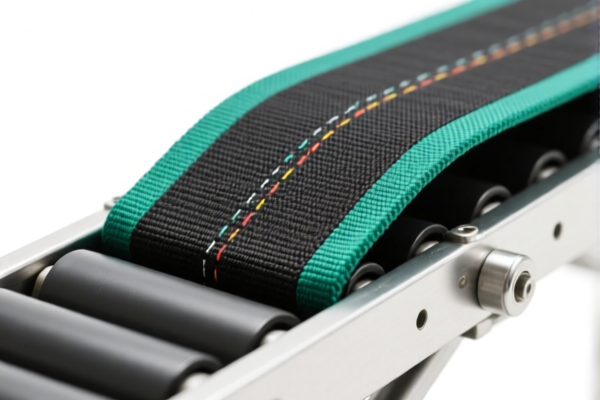
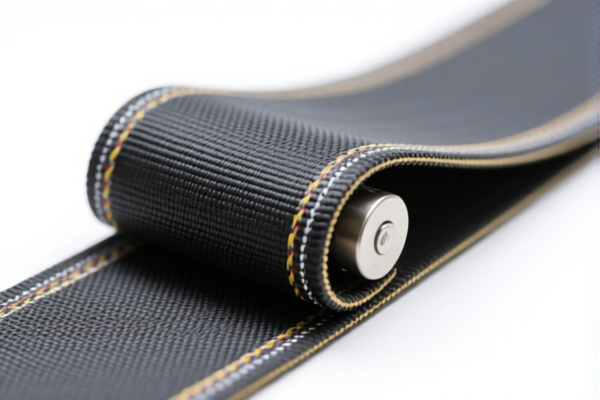
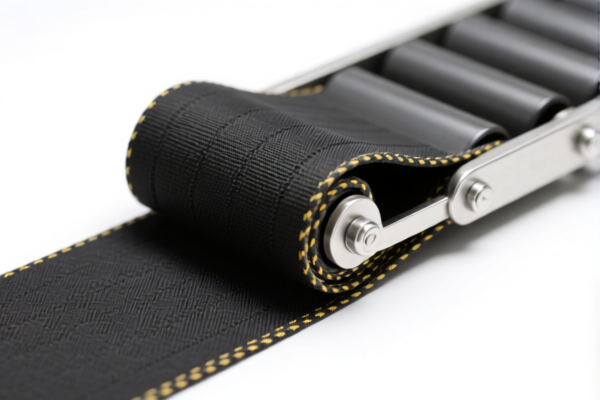
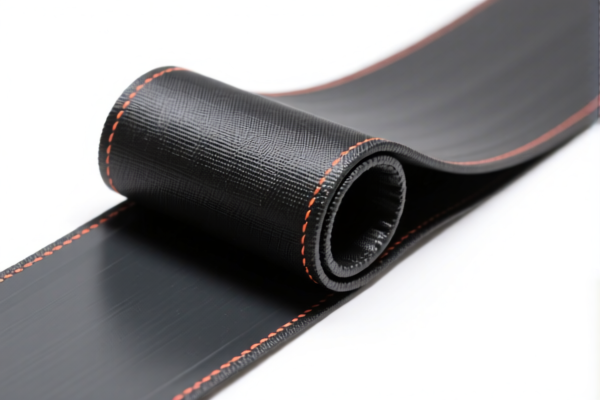
AI Analysis
🌐 Textile-Reinforced Conveyor Belting
📌 HS Code Classification & Duty Guide | 2026 Latest Tariff Breakdown | Pro-Level Customs Clearance Strategy
🧩 I. Product Definition & Classification: What Exactly Is Textile-Reinforced Conveyor Belting?
Textile-reinforced conveyor belting is a high-performance industrial belt designed for continuous material transport in mining, manufacturing, logistics, and bulk handling. It features a fabric-reinforced core (typically polyester, nylon, or cotton) embedded within rubber or polymer layers, providing tensile strength, flexibility, and durability.
⚠️ Key Classification Clues: - Reinforced with textile fibers → Not pure rubber or plastic - Used in conveyor systems → Not for transmission or timing functions - Flat, continuous belt form → Not segmented or toothed
🔍 Critical Distinction: - If it has teeth or engages with pulleys via teeth → Not a conveyor belt, but a synchronous belt → Different HS Code - If it’s used in industrial machinery as a drive component → May fall under transmission parts
📦 II. HS Code Breakdown (2026 Latest Tariff Authority – U.S. Focus)
| HS Code | Product Description | Matching Use Case | Tax Rate | Key Trigger |
|---|---|---|---|---|
5910.00.90.00 |
Textile-reinforced conveyor belting, for conveying purposes, made of textile materials | General-purpose industrial conveyor belts (e.g., mining, packaging) | 37.6% | Basic: 2.6%, +25% (Section 301), +10% (IEEPA) |
5910.00.10.70 |
Textile-reinforced conveyor belting, for transmission/conveying, textile-based | High-stress conveyor belts with textile reinforcement | 39.0% | Basic: 4.0%, +25% (Section 301), +10% (IEEPA) |
8431.39.00.10 |
Textile-reinforced conveyor belting, as part of conveying machinery components | Belts used as machine parts (e.g., in automated systems) | 35.0% | Basic: 0.0%, +25% (Section 301), +10% (IEEPA) |
4010.36.45.00 |
Textile-reinforced synchronous belts, toothed, with textile core | Toothed belts used in precision motion control (e.g., CNC, robotics) | 41.4% | Basic: 6.4%, +25% (Section 301), +10% (IEEPA) |
4010.35.45.00 |
Textile-reinforced endless synchronous belts, textile-reinforced | Endless toothed belts (no joints), textile core | 41.4% | Same as above — identical tax treatment |
📌 Why These Codes? - 5910.00.xx.00: Covers non-toothed, textile-reinforced conveyor belts used for bulk transport - 4010.35/36.45.00: Covers toothed belts (synchronous), even if textile-reinforced — not for conveying, but motion transmission - 8431.39.00.10: Used when the belt is part of a larger conveying machine (e.g., as a component in a factory line), not sold standalone
💰 III. 2026 U.S. Tariff Breakdown (Detailed & Compliant)
✅ Applicable Country: United States (US)
✅ Origin: China (CN)
✅ Effective Date: November 10, 2025 (and ongoing)
✅ Legal Basis: Section 301, IEEPA, and U.S. Tariff Schedule
🎯 1. 5910.00.90.00 — Textile-Reinforced Conveyor Belting (General Use)
| Tax Component | Rate | Legal Basis | Notes |
|---|---|---|---|
| Base Duty | 2.6% | U.S. HTSUS 5910.00.90 | Standard rate for textile-reinforced belts |
| Section 301 (USITC) Add-on | +25.0% | USITC Footnote 9903.88.01 | Applies to Chinese-origin goods under Section 301 |
| IEEPA (International Emergency Economic Powers Act) | +10% | IEEPA: 9903.01.25 | Targeted at China/HK; applies to all listed goods |
| Total Effective Duty | 37.6% | — | CIF × 37.6% |
| De Minimis Threshold | ❌ Not applicable | — | No exemption — even small shipments face full duty |
| Legal Pathway | IEEPA:9903.01.25 → USITC:9903.88.01 → HTSUS:5910.00.90.00 |
📌 Explanation:
- The 2.6% base is standard for this category. - The +25% Section 301 is from the U.S. Trade Representative’s action on Chinese unfair trade practices. - The +10% IEEPA is due to national emergency powers targeting China’s technology and industrial policy.
🎯 2. 5910.00.10.70 — Textile-Reinforced Conveyor Belting (High-Performance Use)
| Tax Component | Rate | Legal Basis | Notes |
|---|---|---|---|
| Base Duty | 4.0% | HTSUS 5910.00.10 | Slightly higher due to performance features |
| Section 301 Add-on | +25.0% | USITC:9903.88.01 | Same as above |
| IEEPA Add-on | +10% | IEEPA:9903.01.25 | Same as above |
| Total Duty | 39.0% | — | CIF × 39.0% |
| De Minimis | ❌ Not eligible | — | No relief for small shipments |
| Legal Pathway | IEEPA:9903.01.25 → USITC:9903.88.01 → HTSUS:5910.00.10.70 |
📌 Why Higher Base?
- This code applies to high-tensile, high-temperature, or chemical-resistant belts — often used in mining or heavy industry. - Higher base duty reflects performance and risk profile.
🎯 3. 8431.39.00.10 — Conveyor Belt as Machine Part
| Tax Component | Rate | Legal Basis | Notes |
|---|---|---|---|
| Base Duty | 0.0% | HTSUS 8431.39.00 | No base duty for machine parts |
| Section 301 Add-on | +25.0% | USITC:9903.88.01 | Applies to parts from China |
| IEEPA Add-on | +10% | IEEPA:9903.01.25 | Applies to all Chinese-origin components |
| Total Duty | 35.0% | — | CIF × 35.0% |
| De Minimis | ❌ Not eligible | — | No exemption |
| Legal Pathway | IEEPA:9903.01.25 → USITC:9903.88.01 → HTSUS:8431.39.00.10 |
📌 Key Insight:
- If the belt is sold as a component of a larger conveyor machine, it’s classified under 8431.39.00.10, not 5910. - Lower base duty, but same 35% total due to 25% + 10% add-ons.
🎯 4. 4010.36.45.00 & 4010.35.45.00 — Textile-Reinforced Synchronous Belts
| Tax Component | Rate | Legal Basis | Notes |
|---|---|---|---|
| Base Duty | 6.4% | HTSUS 4010.36.45 / 4010.35.45 | Higher due to precision engineering |
| Section 301 Add-on | +25.0% | USITC:9903.88.01 | Applies to all Chinese-origin mechanical parts |
| IEEPA Add-on | +10% | IEEPA:9903.01.25 | Applies to all goods from China |
| Total Duty | 41.4% | — | CIF × 41.4% |
| De Minimis | ❌ Not eligible | — | No relief |
| Legal Pathway | IEEPA:9903.01.25 → USITC:9903.88.01 → HTSUS:4010.36.45.00 |
📌 Critical Warning:
- Do NOT confuse synchronous belts with conveyor belts. - Even if textile-reinforced, toothed belts used in transmission fall under 4010.35/36.45.00 — highest tax rate (41.4%). - These are used in robotics, CNC machines, printing presses, etc.
🛠️ IV. Customs Clearance Best Practices (Pro Tips to Avoid Penalties)
✅ 1. Documentation Checklist (Must-Have)
| Document | Required? | Why It Matters |
|---|---|---|
| ✅ Product Specification Sheet | ✔️ | Show textile type, reinforcement, thickness, tensile strength |
| ✅ Technical Drawings / Schematic | ✔️ | Prove if it’s toothed (synchronous) or flat (conveyor) |
| ✅ Product Photos (with markings) | ✔️ | Show belt surface, teeth, joints, brand, model |
| ✅ Third-Party Test Report | ✔️ | ISO, ASTM, or UL certifications (if applicable) |
| ✅ Commercial Invoice | ✔️ | Must clearly state: “Textile-Reinforced Conveyor Belt” or “Synchronous Belt” |
| ✅ Certificate of Origin (CO) | ✔️ | Required for duty calculation; China = 25% + 10% |
| ✅ Packing List | ✔️ | Show if belt is sold standalone or as part of a machine |
✅ 2.申报技巧(申报口诀)
🔥 “Toothed? → 4010.35/36. → 41.4% | Flat? → 5910.00. → 37.6% | Part of Machine? → 8431.39. → 35.0%”
| Scenario | Correct HS Code | Wrong Code | Risk |
|---|---|---|---|
| Flat belt, textile-reinforced, for bulk transport | 5910.00.90.00 |
4010.36.45.00 |
Underpay → Penalty |
| Toothed belt, textile core, for CNC machine | 4010.36.45.00 |
5910.00.90.00 |
Underpay → Audit & Fines |
| Belt sold as part of a conveyor machine | 8431.39.00.10 |
5910.00.90.00 |
Overpay → Costly |
| Endless synchronous belt | 4010.35.45.00 |
4010.36.45.00 |
Incorrect → Delayed Release |
✅ 3. Special Cases & Solutions
| Situation | Recommended Action |
|---|---|
| OEM Custom Belt | Provide engineering drawings + customer PO to prove purpose |
| Belt with Joints (not endless) | Still eligible for 5910.00.90.00 if flat and non-toothed |
| Belt for Medical/Pharma Use | Can apply for non-commercial exemption — provide usage proof |
| Belt for Military/Aerospace | Apply for special-use exemption — requires prior approval |
| Belt from Vietnam/Mexico | Can qualify for IEEPA exemption → 0% duty if origin is non-China |
🌍 V. Global Customs Comparison (2026 Update)
| Country | Recommended HS Code | Base Duty | Additional Taxes | Notes |
|---|---|---|---|---|
| 🇺🇸 United States | 5910.00.90.00 |
2.6% | +25% (301) +10% (IEEPA) | Total: 37.6% |
| 🇨🇳 China | 5910.00.90.00 |
5% | None | No 301/IEEPA |
| 🇪🇺 European Union | 5910.00.90.00 |
0% | None (if CE certified) | No extra tariffs |
| 🇦🇺 Australia | 5910.00.90.00 |
5% | None | No IEEPA |
| 🇯🇵 Japan | 5910.00.90.00 |
0% | None | No extra taxes |
📌 Key Insight:
- Only the U.S. applies the 25% + 10% combo. - China-origin goods face the highest cost. - Vietnam/Mexico/Thailand origin = potential 0% duty in U.S.
📌 VI. Common Mistakes & How to Avoid Them
❌ Mistake 1: Misclassifying a toothed belt as a conveyor belt
👉 Result: Underpaid duty → Penalty + 200% fines
✅ Fix: Use 4010.35.45.00 or 4010.36.45.00 — 41.4% tax
❌ Mistake 2: Calling a conveyor belt a "rubber belt" or "industrial belt"
👉 Result: Customs can reclassify → higher duty
✅ Fix: Use exact term: “Textile-Reinforced Conveyor Belt”
❌ Mistake 3: Not providing technical drawings
👉 Result: Delayed release, audit risk
✅ Fix: Always include schematic + photos
❌ Mistake 4: Selling a belt as a machine part but not declaring it as such
👉 Result: Wrong HS Code → fines
✅ Fix: Use 8431.39.00.10 only if sold as part of a machine
🎯 VII. Final Verdict: Precision Matters, Cost Depends on Class
🔥 Pro Tip:
- Flat, non-toothed, textile-reinforced belt →5910.00.90.00→ 37.6% - Toothed, textile-reinforced belt →4010.35.45.00→ 41.4% (highest!) - Belt as machine part →8431.39.00.10→ 35.0%📌 Bottom Line:
- Do not guess the HS Code — misclassification = 40%+ tax penalties - Always confirm with a customs expert before shipment - Consider shifting origin to Vietnam/Mexico to avoid 35%+ duty
📣 Act Now: Avoid Costly Mistakes!
📞 Contact a U.S. Customs Broker + Submit product photos + Request HS Code Pre-Ruling
🚀 Get your belt classified correctly — avoid delays, fines, and 41.4% tax surprises!
✨ Professional Customs Starts with Accurate Classification!
💼 Your profit margin depends on the right HS Code.
✅ One mistake = thousands in extra duty.
✅ One correct code = smooth, fast, low-cost clearance.
📌 Bonus Tip:
If your textile-reinforced belt is made in Vietnam, Mexico, or Thailand, you may qualify for IEEPA exemption — 0% duty on top of 25% Section 301.
✅ Apply for origin certification — save up to 41.4% in duties!
🚀 Your Belt. Your Cost. Your Control.
👉 Classify Right. Pay Less. Ship Faster.
Customer Reviews
About HS Code Classification
The Harmonized System (HS) is an internationally standardized nomenclature developed by the World Customs Organization (WCO) to classify traded products. Over 200 countries use the HS system as the basis for customs tariffs, trade statistics, and import/export regulations.
Each HS code follows a hierarchical structure:
- Chapter (2 digits) — Broad category of goods (e.g., Chapter 84: Machinery and Mechanical Appliances)
- Heading (4 digits) — More specific grouping within the chapter
- Subheading (6 digits) — Internationally standardized breakdown, used by all WCO member countries
- National subdivisions (8-10 digits) — Country-specific extensions for further classification, such as US HTSUS 10-digit codes
Correct HS code classification is essential for smooth customs clearance, accurate duty payment, and compliance with trade regulations. Misclassification can lead to customs delays, overpayment of duties, or penalties.
When importing from CN to US, the applicable tariff rates may include:
- Most-Favored-Nation (MFN) rate — The standard duty rate applied to WTO members
- General rate — Applied to countries without trade agreements
- Trade remedy duties — Additional tariffs such as Section 301 (anti-dumping), Section 232 (national security), or countervailing duties
The information provided on this page is for reference purposes only. For official classification, please consult with your local customs authority or a licensed customs broker.