Textile Reinforced Plastic Building Panels
CN → US| HS编码 | 关税税率 | 原产国 | 目的国 | 文档 |
|---|---|---|---|---|
| 3926905900 | 37.4% | CN | US | 官方文档 |
| 3926909989 | 22.8% | CN | US | 官方文档 |
| 3921902510 | 41.5% | CN | US | 官方文档 |
| 6815190000 | 35.0% | CN | US | 官方文档 |
商品图片

AI分析
🏗️ Textile Reinforced Plastic (TRP) Building Panels
🌐 HS Code Reference & Customs Clearance Guide | 2026 Latest Tariff Analysis | Professional Entry Strategies
📌 I. Product Definition: What Are "Textile Reinforced Plastic Panels"?
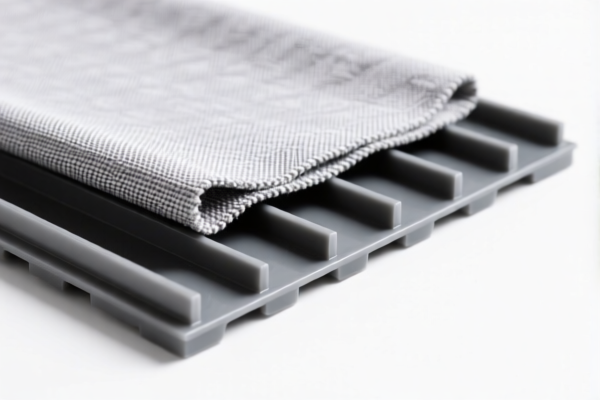
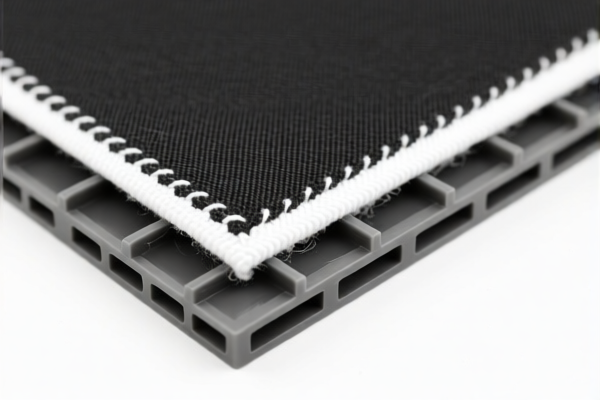
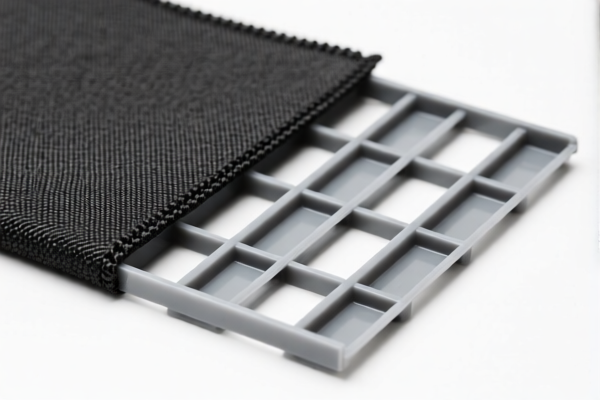
Textile Reinforced Plastic (TRP) building panels are composite materials consisting of plastic resins reinforced with textile fibers (such as glass, carbon, or organic fibers). In international trade, these products are primarily classified under Chapter 39 (Plastics and articles thereof) or Chapter 68 (Mineral products), depending on the specific composition and form.
Key Classification Drivers: 1. Material Composition: Does it contain significant textile components? Is it a pure plastic sheet? 2. Form Factor: Is it a rigid panel, a flexible sheet, or a complex structure? 3. Intended Use: Is it for general construction, decoration, or specialized structural reinforcement?
⚠️ Critical Distinction:
- If the product is primarily a plastic sheet/plate with embedded textiles → Classify under Chapter 39.
- If the product is a mineral/fiber composite used for specific structural purposes → Check Chapter 68.
- Do not confuse TRP with standard fiberglass (which might fall under Chapter 70 or 68) if it is primarily resin-based.
📦 II. HS Code Classification Matrix (Based on Provided Data)
| HS Code | Summary Description | Key Characteristics | Tax Rate (Total) |
|---|---|---|---|
3926.90.59.00 |
Textile-Reinforced Plastic Display Panels | Contains textile fibers; Form: Panel; Category: Other plastic articles | 37.4% |
3926.90.99.89 |
Unspecified Plastic Panels | Material: Plastic; Form: Panel; Category: Other unlisted articles | 22.8% |
3921.90.25.10 |
Textile-Reinforced Plastic Sheets/Films | Contains textile component; Form: Plate/Sheet/Film; Category: Other residual | 41.5% |
6815.19.00.00 |
Textile-Reinforced Plastic Decorative Boards | Contains textile reinforcement; Category: Carbon fiber or mineral composite articles | 35.0% |
🔍 Analysis Note:
- The term "Building Panels" is broad. Customs will look at the physical structure and material weight percentage.
-3926.90.59.00and3921.90.25.10both acknowledge "textile reinforcement," but differ in form (Panel vs. Sheet/Film).
-6815.19.00.00is for decorative boards where the composite is treated as a mineral/carbon fiber product, often used for interior finishing.
💰 III. Detailed Tariff Breakdown (2026 Current Rates)
✅ Applicable Region: United States (US)
✅ Origin: China (CN)
✅ Effective Date: Current trade war tariffs apply (Section 301 + IEEPA)
🎯 1. 3926.90.59.00 —— Other Articles of Plastics (with Textile Reinforcement)
| Item | Detail |
|---|---|
| Base Duty | 2.4% |
| Section 301 Additional Duty | 25.0% |
| IEEPA (Section 122) Duty | 10.0% |
| Total Effective Rate | 37.4% |
| Calculation | CIF Value × 37.4% |
| De Minimis Exemption | ❌ No (Highly restricted due to high rate) |
| Legal Basis | USITC: 3926.90.59.00 + Section 301 Footnote + IEEPA 9903.01.25 |
📌 Interpretation:
- This classification is for finished plastic articles that are reinforced but do not fit other specific subheadings.
- The 25% Section 301 duty is the heavy lifter here.
- Suitable for rigid panels used in display fixtures, signage, or structural non-load-bearing parts.
🎯 2. 3926.90.99.89 —— Other Plastic Articles (Unspecified)
| Item | Detail |
|---|---|
| Base Duty | 5.3% |
| Section 301 Additional Duty | 7.5% |
| IEEPA (Section 122) Duty | 10.0% |
| Total Effective Rate | 22.8% |
| Calculation | CIF Value × 22.8% |
| De Minimis Exemption | ❌ No |
| Legal Basis | USITC: 3926.90.99.89 + Section 301 Footnote + IEEPA 9903.01.25 |
📌 Interpretation:
- This is the "Catch-All" category for plastic panels not specifically described elsewhere.
- Key Advantage: Lower Section 301 rate (7.5% vs. 25%).
- Risk: Customs may challenge this if textile reinforcement is evident, potentially reclassifying to3926.90.59.00(37.4%).
- Use only if the textile content is negligible or structural integrity is primarily plastic-based.
🎯 3. 3921.90.25.10 —— Other Plates, Sheets, Film, Foil, and Strip (with Textile)
| Item | Detail |
|---|---|
| Base Duty | 6.5% |
| Section 301 Additional Duty | 25.0% |
| IEEPA (Section 122) Duty | 10.0% |
| Total Effective Rate | 41.5% |
| Calculation | CIF Value × 41.5% |
| De Minimis Exemption | ❌ No |
| Legal Basis | USITC: 3921.90.25.10 + Section 301 Footnote + IEEPA 9903.01.25 |
📌 Interpretation:
- Specifically for plates, sheets, films, or strips.
- If your "panel" is thin, flexible, or sold as a roll/sheet, this code applies.
- Highest Tax Burden (41.5%).
- Often used for industrial linings, backing materials, or semi-finished composite sheets.
🎯 4. 6815.19.00.00 —— Articles of Stone, Concrete, or Similar Materials (Composite/Decorative)
| Item | Detail |
|---|---|
| Base Duty | 0.0% |
| Section 301 Additional Duty | 25.0% |
| IEEPA (Section 122) Duty | 10.0% |
| Total Effective Rate | 35.0% |
| Calculation | CIF Value × 35.0% |
| De Minimis Exemption | ❌ No |
| Legal Basis | USITC: 6815.19.00.00 + Section 301 Footnote + IEEPA 9903.01.25 |
📌 Interpretation:
- Used for decorative boards where the composite is viewed through a mineral/fiber lens (e.g., carbon fiber reinforced plastic treated as a mineral composite).
- Lowest Base Duty (0%) saves 2.4-5.3% compared to plastic codes.
- Best for aesthetic interior panels (e.g., wall cladding, furniture surfaces) where texture and decoration are primary features.
🛠️ IV. Customs Clearance Practical Advice (Avoiding Pitfalls)
✅ 1. Documentation Checklist (Mandatory)
| Document | Requirement | Why? |
|---|---|---|
| Product Specification Sheet | Must detail: Resin Type, Fiber Type, Fiber %, Panel Thickness, Dimensions | Proves textile reinforcement level |
| Composition Statement | Explicitly state % by weight of Plastic vs. Textile | Determines Chapter 39 vs. 68 |
| Commercial Invoice | Description: "TRP Panel for Building/Display Use" | Avoids vague terms like "Plastic Part" |
| Photos | Show cross-section (if possible) to reveal layers | Proves composite nature |
| Certificate of Origin | Standard Form A or COO | Required for Section 301 duty calculation |
✅ 2. Strategic Classification Tips
🔥 "Form Dictates Code: Panel vs. Sheet"
| Scenario | Recommended HS Code | Reason |
|---|---|---|
| Rigid, large-format structural or decorative panels | 3926.90.59.00 or 6815.19.00.00 |
Clear "panel" form factor |
| Thin, flexible sheets or rolls for wrapping/lining | 3921.90.25.10 |
"Sheet/Film" definition |
| Simple, non-reinforced plastic boards (minimal fiber) | 3926.90.99.89 |
Lower tariff if textile content is negligible |
| Decorative interior cladding with aesthetic finish | 6815.19.00.00 |
0% base duty, good for high-value decorative items |
✅ 3. Special Considerations for "Building Panels"
- Load-Bearing vs. Non-Load-Bearing: If the panel is structural (load-bearing), customs may scrutinize for Chapter 76 (Aluminum) or Chapter 73 (Steel) misclassification. Ensure it is truly plastic-based.
- Pre-Cutting vs. Raw Sheets: Pre-cut panels with holes/mounting points are clearly "articles" (Chapter 39). Raw sheets are "plates/sheets" (Chapter 39.21).
- Carbon Fiber Panels: If high-value carbon fiber is used, consider
6815.19.00.00for its lower base rate, but ensure the "decorative" aspect is emphasized in marketing.
🌍 V. Global Market Comparison (2026 Snapshot)
| Market | Primary HS Code | Base Duty | Additional Duties (China) | Total Estimate |
|---|---|---|---|---|
| 🇺🇸 USA | 3926.90.59.00 |
2.4% | +25% (301) +10% (IEEPA) | 37.4% |
| 🇨🇳 China (Import) | 3926.90.59.00 |
5.3% | 0% | 5.3% |
| 🇪🇺 EU | 3926.90.99 |
0-6.5% | 0% (Generally) | 0-6.5% |
| 🇬🇧 UK | 3926.90.99 |
0-6.5% | 0% (Generally) | 0-6.5% |
| 🇨🇦 Canada | 3926.90.99 |
0-6.5% | 0% (Generally) | 0-6.5% |
📌 Conclusion:
- USA is the most expensive market due to aggressive trade tariffs.
- EU/UK/Canada offer significantly lower duty burdens for similar goods.
- Consider supply chain diversification if targeting the US market with high-volume TRP panels.
📌 VI. Common Mistakes & How to Avoid Them
❌ Mistake 1: Calling it "Glass Fiber Reinforced Plastic (GFRP)" without specifying it's a panel.
👉 Result: Customs may classify as raw material (3921) leading to higher duties if form is ambiguous.
✅ Fix: Clearly state "Finished Panel" in invoice.
❌ Mistake 2: Using 6815.19.00.00 for structural building materials.
👉 Result: Rejection if Customs determines it's not "decorative" or "mineral-based."
✅ Fix: Provide evidence of decorative intent (e.g., architectural samples).
❌ Mistake 3: Ignoring the IEEPA 10% surcharge.
👉 Result: Underestimating landed cost by 10%.
✅ Fix: Always add 10% to CIF value for China-origin goods.
🎯 VII. Conclusion: Optimize for Cost & Compliance
🎯 Key Takeaway:
- For Rigid Panels: Aim for
3926.90.59.00(37.4%) or6815.19.00.00(35.0%).- For Sheets/Films:
3921.90.25.10(41.5%) – Highest Cost.- For Unspecified/Simple:
3926.90.99.89(22.8%) – Lowest Risk if textile content is minimal.
📌 Pro Tip:
If you are exporting to the US, consider pre-classification rulings for unique TRP products to lock in a favorable HS Code (e.g., arguing for 3926.90.99.89 if textile content is <5%).
✨ Professional Clearance, Start with Accurate Classification!
💼 Every 1% of duty savings is pure profit in global trade.
用户评价
关于 HS 编码归类
协调制度(HS)是由世界海关组织(WCO)制定的国际贸易商品分类标准。全球 200 多个国家采用 HS 系统作为海关关税、贸易统计和进出口监管的基础。
每个 HS 编码遵循以下层级结构:
- 章(2 位)——商品大类(例如:第 84 章:机器和机械设备)
- 品目(4 位)——章内的更具体分类
- 子目(6 位)——国际通用细分,所有 WCO 成员国统一使用
- 本国细分(8-10 位)——各国自行扩展的细分编码,如美国 HTSUS 10 位编码
正确的 HS 编码归类对于顺利通关、准确缴纳关税和遵守贸易法规至关重要。错误归类可能导致海关延误、多缴关税或罚款。
从CN进口到US时,适用的关税税率可能包括:
- 最惠国(MFN)税率——适用于 WTO 成员国的标准关税税率
- 普通税率——适用于无贸易协定国家
- 贸易救济关税——附加关税,如 301 条款(反倾销)、232 条款(国家安全)或反补贴税
本页内容仅供参考。如需正式归类,请咨询当地海关或持牌报关代理。