Textile Reinforced Plastic Building Panels
CN → US| HS Code | Tariff Rate | Origin | Destination | Doc |
|---|---|---|---|---|
| 3926905900 | 37.4% | CN | US | Official Doc |
| 3926909989 | 22.8% | CN | US | Official Doc |
| 3921902510 | 41.5% | CN | US | Official Doc |
| 6815190000 | 35.0% | CN | US | Official Doc |
Product Images
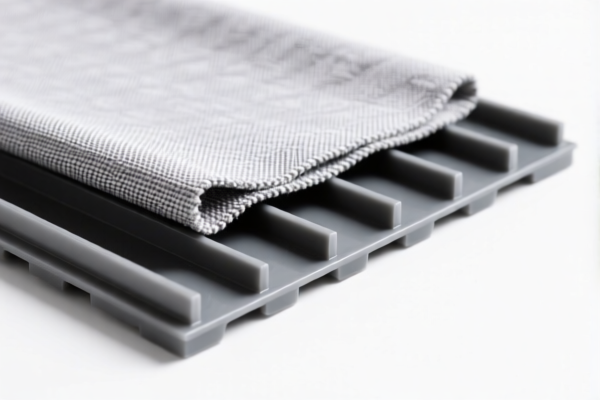
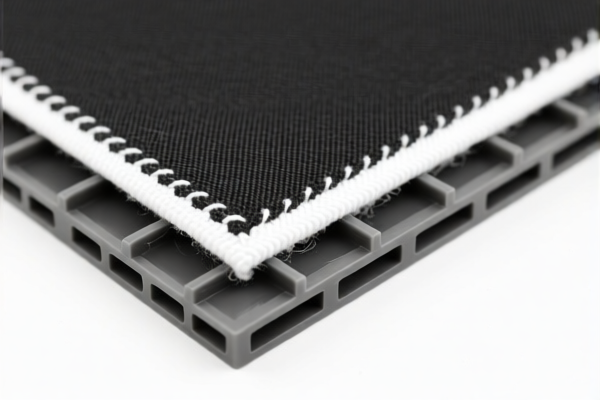
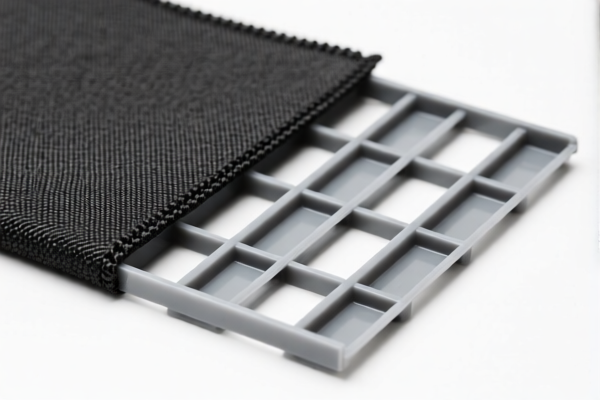

AI Analysis
🏗️ Textile Reinforced Plastic (TRP) Building Panels
🌐 HS Code Reference & Customs Clearance Guide | 2026 Latest Tariff Analysis | Professional Entry Strategies
📌 I. Product Definition: What Are "Textile Reinforced Plastic Panels"?
Textile Reinforced Plastic (TRP) building panels are composite materials consisting of plastic resins reinforced with textile fibers (such as glass, carbon, or organic fibers). In international trade, these products are primarily classified under Chapter 39 (Plastics and articles thereof) or Chapter 68 (Mineral products), depending on the specific composition and form.
Key Classification Drivers: 1. Material Composition: Does it contain significant textile components? Is it a pure plastic sheet? 2. Form Factor: Is it a rigid panel, a flexible sheet, or a complex structure? 3. Intended Use: Is it for general construction, decoration, or specialized structural reinforcement?
⚠️ Critical Distinction:
- If the product is primarily a plastic sheet/plate with embedded textiles → Classify under Chapter 39.
- If the product is a mineral/fiber composite used for specific structural purposes → Check Chapter 68.
- Do not confuse TRP with standard fiberglass (which might fall under Chapter 70 or 68) if it is primarily resin-based.
📦 II. HS Code Classification Matrix (Based on Provided Data)
| HS Code | Summary Description | Key Characteristics | Tax Rate (Total) |
|---|---|---|---|
3926.90.59.00 |
Textile-Reinforced Plastic Display Panels | Contains textile fibers; Form: Panel; Category: Other plastic articles | 37.4% |
3926.90.99.89 |
Unspecified Plastic Panels | Material: Plastic; Form: Panel; Category: Other unlisted articles | 22.8% |
3921.90.25.10 |
Textile-Reinforced Plastic Sheets/Films | Contains textile component; Form: Plate/Sheet/Film; Category: Other residual | 41.5% |
6815.19.00.00 |
Textile-Reinforced Plastic Decorative Boards | Contains textile reinforcement; Category: Carbon fiber or mineral composite articles | 35.0% |
🔍 Analysis Note:
- The term "Building Panels" is broad. Customs will look at the physical structure and material weight percentage.
-3926.90.59.00and3921.90.25.10both acknowledge "textile reinforcement," but differ in form (Panel vs. Sheet/Film).
-6815.19.00.00is for decorative boards where the composite is treated as a mineral/carbon fiber product, often used for interior finishing.
💰 III. Detailed Tariff Breakdown (2026 Current Rates)
✅ Applicable Region: United States (US)
✅ Origin: China (CN)
✅ Effective Date: Current trade war tariffs apply (Section 301 + IEEPA)
🎯 1. 3926.90.59.00 —— Other Articles of Plastics (with Textile Reinforcement)
| Item | Detail |
|---|---|
| Base Duty | 2.4% |
| Section 301 Additional Duty | 25.0% |
| IEEPA (Section 122) Duty | 10.0% |
| Total Effective Rate | 37.4% |
| Calculation | CIF Value × 37.4% |
| De Minimis Exemption | ❌ No (Highly restricted due to high rate) |
| Legal Basis | USITC: 3926.90.59.00 + Section 301 Footnote + IEEPA 9903.01.25 |
📌 Interpretation:
- This classification is for finished plastic articles that are reinforced but do not fit other specific subheadings.
- The 25% Section 301 duty is the heavy lifter here.
- Suitable for rigid panels used in display fixtures, signage, or structural non-load-bearing parts.
🎯 2. 3926.90.99.89 —— Other Plastic Articles (Unspecified)
| Item | Detail |
|---|---|
| Base Duty | 5.3% |
| Section 301 Additional Duty | 7.5% |
| IEEPA (Section 122) Duty | 10.0% |
| Total Effective Rate | 22.8% |
| Calculation | CIF Value × 22.8% |
| De Minimis Exemption | ❌ No |
| Legal Basis | USITC: 3926.90.99.89 + Section 301 Footnote + IEEPA 9903.01.25 |
📌 Interpretation:
- This is the "Catch-All" category for plastic panels not specifically described elsewhere.
- Key Advantage: Lower Section 301 rate (7.5% vs. 25%).
- Risk: Customs may challenge this if textile reinforcement is evident, potentially reclassifying to3926.90.59.00(37.4%).
- Use only if the textile content is negligible or structural integrity is primarily plastic-based.
🎯 3. 3921.90.25.10 —— Other Plates, Sheets, Film, Foil, and Strip (with Textile)
| Item | Detail |
|---|---|
| Base Duty | 6.5% |
| Section 301 Additional Duty | 25.0% |
| IEEPA (Section 122) Duty | 10.0% |
| Total Effective Rate | 41.5% |
| Calculation | CIF Value × 41.5% |
| De Minimis Exemption | ❌ No |
| Legal Basis | USITC: 3921.90.25.10 + Section 301 Footnote + IEEPA 9903.01.25 |
📌 Interpretation:
- Specifically for plates, sheets, films, or strips.
- If your "panel" is thin, flexible, or sold as a roll/sheet, this code applies.
- Highest Tax Burden (41.5%).
- Often used for industrial linings, backing materials, or semi-finished composite sheets.
🎯 4. 6815.19.00.00 —— Articles of Stone, Concrete, or Similar Materials (Composite/Decorative)
| Item | Detail |
|---|---|
| Base Duty | 0.0% |
| Section 301 Additional Duty | 25.0% |
| IEEPA (Section 122) Duty | 10.0% |
| Total Effective Rate | 35.0% |
| Calculation | CIF Value × 35.0% |
| De Minimis Exemption | ❌ No |
| Legal Basis | USITC: 6815.19.00.00 + Section 301 Footnote + IEEPA 9903.01.25 |
📌 Interpretation:
- Used for decorative boards where the composite is viewed through a mineral/fiber lens (e.g., carbon fiber reinforced plastic treated as a mineral composite).
- Lowest Base Duty (0%) saves 2.4-5.3% compared to plastic codes.
- Best for aesthetic interior panels (e.g., wall cladding, furniture surfaces) where texture and decoration are primary features.
🛠️ IV. Customs Clearance Practical Advice (Avoiding Pitfalls)
✅ 1. Documentation Checklist (Mandatory)
| Document | Requirement | Why? |
|---|---|---|
| Product Specification Sheet | Must detail: Resin Type, Fiber Type, Fiber %, Panel Thickness, Dimensions | Proves textile reinforcement level |
| Composition Statement | Explicitly state % by weight of Plastic vs. Textile | Determines Chapter 39 vs. 68 |
| Commercial Invoice | Description: "TRP Panel for Building/Display Use" | Avoids vague terms like "Plastic Part" |
| Photos | Show cross-section (if possible) to reveal layers | Proves composite nature |
| Certificate of Origin | Standard Form A or COO | Required for Section 301 duty calculation |
✅ 2. Strategic Classification Tips
🔥 "Form Dictates Code: Panel vs. Sheet"
| Scenario | Recommended HS Code | Reason |
|---|---|---|
| Rigid, large-format structural or decorative panels | 3926.90.59.00 or 6815.19.00.00 |
Clear "panel" form factor |
| Thin, flexible sheets or rolls for wrapping/lining | 3921.90.25.10 |
"Sheet/Film" definition |
| Simple, non-reinforced plastic boards (minimal fiber) | 3926.90.99.89 |
Lower tariff if textile content is negligible |
| Decorative interior cladding with aesthetic finish | 6815.19.00.00 |
0% base duty, good for high-value decorative items |
✅ 3. Special Considerations for "Building Panels"
- Load-Bearing vs. Non-Load-Bearing: If the panel is structural (load-bearing), customs may scrutinize for Chapter 76 (Aluminum) or Chapter 73 (Steel) misclassification. Ensure it is truly plastic-based.
- Pre-Cutting vs. Raw Sheets: Pre-cut panels with holes/mounting points are clearly "articles" (Chapter 39). Raw sheets are "plates/sheets" (Chapter 39.21).
- Carbon Fiber Panels: If high-value carbon fiber is used, consider
6815.19.00.00for its lower base rate, but ensure the "decorative" aspect is emphasized in marketing.
🌍 V. Global Market Comparison (2026 Snapshot)
| Market | Primary HS Code | Base Duty | Additional Duties (China) | Total Estimate |
|---|---|---|---|---|
| 🇺🇸 USA | 3926.90.59.00 |
2.4% | +25% (301) +10% (IEEPA) | 37.4% |
| 🇨🇳 China (Import) | 3926.90.59.00 |
5.3% | 0% | 5.3% |
| 🇪🇺 EU | 3926.90.99 |
0-6.5% | 0% (Generally) | 0-6.5% |
| 🇬🇧 UK | 3926.90.99 |
0-6.5% | 0% (Generally) | 0-6.5% |
| 🇨🇦 Canada | 3926.90.99 |
0-6.5% | 0% (Generally) | 0-6.5% |
📌 Conclusion:
- USA is the most expensive market due to aggressive trade tariffs.
- EU/UK/Canada offer significantly lower duty burdens for similar goods.
- Consider supply chain diversification if targeting the US market with high-volume TRP panels.
📌 VI. Common Mistakes & How to Avoid Them
❌ Mistake 1: Calling it "Glass Fiber Reinforced Plastic (GFRP)" without specifying it's a panel.
👉 Result: Customs may classify as raw material (3921) leading to higher duties if form is ambiguous.
✅ Fix: Clearly state "Finished Panel" in invoice.
❌ Mistake 2: Using 6815.19.00.00 for structural building materials.
👉 Result: Rejection if Customs determines it's not "decorative" or "mineral-based."
✅ Fix: Provide evidence of decorative intent (e.g., architectural samples).
❌ Mistake 3: Ignoring the IEEPA 10% surcharge.
👉 Result: Underestimating landed cost by 10%.
✅ Fix: Always add 10% to CIF value for China-origin goods.
🎯 VII. Conclusion: Optimize for Cost & Compliance
🎯 Key Takeaway:
- For Rigid Panels: Aim for
3926.90.59.00(37.4%) or6815.19.00.00(35.0%).- For Sheets/Films:
3921.90.25.10(41.5%) – Highest Cost.- For Unspecified/Simple:
3926.90.99.89(22.8%) – Lowest Risk if textile content is minimal.
📌 Pro Tip:
If you are exporting to the US, consider pre-classification rulings for unique TRP products to lock in a favorable HS Code (e.g., arguing for 3926.90.99.89 if textile content is <5%).
✨ Professional Clearance, Start with Accurate Classification!
💼 Every 1% of duty savings is pure profit in global trade.
Customer Reviews
About HS Code Classification
The Harmonized System (HS) is an internationally standardized nomenclature developed by the World Customs Organization (WCO) to classify traded products. Over 200 countries use the HS system as the basis for customs tariffs, trade statistics, and import/export regulations.
Each HS code follows a hierarchical structure:
- Chapter (2 digits) — Broad category of goods (e.g., Chapter 84: Machinery and Mechanical Appliances)
- Heading (4 digits) — More specific grouping within the chapter
- Subheading (6 digits) — Internationally standardized breakdown, used by all WCO member countries
- National subdivisions (8-10 digits) — Country-specific extensions for further classification, such as US HTSUS 10-digit codes
Correct HS code classification is essential for smooth customs clearance, accurate duty payment, and compliance with trade regulations. Misclassification can lead to customs delays, overpayment of duties, or penalties.
When importing from CN to US, the applicable tariff rates may include:
- Most-Favored-Nation (MFN) rate — The standard duty rate applied to WTO members
- General rate — Applied to countries without trade agreements
- Trade remedy duties — Additional tariffs such as Section 301 (anti-dumping), Section 232 (national security), or countervailing duties
The information provided on this page is for reference purposes only. For official classification, please consult with your local customs authority or a licensed customs broker.