Textile Reinforced Plastic Model Board
CN → US| HS编码 | 关税税率 | 原产国 | 目的国 | 文档 |
|---|---|---|---|---|
| 6815190000 | 35.0% | CN | US | 官方文档 |
| 3921905010 | 39.8% | CN | US | 官方文档 |
| 3921904010 | 39.2% | CN | US | 官方文档 |
| 5903102090 | 35.0% | CN | US | 官方文档 |
| 3921905010 | 39.8% | CN | US | 官方文档 |
商品图片
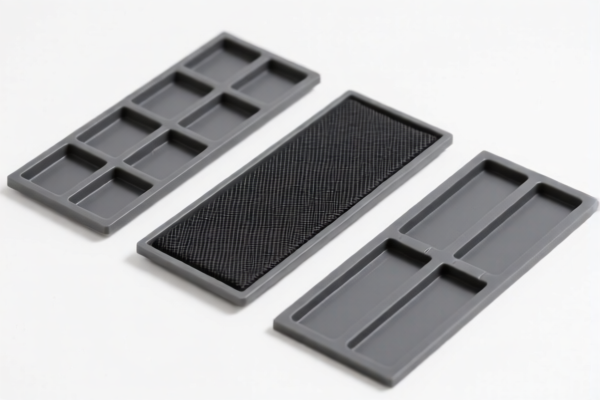
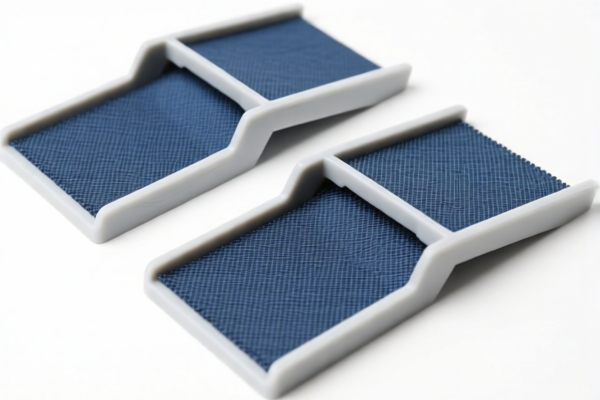

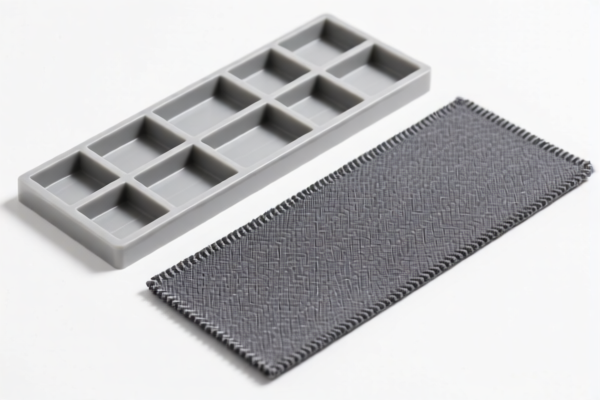
AI分析
🏗️ Textile Reinforced Plastic Model Board (TRP MB)
🌐 HS Code Classification & Customs Clearance Guide | 2026 Tariff Analysis | Strategic Decoding
📌 I. Product Definition & Structural Logic: What Exactly Is This Board?
Textile Reinforced Plastic (TRP) Model Boards represent a sophisticated composite material where textile fibers serve as the primary reinforcement matrix within a plastic/polymer resin binder. In industrial applications, these boards are often used for architectural modeling, prototyping, or decorative cladding.
The classification dilemma arises from the primary characteristic test: Is the board defined by its textile nature or its plastic/decorative nature? Furthermore, does it fall under mineral-based composites?
⚠️ Key Classification Ambiguity:
- If viewed as a plastic sheet reinforced with textiles → Chapter 39
- If viewed as a textile fabric impregnated/covered with plastic → Chapter 59
- If viewed as a mineral composite (due to potential filler content or specific "carbon-like" fiber definitions in some jurisdictions) → Chapter 68
📦 II. HS Code Classification Matrix (Based on Provided Data)
| HS Code | Summary Description | Tax Rate Breakdown | Total Effective Rate |
|---|---|---|---|
| 6815.19.00.00 | Classified as Stone/Mineral Products: Specifically carbon fiber or similar fiber-reinforced composite products in sheet form. | Base: 0.0% Additional (301): 25.0% Section 122: 10.0% |
35.0% |
| 3921.90.50.10 | Classified as Plastic Sheets: Textile reinforcement treated as an enhancement layer, logic similar to high-pressure paper-reinforced laminates. | Base: 4.8% Additional (301): 25.0% Section 122: 10.0% |
39.8% |
| 3921.90.40.10 | Classified as Plastic Sheets: Textile reinforcement is a variant of plastic sheets/films, falling under other miscellaneous categories. | Base: 4.2% Additional (301): 25.0% Section 122: 10.0% |
39.2% |
| 5903.10.20.90 | Classified as Textile Fabrics: Extension of textile processing forms; the board form is secondary to the plastic-reinforced textile material. | Base: 0.0% Additional (301): 25.0% Section 122: 10.0% |
35.0% |
🔍 Critical Note on "Section 122":
The inclusion of 122% Clause Tariff (10%) suggests specific US trade restrictions (likely related to Section 301/122 enforcement or specific anti-dumping/countervailing duties depending on the exact origin and product history). Note: The prompt data explicitly lists "122条款关税10%" which translates to a 10% surcharge under specific clause 122 provisions.
💰 III. Detailed Tariff Structure Analysis (2026 Latest)
✅ Applicable Market: USA (Implicit from "122 Clause" and "301" context)
✅ Origin: Likely China (Given the high composite rate structure)
✅ Effective Date: Current enforcement period
🎯 1. Category A: The "Mineral/Composite" Approach (6815.19.00.00)
- Logic: Customs may view carbon-like fibers in plastics as falling under "articles of stone, plaster, cement" if the mineral/filler content is significant or if the fiber is deemed "carbon-like" in a mineral context.
- Rate Breakdown:
- Base Duty: 0%
- Trade Remedy (301): +25%
- Specific Clause (122): +10%
- Total: 35.0%
- Pros/Cons: Lower base duty, but high risk of reclassification if the board is predominantly polymer-based.
🎯 2. Category B: The "Plastic Sheet" Approach (3921.90.50.10 & 3921.90.40.10)
- Logic: The board is primarily a plastic sheet with textile reinforcement.
.50.10: Higher duty (4.8% base) due to specific "high-pressure laminate" logic..40.10: Lower duty (4.2% base) for other plastic sheets.
- Rate Breakdown:
- Base Duty: 4.8% (for .50) or 4.2% (for .40)
- Trade Remedy (301): +25%
- Specific Clause (122): +10%
- Total: 39.8% (Max) or 39.2% (Min)
- Pros/Cons: Most technically accurate for standard fiberglass/polyester boards, but results in the highest total tax burden among the options.
🎯 3. Category C: The "Textile" Approach (5903.10.20.90)
- Logic: The product is essentially plastic-impregnated textile. Chapter 59 covers impregnated/coated textiles.
- Rate Breakdown:
- Base Duty: 0%
- Trade Remedy (301): +25%
- Specific Clause (122): +10%
- Total: 35.0%
- Pros/Cons: Matches the "Mineral" category in total cost. Viable if the textile substrate is the dominant feature by weight or function.
🛠️ IV. Customs Clearance Operational Advice
✅ 1. Document Preparation Checklist
To navigate the ambiguity between Chapter 39, 59, and 68, precise documentation is non-negotiable:
| Document | Requirement | Purpose |
|---|---|---|
| Technical Data Sheet | Must specify % by weight of Textile vs. Resin/Plastic vs. Fillers. | Determines if Chapter 39 (Plastic dominant) or 59 (Textile dominant) applies. |
| Cross-Section Photos | High-res macro shots showing fiber orientation and resin bonding. | Proves "Reinforced Composite" nature; helps avoid Chapter 68 if no mineral filler exists. |
| Statement of Composition | Explicit breakdown of raw materials. | Critical for arguing against 6815 (if no mineral content) or 5903 (if resin is dominant). |
| Commercial Invoice | Description: "Textile Reinforced Plastic Composite Board, Model/Prototyping Use". | Avoid generic terms like "Plastic Board" which may trigger automatic 3921 classification (higher tax). |
| Country of Origin Cert | Standard COO. | To apply correct FTAs or exemptions (if any). |
✅ 2. Strategic Declaration Tips
🔥 Golden Rule: "Base Rate Drives the Burden, Trade Remedies are Fixed."
Since the Additional (301) + Clause (122) tax is fixed at 35% across all provided HS codes, minimizing the Base Duty is the only way to reduce total cost.
- Option A (Best Cost): Aim for 6815.19.00.00 or 5903.10.20.90 (Base 0% → Total 35%).
- Option B (Highest Cost): Avoid 3921.90.50.10 (Base 4.8% → Total 39.8%).
Recommendation:
1. If the board contains carbon-like fibers or mineral fillers: Declare as 6815.19.00.00. Provide evidence of "mineral/carbon-like" nature to justify Chapter 68.
2. If it is standard fiberglass/polyester: Declare as 5903.10.20.90 (Plastic-impregnated textile). This is often easier to justify than Chapter 68 for organic fibers and avoids the 4.2-4.8% base duty.
3. Avoid 3921 unless you have no choice, as it adds ~5% extra cost purely on the base rate.
✅ 3. Common Pitfalls & Risks
| Pitfall | Consequence | Mitigation |
|---|---|---|
Misclassifying as 3921 |
Pays 39.2-39.8% instead of 35%. Significant margin erosion. | Argue for Chapter 59 (Textile-based) or provide proof of mineral/carbon content for Chapter 68. |
| Vague Description "Plastic Board" | CBP may auto-classify to highest duty plastic code. | Use specific technical names: "Composite Board," "Reinforced Sheet." |
| Ignoring "Section 122" | Underestimating total landed cost. | Include the 10% Clause 122 fee in all cost models. |
| Lack of Material Breakdown | Audit risk, potential reclassification penalties. | Always attach a material composition sheet to the entry. |
🌍 V. Global Market Comparison (Contextual)
- USA: High protectionism. The 35-40% range reflects aggressive trade policies.
- China/Other Regions: Tariffs will differ significantly. This analysis is specific to the provided US-centric tax structure (implied by Section 301/122 references).
- EU: Generally lower tariffs for composites, but requires strict REACH/RoHS compliance.
📌 VI. Conclusion & Action Plan
🎯 Final Recommendation:
1. Target HS Code: 5903.10.20.90 (Textile-based) or 6815.19.00.00 (Mineral/Carbon-based).
2. Target Tax Rate: 35.0% Total.
3. Avoid: 3921 codes due to the 4-5% base duty penalty.
4. Action: Contact your customs broker with the material composition percentage (Textile vs. Resin) to file a Pre-Ruling or Advance Ruling if the volume is high. This locks in the 35% rate and prevents disputes.
✨ Smart Customs, Smarter Profits!
💼 Don't let the 5% base duty difference eat your margin. Choose the right chapter.
用户评价
关于 HS 编码归类
协调制度(HS)是由世界海关组织(WCO)制定的国际贸易商品分类标准。全球 200 多个国家采用 HS 系统作为海关关税、贸易统计和进出口监管的基础。
每个 HS 编码遵循以下层级结构:
- 章(2 位)——商品大类(例如:第 84 章:机器和机械设备)
- 品目(4 位)——章内的更具体分类
- 子目(6 位)——国际通用细分,所有 WCO 成员国统一使用
- 本国细分(8-10 位)——各国自行扩展的细分编码,如美国 HTSUS 10 位编码
正确的 HS 编码归类对于顺利通关、准确缴纳关税和遵守贸易法规至关重要。错误归类可能导致海关延误、多缴关税或罚款。
从CN进口到US时,适用的关税税率可能包括:
- 最惠国(MFN)税率——适用于 WTO 成员国的标准关税税率
- 普通税率——适用于无贸易协定国家
- 贸易救济关税——附加关税,如 301 条款(反倾销)、232 条款(国家安全)或反补贴税
本页内容仅供参考。如需正式归类,请咨询当地海关或持牌报关代理。