Textile Reinforced Plastic Model Board
CN → US| HS Code | Tariff Rate | Origin | Destination | Doc |
|---|---|---|---|---|
| 6815190000 | 35.0% | CN | US | Official Doc |
| 3921905010 | 39.8% | CN | US | Official Doc |
| 3921904010 | 39.2% | CN | US | Official Doc |
| 5903102090 | 35.0% | CN | US | Official Doc |
| 3921905010 | 39.8% | CN | US | Official Doc |
Product Images
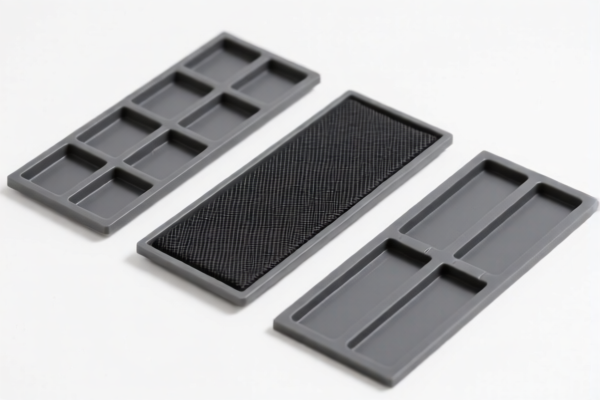
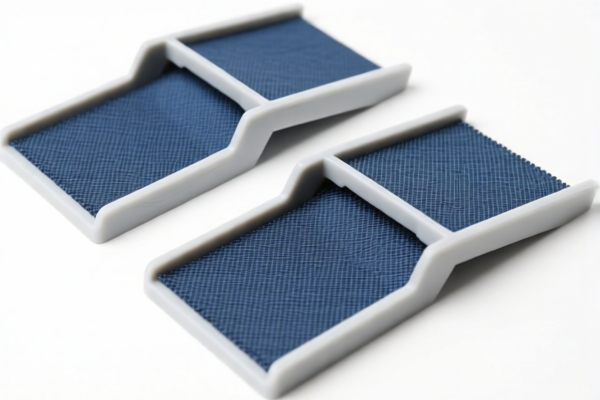

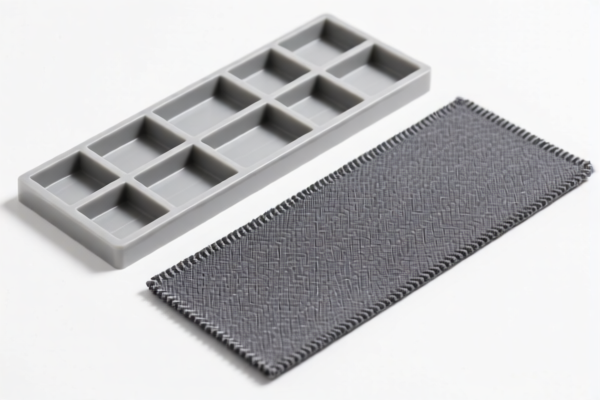
AI Analysis
🏗️ Textile Reinforced Plastic Model Board (TRP MB)
🌐 HS Code Classification & Customs Clearance Guide | 2026 Tariff Analysis | Strategic Decoding
📌 I. Product Definition & Structural Logic: What Exactly Is This Board?
Textile Reinforced Plastic (TRP) Model Boards represent a sophisticated composite material where textile fibers serve as the primary reinforcement matrix within a plastic/polymer resin binder. In industrial applications, these boards are often used for architectural modeling, prototyping, or decorative cladding.
The classification dilemma arises from the primary characteristic test: Is the board defined by its textile nature or its plastic/decorative nature? Furthermore, does it fall under mineral-based composites?
⚠️ Key Classification Ambiguity:
- If viewed as a plastic sheet reinforced with textiles → Chapter 39
- If viewed as a textile fabric impregnated/covered with plastic → Chapter 59
- If viewed as a mineral composite (due to potential filler content or specific "carbon-like" fiber definitions in some jurisdictions) → Chapter 68
📦 II. HS Code Classification Matrix (Based on Provided Data)
| HS Code | Summary Description | Tax Rate Breakdown | Total Effective Rate |
|---|---|---|---|
| 6815.19.00.00 | Classified as Stone/Mineral Products: Specifically carbon fiber or similar fiber-reinforced composite products in sheet form. | Base: 0.0% Additional (301): 25.0% Section 122: 10.0% |
35.0% |
| 3921.90.50.10 | Classified as Plastic Sheets: Textile reinforcement treated as an enhancement layer, logic similar to high-pressure paper-reinforced laminates. | Base: 4.8% Additional (301): 25.0% Section 122: 10.0% |
39.8% |
| 3921.90.40.10 | Classified as Plastic Sheets: Textile reinforcement is a variant of plastic sheets/films, falling under other miscellaneous categories. | Base: 4.2% Additional (301): 25.0% Section 122: 10.0% |
39.2% |
| 5903.10.20.90 | Classified as Textile Fabrics: Extension of textile processing forms; the board form is secondary to the plastic-reinforced textile material. | Base: 0.0% Additional (301): 25.0% Section 122: 10.0% |
35.0% |
🔍 Critical Note on "Section 122":
The inclusion of 122% Clause Tariff (10%) suggests specific US trade restrictions (likely related to Section 301/122 enforcement or specific anti-dumping/countervailing duties depending on the exact origin and product history). Note: The prompt data explicitly lists "122条款关税10%" which translates to a 10% surcharge under specific clause 122 provisions.
💰 III. Detailed Tariff Structure Analysis (2026 Latest)
✅ Applicable Market: USA (Implicit from "122 Clause" and "301" context)
✅ Origin: Likely China (Given the high composite rate structure)
✅ Effective Date: Current enforcement period
🎯 1. Category A: The "Mineral/Composite" Approach (6815.19.00.00)
- Logic: Customs may view carbon-like fibers in plastics as falling under "articles of stone, plaster, cement" if the mineral/filler content is significant or if the fiber is deemed "carbon-like" in a mineral context.
- Rate Breakdown:
- Base Duty: 0%
- Trade Remedy (301): +25%
- Specific Clause (122): +10%
- Total: 35.0%
- Pros/Cons: Lower base duty, but high risk of reclassification if the board is predominantly polymer-based.
🎯 2. Category B: The "Plastic Sheet" Approach (3921.90.50.10 & 3921.90.40.10)
- Logic: The board is primarily a plastic sheet with textile reinforcement.
.50.10: Higher duty (4.8% base) due to specific "high-pressure laminate" logic..40.10: Lower duty (4.2% base) for other plastic sheets.
- Rate Breakdown:
- Base Duty: 4.8% (for .50) or 4.2% (for .40)
- Trade Remedy (301): +25%
- Specific Clause (122): +10%
- Total: 39.8% (Max) or 39.2% (Min)
- Pros/Cons: Most technically accurate for standard fiberglass/polyester boards, but results in the highest total tax burden among the options.
🎯 3. Category C: The "Textile" Approach (5903.10.20.90)
- Logic: The product is essentially plastic-impregnated textile. Chapter 59 covers impregnated/coated textiles.
- Rate Breakdown:
- Base Duty: 0%
- Trade Remedy (301): +25%
- Specific Clause (122): +10%
- Total: 35.0%
- Pros/Cons: Matches the "Mineral" category in total cost. Viable if the textile substrate is the dominant feature by weight or function.
🛠️ IV. Customs Clearance Operational Advice
✅ 1. Document Preparation Checklist
To navigate the ambiguity between Chapter 39, 59, and 68, precise documentation is non-negotiable:
| Document | Requirement | Purpose |
|---|---|---|
| Technical Data Sheet | Must specify % by weight of Textile vs. Resin/Plastic vs. Fillers. | Determines if Chapter 39 (Plastic dominant) or 59 (Textile dominant) applies. |
| Cross-Section Photos | High-res macro shots showing fiber orientation and resin bonding. | Proves "Reinforced Composite" nature; helps avoid Chapter 68 if no mineral filler exists. |
| Statement of Composition | Explicit breakdown of raw materials. | Critical for arguing against 6815 (if no mineral content) or 5903 (if resin is dominant). |
| Commercial Invoice | Description: "Textile Reinforced Plastic Composite Board, Model/Prototyping Use". | Avoid generic terms like "Plastic Board" which may trigger automatic 3921 classification (higher tax). |
| Country of Origin Cert | Standard COO. | To apply correct FTAs or exemptions (if any). |
✅ 2. Strategic Declaration Tips
🔥 Golden Rule: "Base Rate Drives the Burden, Trade Remedies are Fixed."
Since the Additional (301) + Clause (122) tax is fixed at 35% across all provided HS codes, minimizing the Base Duty is the only way to reduce total cost.
- Option A (Best Cost): Aim for 6815.19.00.00 or 5903.10.20.90 (Base 0% → Total 35%).
- Option B (Highest Cost): Avoid 3921.90.50.10 (Base 4.8% → Total 39.8%).
Recommendation:
1. If the board contains carbon-like fibers or mineral fillers: Declare as 6815.19.00.00. Provide evidence of "mineral/carbon-like" nature to justify Chapter 68.
2. If it is standard fiberglass/polyester: Declare as 5903.10.20.90 (Plastic-impregnated textile). This is often easier to justify than Chapter 68 for organic fibers and avoids the 4.2-4.8% base duty.
3. Avoid 3921 unless you have no choice, as it adds ~5% extra cost purely on the base rate.
✅ 3. Common Pitfalls & Risks
| Pitfall | Consequence | Mitigation |
|---|---|---|
Misclassifying as 3921 |
Pays 39.2-39.8% instead of 35%. Significant margin erosion. | Argue for Chapter 59 (Textile-based) or provide proof of mineral/carbon content for Chapter 68. |
| Vague Description "Plastic Board" | CBP may auto-classify to highest duty plastic code. | Use specific technical names: "Composite Board," "Reinforced Sheet." |
| Ignoring "Section 122" | Underestimating total landed cost. | Include the 10% Clause 122 fee in all cost models. |
| Lack of Material Breakdown | Audit risk, potential reclassification penalties. | Always attach a material composition sheet to the entry. |
🌍 V. Global Market Comparison (Contextual)
- USA: High protectionism. The 35-40% range reflects aggressive trade policies.
- China/Other Regions: Tariffs will differ significantly. This analysis is specific to the provided US-centric tax structure (implied by Section 301/122 references).
- EU: Generally lower tariffs for composites, but requires strict REACH/RoHS compliance.
📌 VI. Conclusion & Action Plan
🎯 Final Recommendation:
1. Target HS Code: 5903.10.20.90 (Textile-based) or 6815.19.00.00 (Mineral/Carbon-based).
2. Target Tax Rate: 35.0% Total.
3. Avoid: 3921 codes due to the 4-5% base duty penalty.
4. Action: Contact your customs broker with the material composition percentage (Textile vs. Resin) to file a Pre-Ruling or Advance Ruling if the volume is high. This locks in the 35% rate and prevents disputes.
✨ Smart Customs, Smarter Profits!
💼 Don't let the 5% base duty difference eat your margin. Choose the right chapter.
Customer Reviews
About HS Code Classification
The Harmonized System (HS) is an internationally standardized nomenclature developed by the World Customs Organization (WCO) to classify traded products. Over 200 countries use the HS system as the basis for customs tariffs, trade statistics, and import/export regulations.
Each HS code follows a hierarchical structure:
- Chapter (2 digits) — Broad category of goods (e.g., Chapter 84: Machinery and Mechanical Appliances)
- Heading (4 digits) — More specific grouping within the chapter
- Subheading (6 digits) — Internationally standardized breakdown, used by all WCO member countries
- National subdivisions (8-10 digits) — Country-specific extensions for further classification, such as US HTSUS 10-digit codes
Correct HS code classification is essential for smooth customs clearance, accurate duty payment, and compliance with trade regulations. Misclassification can lead to customs delays, overpayment of duties, or penalties.
When importing from CN to US, the applicable tariff rates may include:
- Most-Favored-Nation (MFN) rate — The standard duty rate applied to WTO members
- General rate — Applied to countries without trade agreements
- Trade remedy duties — Additional tariffs such as Section 301 (anti-dumping), Section 232 (national security), or countervailing duties
The information provided on this page is for reference purposes only. For official classification, please consult with your local customs authority or a licensed customs broker.