Textile Reinforced Synchronous Belt
CN → US| HS编码 | 关税税率 | 原产国 | 目的国 | 文档 |
|---|---|---|---|---|
| 8483901050 | 37.8% | CN | US | 官方文档 |
| 8483908080 | 37.8% | CN | US | 官方文档 |
| 4010359000 | 38.3% | CN | US | 官方文档 |
| 4010369000 | 38.3% | CN | US | 官方文档 |
| 5910001020 | 39.0% | CN | US | 官方文档 |
商品图片
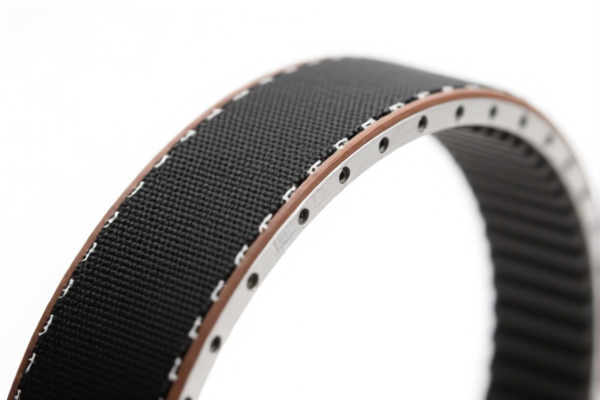
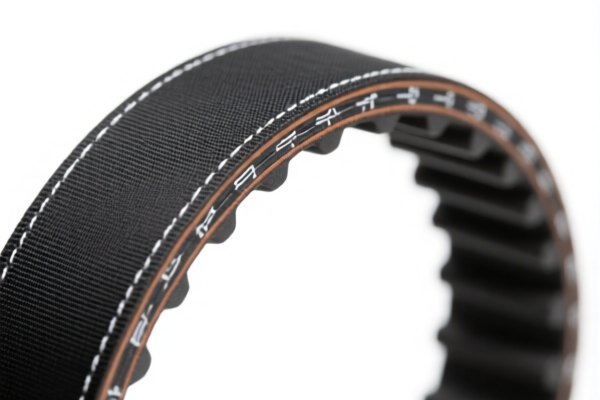
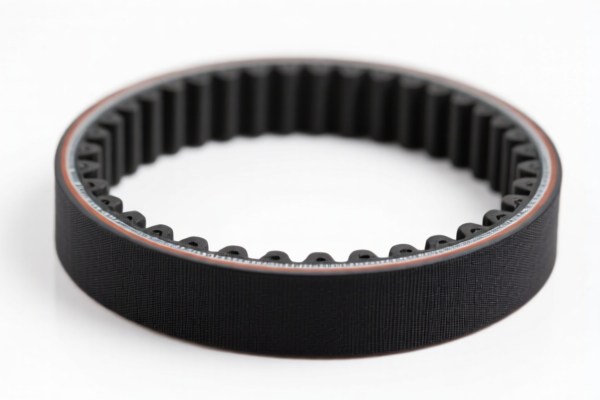
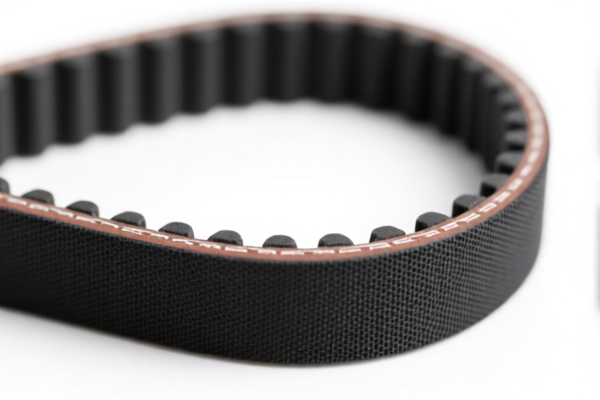
AI分析
🎗️ Textile Reinforced Synchronous Belt (Sync Belt)
🌐 HS Code Reference & Customs Clearance Guide | 2026 Latest Tariff Analysis | Professional Clearance Strategy
📌 I. Product Definition & Classification: Do You Really Understand "Sync Belts"?
A Textile Reinforced Synchronous Belt is a precision transmission component used to transmit power and motion between shafts without slip. Unlike V-belts which rely on friction, sync belts have teeth that mesh with pulleys.
In international trade, these belts are classified based on their material composition (Rubber vs. Textile/Fabric) and function (Transmission Element). The classification significantly impacts duty rates due to the complex tariff structure involving USITC and IEEPA provisions.
⚠️ Key Distinction Points:
- If the belt is primarily rubber (with fabric cords embedded) → Falls under Chapter 40 (Rubber articles);
- If the belt is primarily textile/fabric (with rubber coating or reinforcement) → Falls under Chapter 59 (Impregnated/Coated Textiles);
- If classified as a general mechanical transmission element → Falls under Chapter 84 (Machinery parts).
📦 II. HS Code Classification Details (2026 Latest Tariff Authoritative Comparison)
| HS Code | Product Description | Application Scenario | Material Basis |
|---|---|---|---|
8483.90.10.50 |
Other transmission elements (Sync Belts) | General industrial machinery, CNC machines, automotive timing | General Mechanical Element (No specific material conflict) |
8483.90.80.80 |
Other transmission parts & pulleys (Sync Belts) | Industrial drive systems, belt & pulley assemblies | Mechanical Assembly Component |
4010.35.90.00 |
Other synchronous belts of vulcanized rubber | High-load industrial applications, automotive | Vulcanized Rubber (Primary Material) |
4010.36.90.00 |
Other synchronous belts (Rubber-based) | Precision equipment, office automation | Rubber-based (No other category conflict) |
5910.00.10.20 |
Textile or artificial fiber belts (Sync Belts) | Light-duty transmission, textile machinery, consumer goods | Textile/Artificial Fiber (Primary Material) |
🔍 Critical Note:
- Chapter 84 (8483): Treats the belt as a machine part. Lower base duty (2.8%), but high附加 taxes.
- Chapter 40 (4010): Treats the belt as a rubber article. Base duty 3.3%. Requires proof of vulcanized rubber composition.
- Chapter 59 (5910): Treats the belt as a textile product. Highest base duty (4.0%). Requires proof of textile reinforcement as the primary characteristic.
💰 III. 2026 Latest Tariff Rate Breakdown (Including Surcharges & Policy Add-ons)
✅ Applicable Country: United States (US)
✅ Origin: China (CN)
✅ Effective Date: From November 10, 2025 (including subsequent imports)
🎯 1. 8483.90.10.50 & 8483.90.80.80 —— Transmission Elements (Chapter 84)
| Item | Content |
|---|---|
| Base Tariff Rate | 2.8% (ad valorem) |
| USITC Additional Tariff (Section 301) | +25.0% |
| IEEPA Additional Tariff (122 Clause) | +10.0% |
| Total Effective Rate | 37.8% |
| Tax Calculation | CIF Value × 37.8% |
| De Minimis Eligibility | ❌ Not Eligible (deny_de_minimis) |
| Legal Basis Path | USITC:8483.90.10.50 → SECTION_301:25% → IEEPA:10% |
📌 Explanation:
- Even though the base rate is low (2.8%), the 35% combined surcharge pushes the total to 37.8%.
- This classification is common for "general mechanical parts" when material specificity is not the primary customs focus.
🎯 2. 4010.35.90.00 & 4010.36.90.00 —— Rubber Synchronous Belts (Chapter 40)
| Item | Content |
|---|---|
| Base Tariff Rate | 3.3% (ad valorem) |
| USITC Additional Tariff (Section 301) | +25.0% |
| IEEPA Additional Tariff (122 Clause) | +10.0% |
| Total Effective Rate | 38.3% |
| Tax Calculation | CIF Value × 38.3% |
| De Minimis Eligibility | ❌ Not Eligible (deny_de_minimis) |
| Legal Basis Path | USITC:4010.35.90.00 → SECTION_301:25% → IEEPA:10% |
📌 Note:
- Slightly higher than Chapter 84 due to a 0.5% higher base rate (3.3% vs 2.8%).
- Requires documentation proving vulcanized rubber content. If the textile reinforcement is dominant, this classification may be challenged.
🎯 3. 5910.00.10.20 —— Textile/Artificial Fiber Belts (Chapter 59)
| Item | Content |
|---|---|
| Base Tariff Rate | 4.0% (ad valorem) |
| USITC Additional Tariff (Section 301) | +25.0% |
| IEEPA Additional Tariff (122 Clause) | +10.0% |
| Total Effective Rate | 39.0% |
| Tax Calculation | CIF Value × 39.0% |
| De Minimis Eligibility | ❌ Not Eligible (deny_de_minimis) |
| Legal Basis Path | USITC:5910.00.10.20 → SECTION_301:25% → IEEPA:10% |
📌 Caution:
- This is the most expensive classification in the dataset.
- Applicable only if the belt is primarily textile (e.g., high-strength nylon/polyester cords with thin rubber coating) and classified under Chapter 59.
- Must provide material composition analysis showing textile as the primary structural element.
🛠️ IV. Practical Clearance Advice (Real-World Pitfall Avoidance)
✅ 1. Documentation Checklist (Mandatory)
| Document | Required? | Description |
|---|---|---|
| ✅ Product Spec Sheet | ✔️ | Must specify: Material (Rubber/Textile), Teeth Profile, Width, Length, Reinforcement Type. |
| ✅ Material Composition Report | ✔️ | Critical for distinguishing between Chapter 40 (Rubber) and Chapter 59 (Textile). |
| ✅ Product Photos (Clear Labeling) | ✔️ | Show belt teeth, backside (textile cords visible?), packaging, and model number. |
| ✅ Commercial Invoice | ✔️ | Describe as "Synchronous Drive Belt, Textile Reinforced, Rubber Coated" or similar accurate term. |
| ✅ Packing List | ✔️ | Clarify if sold as single item or kit (with pulleys). |
✅ 2. Classification Strategy (Key Mnemonic)
🔥 "Material Defines Chapter, Teeth Define Function, Tariff Difference Matters!"
| Scenario | Recommended HS Code | Reason |
|---|---|---|
| Heavy Duty, High Heat | 4010.35.90.00 |
Rubber is dominant; handles high stress. |
| Light Duty, Precision | 5910.00.10.20 |
Textile reinforcement is key for flexibility/weight. |
| General Industrial, Ambiguous | 8483.90.10.50 |
Classified as a machine part; lower base duty. |
| Belt + Pulley Set | 8483.90.80.80 |
Considered a transmission assembly/component. |
✅ 3. Special Circumstances
| Situation | Handling Advice |
|---|---|
| OEM Custom Belt | Provide design drawings showing material layers. Avoid generic terms like "Belt." |
| Mixed Material (Rubber + Textile) | Customs will look at the principal material. If rubber >50% by weight/volume → Ch 40. If textile structure dominates → Ch 59. |
| Small Sample Shipment (< $800) | ❌ Cannot use De Minimis. Section 301 and IEEPA taxes apply regardless of value. |
| Transshipment via Third Country | Risk of Anti-Circumvention Investigation. Ensure origin is clearly marked. |
🌍 V. Global Market Clearance Comparison (2026 Latest)
| Country/Region | Recommended HS Code | Tariff Rate | Certification Required | Notes |
|---|---|---|---|---|
| 🇺🇸 United States | 4010.35.90.00 |
38.3% | No special certs | High taxes due to 301/IEEPA. |
| 🇨🇳 China | 4010.35.90.00 |
~5-10% | CCC (if applicable) | Low import duty. |
| 🇪🇺 European Union | 4010.35.90.00 |
0-2% | CE (if machinery part) | FTA may apply. |
| 🇬🇧 United Kingdom | 4010.35.90.00 |
0-2% | UKCA | Post-Brexit rules apply. |
| 🇯🇵 Japan | 4010.35.90.00 |
0% | PSE (if electrical) | No additional surcharges. |
📌 Conclusion:
- The US is the most expensive market for sync belts due to 35%+ in surcharges.
- EU/UK/Japan offer near-zero or low tariffs, making them favorable for export.
- Cost Optimization: For US-bound goods, consider Chapter 84 (8483.90.10.50) if technically justifiable, as it saves 0.5% vs Chapter 40.
📌 VI. Common Mistakes & Pitfall Guide (Lessons Learned)
❌ Mistake 1: Classifying a "Rubber Belt with Textile Cords" under Chapter 59
👉 Consequence: Customs may reject it if rubber is the primary material. You’ll face delays, re-classification to Ch 40, and potential penalties.
👉 Correct Approach: Provide material weight ratio. If Rubber > Textile → Use 4010.
❌ Mistake 2: Ignoring the "122 Clause" (IEEPA)
👉 Consequence: Under-declaring taxes by assuming only 301 (25%) applies. Actual rate is 25% + 10%.
👉 Correct Approach: Always calculate Total Rate = Base + 25% + 10%.
❌ Mistake 3: Using "De Minimis" for small shipments
👉 Consequence: Packages held at customs, taxed at 37.8-39.0%, and delayed.
👉 Correct Approach: Pay taxes upfront or use bonded warehouses.
❌ Mistake 4: Vague Description "Sync Belt"
👉 Consequence: Customs suspicion, request for samples, valuation adjustment.
👉 Correct Approach: Use precise description: "Synchronous Drive Belt, 10mm Width, 500mm Length, Polyester Cord Reinforced, Rubber Surface."
✅ Best Practice:
"Textile-Reinforced Synchronous Drive Belt, Model XYZ, 100% New, For Industrial Machinery, Material: Rubber (60%) / Polyester (40%), Certified to ISO 9001"
🎯 VII. Conclusion: Professional Classification Saves Money!
🎯 Remember the Key Points:
🔹 "Chapter 40 for Rubber, Chapter 59 for Textile, Chapter 84 for Parts."
🔹 "US Tariff is Base + 35% (25% Sec 301 + 10% IEEPA)."
🔹 "No De Minimis Exemption for China Origin Sync Belts."
📌 Pro Tip:
If your sync belts are originating from Vietnam, Mexico, or Thailand, you may qualify for IEEPA Exemption or lower Section 301 rates.
Recommendation: Apply for Advance Ruling with US CBP before large-scale shipment to lock in the HS Code and tariff rate.
📣 Immediate Action:
📞 Consult a Licensed Customs Broker + Provide Material Safety Data Sheet (MSDS) + Verify IEEPA Eligibility
🚀 Ensure your Sync Belts pass customs smoothly, avoid 39%+ duties, and maximize your profit margin!
✨ Professional Clearance Starts with Accurate Classification!
💼 Every Percentage Point of Duty Affects Your Bottom Line!
用户评价
关于 HS 编码归类
协调制度(HS)是由世界海关组织(WCO)制定的国际贸易商品分类标准。全球 200 多个国家采用 HS 系统作为海关关税、贸易统计和进出口监管的基础。
每个 HS 编码遵循以下层级结构:
- 章(2 位)——商品大类(例如:第 84 章:机器和机械设备)
- 品目(4 位)——章内的更具体分类
- 子目(6 位)——国际通用细分,所有 WCO 成员国统一使用
- 本国细分(8-10 位)——各国自行扩展的细分编码,如美国 HTSUS 10 位编码
正确的 HS 编码归类对于顺利通关、准确缴纳关税和遵守贸易法规至关重要。错误归类可能导致海关延误、多缴关税或罚款。
从CN进口到US时,适用的关税税率可能包括:
- 最惠国(MFN)税率——适用于 WTO 成员国的标准关税税率
- 普通税率——适用于无贸易协定国家
- 贸易救济关税——附加关税,如 301 条款(反倾销)、232 条款(国家安全)或反补贴税
本页内容仅供参考。如需正式归类,请咨询当地海关或持牌报关代理。