Textile Reinforced Synchronous Belt
CN → US| HS Code | Tariff Rate | Origin | Destination | Doc |
|---|---|---|---|---|
| 8483901050 | 37.8% | CN | US | Official Doc |
| 8483908080 | 37.8% | CN | US | Official Doc |
| 4010359000 | 38.3% | CN | US | Official Doc |
| 4010369000 | 38.3% | CN | US | Official Doc |
| 5910001020 | 39.0% | CN | US | Official Doc |
Product Images
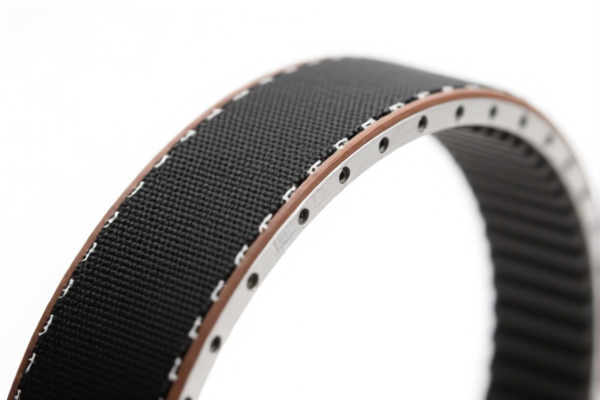
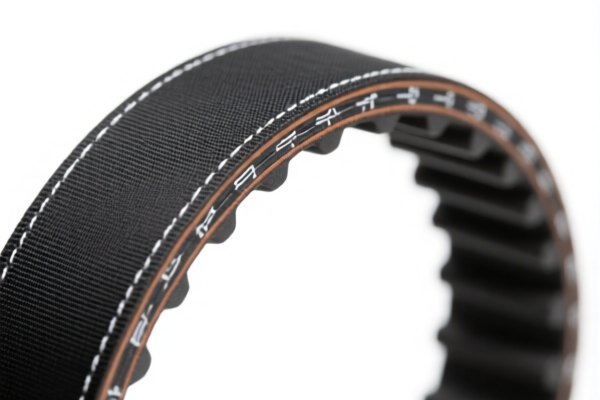
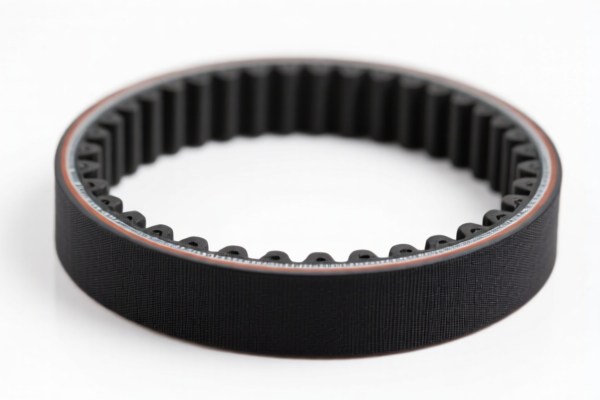
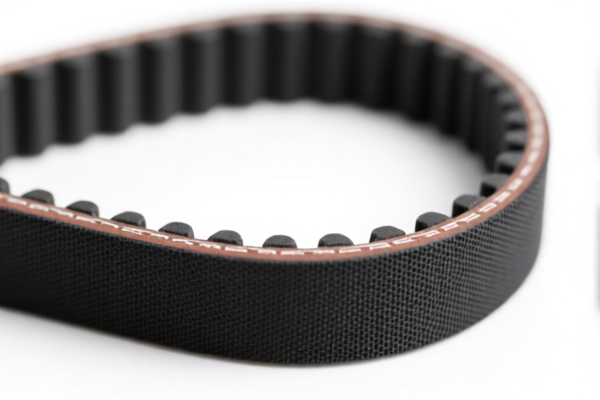
AI Analysis
🎗️ Textile Reinforced Synchronous Belt (Sync Belt)
🌐 HS Code Reference & Customs Clearance Guide | 2026 Latest Tariff Analysis | Professional Clearance Strategy
📌 I. Product Definition & Classification: Do You Really Understand "Sync Belts"?
A Textile Reinforced Synchronous Belt is a precision transmission component used to transmit power and motion between shafts without slip. Unlike V-belts which rely on friction, sync belts have teeth that mesh with pulleys.
In international trade, these belts are classified based on their material composition (Rubber vs. Textile/Fabric) and function (Transmission Element). The classification significantly impacts duty rates due to the complex tariff structure involving USITC and IEEPA provisions.
⚠️ Key Distinction Points:
- If the belt is primarily rubber (with fabric cords embedded) → Falls under Chapter 40 (Rubber articles);
- If the belt is primarily textile/fabric (with rubber coating or reinforcement) → Falls under Chapter 59 (Impregnated/Coated Textiles);
- If classified as a general mechanical transmission element → Falls under Chapter 84 (Machinery parts).
📦 II. HS Code Classification Details (2026 Latest Tariff Authoritative Comparison)
| HS Code | Product Description | Application Scenario | Material Basis |
|---|---|---|---|
8483.90.10.50 |
Other transmission elements (Sync Belts) | General industrial machinery, CNC machines, automotive timing | General Mechanical Element (No specific material conflict) |
8483.90.80.80 |
Other transmission parts & pulleys (Sync Belts) | Industrial drive systems, belt & pulley assemblies | Mechanical Assembly Component |
4010.35.90.00 |
Other synchronous belts of vulcanized rubber | High-load industrial applications, automotive | Vulcanized Rubber (Primary Material) |
4010.36.90.00 |
Other synchronous belts (Rubber-based) | Precision equipment, office automation | Rubber-based (No other category conflict) |
5910.00.10.20 |
Textile or artificial fiber belts (Sync Belts) | Light-duty transmission, textile machinery, consumer goods | Textile/Artificial Fiber (Primary Material) |
🔍 Critical Note:
- Chapter 84 (8483): Treats the belt as a machine part. Lower base duty (2.8%), but high附加 taxes.
- Chapter 40 (4010): Treats the belt as a rubber article. Base duty 3.3%. Requires proof of vulcanized rubber composition.
- Chapter 59 (5910): Treats the belt as a textile product. Highest base duty (4.0%). Requires proof of textile reinforcement as the primary characteristic.
💰 III. 2026 Latest Tariff Rate Breakdown (Including Surcharges & Policy Add-ons)
✅ Applicable Country: United States (US)
✅ Origin: China (CN)
✅ Effective Date: From November 10, 2025 (including subsequent imports)
🎯 1. 8483.90.10.50 & 8483.90.80.80 —— Transmission Elements (Chapter 84)
| Item | Content |
|---|---|
| Base Tariff Rate | 2.8% (ad valorem) |
| USITC Additional Tariff (Section 301) | +25.0% |
| IEEPA Additional Tariff (122 Clause) | +10.0% |
| Total Effective Rate | 37.8% |
| Tax Calculation | CIF Value × 37.8% |
| De Minimis Eligibility | ❌ Not Eligible (deny_de_minimis) |
| Legal Basis Path | USITC:8483.90.10.50 → SECTION_301:25% → IEEPA:10% |
📌 Explanation:
- Even though the base rate is low (2.8%), the 35% combined surcharge pushes the total to 37.8%.
- This classification is common for "general mechanical parts" when material specificity is not the primary customs focus.
🎯 2. 4010.35.90.00 & 4010.36.90.00 —— Rubber Synchronous Belts (Chapter 40)
| Item | Content |
|---|---|
| Base Tariff Rate | 3.3% (ad valorem) |
| USITC Additional Tariff (Section 301) | +25.0% |
| IEEPA Additional Tariff (122 Clause) | +10.0% |
| Total Effective Rate | 38.3% |
| Tax Calculation | CIF Value × 38.3% |
| De Minimis Eligibility | ❌ Not Eligible (deny_de_minimis) |
| Legal Basis Path | USITC:4010.35.90.00 → SECTION_301:25% → IEEPA:10% |
📌 Note:
- Slightly higher than Chapter 84 due to a 0.5% higher base rate (3.3% vs 2.8%).
- Requires documentation proving vulcanized rubber content. If the textile reinforcement is dominant, this classification may be challenged.
🎯 3. 5910.00.10.20 —— Textile/Artificial Fiber Belts (Chapter 59)
| Item | Content |
|---|---|
| Base Tariff Rate | 4.0% (ad valorem) |
| USITC Additional Tariff (Section 301) | +25.0% |
| IEEPA Additional Tariff (122 Clause) | +10.0% |
| Total Effective Rate | 39.0% |
| Tax Calculation | CIF Value × 39.0% |
| De Minimis Eligibility | ❌ Not Eligible (deny_de_minimis) |
| Legal Basis Path | USITC:5910.00.10.20 → SECTION_301:25% → IEEPA:10% |
📌 Caution:
- This is the most expensive classification in the dataset.
- Applicable only if the belt is primarily textile (e.g., high-strength nylon/polyester cords with thin rubber coating) and classified under Chapter 59.
- Must provide material composition analysis showing textile as the primary structural element.
🛠️ IV. Practical Clearance Advice (Real-World Pitfall Avoidance)
✅ 1. Documentation Checklist (Mandatory)
| Document | Required? | Description |
|---|---|---|
| ✅ Product Spec Sheet | ✔️ | Must specify: Material (Rubber/Textile), Teeth Profile, Width, Length, Reinforcement Type. |
| ✅ Material Composition Report | ✔️ | Critical for distinguishing between Chapter 40 (Rubber) and Chapter 59 (Textile). |
| ✅ Product Photos (Clear Labeling) | ✔️ | Show belt teeth, backside (textile cords visible?), packaging, and model number. |
| ✅ Commercial Invoice | ✔️ | Describe as "Synchronous Drive Belt, Textile Reinforced, Rubber Coated" or similar accurate term. |
| ✅ Packing List | ✔️ | Clarify if sold as single item or kit (with pulleys). |
✅ 2. Classification Strategy (Key Mnemonic)
🔥 "Material Defines Chapter, Teeth Define Function, Tariff Difference Matters!"
| Scenario | Recommended HS Code | Reason |
|---|---|---|
| Heavy Duty, High Heat | 4010.35.90.00 |
Rubber is dominant; handles high stress. |
| Light Duty, Precision | 5910.00.10.20 |
Textile reinforcement is key for flexibility/weight. |
| General Industrial, Ambiguous | 8483.90.10.50 |
Classified as a machine part; lower base duty. |
| Belt + Pulley Set | 8483.90.80.80 |
Considered a transmission assembly/component. |
✅ 3. Special Circumstances
| Situation | Handling Advice |
|---|---|
| OEM Custom Belt | Provide design drawings showing material layers. Avoid generic terms like "Belt." |
| Mixed Material (Rubber + Textile) | Customs will look at the principal material. If rubber >50% by weight/volume → Ch 40. If textile structure dominates → Ch 59. |
| Small Sample Shipment (< $800) | ❌ Cannot use De Minimis. Section 301 and IEEPA taxes apply regardless of value. |
| Transshipment via Third Country | Risk of Anti-Circumvention Investigation. Ensure origin is clearly marked. |
🌍 V. Global Market Clearance Comparison (2026 Latest)
| Country/Region | Recommended HS Code | Tariff Rate | Certification Required | Notes |
|---|---|---|---|---|
| 🇺🇸 United States | 4010.35.90.00 |
38.3% | No special certs | High taxes due to 301/IEEPA. |
| 🇨🇳 China | 4010.35.90.00 |
~5-10% | CCC (if applicable) | Low import duty. |
| 🇪🇺 European Union | 4010.35.90.00 |
0-2% | CE (if machinery part) | FTA may apply. |
| 🇬🇧 United Kingdom | 4010.35.90.00 |
0-2% | UKCA | Post-Brexit rules apply. |
| 🇯🇵 Japan | 4010.35.90.00 |
0% | PSE (if electrical) | No additional surcharges. |
📌 Conclusion:
- The US is the most expensive market for sync belts due to 35%+ in surcharges.
- EU/UK/Japan offer near-zero or low tariffs, making them favorable for export.
- Cost Optimization: For US-bound goods, consider Chapter 84 (8483.90.10.50) if technically justifiable, as it saves 0.5% vs Chapter 40.
📌 VI. Common Mistakes & Pitfall Guide (Lessons Learned)
❌ Mistake 1: Classifying a "Rubber Belt with Textile Cords" under Chapter 59
👉 Consequence: Customs may reject it if rubber is the primary material. You’ll face delays, re-classification to Ch 40, and potential penalties.
👉 Correct Approach: Provide material weight ratio. If Rubber > Textile → Use 4010.
❌ Mistake 2: Ignoring the "122 Clause" (IEEPA)
👉 Consequence: Under-declaring taxes by assuming only 301 (25%) applies. Actual rate is 25% + 10%.
👉 Correct Approach: Always calculate Total Rate = Base + 25% + 10%.
❌ Mistake 3: Using "De Minimis" for small shipments
👉 Consequence: Packages held at customs, taxed at 37.8-39.0%, and delayed.
👉 Correct Approach: Pay taxes upfront or use bonded warehouses.
❌ Mistake 4: Vague Description "Sync Belt"
👉 Consequence: Customs suspicion, request for samples, valuation adjustment.
👉 Correct Approach: Use precise description: "Synchronous Drive Belt, 10mm Width, 500mm Length, Polyester Cord Reinforced, Rubber Surface."
✅ Best Practice:
"Textile-Reinforced Synchronous Drive Belt, Model XYZ, 100% New, For Industrial Machinery, Material: Rubber (60%) / Polyester (40%), Certified to ISO 9001"
🎯 VII. Conclusion: Professional Classification Saves Money!
🎯 Remember the Key Points:
🔹 "Chapter 40 for Rubber, Chapter 59 for Textile, Chapter 84 for Parts."
🔹 "US Tariff is Base + 35% (25% Sec 301 + 10% IEEPA)."
🔹 "No De Minimis Exemption for China Origin Sync Belts."
📌 Pro Tip:
If your sync belts are originating from Vietnam, Mexico, or Thailand, you may qualify for IEEPA Exemption or lower Section 301 rates.
Recommendation: Apply for Advance Ruling with US CBP before large-scale shipment to lock in the HS Code and tariff rate.
📣 Immediate Action:
📞 Consult a Licensed Customs Broker + Provide Material Safety Data Sheet (MSDS) + Verify IEEPA Eligibility
🚀 Ensure your Sync Belts pass customs smoothly, avoid 39%+ duties, and maximize your profit margin!
✨ Professional Clearance Starts with Accurate Classification!
💼 Every Percentage Point of Duty Affects Your Bottom Line!
Customer Reviews
About HS Code Classification
The Harmonized System (HS) is an internationally standardized nomenclature developed by the World Customs Organization (WCO) to classify traded products. Over 200 countries use the HS system as the basis for customs tariffs, trade statistics, and import/export regulations.
Each HS code follows a hierarchical structure:
- Chapter (2 digits) — Broad category of goods (e.g., Chapter 84: Machinery and Mechanical Appliances)
- Heading (4 digits) — More specific grouping within the chapter
- Subheading (6 digits) — Internationally standardized breakdown, used by all WCO member countries
- National subdivisions (8-10 digits) — Country-specific extensions for further classification, such as US HTSUS 10-digit codes
Correct HS code classification is essential for smooth customs clearance, accurate duty payment, and compliance with trade regulations. Misclassification can lead to customs delays, overpayment of duties, or penalties.
When importing from CN to US, the applicable tariff rates may include:
- Most-Favored-Nation (MFN) rate — The standard duty rate applied to WTO members
- General rate — Applied to countries without trade agreements
- Trade remedy duties — Additional tariffs such as Section 301 (anti-dumping), Section 232 (national security), or countervailing duties
The information provided on this page is for reference purposes only. For official classification, please consult with your local customs authority or a licensed customs broker.