Thermal Paper Base
CN → US| HS编码 | 关税税率 | 原产国 | 目的国 | 文档 |
|---|---|---|---|---|
| 4811909030 | 35.0% | CN | US | 官方文档 |
| 4811908030 | 35.0% | CN | US | 官方文档 |
| 4802201000 | 35.0% | CN | US | 官方文档 |
| 4802202000 | 35.0% | CN | US | 官方文档 |
| 4911998000 | 17.5% | CN | US | 官方文档 |
商品图片

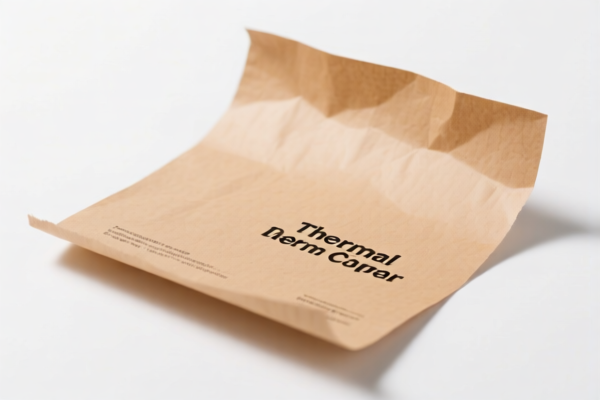
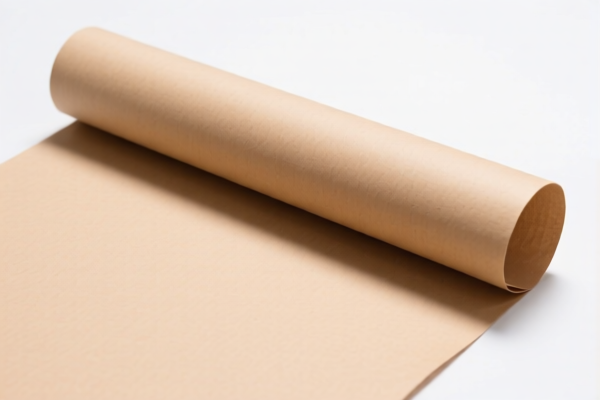
AI分析
🧻 Thermal Paper Base (Thermal Receipt/POS Paper)
🌐 HS Code Reference & Customs Clearance Guide | 2026 Latest Tariff Analysis | Professional Entry Strategy
📌 1. Product Definition & Classification: Do You Really Understand "Thermal Paper"?
Thermal paper is a key component in POS systems, logistics, and financial printing. In international trade, it is primarily classified based on its coating technology and base material.
Base Paper (Uncoated/Primed): The plain paper layer before or during the manufacturing of thermal coating. Thermal Coated Paper: Paper with a heat-sensitive chemical layer (direct thermal).
⚠️ Key Distinction Point:
- If the paper is plain paper or primed paper not yet fully processed as a final thermal product → May fall under Chapter 48 (Pulp/Paper), e.g., 4802.20.
- If the paper is fully coated for direct thermal printing (receipts, faxes) → Falls under 4811.90 (Processed paper) or 4911.99 (Printed items).
📦 2. HS Code Classification Details (2026 Latest Tariff Authority Comparison)
| HS Code | Product Description | Application Scenario | Tax Rate (US/CN Origin) |
|---|---|---|---|
4811.90.90.30 |
Other paper, paperboard, cellulose wadding and webs of cellulose fibers, coated, impregnated, covered, surface-colored, surface-decorated or printed, other than goods of heading 4803, 4809, 4810, 4811 or 4813; thermal coated | Direct thermal receipt paper, fax paper, label backing | 35.0% |
4811.90.80.30 |
Other paper, paperboard, cellulose wadding and webs of cellulose fibers, coated, impregnated, covered, surface-colored, surface-decorated or printed, other than goods of heading 4803, 4809, 4810, 4811 or 4813; thermal sensitive | Thermal paper rolls, unprinted thermal rolls | 35.0% |
4802.20.10.00 |
Writing paper, including blotting paper, perforated stationery paper, and other paper containing principally fibers obtained by a mechanical or chemical-mechanical pulping process, in sheets or rolls, other than printing paper and paper for writing or drawing by hand | Primed thermal paper base, uncoated thermal base | 35.0% |
4802.20.20.00 |
Other paper and paperboard, of which all the fibers are obtained by a chemical process, weighing 40 g/m² or more, not further worked than calendared or super-calendared, in sheets or rolls | Chemical wood pulp base for thermal paper | 35.0% |
4911.99.80.00 |
Other printed matter, including printed pictures and photographs | Printed thermal receipts (with logos/text) | 17.5% |
🔍 Critical Reminder:
- Unprinted thermal rolls are generally classified under 4811.90 (Coated/Impregnated Paper) because the thermal coating is considered a "processing" step.
- Printed thermal receipts (with barcodes/logos) may be eligible for 4911.99 at a lower tax rate of 17.5%, but must prove they are "printed matter" and not just "blank rolls with minor imprinting."
- Plain base paper (no thermal coating) falls under 4802.20, but this is rare for "thermal paper base" in final consumer goods.
💰 3. 2026 Latest Tariff Rate Breakdown (Including Surcharges, Policy Add-ons)
✅ Applicable Country: United States (US)
✅ Origin: China (CN)
✅ Effective Date: From November 10, 2025 (including subsequent imports)
🎯 1. 4811.90.90.30 & 4811.90.80.30 —— Thermal Coated Paper (Unprinted or Blank Rolls)
| Item | Content |
|---|---|
| Base Tariff | 0% (ad valorem) |
| USITC Surcharge | +25% (From USITC Footnote 9903.88.01 / Section 301) |
| IEEPA Surcharge | +10% (For China/HK origin, effective from Nov 10, 2025) |
| Total Tariff | 35.0% |
| Tax Calculation | CIF Value × 35% |
| De Minimis Eligibility | ❌ No (deny_de_minimis) |
| Legal Basis Path | IEEPA:9903.01.25 → IEEPA:9903.01.24 → USITC:4811.90.90.30 → FOOTNOTE:9903.88.01 |
📌 Explanation:
- The 25% USITC surcharge is part of the Section 301 trade measures against China.
- The 10% IEEPA surcharge is a new additional tariff for Chinese-origin goods under the International Emergency Economic Powers Act.
- Total 35% is a high tariff for paper products. Importers must calculate costs carefully.
🎯 2. 4911.99.80.00 —— Printed Thermal Paper (Receipts with Logos/Text)
| Item | Content |
|---|---|
| Base Tariff | 0% |
| USITC Surcharge | +7.5% |
| IEEPA Surcharge | +10% |
| Total Tariff | 17.5% |
| Tax Calculation | CIF Value × 17.5% |
| De Minimis Eligibility | ❌ No (deny_de_minimis) |
| Legal Basis Path | IEEPA:9903.01.25 → USITC:4911.99.80.00 |
📌 Note:
- If the thermal paper is already printed (e.g., with store logos, barcodes, instructions), it may qualify as "Printed Matter" under Chapter 49.
- This results in a 50% reduction in the surcharge component (25% → 7.5%), lowering the total rate from 35% to 17.5%.
- Condition: The printing must be significant enough to classify as "printed matter" and not just a simple pre-printed template on blank stock.
🎯 3. 4802.20.10.00 & 4802.20.20.00 —— Uncoated Thermal Base Paper
| Item | Content |
|---|---|
| Base Tariff | 0% |
| USITC Surcharge | +25% |
| IEEPA Surcharge | +10% |
| Total Tariff | 35.0% |
| Tax Calculation | CIF Value × 35% |
| De Minimis Eligibility | ❌ No |
📌 Note:
- These codes apply if you import raw paper rolls intended for further coating in the US.
- For finished thermal paper products, this classification is less common unless you are a manufacturer importing base stock.
🛠️ 4. Customs Clearance Practical Advice (Real-World Pitfall Guide)
✅ 1. Required Documentation Checklist (Must Provide)
| Document | Required | Description |
|---|---|---|
| ✅ Product Specification Sheet | ✔️ | Include weight (gsm), width, diameter, coating type (Direct Thermal), roll core size. |
| ✅ Product Photos | ✔️ | Clear images of the roll, core, and any printed text/logos. |
| ✅ Commercial Invoice | ✔️ | Clearly state "Thermal Paper" or "Printed Thermal Receipts". Avoid vague terms like "Paper". |
| ✅ Certificate of Origin (CO) | ✔️ | Essential for determining origin-based surcharges. |
| ✅ Packing List | ✔️ | Detail net/gross weight, number of rolls, packaging type. |
| ✅ Third-Party Test Report | ✔️ | ISO, FSC, or chemical safety reports (e.g., BPA-free certification) can help avoid health-related delays. |
✅ 2. Declaration Tips (Key Mnemonic)
🔥 "Printed gets 17.5%, Blank gets 35%, Base is rare, Code must be exact!"
| Scenario | Correct Declaration | Incorrect Practice |
|---|---|---|
| Blank thermal rolls (no print) | 4811.90.80.30 or 4811.90.90.30 |
Declare as "Paper" (generic) → Risk of audit |
| Thermal rolls with logo/text | 4911.99.80.00 |
Declare as 4811.90.80.30 → Overpaying 17.5% |
| Raw uncoated paper rolls | 4802.20.10.00 |
Declare as thermal paper → Misclassification |
| Mixed batch (Printed + Blank) | Separate declarations or apply highest rate | Mix codes → Customs rejection |
✅ 3. Special Case Handling
| Case | Handling Advice |
|---|---|
| BPA-Free Thermal Paper | Provide chemical safety reports. Some US states require specific labeling. Does not change HS Code but aids clearance. |
| OEM Custom Printing | If you are the manufacturer, provide the client's design files to prove "Printed Matter" status for 4911.99.80.00. |
| Small Roll Cores vs. Large Rolls | Ensure dimensions match the code description. No specific dimension thresholds in the summary data, but consistency with invoices is key. |
| Re-export from Third Country | If shipped from Vietnam/Malaysia, provide proof of non-Chinese origin to avoid IEEPA 10% surcharge. |
🌍 5. Global Market Clearance Comparison (2026 Latest)
| Country/Region | Recommended HS Code | Tariff (CN Origin) | Certification Requirements | Notes |
|---|---|---|---|---|
| 🇺🇸 USA | 4811.90.80.30 (Blank) / 4911.99.80.00 (Printed) |
35% / 17.5% | FDA (if food contact), BPA-free claims | High surcharges. Printed status saves money. |
| 🇨🇳 China | 4811.90 / 4911.99 |
5% - 9% | CCC (if applicable) | Lower base tariff, no US-style surcharges. |
| 🇪🇺 EU | 4811.40 / 4911.91 |
0% - 6.5% | CE, REACH, BPA regulations | No Section 301-style surcharges. |
| 🇯🇵 Japan | 4811.90 / 4911.99 |
3% - 6% | JIS, FSC | Strict chemical safety checks for thermal paper. |
📌 Conclusion:
- USA is the most expensive market due to the 35% effective rate for blank thermal paper.
- Printing your receipts can cut the tariff in half (to 17.5%). Consider pre-printing overseas if cost is a major factor.
- EU/Japan are more cost-effective for thermal paper imports but have stricter chemical regulations (BPA/BPS free).
📌 6. Common Mistakes & Pitfall Guide (Lessons Learned)
❌ Mistake 1: Declaring blank thermal rolls as "Paper" (e.g., 4802.55)
👉 Consequence: Customs may classify as 4811.90.80.30 during audit → Back taxes + penalties.
❌ Mistake 2: Trying to classify printed thermal paper as 4811.90.80.30
👉 Consequence: Overpaying 17.5% in tariffs. You lose money unnecessarily.
❌ Mistake 3: Ignoring the "Origin" label
👉 Consequence: If not marked "Made in China" on the package, customs may assume other origins, leading to seizure or delay for origin verification.
❌ Mistake 4: Mixing printed and blank rolls in one HS Code declaration
👉 Consequence: Customs may reject the declaration or apply the higher 35% rate to the entire shipment.
✅ Correct Practice:
"Thermal Paper Roll, 57mm x 30m, Direct Thermal, BPA-Free, [Printed/Blank], Model ABC, Certified FSC & ISO9001"
🎯 7. Conclusion: Professional Declaration, Save Time, Reduce Costs!
🎯 Remember the Mnemonic:
🔹 "Blank is 35%, Printed is 17.5%, Code must match content!"
🔹 "HS Code decides your cost, 17.5% vs 35% is a big difference!"
📌 Tips:
- If your thermal paper is printed with logos, always declare under 4911.99.80.00 to save 17.5% in tariffs.
- Ensure BPA-free certification is available, as US/EU regulations are tightening on chemical safety.
- For large volumes, consider Advance Ruling from US Customs to confirm the correct HS Code and tax rate.
📣 Immediate Action:
📞 Contact professional customs brokers + Provide product photos + Apply for HS Code Advance Ruling
🚀 Let your thermal paper pass smoothly, reduce costs, and boost profits!
✨ Professional clearance starts with precise classification!
💼 Every cent of your cost deserves accurate calculation!
用户评价
关于 HS 编码归类
协调制度(HS)是由世界海关组织(WCO)制定的国际贸易商品分类标准。全球 200 多个国家采用 HS 系统作为海关关税、贸易统计和进出口监管的基础。
每个 HS 编码遵循以下层级结构:
- 章(2 位)——商品大类(例如:第 84 章:机器和机械设备)
- 品目(4 位)——章内的更具体分类
- 子目(6 位)——国际通用细分,所有 WCO 成员国统一使用
- 本国细分(8-10 位)——各国自行扩展的细分编码,如美国 HTSUS 10 位编码
正确的 HS 编码归类对于顺利通关、准确缴纳关税和遵守贸易法规至关重要。错误归类可能导致海关延误、多缴关税或罚款。
从CN进口到US时,适用的关税税率可能包括:
- 最惠国(MFN)税率——适用于 WTO 成员国的标准关税税率
- 普通税率——适用于无贸易协定国家
- 贸易救济关税——附加关税,如 301 条款(反倾销)、232 条款(国家安全)或反补贴税
本页内容仅供参考。如需正式归类,请咨询当地海关或持牌报关代理。