Thermal Paper Base
CN → US| HS Code | Tariff Rate | Origin | Destination | Doc |
|---|---|---|---|---|
| 4811909030 | 35.0% | CN | US | Official Doc |
| 4811908030 | 35.0% | CN | US | Official Doc |
| 4802201000 | 35.0% | CN | US | Official Doc |
| 4802202000 | 35.0% | CN | US | Official Doc |
| 4911998000 | 17.5% | CN | US | Official Doc |
Product Images

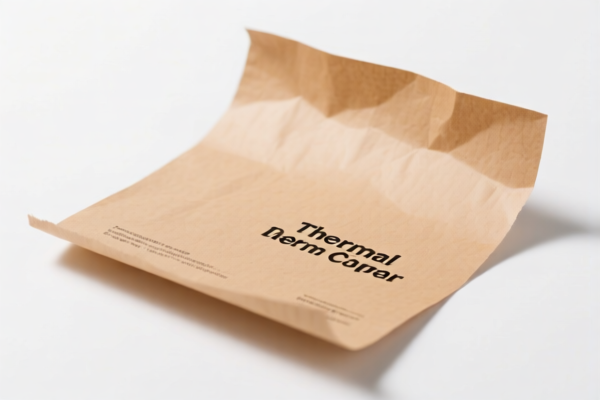
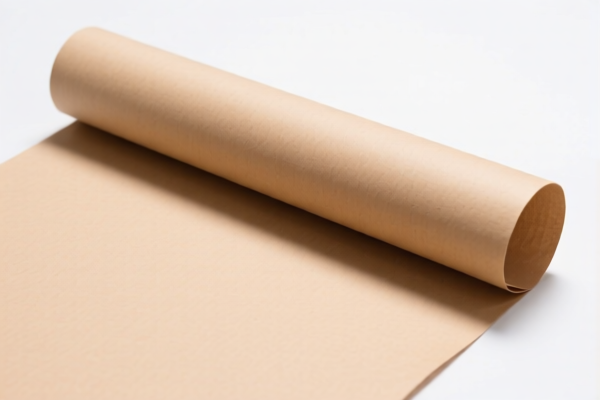
AI Analysis
🧻 Thermal Paper Base (Thermal Receipt/POS Paper)
🌐 HS Code Reference & Customs Clearance Guide | 2026 Latest Tariff Analysis | Professional Entry Strategy
📌 1. Product Definition & Classification: Do You Really Understand "Thermal Paper"?
Thermal paper is a key component in POS systems, logistics, and financial printing. In international trade, it is primarily classified based on its coating technology and base material.
Base Paper (Uncoated/Primed): The plain paper layer before or during the manufacturing of thermal coating. Thermal Coated Paper: Paper with a heat-sensitive chemical layer (direct thermal).
⚠️ Key Distinction Point:
- If the paper is plain paper or primed paper not yet fully processed as a final thermal product → May fall under Chapter 48 (Pulp/Paper), e.g., 4802.20.
- If the paper is fully coated for direct thermal printing (receipts, faxes) → Falls under 4811.90 (Processed paper) or 4911.99 (Printed items).
📦 2. HS Code Classification Details (2026 Latest Tariff Authority Comparison)
| HS Code | Product Description | Application Scenario | Tax Rate (US/CN Origin) |
|---|---|---|---|
4811.90.90.30 |
Other paper, paperboard, cellulose wadding and webs of cellulose fibers, coated, impregnated, covered, surface-colored, surface-decorated or printed, other than goods of heading 4803, 4809, 4810, 4811 or 4813; thermal coated | Direct thermal receipt paper, fax paper, label backing | 35.0% |
4811.90.80.30 |
Other paper, paperboard, cellulose wadding and webs of cellulose fibers, coated, impregnated, covered, surface-colored, surface-decorated or printed, other than goods of heading 4803, 4809, 4810, 4811 or 4813; thermal sensitive | Thermal paper rolls, unprinted thermal rolls | 35.0% |
4802.20.10.00 |
Writing paper, including blotting paper, perforated stationery paper, and other paper containing principally fibers obtained by a mechanical or chemical-mechanical pulping process, in sheets or rolls, other than printing paper and paper for writing or drawing by hand | Primed thermal paper base, uncoated thermal base | 35.0% |
4802.20.20.00 |
Other paper and paperboard, of which all the fibers are obtained by a chemical process, weighing 40 g/m² or more, not further worked than calendared or super-calendared, in sheets or rolls | Chemical wood pulp base for thermal paper | 35.0% |
4911.99.80.00 |
Other printed matter, including printed pictures and photographs | Printed thermal receipts (with logos/text) | 17.5% |
🔍 Critical Reminder:
- Unprinted thermal rolls are generally classified under 4811.90 (Coated/Impregnated Paper) because the thermal coating is considered a "processing" step.
- Printed thermal receipts (with barcodes/logos) may be eligible for 4911.99 at a lower tax rate of 17.5%, but must prove they are "printed matter" and not just "blank rolls with minor imprinting."
- Plain base paper (no thermal coating) falls under 4802.20, but this is rare for "thermal paper base" in final consumer goods.
💰 3. 2026 Latest Tariff Rate Breakdown (Including Surcharges, Policy Add-ons)
✅ Applicable Country: United States (US)
✅ Origin: China (CN)
✅ Effective Date: From November 10, 2025 (including subsequent imports)
🎯 1. 4811.90.90.30 & 4811.90.80.30 —— Thermal Coated Paper (Unprinted or Blank Rolls)
| Item | Content |
|---|---|
| Base Tariff | 0% (ad valorem) |
| USITC Surcharge | +25% (From USITC Footnote 9903.88.01 / Section 301) |
| IEEPA Surcharge | +10% (For China/HK origin, effective from Nov 10, 2025) |
| Total Tariff | 35.0% |
| Tax Calculation | CIF Value × 35% |
| De Minimis Eligibility | ❌ No (deny_de_minimis) |
| Legal Basis Path | IEEPA:9903.01.25 → IEEPA:9903.01.24 → USITC:4811.90.90.30 → FOOTNOTE:9903.88.01 |
📌 Explanation:
- The 25% USITC surcharge is part of the Section 301 trade measures against China.
- The 10% IEEPA surcharge is a new additional tariff for Chinese-origin goods under the International Emergency Economic Powers Act.
- Total 35% is a high tariff for paper products. Importers must calculate costs carefully.
🎯 2. 4911.99.80.00 —— Printed Thermal Paper (Receipts with Logos/Text)
| Item | Content |
|---|---|
| Base Tariff | 0% |
| USITC Surcharge | +7.5% |
| IEEPA Surcharge | +10% |
| Total Tariff | 17.5% |
| Tax Calculation | CIF Value × 17.5% |
| De Minimis Eligibility | ❌ No (deny_de_minimis) |
| Legal Basis Path | IEEPA:9903.01.25 → USITC:4911.99.80.00 |
📌 Note:
- If the thermal paper is already printed (e.g., with store logos, barcodes, instructions), it may qualify as "Printed Matter" under Chapter 49.
- This results in a 50% reduction in the surcharge component (25% → 7.5%), lowering the total rate from 35% to 17.5%.
- Condition: The printing must be significant enough to classify as "printed matter" and not just a simple pre-printed template on blank stock.
🎯 3. 4802.20.10.00 & 4802.20.20.00 —— Uncoated Thermal Base Paper
| Item | Content |
|---|---|
| Base Tariff | 0% |
| USITC Surcharge | +25% |
| IEEPA Surcharge | +10% |
| Total Tariff | 35.0% |
| Tax Calculation | CIF Value × 35% |
| De Minimis Eligibility | ❌ No |
📌 Note:
- These codes apply if you import raw paper rolls intended for further coating in the US.
- For finished thermal paper products, this classification is less common unless you are a manufacturer importing base stock.
🛠️ 4. Customs Clearance Practical Advice (Real-World Pitfall Guide)
✅ 1. Required Documentation Checklist (Must Provide)
| Document | Required | Description |
|---|---|---|
| ✅ Product Specification Sheet | ✔️ | Include weight (gsm), width, diameter, coating type (Direct Thermal), roll core size. |
| ✅ Product Photos | ✔️ | Clear images of the roll, core, and any printed text/logos. |
| ✅ Commercial Invoice | ✔️ | Clearly state "Thermal Paper" or "Printed Thermal Receipts". Avoid vague terms like "Paper". |
| ✅ Certificate of Origin (CO) | ✔️ | Essential for determining origin-based surcharges. |
| ✅ Packing List | ✔️ | Detail net/gross weight, number of rolls, packaging type. |
| ✅ Third-Party Test Report | ✔️ | ISO, FSC, or chemical safety reports (e.g., BPA-free certification) can help avoid health-related delays. |
✅ 2. Declaration Tips (Key Mnemonic)
🔥 "Printed gets 17.5%, Blank gets 35%, Base is rare, Code must be exact!"
| Scenario | Correct Declaration | Incorrect Practice |
|---|---|---|
| Blank thermal rolls (no print) | 4811.90.80.30 or 4811.90.90.30 |
Declare as "Paper" (generic) → Risk of audit |
| Thermal rolls with logo/text | 4911.99.80.00 |
Declare as 4811.90.80.30 → Overpaying 17.5% |
| Raw uncoated paper rolls | 4802.20.10.00 |
Declare as thermal paper → Misclassification |
| Mixed batch (Printed + Blank) | Separate declarations or apply highest rate | Mix codes → Customs rejection |
✅ 3. Special Case Handling
| Case | Handling Advice |
|---|---|
| BPA-Free Thermal Paper | Provide chemical safety reports. Some US states require specific labeling. Does not change HS Code but aids clearance. |
| OEM Custom Printing | If you are the manufacturer, provide the client's design files to prove "Printed Matter" status for 4911.99.80.00. |
| Small Roll Cores vs. Large Rolls | Ensure dimensions match the code description. No specific dimension thresholds in the summary data, but consistency with invoices is key. |
| Re-export from Third Country | If shipped from Vietnam/Malaysia, provide proof of non-Chinese origin to avoid IEEPA 10% surcharge. |
🌍 5. Global Market Clearance Comparison (2026 Latest)
| Country/Region | Recommended HS Code | Tariff (CN Origin) | Certification Requirements | Notes |
|---|---|---|---|---|
| 🇺🇸 USA | 4811.90.80.30 (Blank) / 4911.99.80.00 (Printed) |
35% / 17.5% | FDA (if food contact), BPA-free claims | High surcharges. Printed status saves money. |
| 🇨🇳 China | 4811.90 / 4911.99 |
5% - 9% | CCC (if applicable) | Lower base tariff, no US-style surcharges. |
| 🇪🇺 EU | 4811.40 / 4911.91 |
0% - 6.5% | CE, REACH, BPA regulations | No Section 301-style surcharges. |
| 🇯🇵 Japan | 4811.90 / 4911.99 |
3% - 6% | JIS, FSC | Strict chemical safety checks for thermal paper. |
📌 Conclusion:
- USA is the most expensive market due to the 35% effective rate for blank thermal paper.
- Printing your receipts can cut the tariff in half (to 17.5%). Consider pre-printing overseas if cost is a major factor.
- EU/Japan are more cost-effective for thermal paper imports but have stricter chemical regulations (BPA/BPS free).
📌 6. Common Mistakes & Pitfall Guide (Lessons Learned)
❌ Mistake 1: Declaring blank thermal rolls as "Paper" (e.g., 4802.55)
👉 Consequence: Customs may classify as 4811.90.80.30 during audit → Back taxes + penalties.
❌ Mistake 2: Trying to classify printed thermal paper as 4811.90.80.30
👉 Consequence: Overpaying 17.5% in tariffs. You lose money unnecessarily.
❌ Mistake 3: Ignoring the "Origin" label
👉 Consequence: If not marked "Made in China" on the package, customs may assume other origins, leading to seizure or delay for origin verification.
❌ Mistake 4: Mixing printed and blank rolls in one HS Code declaration
👉 Consequence: Customs may reject the declaration or apply the higher 35% rate to the entire shipment.
✅ Correct Practice:
"Thermal Paper Roll, 57mm x 30m, Direct Thermal, BPA-Free, [Printed/Blank], Model ABC, Certified FSC & ISO9001"
🎯 7. Conclusion: Professional Declaration, Save Time, Reduce Costs!
🎯 Remember the Mnemonic:
🔹 "Blank is 35%, Printed is 17.5%, Code must match content!"
🔹 "HS Code decides your cost, 17.5% vs 35% is a big difference!"
📌 Tips:
- If your thermal paper is printed with logos, always declare under 4911.99.80.00 to save 17.5% in tariffs.
- Ensure BPA-free certification is available, as US/EU regulations are tightening on chemical safety.
- For large volumes, consider Advance Ruling from US Customs to confirm the correct HS Code and tax rate.
📣 Immediate Action:
📞 Contact professional customs brokers + Provide product photos + Apply for HS Code Advance Ruling
🚀 Let your thermal paper pass smoothly, reduce costs, and boost profits!
✨ Professional clearance starts with precise classification!
💼 Every cent of your cost deserves accurate calculation!
Customer Reviews
About HS Code Classification
The Harmonized System (HS) is an internationally standardized nomenclature developed by the World Customs Organization (WCO) to classify traded products. Over 200 countries use the HS system as the basis for customs tariffs, trade statistics, and import/export regulations.
Each HS code follows a hierarchical structure:
- Chapter (2 digits) — Broad category of goods (e.g., Chapter 84: Machinery and Mechanical Appliances)
- Heading (4 digits) — More specific grouping within the chapter
- Subheading (6 digits) — Internationally standardized breakdown, used by all WCO member countries
- National subdivisions (8-10 digits) — Country-specific extensions for further classification, such as US HTSUS 10-digit codes
Correct HS code classification is essential for smooth customs clearance, accurate duty payment, and compliance with trade regulations. Misclassification can lead to customs delays, overpayment of duties, or penalties.
When importing from CN to US, the applicable tariff rates may include:
- Most-Favored-Nation (MFN) rate — The standard duty rate applied to WTO members
- General rate — Applied to countries without trade agreements
- Trade remedy duties — Additional tariffs such as Section 301 (anti-dumping), Section 232 (national security), or countervailing duties
The information provided on this page is for reference purposes only. For official classification, please consult with your local customs authority or a licensed customs broker.