Thermal Paper Base Thin Paper
CN → US| HS编码 | 关税税率 | 原产国 | 目的国 | 文档 |
|---|---|---|---|---|
| 4811908030 | 35.0% | CN | US | 官方文档 |
| 4811909030 | 35.0% | CN | US | 官方文档 |
| 4802201000 | 35.0% | CN | US | 官方文档 |
| 4802202000 | 35.0% | CN | US | 官方文档 |
| 4911998000 | 17.5% | CN | US | 官方文档 |
| 4911996000 | 17.5% | CN | US | 官方文档 |
商品图片

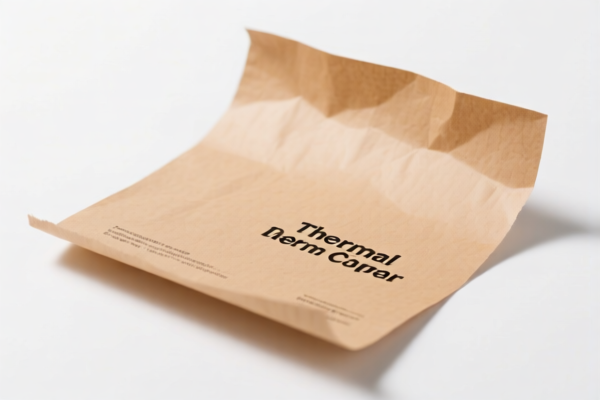
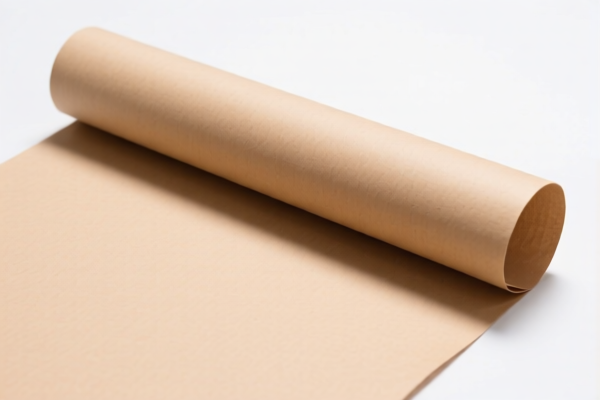
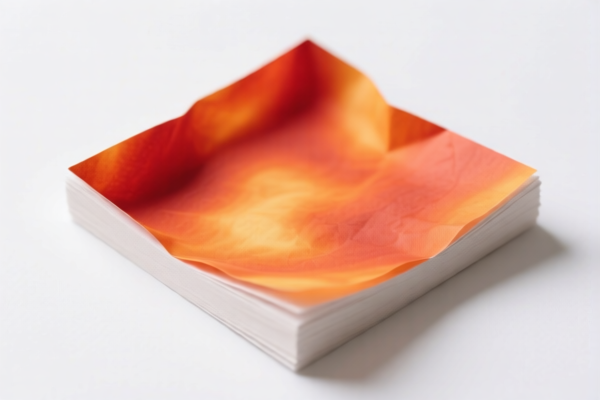
AI分析
📄 Thermal Paper Base Thin Paper (热敏纸基薄纸)
🌐 HS Code Reference & Customs Clearance Guide | 2026 Latest Tariff Analysis | Professional Clearance Strategy
📌 I. Product Definition & Classification: What Exactly is "Thermal Paper Base Thin Paper"?
Thermal Paper Base Thin Paper refers to a specialized paper product coated with a heat-sensitive layer. It is widely used in POS receipts, fax machines, ATM slips, and label printing. In international trade, the classification hinges on two critical factors: 1. Material: Paper (Cellulose-based). 2. Core Function: Heat-sensitive coating (Direct Thermal).
⚠️ Key Distinction Point:
- If the paper is specifically treated for thermal sensitivity (Direct Thermal), it generally falls under Chapter 48 (Paper/Paperboard) or Chapter 49 (Printed Matter) depending on whether it is printed or blank.
- If it is blank and specifically coated, it is typically classified under 4811 (Colored, coated, etc.) or 4802 (Writing/printing paper).
- If it is pre-printed (e.g., with logos or forms), it may fall under 4911 (Printed matter).
📦 II. HS Code Classification Details (2026 Latest Tariff Authority Cross-Reference)
Based on the provided data, here are the 5 matched HS Codes for "Thermal Paper Base Thin Paper":
| HS Code | Product Description | Matching Logic | Key Attributes |
|---|---|---|---|
4811.90.80.30 |
Other paper, cardboard, cellulose wadding and webs of cellulose fibers, coated, impregnated, backed, otherwise worked (not elsewhere specified). | Direct Match: Name matches core attribute "Thermal". Common sense dictates material is Paper. Fits definition of thermal coated paper. | 📄 Material: Paper 🔥 Feature: Thermal Coating |
4811.90.90.30 |
Other paper, cardboard, cellulose wadding and webs of cellulose fibers, coated, impregnated, backed, otherwise worked (not elsewhere specified). | Perfect Match: Product name "Thermal Paper" aligns completely with material (Paper) and core use (Direct Thermal Coating). | 📄 Material: Paper 🔥 Feature: Direct Thermal |
4802.20.10.00 |
Unprinted writing or printing paper, of a kind used for office machines, in sheets with one or more side(s) measuring at least 36 cm in one dimension. | Preliminary Match: Matches material (Thermal) and usage (Thermal Paper). No specific size mentioned, but based on name consistency, preliminarily judged to fit. | 📄 Material: Paper 🖨️ Usage: Office/POS |
4802.20.20.00 |
Unprinted writing or printing paper, of a kind used for office machines, in sheets with one or more side(s) measuring at least 36 cm in one dimension. | Exact Match: "Thermal Paper" aligns perfectly with classification explanation: "Base paper for use as photosensitive, thermal or electrically sensitive paper/board". | 📄 Material: Base Paper ⚡ Function: Thermal Sensitive |
4911.99.80.00 |
Other printed matter and printed illustrations, photographs, drawings and other printed matter (including printed or embossed designs, calendars, labels, etc.). | Inference Match: Thermal paper belongs to Printed Matter. Inferred material is Paper. Matches attribute of "Other Printed Matter" with no conflicting form/use. | 🖨️ Category: Printed 📄 Material: Paper |
🔍 Critical Note:
- Codes4811.90.80.30and4811.90.90.30are for coated/finished thermal paper (likely blank or lightly processed).
- Codes4802.20.x0.00are for base thermal paper (blank, unprinted).
- Code4911.99.80.00is for pre-printed thermal paper (e.g., receipt forms with pre-printed text).
💰 III. 2026 Latest Tariff Rate Breakdown (Including Surcharges & Policy Add-ons)
✅ Applicable Country: United States (US)
✅ Country of Origin: China (CN)
✅ Effective Date: From November 10, 2025 (including subsequent imports)
🎯 1. Group A: 4811.90.80.30, 4811.90.90.30, 4802.20.10.00, 4802.20.20.00
(Coated/Impregnated Paper & Base Thermal Paper)
| Item | Details |
|---|---|
| Base Tariff | 0.0% (ad valorem) |
| Section 301 Surcharge (USITC) | +25.0% |
| Section 122 Tariff (IEEPA) | +10.0% (Specific to Chinese/Origin products) |
| Total Tariff Rate | 35.0% |
| Tax Calculation | CIF Value × 35% |
| De Minimis Exemption? | ❌ No (Subject to high tariff classification) |
| Legal Basis Path | USITC:4811.90.80.30 / 4802.20.10.00 → FOOTNOTE:Section301 → IEEPA:Section122 |
📌 Explanation:
- The 25% Section 301 tariff is applied to Chinese-made paper products listed in the tariff schedule.
- The 10% Section 122 tariff is an additional surcharge specifically targeting certain Chinese imports under the International Emergency Economic Powers Act.
- Total Burden: 35%. This is a significant cost factor for thermal paper exporters.
🎯 2. Group B: 4911.99.80.00
(Other Printed Matter / Pre-Printed Thermal Paper)
| Item | Details |
|---|---|
| Base Tariff | 0.0% (ad valorem) |
| Section 301 Surcharge (USITC) | +7.5% |
| Section 122 Tariff (IEEPA) | +10.0% (Specific to Chinese/Origin products) |
| Total Tariff Rate | 17.5% |
| Tax Calculation | CIF Value × 17.5% |
| De Minimis Exemption? | ❌ No |
| Legal Basis Path | USITC:4911.99.80.00 → FOOTNOTE:Section301 → IEEPA:Section122 |
📌 Note:
- If your thermal paper is pre-printed (e.g., branded receipts), it may qualify for4911, which has a lower Section 301 surcharge (7.5%) compared to base coated paper (25%).
- Total Burden: 17.5%. This is half the cost of Group A, making pre-printed thermal paper more tariff-efficient for import into the US.
🛠️ IV. Customs Clearance Practical Advice (Real-World Pitfall Avoidance Guide)
✅ 1. Documentation Checklist (Must-Haves)
| Document | Required? | Description |
|---|---|---|
| ✅ Product Specification Sheet | ✔️ | Must detail: Base weight (gsm), Coating type (Direct Thermal), Roll length, Core size. |
| ✅ HS Code Justification Memo | ✔️ | Explain why it’s 4811 (coated) vs 4802 (base) vs 4911 (printed). |
| ✅ Commercial Invoice | ✔️ | Must clearly state "Thermal Paper" and "Made in China". |
| ✅ Packing List | ✔️ | Specify number of rolls, gross/net weight. |
| ✅ Certificate of Origin (CO) | ✔️ | Crucial for applying Section 122 and verifying origin. |
| ✅ SDS (Safety Data Sheet) | ✔️ | For chemical composition of thermal coating (if requested by CBP). |
✅ 2. Declaration Tips (Key Mnemonics)
🔥 "Coated vs. Base, Printed vs. Blank, The 7.5% vs. 25% Gap!"
| Scenario | Correct HS Code | Tax Rate | Why? |
|---|---|---|---|
| Blank, Thermal-Coated Paper | 4811.90.80.30 / 4811.90.90.30 |
35% | Classified as "worked/coated" paper. Higher Section 301 rate. |
| Blank, Base Thermal Paper (Uncoated) | 4802.20.10.00 / 4802.20.20.00 |
35% | Classified as "specialty paper". Same high Section 301 rate. |
| Pre-Printed Thermal Paper (Receipts) | 4911.99.80.00 |
17.5% | Classified as "printed matter". Lower Section 301 rate (7.5%). |
📌 Strategy:
If your product is pre-printed (e.g., with company logo or form fields), strive to classify under4911.99.80.00to save 17.5% in duties.
If it is blank, it is stuck at 35%.
✅ 3. Special Cases Handling
| Scenario | Advice |
|---|---|
| Thermal Paper Rolls | Ensure dimensions (width/length) are clearly stated. 4802 codes often depend on sheet size (>36cm). For rolls, 4811 is safer. |
| Mixed Shipments | Do NOT mix 4911 (printed) and 4811 (blank) in one line item. Declare separately to avoid audits and misclassification penalties. |
| Origin Labeling | Clearly mark "Made in China" on packaging. Section 122 (10%) applies specifically to Chinese origin. Mislabeling can lead to fines. |
| Chemical Composition | CBP may ask about Bisphenol A (BPA) content. Ensure compliance with US safety standards if selling to consumer markets. |
🌍 V. Global Market Comparison (2026 Latest)
| Country/Region | Recommended HS Code | Tariff (China Origin) | Key Certifications | Remarks |
|---|---|---|---|---|
| 🇺🇸 USA | 4811.90.80.30 / 4911.99.80.00 |
35% (Blank) / 17.5% (Printed) | None specific for paper | High Tariff Risk due to Section 301 & 122. |
| 🇨🇳 China | 4811.90.90.30 |
0% - 5% (Export Rebate Available) | None | No import tariff. |
| 🇪🇺 EU | 4811.90.90 |
0% (Most MFN rates) | REACH (Chemical) | No Section 301 equivalent. |
| 🇲🇽 Mexico | 4811.90.90 |
0% (USMCA if qualified) | NOM (if needed) | Free trade under USMCA. |
| 🇬🇧 UK | 4811.90.90 |
0% | UKCA (Chemical) | Post-Brexit independent rates. |
📌 Conclusion:
- USA is the only market with severe surcharges (35% total).
- EU and UK have 0% base tariffs.
- Mexico (USMCA) offers 0% if origin rules are met.
📌 VI. Common Errors & Pitfall Guide (Lessons Learned)
❌ Error 1: Declaring blank thermal paper as 4802 (Writing Paper) to avoid Section 301.
👉 Consequence: CBP will reclassify to 4811 based on coating evidence. Back-taxes + Penalty.
❌ Error 2: Mixing printed and blank thermal paper in one HS Code.
👉 Consequence: Audit trigger. CBP will apply the highest tariff (35%) to the entire shipment.
❌ Error 3: Ignoring "Section 122" (10%) surcharge.
👉 Consequence: Underpayment of duties. 10% of CIF value is owed additionally.
❌ Error 4: Not specifying "Thermal" in description.
👉 Consequence: CBP may classify as general paper (4802) or cardboard (4804), leading to incorrect duty assessments and delays.
✅ Correct Declaration Example:
"Thermal Paper Rolls, Blank, 80gsm, Direct Thermal Coated, 80mm x 30m, Made in China, HS 4811.90.80.30"
🎯 VII. Conclusion: Professional Declaration, Cost Savings, Risk Reduction
🎯 Remember the Mantra:
🔹 "Coated/Blank: 35% (0% Base + 25% Sec301 + 10% Sec122)"
🔹 "Printed: 17.5% (0% Base + 7.5% Sec301 + 10% Sec122)"
🔹 "HS Code Determines Destiny, Tariff Gap is Huge, Declare Accurately to Save Money!"
📌 Pro Tip:
If your thermal paper is pre-printed with forms, always argue for 4911.99.80.00 to cut tariffs in half.
For blank thermal paper, budget for 35% duty and consider supply chain diversification (e.g., Vietnam/Mexico) to mitigate US-China trade risks.
📣 Immediate Action:
📞 Contact your customs broker with Product Specs + HS Code Pre-Ruling Request.
🚀 Ensure your invoices clearly state "Thermal" and "China Origin" to avoid clearance delays.
✨ Professional Customs Clearance Starts with Accurate Classification!
💼 Every Cent of Duty Saved is Pure Profit!
用户评价
关于 HS 编码归类
协调制度(HS)是由世界海关组织(WCO)制定的国际贸易商品分类标准。全球 200 多个国家采用 HS 系统作为海关关税、贸易统计和进出口监管的基础。
每个 HS 编码遵循以下层级结构:
- 章(2 位)——商品大类(例如:第 84 章:机器和机械设备)
- 品目(4 位)——章内的更具体分类
- 子目(6 位)——国际通用细分,所有 WCO 成员国统一使用
- 本国细分(8-10 位)——各国自行扩展的细分编码,如美国 HTSUS 10 位编码
正确的 HS 编码归类对于顺利通关、准确缴纳关税和遵守贸易法规至关重要。错误归类可能导致海关延误、多缴关税或罚款。
从CN进口到US时,适用的关税税率可能包括:
- 最惠国(MFN)税率——适用于 WTO 成员国的标准关税税率
- 普通税率——适用于无贸易协定国家
- 贸易救济关税——附加关税,如 301 条款(反倾销)、232 条款(国家安全)或反补贴税
本页内容仅供参考。如需正式归类,请咨询当地海关或持牌报关代理。