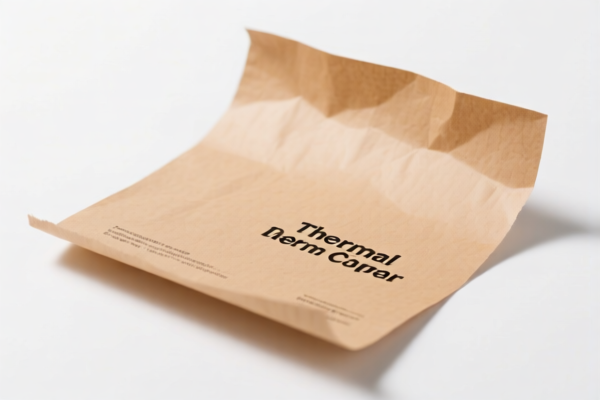
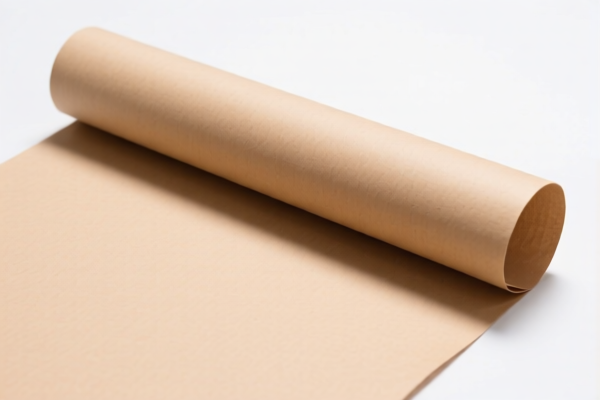
Thermal Paper Base Thin Paper
CN → US| HS Code | Tariff Rate | Origin | Destination | Doc |
|---|---|---|---|---|
| 4811908030 | 35.0% | CN | US | Official Doc |
| 4811909030 | 35.0% | CN | US | Official Doc |
| 4802201000 | 35.0% | CN | US | Official Doc |
| 4802202000 | 35.0% | CN | US | Official Doc |
| 4911998000 | 17.5% | CN | US | Official Doc |
| 4911996000 | 17.5% | CN | US | Official Doc |
Product Images

AI Analysis
📄 Thermal Paper Base Thin Paper (热敏纸基薄纸)
🌐 HS Code Reference & Customs Clearance Guide | 2026 Latest Tariff Analysis | Professional Clearance Strategy
📌 I. Product Definition & Classification: What Exactly is "Thermal Paper Base Thin Paper"?
Thermal Paper Base Thin Paper refers to a specialized paper product coated with a heat-sensitive layer. It is widely used in POS receipts, fax machines, ATM slips, and label printing. In international trade, the classification hinges on two critical factors: 1. Material: Paper (Cellulose-based). 2. Core Function: Heat-sensitive coating (Direct Thermal).
⚠️ Key Distinction Point:
- If the paper is specifically treated for thermal sensitivity (Direct Thermal), it generally falls under Chapter 48 (Paper/Paperboard) or Chapter 49 (Printed Matter) depending on whether it is printed or blank.
- If it is blank and specifically coated, it is typically classified under 4811 (Colored, coated, etc.) or 4802 (Writing/printing paper).
- If it is pre-printed (e.g., with logos or forms), it may fall under 4911 (Printed matter).
📦 II. HS Code Classification Details (2026 Latest Tariff Authority Cross-Reference)
Based on the provided data, here are the 5 matched HS Codes for "Thermal Paper Base Thin Paper":
| HS Code | Product Description | Matching Logic | Key Attributes |
|---|---|---|---|
4811.90.80.30 |
Other paper, cardboard, cellulose wadding and webs of cellulose fibers, coated, impregnated, backed, otherwise worked (not elsewhere specified). | Direct Match: Name matches core attribute "Thermal". Common sense dictates material is Paper. Fits definition of thermal coated paper. | 📄 Material: Paper 🔥 Feature: Thermal Coating |
4811.90.90.30 |
Other paper, cardboard, cellulose wadding and webs of cellulose fibers, coated, impregnated, backed, otherwise worked (not elsewhere specified). | Perfect Match: Product name "Thermal Paper" aligns completely with material (Paper) and core use (Direct Thermal Coating). | 📄 Material: Paper 🔥 Feature: Direct Thermal |
4802.20.10.00 |
Unprinted writing or printing paper, of a kind used for office machines, in sheets with one or more side(s) measuring at least 36 cm in one dimension. | Preliminary Match: Matches material (Thermal) and usage (Thermal Paper). No specific size mentioned, but based on name consistency, preliminarily judged to fit. | 📄 Material: Paper 🖨️ Usage: Office/POS |
4802.20.20.00 |
Unprinted writing or printing paper, of a kind used for office machines, in sheets with one or more side(s) measuring at least 36 cm in one dimension. | Exact Match: "Thermal Paper" aligns perfectly with classification explanation: "Base paper for use as photosensitive, thermal or electrically sensitive paper/board". | 📄 Material: Base Paper ⚡ Function: Thermal Sensitive |
4911.99.80.00 |
Other printed matter and printed illustrations, photographs, drawings and other printed matter (including printed or embossed designs, calendars, labels, etc.). | Inference Match: Thermal paper belongs to Printed Matter. Inferred material is Paper. Matches attribute of "Other Printed Matter" with no conflicting form/use. | 🖨️ Category: Printed 📄 Material: Paper |
🔍 Critical Note:
- Codes4811.90.80.30and4811.90.90.30are for coated/finished thermal paper (likely blank or lightly processed).
- Codes4802.20.x0.00are for base thermal paper (blank, unprinted).
- Code4911.99.80.00is for pre-printed thermal paper (e.g., receipt forms with pre-printed text).
💰 III. 2026 Latest Tariff Rate Breakdown (Including Surcharges & Policy Add-ons)
✅ Applicable Country: United States (US)
✅ Country of Origin: China (CN)
✅ Effective Date: From November 10, 2025 (including subsequent imports)
🎯 1. Group A: 4811.90.80.30, 4811.90.90.30, 4802.20.10.00, 4802.20.20.00
(Coated/Impregnated Paper & Base Thermal Paper)
| Item | Details |
|---|---|
| Base Tariff | 0.0% (ad valorem) |
| Section 301 Surcharge (USITC) | +25.0% |
| Section 122 Tariff (IEEPA) | +10.0% (Specific to Chinese/Origin products) |
| Total Tariff Rate | 35.0% |
| Tax Calculation | CIF Value × 35% |
| De Minimis Exemption? | ❌ No (Subject to high tariff classification) |
| Legal Basis Path | USITC:4811.90.80.30 / 4802.20.10.00 → FOOTNOTE:Section301 → IEEPA:Section122 |
📌 Explanation:
- The 25% Section 301 tariff is applied to Chinese-made paper products listed in the tariff schedule.
- The 10% Section 122 tariff is an additional surcharge specifically targeting certain Chinese imports under the International Emergency Economic Powers Act.
- Total Burden: 35%. This is a significant cost factor for thermal paper exporters.
🎯 2. Group B: 4911.99.80.00
(Other Printed Matter / Pre-Printed Thermal Paper)
| Item | Details |
|---|---|
| Base Tariff | 0.0% (ad valorem) |
| Section 301 Surcharge (USITC) | +7.5% |
| Section 122 Tariff (IEEPA) | +10.0% (Specific to Chinese/Origin products) |
| Total Tariff Rate | 17.5% |
| Tax Calculation | CIF Value × 17.5% |
| De Minimis Exemption? | ❌ No |
| Legal Basis Path | USITC:4911.99.80.00 → FOOTNOTE:Section301 → IEEPA:Section122 |
📌 Note:
- If your thermal paper is pre-printed (e.g., branded receipts), it may qualify for4911, which has a lower Section 301 surcharge (7.5%) compared to base coated paper (25%).
- Total Burden: 17.5%. This is half the cost of Group A, making pre-printed thermal paper more tariff-efficient for import into the US.
🛠️ IV. Customs Clearance Practical Advice (Real-World Pitfall Avoidance Guide)
✅ 1. Documentation Checklist (Must-Haves)
| Document | Required? | Description |
|---|---|---|
| ✅ Product Specification Sheet | ✔️ | Must detail: Base weight (gsm), Coating type (Direct Thermal), Roll length, Core size. |
| ✅ HS Code Justification Memo | ✔️ | Explain why it’s 4811 (coated) vs 4802 (base) vs 4911 (printed). |
| ✅ Commercial Invoice | ✔️ | Must clearly state "Thermal Paper" and "Made in China". |
| ✅ Packing List | ✔️ | Specify number of rolls, gross/net weight. |
| ✅ Certificate of Origin (CO) | ✔️ | Crucial for applying Section 122 and verifying origin. |
| ✅ SDS (Safety Data Sheet) | ✔️ | For chemical composition of thermal coating (if requested by CBP). |
✅ 2. Declaration Tips (Key Mnemonics)
🔥 "Coated vs. Base, Printed vs. Blank, The 7.5% vs. 25% Gap!"
| Scenario | Correct HS Code | Tax Rate | Why? |
|---|---|---|---|
| Blank, Thermal-Coated Paper | 4811.90.80.30 / 4811.90.90.30 |
35% | Classified as "worked/coated" paper. Higher Section 301 rate. |
| Blank, Base Thermal Paper (Uncoated) | 4802.20.10.00 / 4802.20.20.00 |
35% | Classified as "specialty paper". Same high Section 301 rate. |
| Pre-Printed Thermal Paper (Receipts) | 4911.99.80.00 |
17.5% | Classified as "printed matter". Lower Section 301 rate (7.5%). |
📌 Strategy:
If your product is pre-printed (e.g., with company logo or form fields), strive to classify under4911.99.80.00to save 17.5% in duties.
If it is blank, it is stuck at 35%.
✅ 3. Special Cases Handling
| Scenario | Advice |
|---|---|
| Thermal Paper Rolls | Ensure dimensions (width/length) are clearly stated. 4802 codes often depend on sheet size (>36cm). For rolls, 4811 is safer. |
| Mixed Shipments | Do NOT mix 4911 (printed) and 4811 (blank) in one line item. Declare separately to avoid audits and misclassification penalties. |
| Origin Labeling | Clearly mark "Made in China" on packaging. Section 122 (10%) applies specifically to Chinese origin. Mislabeling can lead to fines. |
| Chemical Composition | CBP may ask about Bisphenol A (BPA) content. Ensure compliance with US safety standards if selling to consumer markets. |
🌍 V. Global Market Comparison (2026 Latest)
| Country/Region | Recommended HS Code | Tariff (China Origin) | Key Certifications | Remarks |
|---|---|---|---|---|
| 🇺🇸 USA | 4811.90.80.30 / 4911.99.80.00 |
35% (Blank) / 17.5% (Printed) | None specific for paper | High Tariff Risk due to Section 301 & 122. |
| 🇨🇳 China | 4811.90.90.30 |
0% - 5% (Export Rebate Available) | None | No import tariff. |
| 🇪🇺 EU | 4811.90.90 |
0% (Most MFN rates) | REACH (Chemical) | No Section 301 equivalent. |
| 🇲🇽 Mexico | 4811.90.90 |
0% (USMCA if qualified) | NOM (if needed) | Free trade under USMCA. |
| 🇬🇧 UK | 4811.90.90 |
0% | UKCA (Chemical) | Post-Brexit independent rates. |
📌 Conclusion:
- USA is the only market with severe surcharges (35% total).
- EU and UK have 0% base tariffs.
- Mexico (USMCA) offers 0% if origin rules are met.
📌 VI. Common Errors & Pitfall Guide (Lessons Learned)
❌ Error 1: Declaring blank thermal paper as 4802 (Writing Paper) to avoid Section 301.
👉 Consequence: CBP will reclassify to 4811 based on coating evidence. Back-taxes + Penalty.
❌ Error 2: Mixing printed and blank thermal paper in one HS Code.
👉 Consequence: Audit trigger. CBP will apply the highest tariff (35%) to the entire shipment.
❌ Error 3: Ignoring "Section 122" (10%) surcharge.
👉 Consequence: Underpayment of duties. 10% of CIF value is owed additionally.
❌ Error 4: Not specifying "Thermal" in description.
👉 Consequence: CBP may classify as general paper (4802) or cardboard (4804), leading to incorrect duty assessments and delays.
✅ Correct Declaration Example:
"Thermal Paper Rolls, Blank, 80gsm, Direct Thermal Coated, 80mm x 30m, Made in China, HS 4811.90.80.30"
🎯 VII. Conclusion: Professional Declaration, Cost Savings, Risk Reduction
🎯 Remember the Mantra:
🔹 "Coated/Blank: 35% (0% Base + 25% Sec301 + 10% Sec122)"
🔹 "Printed: 17.5% (0% Base + 7.5% Sec301 + 10% Sec122)"
🔹 "HS Code Determines Destiny, Tariff Gap is Huge, Declare Accurately to Save Money!"
📌 Pro Tip:
If your thermal paper is pre-printed with forms, always argue for 4911.99.80.00 to cut tariffs in half.
For blank thermal paper, budget for 35% duty and consider supply chain diversification (e.g., Vietnam/Mexico) to mitigate US-China trade risks.
📣 Immediate Action:
📞 Contact your customs broker with Product Specs + HS Code Pre-Ruling Request.
🚀 Ensure your invoices clearly state "Thermal" and "China Origin" to avoid clearance delays.
✨ Professional Customs Clearance Starts with Accurate Classification!
💼 Every Cent of Duty Saved is Pure Profit!
Customer Reviews
About HS Code Classification
The Harmonized System (HS) is an internationally standardized nomenclature developed by the World Customs Organization (WCO) to classify traded products. Over 200 countries use the HS system as the basis for customs tariffs, trade statistics, and import/export regulations.
Each HS code follows a hierarchical structure:
- Chapter (2 digits) — Broad category of goods (e.g., Chapter 84: Machinery and Mechanical Appliances)
- Heading (4 digits) — More specific grouping within the chapter
- Subheading (6 digits) — Internationally standardized breakdown, used by all WCO member countries
- National subdivisions (8-10 digits) — Country-specific extensions for further classification, such as US HTSUS 10-digit codes
Correct HS code classification is essential for smooth customs clearance, accurate duty payment, and compliance with trade regulations. Misclassification can lead to customs delays, overpayment of duties, or penalties.
When importing from CN to US, the applicable tariff rates may include:
- Most-Favored-Nation (MFN) rate — The standard duty rate applied to WTO members
- General rate — Applied to countries without trade agreements
- Trade remedy duties — Additional tariffs such as Section 301 (anti-dumping), Section 232 (national security), or countervailing duties
The information provided on this page is for reference purposes only. For official classification, please consult with your local customs authority or a licensed customs broker.