Thermal Paper Roll Base
CN → US| HS编码 | 关税税率 | 原产国 | 目的国 | 文档 |
|---|---|---|---|---|
| 4911998000 | 17.5% | CN | US | 官方文档 |
| 4811909030 | 35.0% | CN | US | 官方文档 |
| 4811908030 | 35.0% | CN | US | 官方文档 |
| 4802201000 | 35.0% | CN | US | 官方文档 |
| 4802202000 | 35.0% | CN | US | 官方文档 |
| 4911996000 | 17.5% | CN | US | 官方文档 |
商品图片
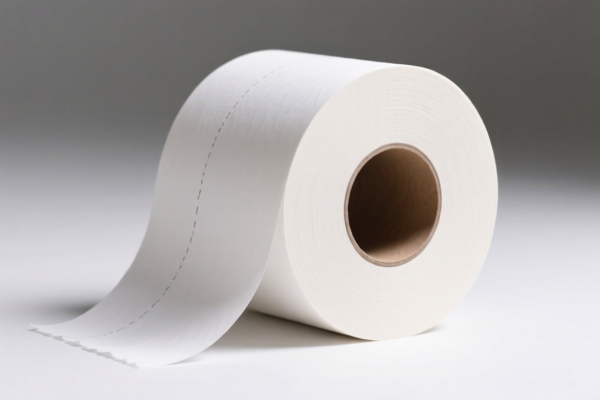
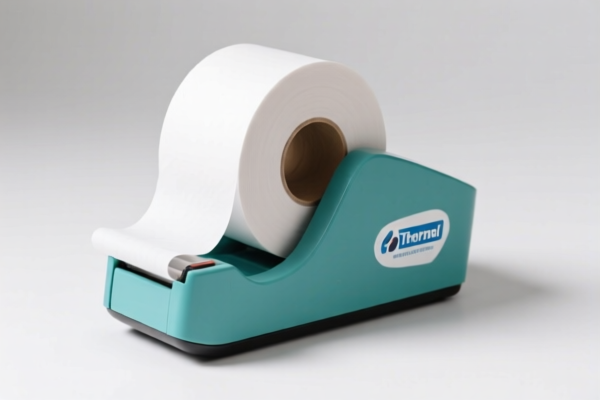
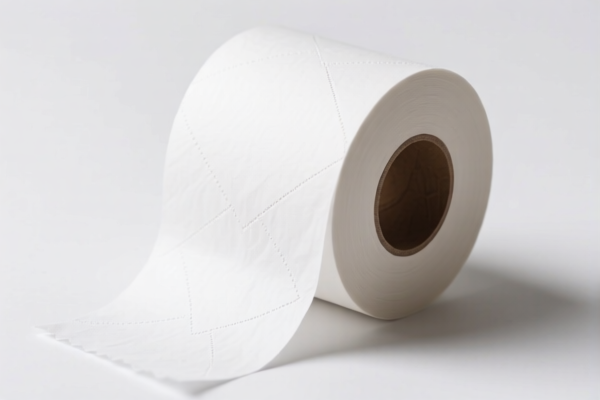
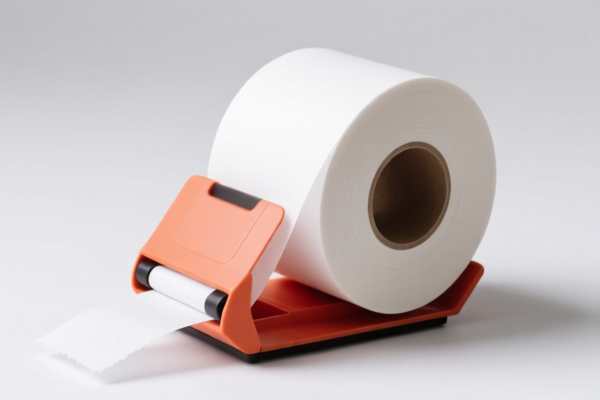
AI分析
🧻 Thermal Paper Roll Base (Thermal Base Paper)
🌐 HS Code Reference & Customs Clearance Guide | 2026 Latest Tariff Analysis | Professional Customs Strategy
📌 I. Product Definition & Classification: What Exactly is "Thermal Paper Roll Base"?
Thermal paper roll base refers to the foundational raw material used in the production of thermal receipt paper, fax paper, and point-of-sale (POS) labels. It consists of high-quality wood pulp or synthetic fibers, often coated or treated with specific chemicals to withstand thermal printing processes. In international trade, it is categorized based on whether it is considered a "paper product" (raw material) or a "printed item" (finished good), depending on its processing level and intended use.
⚠️ Key Distinction:
- If the paper is unprinted, uncoated for thermal use, or serves as a base stock → It falls under Chapter 48 (Paper)
- If the paper is printed with information, logos, or constitutes a final retail product → It may fall under Chapter 49 (Printed Materials)
📦 II. HS Code Classification Details (2026 Latest Tariff Authority Comparison)
| HS Code | Product Description | Applicable Scenario | Tax Rate (Total) | Tax Breakdown |
|---|---|---|---|---|
4911.99.80.00 |
Other printed matter (not elsewhere specified) | Printed thermal receipts, branded labels, final retail thermal paper rolls | 17.5% | Base: 0%, Section 301: 7.5%, Section 122: 10% |
4811.90.90.30 |
Other paper, paperboard, cellulose wadding, and webs of cellulose fibers, coated or impregnated | Unprinted thermal base paper, chemically treated base stock for thermal printing | 35.0% | Base: 0%, Section 301: 25%, Section 122: 10% |
4811.90.80.30 |
Other paper, paperboard, coated with plastic, adhesives, or other substances | Thermal base paper with specific coatings, ready for thermal conversion | 35.0% | Base: 0%, Section 301: 25%, Section 122: 10% |
4802.20.10.00 |
Uncoated paper and paperboard, of a kind used for writing, printing or other graphical purposes, in rolls | General-purpose base paper, including some thermal base papers without specific thermal coating | 35.0% | Base: 0%, Section 301: 25%, Section 122: 10% |
4802.20.20.00 |
Uncoated paper and paperboard, in rolls, specially prepared for use as base paper for photographic paper, sensitized paper, or other similar paper | Base paper specifically prepared for thermal, photosensitive, or electronic sensitive applications | 35.0% | Base: 0%, Section 301: 25%, Section 122: 10% |
4911.99.60.00 |
Other printed matter (not elsewhere specified) | Printed thermal receipts, pre-printed thermal labels, final retail products | 17.5% | Base: 0%, Section 301: 7.5%, Section 122: 10% |
🔍 Key Insight:
- Unprinted thermal base paper (raw material) is classified under Chapter 48 (e.g.,4811.90.90.30,4802.20.10.00) with a 35% total tariff.
- Printed thermal paper (finished goods) is classified under Chapter 49 (e.g.,4911.99.80.00,4911.99.60.00) with a 17.5% total tariff.
- Section 301 tariffs are significantly higher for Chapter 48 products (25%) compared to Chapter 49 (7.5%).
💰 III. 2026 Latest Tariff Rate Explanation (Including Additional Taxes & Policy Surcharges)
✅ Applicable Country: United States (US)
✅ Origin: China (CN)
✅ Effective Date: November 10, 2025 (and subsequent imports)
🎯 1. 4911.99.80.00 & 4911.99.60.00 — Other Printed Matter (Thermal Receipts/Labels)
| Item | Details |
|---|---|
| Base Tariff | 0% (ad valorem) |
| USITC Additional Tariff | +7.5% (Section 301) |
| IEEPA Additional Tariff | +10% (Section 122, targeting China/Hong Kong products from Nov 10, 2025) |
| Total Tariff | 17.5% |
| Tax Calculation | CIF Value × 17.5% |
| De Minimis Eligibility | ❌ Not Eligible (deny_de_minimis) |
| Legal Basis Path | IEEPA:9903.01.25 → IEEPA:9903.01.24 → USITC:4911.99.80.00 / 4911.99.60.00 → FOOTNOTE:9903.88.01 |
📌 Explanation:
- "Section 301 Additional Tariff 7.5%": Applies to "other printed matter" under Section 301 of the Trade Act.
- "IEEPA 10%": The latest surcharge targeting Chinese-origin goods under the International Emergency Economic Powers Act.
- Total 17.5% is significantly lower than unprinted thermal base paper.
- Crucial: If your product is printed, choose Chapter 49 to benefit from the 7.5% vs. 25% Section 301 difference.
🎯 2. 4811.90.90.30, 4811.90.80.30, 4802.20.10.00, 4802.20.20.00 — Unprinted Thermal Base Paper
| Item | Details |
|---|---|
| Base Tariff | 0% |
| USITC Additional Tariff | +25% (Section 301) |
| IEEPA Additional Tariff | +10% (Section 122) |
| Total Tariff | 35.0% |
| Tax Calculation | CIF Value × 35.0% |
| De Minimis Eligibility | ❌ Not Eligible (deny_de_minimis) |
| Legal Basis Path | IEEPA:9901.25 → IEEPA:9903.01.24 → USITC:4811.90.90.30 / 4811.90.80.30 / 4802.20.10.00 / 4802.20.20.00 → FOOTNOTE:9903.88.01 |
📌 Note:
- All unprinted thermal base papers fall under Chapter 48 with a 25% Section 301 tariff.
- This includes plain thermal base stock, coated thermal base paper, and specially prepared base paper for thermal/photographic/electronic sensitive applications.
- Total 35% is double the rate for printed thermal paper.
🛠️ IV. Customs Clearance Practical Suggestions (Battle-Tested Pitfall Avoidance Guide)
✅ 1. Required Documentation Checklist (Missing Any = Delay)
| Document | Mandatory | Description |
|---|---|---|
| ✅ Product Specification Sheet | ✔️ | Must include paper weight (GSM), roll diameter, core size, coating type, thermal sensitivity grade |
| ✅ Certificate of Origin (CO) | ✔️ | Essential for proving Chinese origin and applying correct Section 301/122 tariffs |
| ✅ Commercial Invoice | ✔️ | Must clearly state "Thermal Paper Roll Base" or "Printed Thermal Receipts" — avoid vague terms like "Paper" |
| ✅ Packing List | ✔️ | Detail roll dimensions, weight per roll, number of rolls per carton |
| ✅ Third-Party Test Report | ✔️ | Proof of thermal sensitivity, coating uniformity, environmental compliance (e.g., BPA-free, RoHS) |
| ✅ Manufacturer’s Declaration | ✔️ | Confirm whether the paper is unprinted base stock or pre-printed retail product |
✅ 2. Declaration Strategy (Key Mantra)
🔥 "Base Paper = Chapter 48 (35%), Printed Paper = Chapter 49 (17.5%)!"
| Scenario | Correct HS Code | Incorrect Action | Consequence |
|---|---|---|---|
| Unprinted thermal base paper (raw material for conversion) | 4811.90.90.30 or 4802.20.10.00 |
Misdeclare as "printed paper" | Audit risk + penalty |
| Pre-printed thermal receipts (final retail product) | 4911.99.80.00 or 4911.99.60.00 |
Misdeclare as "base paper" | Overpay 17.5% tax |
| Thermal base paper with partial printing | Depends on primary purpose | Ambiguous description | Customs reclassification + delays |
| Bulk thermal paper rolls for B2B | 4811.90.90.30 (if unprinted) |
Use retail-oriented descriptions | Misalignment with invoice |
✅ 3. Special Case Handling
| Situation | Handling Advice |
|---|---|
| OEM Custom Printing | Provide client’s design files + print proof. If majority of surface is printed, classify under Chapter 49. |
| Hybrid Products (partially printed base paper) | Declare as unprinted base paper (Chapter 48) unless printing is dominant feature. |
| BPA-Free Thermal Paper | Highlight this in specifications to meet environmental standards, but does not change HS Code. |
| Small Samples for Testing | If shipped under $800, may still be subject to Section 301/122 — de minimis does NOT apply. |
🌍 V. Global Market Clearance Comparison (2026 Latest)
| Country/Region | Recommended HS Code | Tariff | Certification Requirements | Notes |
|---|---|---|---|---|
| 🇺🇸 United States | 4811.90.90.30 (Base) / 4911.99.80.00 (Printed) |
35% (Base) / 17.5% (Printed) | No specific certification, but BPA-free recommended | Highest tariff impact |
| 🇨🇳 China | 4811.90.90.30 / 4911.99.80.00 |
0%~5% | CCC (if applicable) | Low tariff, no Section 301 |
| 🇪🇺 European Union | 4811.90.90 / 4911.99.80 |
0%~6.5% | CE, RoHS, REACH | No additional surcharges |
| 🇦🇺 Australia | 4811.90.90 / 4911.99.80 |
5%~5% | RCM (if applicable) | Moderate tariff |
| 🇯🇵 Japan | 4811.90.90 / 4911.99.80 |
0%~3% | PSE (if electronic accessories) | Low tariff, strict quality standards |
📌 Conclusion:
- The US is the ONLY market with significant Section 301 + Section 122 surcharges for thermal paper.
- Printed thermal paper (Chapter 49) saves 17.5% in tariffs compared to unprinted base paper (Chapter 48).
- Chinese-origin thermal base paper faces the highest landed cost in the US.
📌 VI. Common Mistakes & Pitfall Avoidance (Blood & Tears Lessons)
❌ Mistake 1: Declaring unprinted thermal base paper as "printed paper" to avoid 25% Section 301
👉 Consequence: Customs audit, penalties, retroactive taxes + interest
❌ Mistake 2: Using vague terms like "Paper Roll" without specifying thermal coating or printing status
👉 Consequence: Customs reclassification → delays + potential misclassification fines
❌ Mistake 3: Assuming de minimis ($800) applies to thermal paper shipments from China
👉 Consequence: De minimis is EXCLUDED for Section 301/122 goods → full tariffs apply even for small shipments
❌ Mistake 4: Mixing printed and unprinted rolls in one shipment without clear separation
👉 Consequence: Customs may classify the entire shipment under the higher tariff rate (35%)
✅ Correct Approach:
"Thermal Paper Roll Base, Uncoated, 50 GSM, 100mm Width, 200m Length, BPA-Free, for POS Receipt Conversion"
or
"Pre-Printed Thermal Receipt Rolls, 57x40mm, With Logo, BPA-Free, Retail Ready"
🎯 VII. Conclusion: Precise Classification Saves 17.5%!
🎯 Remember the Mantra:
🔹 "Base Paper = 35%, Printed Paper = 17.5% — Choose Wisely!"
🔹 "Chapter 48 for Raw, Chapter 49 for Retail — Don’t Mix Them!"
🔹 "No De Minimis for China Thermal Paper — Plan Ahead!"
📌 Pro Tip:
If your thermal paper is originally manufactured in Vietnam, Mexico, or Thailand, you may qualify for IEEPA Exemptions under certain conditions, reducing tariffs to 0%~5%.
Recommendation: Apply for an Advance Ruling (Pre-Customs Classification) with US CBP to secure the correct HS Code and tariff rate before shipment.
📣 Immediate Action Steps:
📞 Engage a licensed customs broker + Provide product images + Apply for HS Code Advance Ruling
🚀 Ensure smooth clearance, minimize tax burden, maximize profit margins!
✨ Professional Customs Clearance Starts with Accurate Classification!
💼 Every Cent Counts — Calculate Precisely, Clear Efficiently!
用户评价
关于 HS 编码归类
协调制度(HS)是由世界海关组织(WCO)制定的国际贸易商品分类标准。全球 200 多个国家采用 HS 系统作为海关关税、贸易统计和进出口监管的基础。
每个 HS 编码遵循以下层级结构:
- 章(2 位)——商品大类(例如:第 84 章:机器和机械设备)
- 品目(4 位)——章内的更具体分类
- 子目(6 位)——国际通用细分,所有 WCO 成员国统一使用
- 本国细分(8-10 位)——各国自行扩展的细分编码,如美国 HTSUS 10 位编码
正确的 HS 编码归类对于顺利通关、准确缴纳关税和遵守贸易法规至关重要。错误归类可能导致海关延误、多缴关税或罚款。
从CN进口到US时,适用的关税税率可能包括:
- 最惠国(MFN)税率——适用于 WTO 成员国的标准关税税率
- 普通税率——适用于无贸易协定国家
- 贸易救济关税——附加关税,如 301 条款(反倾销)、232 条款(国家安全)或反补贴税
本页内容仅供参考。如需正式归类,请咨询当地海关或持牌报关代理。