Thermal Paper Roll Base
CN → US| HS Code | Tariff Rate | Origin | Destination | Doc |
|---|---|---|---|---|
| 4911998000 | 17.5% | CN | US | Official Doc |
| 4811909030 | 35.0% | CN | US | Official Doc |
| 4811908030 | 35.0% | CN | US | Official Doc |
| 4802201000 | 35.0% | CN | US | Official Doc |
| 4802202000 | 35.0% | CN | US | Official Doc |
| 4911996000 | 17.5% | CN | US | Official Doc |
Product Images
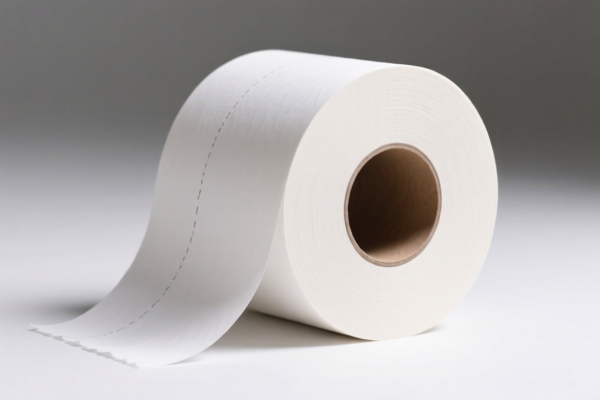
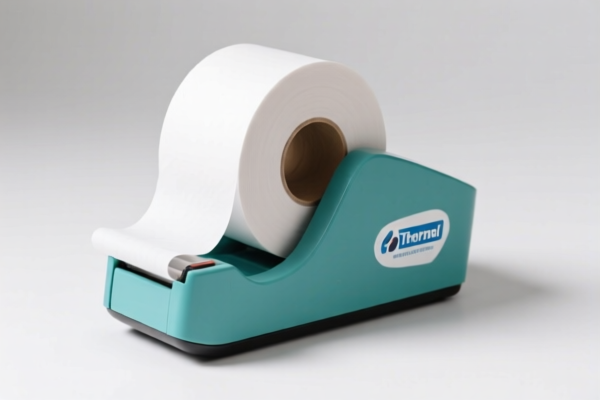
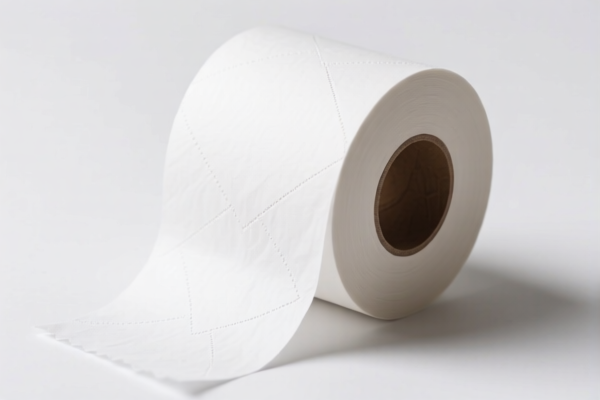
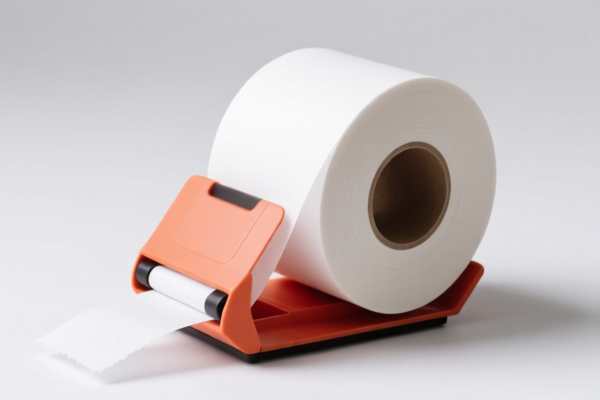
AI Analysis
🧻 Thermal Paper Roll Base (Thermal Base Paper)
🌐 HS Code Reference & Customs Clearance Guide | 2026 Latest Tariff Analysis | Professional Customs Strategy
📌 I. Product Definition & Classification: What Exactly is "Thermal Paper Roll Base"?
Thermal paper roll base refers to the foundational raw material used in the production of thermal receipt paper, fax paper, and point-of-sale (POS) labels. It consists of high-quality wood pulp or synthetic fibers, often coated or treated with specific chemicals to withstand thermal printing processes. In international trade, it is categorized based on whether it is considered a "paper product" (raw material) or a "printed item" (finished good), depending on its processing level and intended use.
⚠️ Key Distinction:
- If the paper is unprinted, uncoated for thermal use, or serves as a base stock → It falls under Chapter 48 (Paper)
- If the paper is printed with information, logos, or constitutes a final retail product → It may fall under Chapter 49 (Printed Materials)
📦 II. HS Code Classification Details (2026 Latest Tariff Authority Comparison)
| HS Code | Product Description | Applicable Scenario | Tax Rate (Total) | Tax Breakdown |
|---|---|---|---|---|
4911.99.80.00 |
Other printed matter (not elsewhere specified) | Printed thermal receipts, branded labels, final retail thermal paper rolls | 17.5% | Base: 0%, Section 301: 7.5%, Section 122: 10% |
4811.90.90.30 |
Other paper, paperboard, cellulose wadding, and webs of cellulose fibers, coated or impregnated | Unprinted thermal base paper, chemically treated base stock for thermal printing | 35.0% | Base: 0%, Section 301: 25%, Section 122: 10% |
4811.90.80.30 |
Other paper, paperboard, coated with plastic, adhesives, or other substances | Thermal base paper with specific coatings, ready for thermal conversion | 35.0% | Base: 0%, Section 301: 25%, Section 122: 10% |
4802.20.10.00 |
Uncoated paper and paperboard, of a kind used for writing, printing or other graphical purposes, in rolls | General-purpose base paper, including some thermal base papers without specific thermal coating | 35.0% | Base: 0%, Section 301: 25%, Section 122: 10% |
4802.20.20.00 |
Uncoated paper and paperboard, in rolls, specially prepared for use as base paper for photographic paper, sensitized paper, or other similar paper | Base paper specifically prepared for thermal, photosensitive, or electronic sensitive applications | 35.0% | Base: 0%, Section 301: 25%, Section 122: 10% |
4911.99.60.00 |
Other printed matter (not elsewhere specified) | Printed thermal receipts, pre-printed thermal labels, final retail products | 17.5% | Base: 0%, Section 301: 7.5%, Section 122: 10% |
🔍 Key Insight:
- Unprinted thermal base paper (raw material) is classified under Chapter 48 (e.g.,4811.90.90.30,4802.20.10.00) with a 35% total tariff.
- Printed thermal paper (finished goods) is classified under Chapter 49 (e.g.,4911.99.80.00,4911.99.60.00) with a 17.5% total tariff.
- Section 301 tariffs are significantly higher for Chapter 48 products (25%) compared to Chapter 49 (7.5%).
💰 III. 2026 Latest Tariff Rate Explanation (Including Additional Taxes & Policy Surcharges)
✅ Applicable Country: United States (US)
✅ Origin: China (CN)
✅ Effective Date: November 10, 2025 (and subsequent imports)
🎯 1. 4911.99.80.00 & 4911.99.60.00 — Other Printed Matter (Thermal Receipts/Labels)
| Item | Details |
|---|---|
| Base Tariff | 0% (ad valorem) |
| USITC Additional Tariff | +7.5% (Section 301) |
| IEEPA Additional Tariff | +10% (Section 122, targeting China/Hong Kong products from Nov 10, 2025) |
| Total Tariff | 17.5% |
| Tax Calculation | CIF Value × 17.5% |
| De Minimis Eligibility | ❌ Not Eligible (deny_de_minimis) |
| Legal Basis Path | IEEPA:9903.01.25 → IEEPA:9903.01.24 → USITC:4911.99.80.00 / 4911.99.60.00 → FOOTNOTE:9903.88.01 |
📌 Explanation:
- "Section 301 Additional Tariff 7.5%": Applies to "other printed matter" under Section 301 of the Trade Act.
- "IEEPA 10%": The latest surcharge targeting Chinese-origin goods under the International Emergency Economic Powers Act.
- Total 17.5% is significantly lower than unprinted thermal base paper.
- Crucial: If your product is printed, choose Chapter 49 to benefit from the 7.5% vs. 25% Section 301 difference.
🎯 2. 4811.90.90.30, 4811.90.80.30, 4802.20.10.00, 4802.20.20.00 — Unprinted Thermal Base Paper
| Item | Details |
|---|---|
| Base Tariff | 0% |
| USITC Additional Tariff | +25% (Section 301) |
| IEEPA Additional Tariff | +10% (Section 122) |
| Total Tariff | 35.0% |
| Tax Calculation | CIF Value × 35.0% |
| De Minimis Eligibility | ❌ Not Eligible (deny_de_minimis) |
| Legal Basis Path | IEEPA:9901.25 → IEEPA:9903.01.24 → USITC:4811.90.90.30 / 4811.90.80.30 / 4802.20.10.00 / 4802.20.20.00 → FOOTNOTE:9903.88.01 |
📌 Note:
- All unprinted thermal base papers fall under Chapter 48 with a 25% Section 301 tariff.
- This includes plain thermal base stock, coated thermal base paper, and specially prepared base paper for thermal/photographic/electronic sensitive applications.
- Total 35% is double the rate for printed thermal paper.
🛠️ IV. Customs Clearance Practical Suggestions (Battle-Tested Pitfall Avoidance Guide)
✅ 1. Required Documentation Checklist (Missing Any = Delay)
| Document | Mandatory | Description |
|---|---|---|
| ✅ Product Specification Sheet | ✔️ | Must include paper weight (GSM), roll diameter, core size, coating type, thermal sensitivity grade |
| ✅ Certificate of Origin (CO) | ✔️ | Essential for proving Chinese origin and applying correct Section 301/122 tariffs |
| ✅ Commercial Invoice | ✔️ | Must clearly state "Thermal Paper Roll Base" or "Printed Thermal Receipts" — avoid vague terms like "Paper" |
| ✅ Packing List | ✔️ | Detail roll dimensions, weight per roll, number of rolls per carton |
| ✅ Third-Party Test Report | ✔️ | Proof of thermal sensitivity, coating uniformity, environmental compliance (e.g., BPA-free, RoHS) |
| ✅ Manufacturer’s Declaration | ✔️ | Confirm whether the paper is unprinted base stock or pre-printed retail product |
✅ 2. Declaration Strategy (Key Mantra)
🔥 "Base Paper = Chapter 48 (35%), Printed Paper = Chapter 49 (17.5%)!"
| Scenario | Correct HS Code | Incorrect Action | Consequence |
|---|---|---|---|
| Unprinted thermal base paper (raw material for conversion) | 4811.90.90.30 or 4802.20.10.00 |
Misdeclare as "printed paper" | Audit risk + penalty |
| Pre-printed thermal receipts (final retail product) | 4911.99.80.00 or 4911.99.60.00 |
Misdeclare as "base paper" | Overpay 17.5% tax |
| Thermal base paper with partial printing | Depends on primary purpose | Ambiguous description | Customs reclassification + delays |
| Bulk thermal paper rolls for B2B | 4811.90.90.30 (if unprinted) |
Use retail-oriented descriptions | Misalignment with invoice |
✅ 3. Special Case Handling
| Situation | Handling Advice |
|---|---|
| OEM Custom Printing | Provide client’s design files + print proof. If majority of surface is printed, classify under Chapter 49. |
| Hybrid Products (partially printed base paper) | Declare as unprinted base paper (Chapter 48) unless printing is dominant feature. |
| BPA-Free Thermal Paper | Highlight this in specifications to meet environmental standards, but does not change HS Code. |
| Small Samples for Testing | If shipped under $800, may still be subject to Section 301/122 — de minimis does NOT apply. |
🌍 V. Global Market Clearance Comparison (2026 Latest)
| Country/Region | Recommended HS Code | Tariff | Certification Requirements | Notes |
|---|---|---|---|---|
| 🇺🇸 United States | 4811.90.90.30 (Base) / 4911.99.80.00 (Printed) |
35% (Base) / 17.5% (Printed) | No specific certification, but BPA-free recommended | Highest tariff impact |
| 🇨🇳 China | 4811.90.90.30 / 4911.99.80.00 |
0%~5% | CCC (if applicable) | Low tariff, no Section 301 |
| 🇪🇺 European Union | 4811.90.90 / 4911.99.80 |
0%~6.5% | CE, RoHS, REACH | No additional surcharges |
| 🇦🇺 Australia | 4811.90.90 / 4911.99.80 |
5%~5% | RCM (if applicable) | Moderate tariff |
| 🇯🇵 Japan | 4811.90.90 / 4911.99.80 |
0%~3% | PSE (if electronic accessories) | Low tariff, strict quality standards |
📌 Conclusion:
- The US is the ONLY market with significant Section 301 + Section 122 surcharges for thermal paper.
- Printed thermal paper (Chapter 49) saves 17.5% in tariffs compared to unprinted base paper (Chapter 48).
- Chinese-origin thermal base paper faces the highest landed cost in the US.
📌 VI. Common Mistakes & Pitfall Avoidance (Blood & Tears Lessons)
❌ Mistake 1: Declaring unprinted thermal base paper as "printed paper" to avoid 25% Section 301
👉 Consequence: Customs audit, penalties, retroactive taxes + interest
❌ Mistake 2: Using vague terms like "Paper Roll" without specifying thermal coating or printing status
👉 Consequence: Customs reclassification → delays + potential misclassification fines
❌ Mistake 3: Assuming de minimis ($800) applies to thermal paper shipments from China
👉 Consequence: De minimis is EXCLUDED for Section 301/122 goods → full tariffs apply even for small shipments
❌ Mistake 4: Mixing printed and unprinted rolls in one shipment without clear separation
👉 Consequence: Customs may classify the entire shipment under the higher tariff rate (35%)
✅ Correct Approach:
"Thermal Paper Roll Base, Uncoated, 50 GSM, 100mm Width, 200m Length, BPA-Free, for POS Receipt Conversion"
or
"Pre-Printed Thermal Receipt Rolls, 57x40mm, With Logo, BPA-Free, Retail Ready"
🎯 VII. Conclusion: Precise Classification Saves 17.5%!
🎯 Remember the Mantra:
🔹 "Base Paper = 35%, Printed Paper = 17.5% — Choose Wisely!"
🔹 "Chapter 48 for Raw, Chapter 49 for Retail — Don’t Mix Them!"
🔹 "No De Minimis for China Thermal Paper — Plan Ahead!"
📌 Pro Tip:
If your thermal paper is originally manufactured in Vietnam, Mexico, or Thailand, you may qualify for IEEPA Exemptions under certain conditions, reducing tariffs to 0%~5%.
Recommendation: Apply for an Advance Ruling (Pre-Customs Classification) with US CBP to secure the correct HS Code and tariff rate before shipment.
📣 Immediate Action Steps:
📞 Engage a licensed customs broker + Provide product images + Apply for HS Code Advance Ruling
🚀 Ensure smooth clearance, minimize tax burden, maximize profit margins!
✨ Professional Customs Clearance Starts with Accurate Classification!
💼 Every Cent Counts — Calculate Precisely, Clear Efficiently!
Customer Reviews
About HS Code Classification
The Harmonized System (HS) is an internationally standardized nomenclature developed by the World Customs Organization (WCO) to classify traded products. Over 200 countries use the HS system as the basis for customs tariffs, trade statistics, and import/export regulations.
Each HS code follows a hierarchical structure:
- Chapter (2 digits) — Broad category of goods (e.g., Chapter 84: Machinery and Mechanical Appliances)
- Heading (4 digits) — More specific grouping within the chapter
- Subheading (6 digits) — Internationally standardized breakdown, used by all WCO member countries
- National subdivisions (8-10 digits) — Country-specific extensions for further classification, such as US HTSUS 10-digit codes
Correct HS code classification is essential for smooth customs clearance, accurate duty payment, and compliance with trade regulations. Misclassification can lead to customs delays, overpayment of duties, or penalties.
When importing from CN to US, the applicable tariff rates may include:
- Most-Favored-Nation (MFN) rate — The standard duty rate applied to WTO members
- General rate — Applied to countries without trade agreements
- Trade remedy duties — Additional tariffs such as Section 301 (anti-dumping), Section 232 (national security), or countervailing duties
The information provided on this page is for reference purposes only. For official classification, please consult with your local customs authority or a licensed customs broker.