To Do List
CN → US| HS编码 | 关税税率 | 原产国 | 目的国 | 文档 |
|---|---|---|---|---|
| 9610000000 | 13.5% | CN | US | 官方文档 |
| 4820102010 | 35.0% | CN | US | 官方文档 |
| 4820102060 | 35.0% | CN | US | 官方文档 |
商品图片
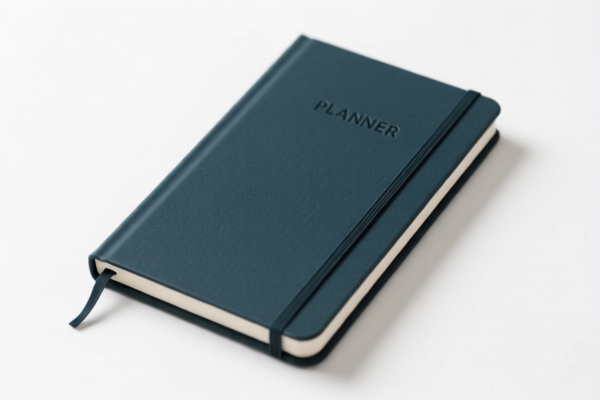
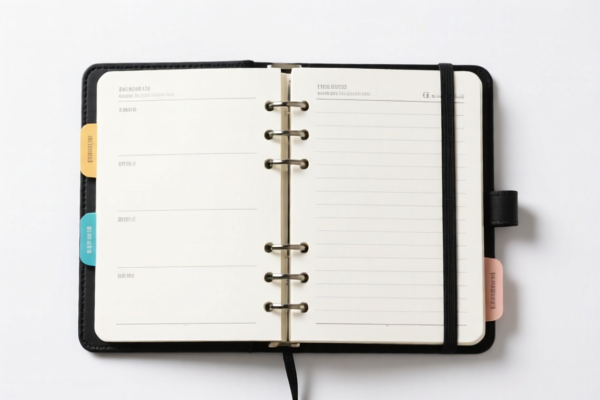
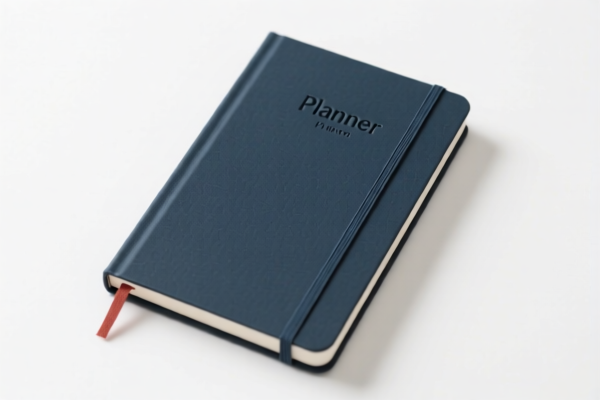
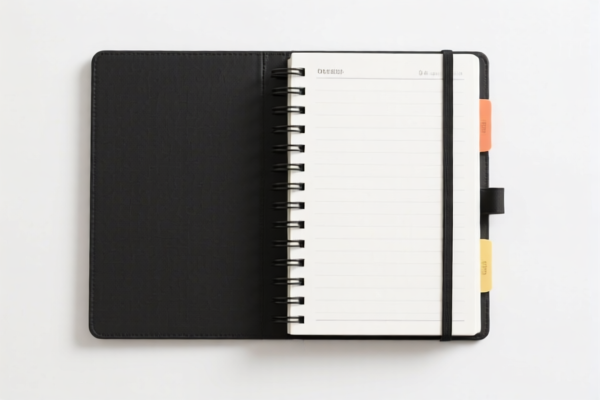
AI分析
📝 To-Do List: Classification & Tax Analysis for Stationery & Writing Surfaces
🌐 HS Code Reference & Customs Clearance Guide | 2026 Latest Tariff Breakdown | Strategic Compliance Strategy
📌 Part 1: Product Definition & Classification Logic
The input data covers two distinct categories of paper-based goods. It is crucial to distinguish between hard-sided writing surfaces and soft-bound paper stationery, as they fall under completely different Harmonized System (HS) chapters with significantly different tax implications.
1. 🏷️ Slates and Boards
- Description: Slates and boards with writing or drawing surfaces, whether or not framed.
- Key Characteristics: Rigid or semi-rigid surface (chalkboards, dry-erase boards, slates); used for writing/drawing.
- Classification Logic: These are classified under Chapter 96 (Miscellaneous manufactured articles), specifically as simple writing boards, not as paper products.
2. 📓 Diaries, Notebooks & Stationery Pads
- Description: Registers, account books, notebooks, order books, receipt books, letter pads, memorandum pads, diaries, exercise books, blotting pads, binders, folders, etc.
- Key Characteristics: Made of paper or paperboard; bound or assembled for recording information.
- Classification Logic: These fall under Chapter 48 (Paper and paperboard). The subheading
4820.10specifically targets "Registers, account books, notebooks... diaries."
📦 Part 2: HS Code Classification Detail (2026 Tariff Schedule)
| HS Code | Product Description | Key Distinction | Tax Rate |
|---|---|---|---|
9610.00.00.00 |
Slates and boards, with writing or drawing surfaces, whether or not framed. | Rigid surface (chalkboard/dry-erase); NOT made of paper pages. | 0.0% |
4820.10.20.10 |
Diaries, notebooks, and address books, bound; memorandum pads, letter pads. (Specific Sub-category: Diaries/Address Books) |
Bound paper items (Diaries/Notebooks). | 25.0% |
4820.10.20.60 |
Registers, account books, notebooks... (Other). (Specific Sub-category: Other Stationery like Letter Pads/Memo Pads) |
Other bound paper stationery (e.g., loose-leaf notebooks, memo pads, address books not classified as diaries). | 25.0% |
🔍 Critical Classification Note:
- Do not confuse9610.00.00.00(Chalkboards/Slates) with4820.10...(Paper Notebooks).
- If the item is a paper-based diary/notebook, it always falls under 4820.10.20, regardless of whether it is a "diary" (.10) or "other stationery" (.60).
- The tax rate for all paper-based stationery in this dataset is 25%, while hard-sided writing boards are 0%.
💰 Part 3: 2026 Tax Rate Breakdown (Detailed Analysis)
✅ Applicable Context: Based on the provided data, these taxes appear to reflect US Import Tariffs (given the 25% "Additional Duty" structure typical of Section 301 tariffs on Chinese goods).
✅ Origin Assumption: China (CN) – Standard assumption for 25% additional duty scenarios.
✅ Effective Date: Current 2026 tariff regime.
🎯 1. 9610.00.00.00 – Slates & Boards (Writing Surfaces)
| Item | Detail |
|---|---|
| Product | Slates and boards with writing or drawing surfaces |
| Base Tariff | 0.0% |
| Additional Duty | 0.0% |
| Total Tax Rate | 0.0% |
| Tax Calculation | Duty = CIF Value × 0.0% = $0 |
| De Minimis Eligibility | ✅ Yes (If shipped as low-value parcel, often exempt entirely) |
| Legal Basis | HTSUS 9610.00.00 |
📌 Explanation:
- Writing boards (chalkboards, dry-erase boards) are considered non-paper, non-electronic goods with zero tariff burden.
- This is a highly favorable classification for cost efficiency.
- Risk: Misclassifying a paper-bound notebook as a "slate" to avoid tax will result in severe penalties.
🎯 2. 4820.10.20.10 – Diaries, Notebooks, Address Books (Bound)
| Item | Detail |
|---|---|
| Product | Diaries, notebooks, address books, bound; memo pads |
| Base Tariff | 0.0% |
| Additional Duty | 25.0% |
| Total Tax Rate | 25.0% |
| Tax Calculation | Duty = CIF Value × 25.0% |
| De Minimis Eligibility | ❌ No (Section 301 goods generally excluded from de minimis exemption if taxed) |
| Legal Basis | HTSUS 4820.10.20.10 + Section 301 Footnote |
📌 Explanation:
- This code captures bound paper products like diaries and address books.
- The 25% additional duty is likely due to Section 301 trade actions (if originating from China).
- Even though the base tariff is 0%, the 25% surcharge significantly increases landed cost.
🎯 3. 4820.10.20.60 – Other Stationery (Notebooks, Pads, etc.)
| Item | Detail |
|---|---|
| Product | Other registers, account books, notebooks, letter pads, memo pads |
| Base Tariff | 0.0% |
| Additional Duty | 25.0% |
| Total Tax Rate | 25.0% |
| Tax Calculation | Duty = CIF Value × 25.0% |
| De Minimis Eligibility | ❌ No |
| Legal Basis | HTSUS 4820.10.20.60 + Section 301 Footnote |
📌 Explanation:
- This code covers stationery pads, loose-leaf notebooks, and other paper stationery not classified as diaries.
- Same tax burden as diaries: 25% additional duty.
- Key Difference:.10is for Diaries/Address Books;.60is for Other Stationery. Correct sub-classification is vital for compliance, even if the tax rate is identical.
🛠️ Part 4: Customs Clearance Practical Advice (Risk Mitigation)
✅ 1. Critical Documentation Requirements
| Document | Required? | Purpose |
|---|---|---|
| Product Specification Sheet | ✅ Yes | Clearly state material (Paper vs. Slate/Board). |
| Commercial Invoice | ✅ Yes | Must explicitly describe items as "Diaries/Notebooks" or "Slates/Bords". |
| HS Code Declaration | ✅ Yes | Specify exact 10-digit HS Code. |
| Country of Origin Certificate | ✅ Yes | To determine if 25% additional duty applies (if non-China origin, rate may be lower). |
| Photos of Product | ✅ Yes | Show that items are paper-bound (for 4820) or rigid boards (for 9610). |
✅ 2. Declaration Strategy & Pitfalls to Avoid
| Scenario | Correct Declaration | Incorrect Declaration | Consequence |
|---|---|---|---|
| Paper Notebook | 4820.10.20.10 or .60 |
9610.00.00.00 |
Penalty + Back Taxes (25% underpayment) |
| Chalkboard | 9610.00.00.00 |
4820.10.20.60 |
Overpayment (Pay 25% when it should be 0%) |
| Mixed Shipment | Declare each item separately by HS Code | Bundle all as "Stationery" | Customs Delay or Seizure |
| Diary vs. Memo Pad | Use .10 for Diaries, .60 for Memo Pads |
Use only one code for both | Compliance Risk (Though tax rate is same) |
🔥 Golden Rule:
"Paper Bound = Chapter 48 (25% Tax). Rigid Board = Chapter 96 (0% Tax)."
✅ 3. Special Considerations
| Situation | Recommendation |
|---|---|
| Mixed Container | Ensure accurate line-item declaration. Do not lump "Slates" and "Notebooks" together. |
| Gift Items | Even for gifts, correct HS Code is required. Diaries as gifts still incur 25% duty if over de minimis threshold. |
| Sampling | If value is below $800 (US De Minimis), may be exempt from duty if properly declared and not restricted. |
| Origin Change | If products are not from China (e.g., Vietnam, Thailand), check if 25% additional duty still applies. Some countries have tariff exemptions. |
🌍 Part 5: Global Market Comparison (2026)
| Country/Region | Recommended HS Code | Tariff Rate (China Origin) | Key Compliance Note |
|---|---|---|---|
| 🇺🇸 USA | 9610.00.00.00 (Slates) |
0.0% | No additional duty. |
| 🇺🇸 USA | 4820.10.20.x0 (Notebooks) |
25.0% | Section 301 additional duty applies. |
| 🇨🇳 China | 9610.00.00.00 |
~10-15% | Varies by specific HS subheading. |
| 🇨🇳 China | 4820.10.20.60 |
~5-10% | Lower than US additional duties. |
| 🇪🇺 EU | 9610.00.00 |
0% | Most paper goods also 0-5%. |
| 🇪🇺 EU | 4820.10.20 |
0-5% | No equivalent of US Section 301. |
📌 Conclusion:
- USA imposes highest tariffs on paper stationery (25% additional duty).
- Slates/Boards remain tax-free in the US (0%).
- EU and China have much lower tariffs for both categories.
- Strategy: If shipping to the US, ensure accurate classification to avoid 25% surprise costs. If possible, consider product redesign (e.g., offering slate-like products) for tax efficiency, but only if functionally appropriate.
📌 Part 6: Common Errors & Best Practices
❌ Error 1: Calling a paper diary a "Writing Board" to claim 0% tax.
👉 Result: Customs audit, 25% back-taxes + penalties.
❌ Error 2: Grouping slates and notebooks into one HS Code.
👉 Result: Clearance delay, reclassification, and potential duty underpayment.
❌ Error 3: Ignoring Origin for stationery.
👉 Result: Assuming 25% applies globally. If product is from Vietnam, it may be 0%. Verify Country of Origin!
✅ Best Practice:
"Describe precisely: 'Diary, bound, paper, 200 pages' for
4820.10.20.10. 'Chalkboard, framed, slate surface' for9610.00.00.00. Never guess."
🎯 Part 7: Conclusion & Action Items
🎯 Key Takeaway:
- Slates/Boards: 0% Tax → Low Cost.
- Diaries/Notebooks: 25% Tax → High Cost (in US).
📌 Immediate Action Items:
1. Verify Product Material: Is it paper (→ 25%) or rigid board (→ 0%)?
2. Check Country of Origin: Is it China? If yes, 25% applies. If not, check for exemptions.
3. Accurate Declaration: Use specific HS codes (9610.00.00.00 vs 4820.10.20.x0).
4. Consult Customs Broker: For mixed shipments, request a binding ruling if high volume.
✨ Professional Compliance Starts with Precision!
💼 Save Costs by Classifying Correctly – Don’t Pay 25% When You Should Pay 0% (or Vice Versa).
📣 Need Help?
📞 Contact your customs broker with product photos and material specs.
🚀 Ensure Smooth Clearance, Avoid Penalties, Optimize Landed Cost.
用户评价
关于 HS 编码归类
协调制度(HS)是由世界海关组织(WCO)制定的国际贸易商品分类标准。全球 200 多个国家采用 HS 系统作为海关关税、贸易统计和进出口监管的基础。
每个 HS 编码遵循以下层级结构:
- 章(2 位)——商品大类(例如:第 84 章:机器和机械设备)
- 品目(4 位)——章内的更具体分类
- 子目(6 位)——国际通用细分,所有 WCO 成员国统一使用
- 本国细分(8-10 位)——各国自行扩展的细分编码,如美国 HTSUS 10 位编码
正确的 HS 编码归类对于顺利通关、准确缴纳关税和遵守贸易法规至关重要。错误归类可能导致海关延误、多缴关税或罚款。
从CN进口到US时,适用的关税税率可能包括:
- 最惠国(MFN)税率——适用于 WTO 成员国的标准关税税率
- 普通税率——适用于无贸易协定国家
- 贸易救济关税——附加关税,如 301 条款(反倾销)、232 条款(国家安全)或反补贴税
本页内容仅供参考。如需正式归类,请咨询当地海关或持牌报关代理。