To Do List
CN → US| HS Code | Tariff Rate | Origin | Destination | Doc |
|---|---|---|---|---|
| 9610000000 | 13.5% | CN | US | Official Doc |
| 4820102010 | 35.0% | CN | US | Official Doc |
| 4820102060 | 35.0% | CN | US | Official Doc |
Product Images
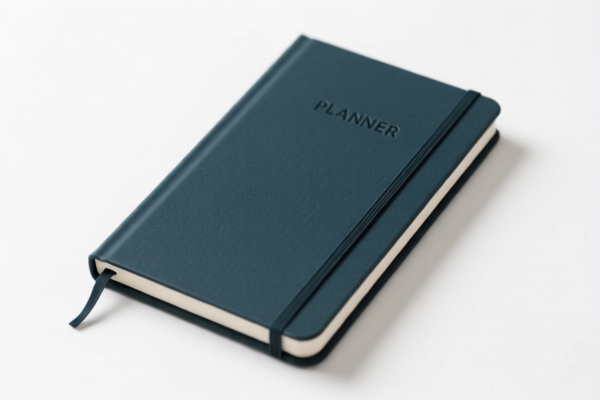
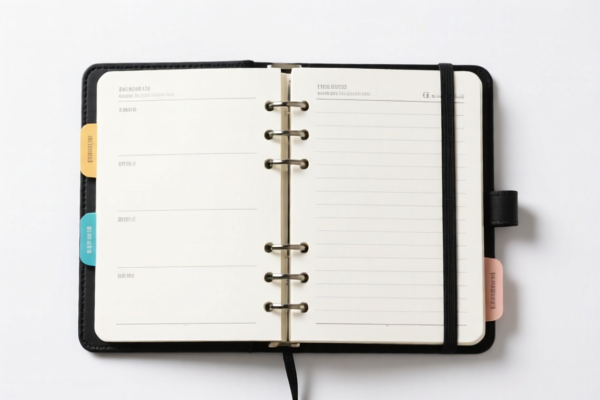
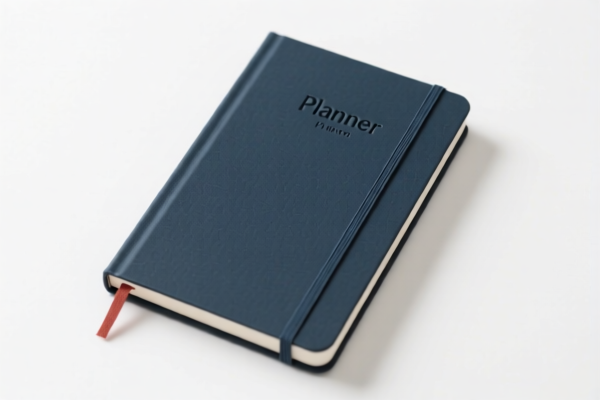
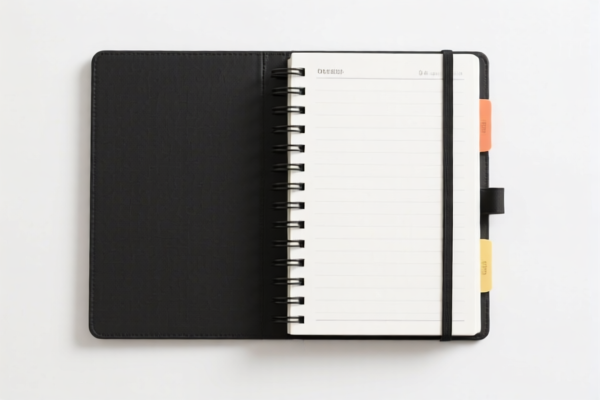
AI Analysis
📝 To-Do List: Classification & Tax Analysis for Stationery & Writing Surfaces
🌐 HS Code Reference & Customs Clearance Guide | 2026 Latest Tariff Breakdown | Strategic Compliance Strategy
📌 Part 1: Product Definition & Classification Logic
The input data covers two distinct categories of paper-based goods. It is crucial to distinguish between hard-sided writing surfaces and soft-bound paper stationery, as they fall under completely different Harmonized System (HS) chapters with significantly different tax implications.
1. 🏷️ Slates and Boards
- Description: Slates and boards with writing or drawing surfaces, whether or not framed.
- Key Characteristics: Rigid or semi-rigid surface (chalkboards, dry-erase boards, slates); used for writing/drawing.
- Classification Logic: These are classified under Chapter 96 (Miscellaneous manufactured articles), specifically as simple writing boards, not as paper products.
2. 📓 Diaries, Notebooks & Stationery Pads
- Description: Registers, account books, notebooks, order books, receipt books, letter pads, memorandum pads, diaries, exercise books, blotting pads, binders, folders, etc.
- Key Characteristics: Made of paper or paperboard; bound or assembled for recording information.
- Classification Logic: These fall under Chapter 48 (Paper and paperboard). The subheading
4820.10specifically targets "Registers, account books, notebooks... diaries."
📦 Part 2: HS Code Classification Detail (2026 Tariff Schedule)
| HS Code | Product Description | Key Distinction | Tax Rate |
|---|---|---|---|
9610.00.00.00 |
Slates and boards, with writing or drawing surfaces, whether or not framed. | Rigid surface (chalkboard/dry-erase); NOT made of paper pages. | 0.0% |
4820.10.20.10 |
Diaries, notebooks, and address books, bound; memorandum pads, letter pads. (Specific Sub-category: Diaries/Address Books) |
Bound paper items (Diaries/Notebooks). | 25.0% |
4820.10.20.60 |
Registers, account books, notebooks... (Other). (Specific Sub-category: Other Stationery like Letter Pads/Memo Pads) |
Other bound paper stationery (e.g., loose-leaf notebooks, memo pads, address books not classified as diaries). | 25.0% |
🔍 Critical Classification Note:
- Do not confuse9610.00.00.00(Chalkboards/Slates) with4820.10...(Paper Notebooks).
- If the item is a paper-based diary/notebook, it always falls under 4820.10.20, regardless of whether it is a "diary" (.10) or "other stationery" (.60).
- The tax rate for all paper-based stationery in this dataset is 25%, while hard-sided writing boards are 0%.
💰 Part 3: 2026 Tax Rate Breakdown (Detailed Analysis)
✅ Applicable Context: Based on the provided data, these taxes appear to reflect US Import Tariffs (given the 25% "Additional Duty" structure typical of Section 301 tariffs on Chinese goods).
✅ Origin Assumption: China (CN) – Standard assumption for 25% additional duty scenarios.
✅ Effective Date: Current 2026 tariff regime.
🎯 1. 9610.00.00.00 – Slates & Boards (Writing Surfaces)
| Item | Detail |
|---|---|
| Product | Slates and boards with writing or drawing surfaces |
| Base Tariff | 0.0% |
| Additional Duty | 0.0% |
| Total Tax Rate | 0.0% |
| Tax Calculation | Duty = CIF Value × 0.0% = $0 |
| De Minimis Eligibility | ✅ Yes (If shipped as low-value parcel, often exempt entirely) |
| Legal Basis | HTSUS 9610.00.00 |
📌 Explanation:
- Writing boards (chalkboards, dry-erase boards) are considered non-paper, non-electronic goods with zero tariff burden.
- This is a highly favorable classification for cost efficiency.
- Risk: Misclassifying a paper-bound notebook as a "slate" to avoid tax will result in severe penalties.
🎯 2. 4820.10.20.10 – Diaries, Notebooks, Address Books (Bound)
| Item | Detail |
|---|---|
| Product | Diaries, notebooks, address books, bound; memo pads |
| Base Tariff | 0.0% |
| Additional Duty | 25.0% |
| Total Tax Rate | 25.0% |
| Tax Calculation | Duty = CIF Value × 25.0% |
| De Minimis Eligibility | ❌ No (Section 301 goods generally excluded from de minimis exemption if taxed) |
| Legal Basis | HTSUS 4820.10.20.10 + Section 301 Footnote |
📌 Explanation:
- This code captures bound paper products like diaries and address books.
- The 25% additional duty is likely due to Section 301 trade actions (if originating from China).
- Even though the base tariff is 0%, the 25% surcharge significantly increases landed cost.
🎯 3. 4820.10.20.60 – Other Stationery (Notebooks, Pads, etc.)
| Item | Detail |
|---|---|
| Product | Other registers, account books, notebooks, letter pads, memo pads |
| Base Tariff | 0.0% |
| Additional Duty | 25.0% |
| Total Tax Rate | 25.0% |
| Tax Calculation | Duty = CIF Value × 25.0% |
| De Minimis Eligibility | ❌ No |
| Legal Basis | HTSUS 4820.10.20.60 + Section 301 Footnote |
📌 Explanation:
- This code covers stationery pads, loose-leaf notebooks, and other paper stationery not classified as diaries.
- Same tax burden as diaries: 25% additional duty.
- Key Difference:.10is for Diaries/Address Books;.60is for Other Stationery. Correct sub-classification is vital for compliance, even if the tax rate is identical.
🛠️ Part 4: Customs Clearance Practical Advice (Risk Mitigation)
✅ 1. Critical Documentation Requirements
| Document | Required? | Purpose |
|---|---|---|
| Product Specification Sheet | ✅ Yes | Clearly state material (Paper vs. Slate/Board). |
| Commercial Invoice | ✅ Yes | Must explicitly describe items as "Diaries/Notebooks" or "Slates/Bords". |
| HS Code Declaration | ✅ Yes | Specify exact 10-digit HS Code. |
| Country of Origin Certificate | ✅ Yes | To determine if 25% additional duty applies (if non-China origin, rate may be lower). |
| Photos of Product | ✅ Yes | Show that items are paper-bound (for 4820) or rigid boards (for 9610). |
✅ 2. Declaration Strategy & Pitfalls to Avoid
| Scenario | Correct Declaration | Incorrect Declaration | Consequence |
|---|---|---|---|
| Paper Notebook | 4820.10.20.10 or .60 |
9610.00.00.00 |
Penalty + Back Taxes (25% underpayment) |
| Chalkboard | 9610.00.00.00 |
4820.10.20.60 |
Overpayment (Pay 25% when it should be 0%) |
| Mixed Shipment | Declare each item separately by HS Code | Bundle all as "Stationery" | Customs Delay or Seizure |
| Diary vs. Memo Pad | Use .10 for Diaries, .60 for Memo Pads |
Use only one code for both | Compliance Risk (Though tax rate is same) |
🔥 Golden Rule:
"Paper Bound = Chapter 48 (25% Tax). Rigid Board = Chapter 96 (0% Tax)."
✅ 3. Special Considerations
| Situation | Recommendation |
|---|---|
| Mixed Container | Ensure accurate line-item declaration. Do not lump "Slates" and "Notebooks" together. |
| Gift Items | Even for gifts, correct HS Code is required. Diaries as gifts still incur 25% duty if over de minimis threshold. |
| Sampling | If value is below $800 (US De Minimis), may be exempt from duty if properly declared and not restricted. |
| Origin Change | If products are not from China (e.g., Vietnam, Thailand), check if 25% additional duty still applies. Some countries have tariff exemptions. |
🌍 Part 5: Global Market Comparison (2026)
| Country/Region | Recommended HS Code | Tariff Rate (China Origin) | Key Compliance Note |
|---|---|---|---|
| 🇺🇸 USA | 9610.00.00.00 (Slates) |
0.0% | No additional duty. |
| 🇺🇸 USA | 4820.10.20.x0 (Notebooks) |
25.0% | Section 301 additional duty applies. |
| 🇨🇳 China | 9610.00.00.00 |
~10-15% | Varies by specific HS subheading. |
| 🇨🇳 China | 4820.10.20.60 |
~5-10% | Lower than US additional duties. |
| 🇪🇺 EU | 9610.00.00 |
0% | Most paper goods also 0-5%. |
| 🇪🇺 EU | 4820.10.20 |
0-5% | No equivalent of US Section 301. |
📌 Conclusion:
- USA imposes highest tariffs on paper stationery (25% additional duty).
- Slates/Boards remain tax-free in the US (0%).
- EU and China have much lower tariffs for both categories.
- Strategy: If shipping to the US, ensure accurate classification to avoid 25% surprise costs. If possible, consider product redesign (e.g., offering slate-like products) for tax efficiency, but only if functionally appropriate.
📌 Part 6: Common Errors & Best Practices
❌ Error 1: Calling a paper diary a "Writing Board" to claim 0% tax.
👉 Result: Customs audit, 25% back-taxes + penalties.
❌ Error 2: Grouping slates and notebooks into one HS Code.
👉 Result: Clearance delay, reclassification, and potential duty underpayment.
❌ Error 3: Ignoring Origin for stationery.
👉 Result: Assuming 25% applies globally. If product is from Vietnam, it may be 0%. Verify Country of Origin!
✅ Best Practice:
"Describe precisely: 'Diary, bound, paper, 200 pages' for
4820.10.20.10. 'Chalkboard, framed, slate surface' for9610.00.00.00. Never guess."
🎯 Part 7: Conclusion & Action Items
🎯 Key Takeaway:
- Slates/Boards: 0% Tax → Low Cost.
- Diaries/Notebooks: 25% Tax → High Cost (in US).
📌 Immediate Action Items:
1. Verify Product Material: Is it paper (→ 25%) or rigid board (→ 0%)?
2. Check Country of Origin: Is it China? If yes, 25% applies. If not, check for exemptions.
3. Accurate Declaration: Use specific HS codes (9610.00.00.00 vs 4820.10.20.x0).
4. Consult Customs Broker: For mixed shipments, request a binding ruling if high volume.
✨ Professional Compliance Starts with Precision!
💼 Save Costs by Classifying Correctly – Don’t Pay 25% When You Should Pay 0% (or Vice Versa).
📣 Need Help?
📞 Contact your customs broker with product photos and material specs.
🚀 Ensure Smooth Clearance, Avoid Penalties, Optimize Landed Cost.
Customer Reviews
About HS Code Classification
The Harmonized System (HS) is an internationally standardized nomenclature developed by the World Customs Organization (WCO) to classify traded products. Over 200 countries use the HS system as the basis for customs tariffs, trade statistics, and import/export regulations.
Each HS code follows a hierarchical structure:
- Chapter (2 digits) — Broad category of goods (e.g., Chapter 84: Machinery and Mechanical Appliances)
- Heading (4 digits) — More specific grouping within the chapter
- Subheading (6 digits) — Internationally standardized breakdown, used by all WCO member countries
- National subdivisions (8-10 digits) — Country-specific extensions for further classification, such as US HTSUS 10-digit codes
Correct HS code classification is essential for smooth customs clearance, accurate duty payment, and compliance with trade regulations. Misclassification can lead to customs delays, overpayment of duties, or penalties.
When importing from CN to US, the applicable tariff rates may include:
- Most-Favored-Nation (MFN) rate — The standard duty rate applied to WTO members
- General rate — Applied to countries without trade agreements
- Trade remedy duties — Additional tariffs such as Section 301 (anti-dumping), Section 232 (national security), or countervailing duties
The information provided on this page is for reference purposes only. For official classification, please consult with your local customs authority or a licensed customs broker.