Towing Rope
CN → US| HS编码 | 关税税率 | 原产国 | 目的国 | 文档 |
|---|---|---|---|---|
| 5607909000 | 41.3% | CN | US | 官方文档 |
| 7312107000 | 85.0% | CN | US | 官方文档 |
| 3926909989 | 22.8% | CN | US | 官方文档 |
| 5607493000 | 38.6% | CN | US | 官方文档 |
| 7312900000 | 85.0% | CN | US | 官方文档 |
商品图片

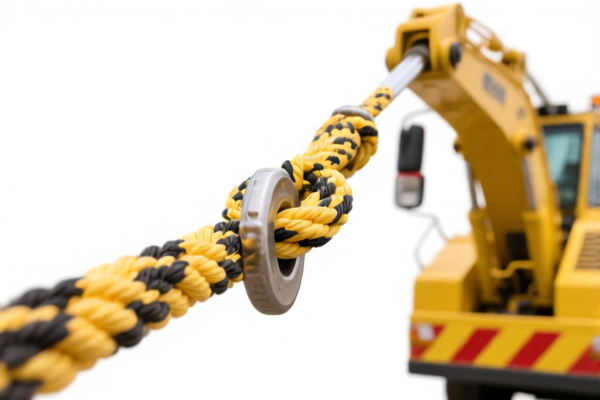
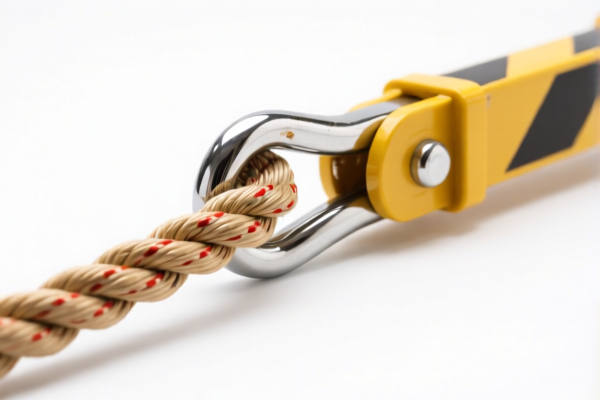
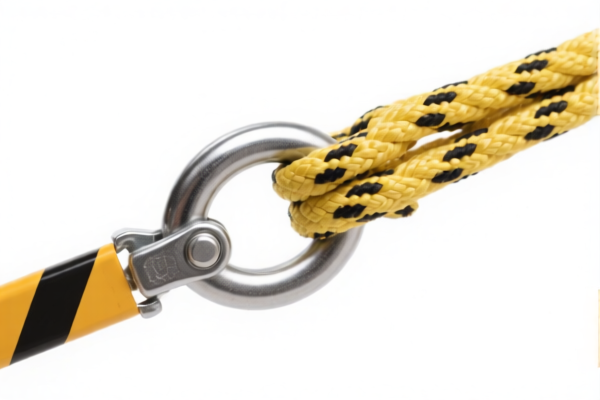
AI分析
🚗 Towing Rope (Recovery Straps)
🌐 HS Code Reference & Customs Clearance Guide | 2026 Latest Tariff Analysis | Professional Compliance Strategy
📌 I. Product Definition & Classification: What Exactly Is a "Towing Rope"?
A towing rope (often called a recovery strap or tow strap) is a critical safety accessory used for vehicle recovery. In international trade, its classification depends strictly on material composition and structural form. Misclassification leads to massive tariff discrepancies (from ~23% to 85%).
Key Distinctions:
Synthetic Fiber Rope (Polyester/Nylon): Flexible, high-stretch. Classified under Chapter 56.
* Steel Wire Rope: Rigid or semi-rigid, high tensile strength. Classified under Chapter 73.
* Plastic Rope:* Less common for heavy-duty, but possible. Classified under Chapter 39.
⚠️ Critical Decision Point:
- If the core material is Polyester/Nylon → Go to 5607.90.90.00 (Lowest Tax)
- If the core material is Steel → Go to 7312 Series (Highest Tax)
- If the core material is Plastic → Go to 3926.90.99.89 or 5607.49.30.00
📦 II. HS Code Classification Matrix (Based on Provided Data)
| HS Code | Product Description | Material Basis | Key Characteristics |
|---|---|---|---|
5607.90.90.00 |
Towing Rope, Synthetic Fiber | Polyester / Nylon | Flexible rope; fits the "catch-all" category for ropes not specifically listed elsewhere; may be impregnated with rubber/plastic. |
7312.10.70.00 |
Steel Cable/Rope | Steel / Metal Fiber | Iron/steel stranded wires; includes accessories/attachments; rigid structure. |
3926.90.99.89 |
Other Plastic Articles | Plastic / Synthetic Fiber | Not specifically listed elsewhere; plastic-made towing rope. |
5607.49.30.00 |
Other Twine/Cordage | Polyethylene (PE) / Polypropylene (PP) | Plastic-based cordage; specific to synthetic plastic fibers. |
7312.90.00.00 |
Other Iron/Steel Ropes | Iron / Steel | Braided or woven steel rope; no specific conflict in material classification. |
🔍 Important Note:
- Synthetic vs. Steel: This is the single most important factor. A "steel core" rope triggers Chapter 73 duties. - "Red" Color: Irrelevant to HS classification but may affect visual inspection by customs. - "Impregnated": If rubber/plastic impregnation changes the essential character, it might shift from 5607 to 3926, but current data suggests 5607 remains the primary bucket for fiber ropes.
💰 III. 2026 Tariff Rate Breakdown (USA Market)
✅ Applicable Country: United States (US)
✅ Origin: China (CN)
✅ Effective Date: Current rates apply (Includes Section 301 & IEEPA surcharges)
🎯 1. 5607.90.90.00 – Synthetic Fiber Towing Rope (Polyester/Nylon)
The Lowest Risk & Cost Option for Standard Recovery Straps
| Item | Detail |
|---|---|
| Base Tariff | 6.3% |
| Section 301 Surcharge | +25.0% |
| IEEPA Surcharge (Sec 122) | +10.0% |
| Total Tax Rate | 41.3% |
| Calculation | CIF Value × 41.3% |
| De Minimis Exemption | ❌ Not Eligible (Due to Section 301) |
| Legal Basis | Base Tariff + USITC Footnote 301 + IEEPA Proclamation |
📌 Explanation:
- This is the most common classification for high-quality nylon/polyester tow straps. - The 41.3% total rate is high but significantly lower than steel alternatives. - Crucial: Must clearly declare material as "Polyester" or "Nylon" to avoid misclassification as steel.
🎯 2. 7312.10.70.00 & 7312.90.00.00 – Steel Towing Cables
The Highest Risk & Cost Option
| Item | Detail |
|---|---|
| Base Tariff | 0.0% |
| Section 301 Surcharge | +25.0% |
| IEEPA Surcharge (Sec 122) | +10.0% |
| Steel/Aluminum/Copper Surcharge | +50.0% |
| Total Tax Rate | 85.0% |
| Calculation | CIF Value × 85.0% |
| De Minimis Exemption | ❌ Not Eligible |
📌 Explanation:
- Steel products face a cumulative burden: Base (0%) + 301 (25%) + 122 (10%) + Section 122 Steel Surcharge (50%). - Warning: If your tow rope has a steel core or is made of steel wire, the tax doubles compared to synthetic ropes. - Ensure marketing materials do not mislead if the product is synthetic.
🎯 3. 3926.90.99.89 – Plastic Towing Rope
The Lowest Tax Option (If Material Qualifies)
| Item | Detail |
|---|---|
| Base Tariff | 5.3% |
| Section 301 Surcharge | +7.5% |
| IEEPA Surcharge (Sec 122) | +10.0% |
| Total Tax Rate | 22.8% |
| Calculation | CIF Value × 22.8% |
| De Minimis Exemption | ❌ Not Eligible |
📌 Explanation:
- Only applies if the rope is primarily plastic (not reinforced with significant synthetic fibers that would push it to Chapter 56). - 22.8% is the most cost-effective classification. - Risk: Customs may reclassify as 5607 if fiber content is high. Requires strict material documentation.
🎯 4. 5607.49.30.00 – Plastic Cordage (PE/PP)
Alternative Synthetic Classification
| Item | Detail |
|---|---|
| Base Tariff | 3.6% |
| Section 301 Surcharge | +25.0% |
| IEEPA Surcharge (Sec 122) | +10.0% |
| Total Tax Rate | 38.6% |
| Calculation | CIF Value × 38.6% |
| De Minimis Exemption | ❌ Not Eligible |
📌 Explanation:
- Specific to Polyethylene (PE) or Polypropylene (PP) cords. - 38.6% is slightly better than the 41.3% for general polyester ropes. - Must prove material is specifically PE/PP, not generic "synthetic."
🛠️ IV. Customs Clearance Practical Advice
✅ 1. Documentation Checklist (Mandatory)
| Document | Requirement | Purpose |
|---|---|---|
| Product Specification Sheet | ✔️ Must List Material | Proof of Polyester/Nylon/Steel vs. Plastic. Most Critical. |
| Composition Breakdown | ✔️ % by Weight | Distinguishes between Chapter 56 (Fiber) and Chapter 39 (Plastic). |
| Commercial Invoice | ✔️ Clear Description | Use "Towing Rope, Polyester, 10ft, Red" – avoid vague terms like "Car Accessory." |
| Photos | ✔️ Cross-section + Full View | Visual proof of fiber vs. steel wire. |
| Usage Description | ✔️ Recovery/Transport | Confirms utility (automotive recovery). |
✅ 2. Declaration Strategy (Key Tips)
🔥 "Material is King. Steel is Expensive. Plastic is Cheapest."
| Scenario | Recommended HS Code | Tax Rate | Action |
|---|---|---|---|
| Standard Nylon Strap | 5607.90.90.00 |
41.3% | Declare "Polyester Rope." |
| Steel Cable | 7312.10.70.00 |
85.0% | Declare "Steel Wire Rope." Expect high tax. |
| Pure Plastic Rope | 3926.90.99.89 |
22.8% | Declare "Plastic Rope." Ensure no fiber reinforcement. |
| PE/PP Cord | 5607.49.30.00 |
38.6% | Declare "Polyethylene Cord." |
✅ 3. Pitfalls to Avoid
❌ Error 1: Calling a steel rope a "tow strap" without specifying material.
👉 Result: Customs inspects, finds steel, applies 85% retroactively + penalties.
❌ Error 2: Claiming "Plastic" for a Nylon rope.
👉 Result: Rejected at border. Re-classified to 5607 (41.3%). Delay and storage fees.
❌ Error 3: Ignoring the "Steel Surcharge."
👉 Result: Unexpected $85,000 tax on a $100,000 shipment of steel cables.
✅ Correct Practice:
"Towing Rope, 10m, Red, 100% Polyester Braided, With Metal Hooks, Model TR-100"
HS Code:5607.90.90.00
🌍 V. Global Market Comparison (2026)
| Market | Recommended HS | Total Tax (China Origin) | Notes |
|---|---|---|---|
| 🇺🇸 USA | 5607.90.90.00 |
41.3% | High due to 301 + IEEPA. Steel is 85%. |
| 🇨🇳 China | 5607.90.90.00 |
~6-9% | Lower base duties. |
| 🇪🇺 EU | 5607.90.90 |
~6% | No Section 301. Standard EU tariffs apply. |
| 🇬🇧 UK | 5607.90.90 |
~6% | Post-Brexit tariffs. |
📌 Conclusion:
- The US market is uniquely punitive for Chinese-made tow ropes due to layered surcharges. - Steel ropes are financially non-viable for direct export to the US due to the 50% steel surcharge. - Polyester/Nylon (5607) is the standard, but Plastic (3926) offers significant savings if material allows.
📌 VI. Final Recommendation for Importers
- Audit Material: Confirm if your rope is Nylon, Polyester, Steel, or Plastic. This single fact determines your cost.
- Prefer Synthetic (Nylon/Polyester): While 41.3% is high, it is half the cost of steel (85%).
- Consider Plastic: If strength requirements allow, shifting to 100% Plastic ropes can save ~18.5% in tax (22.8% vs 41.3%).
- Avoid Steel: Do not import steel towing ropes to the US unless absolutely necessary, as the 85% tax destroys margins.
- Apply for Advance Ruling: If unsure, request a Binding Tariff Information (BTI) or US CBP Ruling before shipment to lock in the HS code.
🎯 Final Tip:
"Check the fiber, check the fee. Polyester pays less, Steel pays the rest."
✨ Professional Clearance Starts with Accurate Material Declaration!
💼 Optimize your supply chain by choosing the right HS code today!
用户评价
关于 HS 编码归类
协调制度(HS)是由世界海关组织(WCO)制定的国际贸易商品分类标准。全球 200 多个国家采用 HS 系统作为海关关税、贸易统计和进出口监管的基础。
每个 HS 编码遵循以下层级结构:
- 章(2 位)——商品大类(例如:第 84 章:机器和机械设备)
- 品目(4 位)——章内的更具体分类
- 子目(6 位)——国际通用细分,所有 WCO 成员国统一使用
- 本国细分(8-10 位)——各国自行扩展的细分编码,如美国 HTSUS 10 位编码
正确的 HS 编码归类对于顺利通关、准确缴纳关税和遵守贸易法规至关重要。错误归类可能导致海关延误、多缴关税或罚款。
从CN进口到US时,适用的关税税率可能包括:
- 最惠国(MFN)税率——适用于 WTO 成员国的标准关税税率
- 普通税率——适用于无贸易协定国家
- 贸易救济关税——附加关税,如 301 条款(反倾销)、232 条款(国家安全)或反补贴税
本页内容仅供参考。如需正式归类,请咨询当地海关或持牌报关代理。