Towing Rope
CN → US| HS Code | Tariff Rate | Origin | Destination | Doc |
|---|---|---|---|---|
| 5607909000 | 41.3% | CN | US | Official Doc |
| 7312107000 | 85.0% | CN | US | Official Doc |
| 3926909989 | 22.8% | CN | US | Official Doc |
| 5607493000 | 38.6% | CN | US | Official Doc |
| 7312900000 | 85.0% | CN | US | Official Doc |
Product Images



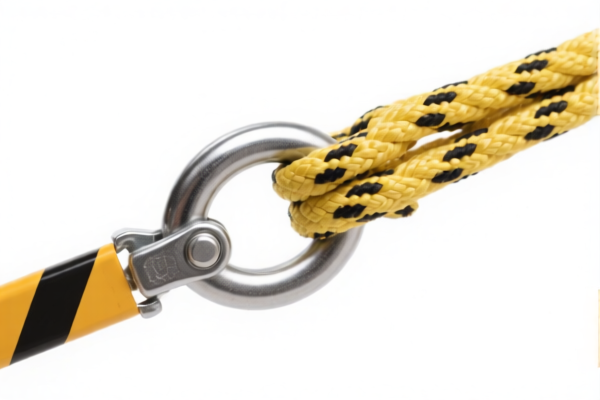
AI Analysis
🚗 Towing Rope (Recovery Straps)
🌐 HS Code Reference & Customs Clearance Guide | 2026 Latest Tariff Analysis | Professional Compliance Strategy
📌 I. Product Definition & Classification: What Exactly Is a "Towing Rope"?
A towing rope (often called a recovery strap or tow strap) is a critical safety accessory used for vehicle recovery. In international trade, its classification depends strictly on material composition and structural form. Misclassification leads to massive tariff discrepancies (from ~23% to 85%).
Key Distinctions:
Synthetic Fiber Rope (Polyester/Nylon): Flexible, high-stretch. Classified under Chapter 56.
* Steel Wire Rope: Rigid or semi-rigid, high tensile strength. Classified under Chapter 73.
* Plastic Rope:* Less common for heavy-duty, but possible. Classified under Chapter 39.
⚠️ Critical Decision Point:
- If the core material is Polyester/Nylon → Go to 5607.90.90.00 (Lowest Tax)
- If the core material is Steel → Go to 7312 Series (Highest Tax)
- If the core material is Plastic → Go to 3926.90.99.89 or 5607.49.30.00
📦 II. HS Code Classification Matrix (Based on Provided Data)
| HS Code | Product Description | Material Basis | Key Characteristics |
|---|---|---|---|
5607.90.90.00 |
Towing Rope, Synthetic Fiber | Polyester / Nylon | Flexible rope; fits the "catch-all" category for ropes not specifically listed elsewhere; may be impregnated with rubber/plastic. |
7312.10.70.00 |
Steel Cable/Rope | Steel / Metal Fiber | Iron/steel stranded wires; includes accessories/attachments; rigid structure. |
3926.90.99.89 |
Other Plastic Articles | Plastic / Synthetic Fiber | Not specifically listed elsewhere; plastic-made towing rope. |
5607.49.30.00 |
Other Twine/Cordage | Polyethylene (PE) / Polypropylene (PP) | Plastic-based cordage; specific to synthetic plastic fibers. |
7312.90.00.00 |
Other Iron/Steel Ropes | Iron / Steel | Braided or woven steel rope; no specific conflict in material classification. |
🔍 Important Note:
- Synthetic vs. Steel: This is the single most important factor. A "steel core" rope triggers Chapter 73 duties. - "Red" Color: Irrelevant to HS classification but may affect visual inspection by customs. - "Impregnated": If rubber/plastic impregnation changes the essential character, it might shift from 5607 to 3926, but current data suggests 5607 remains the primary bucket for fiber ropes.
💰 III. 2026 Tariff Rate Breakdown (USA Market)
✅ Applicable Country: United States (US)
✅ Origin: China (CN)
✅ Effective Date: Current rates apply (Includes Section 301 & IEEPA surcharges)
🎯 1. 5607.90.90.00 – Synthetic Fiber Towing Rope (Polyester/Nylon)
The Lowest Risk & Cost Option for Standard Recovery Straps
| Item | Detail |
|---|---|
| Base Tariff | 6.3% |
| Section 301 Surcharge | +25.0% |
| IEEPA Surcharge (Sec 122) | +10.0% |
| Total Tax Rate | 41.3% |
| Calculation | CIF Value × 41.3% |
| De Minimis Exemption | ❌ Not Eligible (Due to Section 301) |
| Legal Basis | Base Tariff + USITC Footnote 301 + IEEPA Proclamation |
📌 Explanation:
- This is the most common classification for high-quality nylon/polyester tow straps. - The 41.3% total rate is high but significantly lower than steel alternatives. - Crucial: Must clearly declare material as "Polyester" or "Nylon" to avoid misclassification as steel.
🎯 2. 7312.10.70.00 & 7312.90.00.00 – Steel Towing Cables
The Highest Risk & Cost Option
| Item | Detail |
|---|---|
| Base Tariff | 0.0% |
| Section 301 Surcharge | +25.0% |
| IEEPA Surcharge (Sec 122) | +10.0% |
| Steel/Aluminum/Copper Surcharge | +50.0% |
| Total Tax Rate | 85.0% |
| Calculation | CIF Value × 85.0% |
| De Minimis Exemption | ❌ Not Eligible |
📌 Explanation:
- Steel products face a cumulative burden: Base (0%) + 301 (25%) + 122 (10%) + Section 122 Steel Surcharge (50%). - Warning: If your tow rope has a steel core or is made of steel wire, the tax doubles compared to synthetic ropes. - Ensure marketing materials do not mislead if the product is synthetic.
🎯 3. 3926.90.99.89 – Plastic Towing Rope
The Lowest Tax Option (If Material Qualifies)
| Item | Detail |
|---|---|
| Base Tariff | 5.3% |
| Section 301 Surcharge | +7.5% |
| IEEPA Surcharge (Sec 122) | +10.0% |
| Total Tax Rate | 22.8% |
| Calculation | CIF Value × 22.8% |
| De Minimis Exemption | ❌ Not Eligible |
📌 Explanation:
- Only applies if the rope is primarily plastic (not reinforced with significant synthetic fibers that would push it to Chapter 56). - 22.8% is the most cost-effective classification. - Risk: Customs may reclassify as 5607 if fiber content is high. Requires strict material documentation.
🎯 4. 5607.49.30.00 – Plastic Cordage (PE/PP)
Alternative Synthetic Classification
| Item | Detail |
|---|---|
| Base Tariff | 3.6% |
| Section 301 Surcharge | +25.0% |
| IEEPA Surcharge (Sec 122) | +10.0% |
| Total Tax Rate | 38.6% |
| Calculation | CIF Value × 38.6% |
| De Minimis Exemption | ❌ Not Eligible |
📌 Explanation:
- Specific to Polyethylene (PE) or Polypropylene (PP) cords. - 38.6% is slightly better than the 41.3% for general polyester ropes. - Must prove material is specifically PE/PP, not generic "synthetic."
🛠️ IV. Customs Clearance Practical Advice
✅ 1. Documentation Checklist (Mandatory)
| Document | Requirement | Purpose |
|---|---|---|
| Product Specification Sheet | ✔️ Must List Material | Proof of Polyester/Nylon/Steel vs. Plastic. Most Critical. |
| Composition Breakdown | ✔️ % by Weight | Distinguishes between Chapter 56 (Fiber) and Chapter 39 (Plastic). |
| Commercial Invoice | ✔️ Clear Description | Use "Towing Rope, Polyester, 10ft, Red" – avoid vague terms like "Car Accessory." |
| Photos | ✔️ Cross-section + Full View | Visual proof of fiber vs. steel wire. |
| Usage Description | ✔️ Recovery/Transport | Confirms utility (automotive recovery). |
✅ 2. Declaration Strategy (Key Tips)
🔥 "Material is King. Steel is Expensive. Plastic is Cheapest."
| Scenario | Recommended HS Code | Tax Rate | Action |
|---|---|---|---|
| Standard Nylon Strap | 5607.90.90.00 |
41.3% | Declare "Polyester Rope." |
| Steel Cable | 7312.10.70.00 |
85.0% | Declare "Steel Wire Rope." Expect high tax. |
| Pure Plastic Rope | 3926.90.99.89 |
22.8% | Declare "Plastic Rope." Ensure no fiber reinforcement. |
| PE/PP Cord | 5607.49.30.00 |
38.6% | Declare "Polyethylene Cord." |
✅ 3. Pitfalls to Avoid
❌ Error 1: Calling a steel rope a "tow strap" without specifying material.
👉 Result: Customs inspects, finds steel, applies 85% retroactively + penalties.
❌ Error 2: Claiming "Plastic" for a Nylon rope.
👉 Result: Rejected at border. Re-classified to 5607 (41.3%). Delay and storage fees.
❌ Error 3: Ignoring the "Steel Surcharge."
👉 Result: Unexpected $85,000 tax on a $100,000 shipment of steel cables.
✅ Correct Practice:
"Towing Rope, 10m, Red, 100% Polyester Braided, With Metal Hooks, Model TR-100"
HS Code:5607.90.90.00
🌍 V. Global Market Comparison (2026)
| Market | Recommended HS | Total Tax (China Origin) | Notes |
|---|---|---|---|
| 🇺🇸 USA | 5607.90.90.00 |
41.3% | High due to 301 + IEEPA. Steel is 85%. |
| 🇨🇳 China | 5607.90.90.00 |
~6-9% | Lower base duties. |
| 🇪🇺 EU | 5607.90.90 |
~6% | No Section 301. Standard EU tariffs apply. |
| 🇬🇧 UK | 5607.90.90 |
~6% | Post-Brexit tariffs. |
📌 Conclusion:
- The US market is uniquely punitive for Chinese-made tow ropes due to layered surcharges. - Steel ropes are financially non-viable for direct export to the US due to the 50% steel surcharge. - Polyester/Nylon (5607) is the standard, but Plastic (3926) offers significant savings if material allows.
📌 VI. Final Recommendation for Importers
- Audit Material: Confirm if your rope is Nylon, Polyester, Steel, or Plastic. This single fact determines your cost.
- Prefer Synthetic (Nylon/Polyester): While 41.3% is high, it is half the cost of steel (85%).
- Consider Plastic: If strength requirements allow, shifting to 100% Plastic ropes can save ~18.5% in tax (22.8% vs 41.3%).
- Avoid Steel: Do not import steel towing ropes to the US unless absolutely necessary, as the 85% tax destroys margins.
- Apply for Advance Ruling: If unsure, request a Binding Tariff Information (BTI) or US CBP Ruling before shipment to lock in the HS code.
🎯 Final Tip:
"Check the fiber, check the fee. Polyester pays less, Steel pays the rest."
✨ Professional Clearance Starts with Accurate Material Declaration!
💼 Optimize your supply chain by choosing the right HS code today!
Customer Reviews
About HS Code Classification
The Harmonized System (HS) is an internationally standardized nomenclature developed by the World Customs Organization (WCO) to classify traded products. Over 200 countries use the HS system as the basis for customs tariffs, trade statistics, and import/export regulations.
Each HS code follows a hierarchical structure:
- Chapter (2 digits) — Broad category of goods (e.g., Chapter 84: Machinery and Mechanical Appliances)
- Heading (4 digits) — More specific grouping within the chapter
- Subheading (6 digits) — Internationally standardized breakdown, used by all WCO member countries
- National subdivisions (8-10 digits) — Country-specific extensions for further classification, such as US HTSUS 10-digit codes
Correct HS code classification is essential for smooth customs clearance, accurate duty payment, and compliance with trade regulations. Misclassification can lead to customs delays, overpayment of duties, or penalties.
When importing from CN to US, the applicable tariff rates may include:
- Most-Favored-Nation (MFN) rate — The standard duty rate applied to WTO members
- General rate — Applied to countries without trade agreements
- Trade remedy duties — Additional tariffs such as Section 301 (anti-dumping), Section 232 (national security), or countervailing duties
The information provided on this page is for reference purposes only. For official classification, please consult with your local customs authority or a licensed customs broker.