Traffic Sign Reflective Plastic Board
CN → US| HS编码 | 关税税率 | 原产国 | 目的国 | 文档 |
|---|---|---|---|---|
| 3926909925 | 22.8% | CN | US | 官方文档 |
| 3926909989 | 22.8% | CN | US | 官方文档 |
| 3920991000 | 41.0% | CN | US | 官方文档 |
| 3920591000 | 41.0% | CN | US | 官方文档 |
| 8708295160 | 0.0% | CN | US | 官方文档 |
商品图片
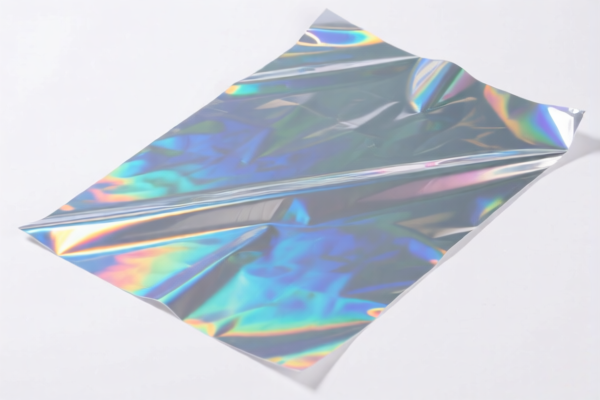
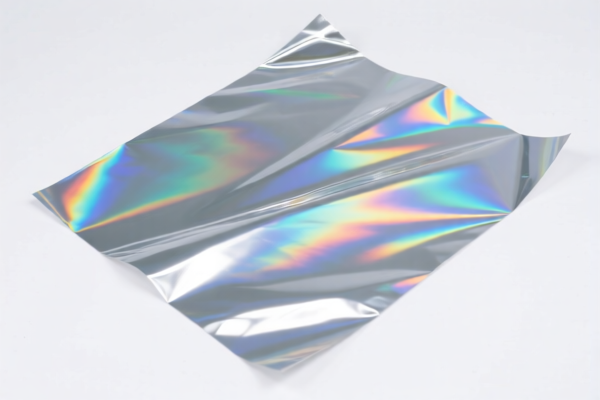
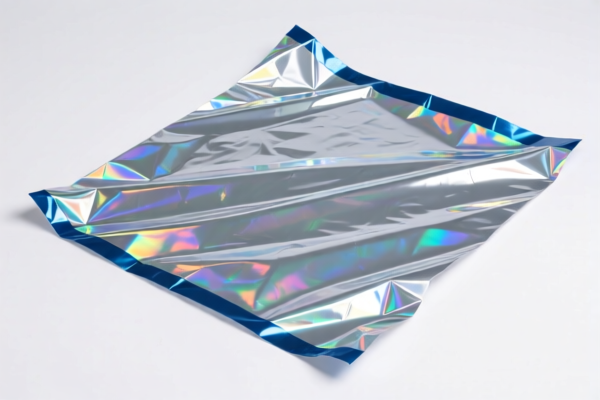
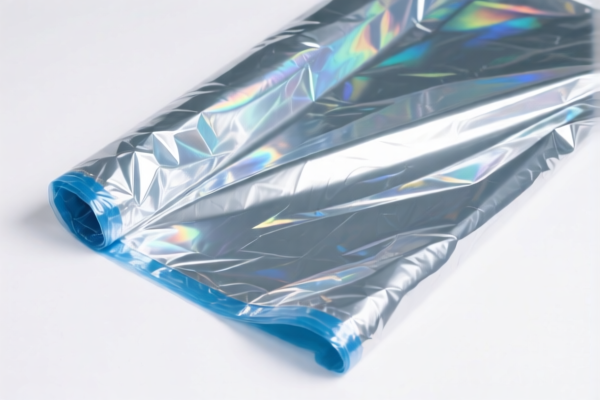
AI分析
🚦 Traffic Sign Reflective Plastic Board (塑料反光标牌/车身板)
🌐 HS Code Classification & US Customs Clearance Guide | 2026 Tariff Analysis | Professional Compliance Strategy
📌 I. Product Definition & Classification: Is it a Traffic Sign or a Car Part?
The product "Traffic Sign Reflective Plastic Board" is a generic description that leads to significantly different customs classifications and tax liabilities depending on its intended end-use and physical structure. In US Customs (CBP) practice, this ambiguity is the primary cause of classification disputes.
We distinguish between two main categories based on the provided data:
- General Plastic Articles (Traffic/Utility Signs): If the board is used for road signs, construction markers, or general signage where the plastic itself is the primary function.
- Vehicle Body Parts: If the board is specifically designed to be attached to a vehicle (e.g., as a decorative panel, fender liner, or replacement body part), it falls under motor vehicle parts.
⚠️ Critical Distinction:
- If the item is a standalone sign → It is classified under Chapter 39 (Plastics).
- If the item is a component for a car/truck → It is classified under Chapter 87 (Vehicles).
- Do not guess! Misclassification leads to massive duty differences (from 2.5% to 41%).
📦 II. HS Code Classification Details (2026 Latest Tariff Schedule)
Based on the input data, there are 5 potential HS Codes. The choice depends on specific product attributes.
| HS Code | Product Description & Logic | Total Duty Rate (US/China) | Key Classification Criteria |
|---|---|---|---|
3926.90.99.25 |
Plastic Reflective Sign: General plastic reflective board, not specifically listed elsewhere. | 22.8% | - Material: Plastic - Use: Reflective marking/sign - Not a vehicle part |
3926.90.99.89 |
Plastic Reflective Sign: Other plastic articles (unspecified). | 22.8% | - Material: Plastic - Use: General plastic reflective board - Catch-all for unspecified plastic goods |
3920.99.10.00 |
Plastic Plate/Film/Sheet: Composite plastic board/film with reflective properties. | 41.0% | - Form: Plate, Sheet, or Film - Structure: Composite - Material: Plastic (general) |
3920.59.10.00 |
Acrylic Plastic Board: Reflective board made of acrylic polymer. | 41.0% | - Material: Acrylic (Polymethyl Methacrylate) - Form: Plate/Sheet - Specific to acrylic polymers |
8708.29.51.60 |
Plastic Body Panel: Plastic reflective body part for vehicles. | 87.5% (2.5% Base + 85% Add-on) |
- Use: Vehicle Body Part - Material: Plastic - NOT a standalone sign |
🔍 Key Insight:
- Codes3926and3920are for non-vehicle applications (road signs, safety markers).
- Code8708is for vehicle applications (e.g., reflective decals/panels stuck on a car door).
- Acrylic (3920.59) attracts the highest duty among plastic articles due to specific material classification.
💰 III. 2026 US Tariff Rate Detailed Breakdown (China Origin)
✅ Applicable Country: United States (US)
✅ Country of Origin: China (CN)
✅ Effective Date: Current Trade Policies (Section 301, Section 232, IEEPA)
🎯 1. General Plastic Articles (3926.90.99.25 / 3926.90.99.89)
Scenario: Used for road signs, construction barriers, or general advertising boards.
| Item | Detail |
|---|---|
| Basic MFN Rate | 5.3% |
| Section 301 (25% Tariff) | +7.5% |
| Section 122 / IEEPA | +10% |
| Total Duty Rate | 22.8% |
| Calculation Base | CIF Value (Cost + Insurance + Freight) |
| De Minimis Exemption | ❌ Not Eligible ($800 rule does not apply to Section 301 goods) |
📌 Explanation:
- The 5.3% is the standard Most Favored Nation (MFN) duty for other plastic articles.
- The 7.5% is part of the Section 301 tariffs applied to many plastic products.
- The 10% is the additional IEEPA tariff on Chinese imports.
- Total: 22.8%. This is a moderate-to-high tariff, requiring careful cost planning.
🎯 2. Composite/Acrylic Plastic Sheets (3920.99.10.00 / 3920.59.10.00)
Scenario: Used as raw materials (sheets/films) that will be further processed, or rigid acrylic signs.
| Item | Detail |
|---|---|
| Basic MFN Rate | 6.0% |
| Section 301 (25% Tariff) | +25.0% |
| Section 122 / IEEPA | +10% |
| Total Duty Rate | 41.0% |
| Calculation Base | CIF Value |
| De Minimis Exemption | ❌ Not Eligible |
📌 Explanation:
- Plastic plates/sheets (3920) face a higher base rate (6.0%).
- The Section 301 tariff for this subheading is the full 25% (unlike the 7.5% in3926).
- Total: 41.0%. This is a high-duty category. If your product is a rigid acrylic board, expect nearly half the value in taxes.
🎯 3. Vehicle Body Parts (8708.29.51.60)
Scenario: Plastic boards specifically designed to be installed on cars/trucks (e.g., reflective fender flares, truck bed liners, decorative body panels).
| Item | Detail |
|---|---|
| Basic MFN Rate | 2.5% |
| Section 301 (25% Tariff) | +25.0% |
| Section 232 (Steel/Aluminum/Copper) | +50.0% |
| Total Duty Rate | 87.5% (2.5% + 25% + 50%) |
| Calculation Base | CIF Value |
| De Minimis Exemption | ❌ Not Eligible |
⚠️ CRITICAL WARNING:
- Although the base rate is low (2.5%), the Section 232 tariff of 50% is applied to many auto parts.
- If the panel contains steel, aluminum, or copper components (even as reinforcements), the 50% may apply.
- Total: 87.5%. This is an exorbitant duty.
- Note: The data shows "2.5% +85.0%". This likely refers to the sum of Section 301 (25%) and Section 232 (50%), plus the base. Do not assume 2.5% is the final rate.
🛠️ IV. Customs Clearance Practical Advice (Avoiding Pitfalls)
✅ 1. Preparation Checklist (Mandatory)
| Document | Requirement | Purpose |
|---|---|---|
| Product Specification Sheet | ✔️ Detailed | Must specify: Material (Acrylic/PVC/ABS), Form (Sheet/Part), Use (Road Sign vs. Car Part). |
| Intended Use Statement | ✔️ Critical | Most Important! Clearly state: "For use in road traffic control" OR "For use as replacement body panel for Vehicle Model X". |
| Product Photos | ✔️ Required | Show front (reflective side), back (mounting holes/structure), and label. |
| Bill of Lading / Packing List | ✔️ Required | Ensure description matches HS code precisely. |
| Origin Certificate | ✔️ Recommended | Proof of China origin for Section 301/IEEPA applicability. |
✅ 2. Declaration Strategy (Key Tips)
| Scenario | Correct Declaration | Incorrect Declaration | Risk |
|---|---|---|---|
| Road Sign | "Plastic Reflective Traffic Sign, Non-Vehicle Use" | "Car Body Part" | Overpayment: 41% or 22.8% vs potential misclassification penalties. |
| Car Part | "Plastic Vehicle Body Panel, Replacement Part for [Make/Model]" | "Plastic Sheet" | Underpayment: 87.5% vs 5.3%. High risk of audit & penalty. |
| Acrylic Board | "Acrylic Polymer Reflective Sheet, for Signage" | "Plastic Sheet, Generic" | Misclassification: 41% vs 22.8%. |
🔥 Golden Rule:
"Use Defines Code."
- If it goes on a road → 3926 or 3920.
- If it goes on a car → 8708.
- Do not mix these in one shipment. Separate them clearly.
✅ 3. Special Cases & Exceptions
| Case | Handling Advice |
|---|---|
| Composite Materials | If the sign has a plastic backing + metal frame, classify as Metal Article (Chapter 73/76) unless plastic is essential character. |
| OEM Car Parts | Provide the OEM Part Number and Vehicle Application to justify 8708. |
| Raw Material vs. Finished Good | A "reflective sheet" sold as raw material → 3920. A finished "sign" with text/logo → 3926. |
| Section 232 Exclusion | If 8708 applies, check if the specific auto part has a Section 232 exclusion code. If not, the 50% adds up fast. |
🌍 V. Global Market Comparison (2026)
| Region | Recommended HS Code | Est. Duty Rate (China) | Key Certification | Notes |
|---|---|---|---|---|
| 🇺🇸 USA | 3926.90.99.25 / 8708.29.51.60 |
22.8% ~ 87.5% | DOT (if traffic sign), FMVSS (if car part) | Highest risk zone due to Section 301/232. |
| 🇨🇳 China | 3926.90.99 / 8708.29 |
5% ~ 10% | CCC (if car part) | No Section 301/IEEPA penalties. |
| 🇪🇺 EU | 3926.90 / 8708.29 |
4.5% ~ 5% | CE (if applicable) | No anti-dumping on general plastics. |
| 🇲🇽 Mexico | 3926.90 / 8708.29 |
5% ~ 15% | NOM Standards | USMCA may apply if assembled in NA. |
📌 Conclusion:
- US Market is the most expensive due to layered tariffs.
- Clear documentation of "End-Use" is the single most important factor to avoid 87.5% duties when claiming 22.8%, or vice versa.
📌 VI. Common Errors & Pitfalls (Lessons Learned)
❌ Error 1: Declaring a Car Body Panel as a "Plastic Sheet" (3920)
👉 Consequence: Under-declaration. CBP will assess 87.5% retroactively + penalties.
✅ Fix: Always declare as Vehicle Part if designed for installation on a vehicle.
❌ Error 2: Declaring a Traffic Sign as a "Vehicle Part" (8708)
👉 Consequence: Over-payment. You pay 87.5% instead of 22.8%.
✅ Fix: Prove it is not attached to a vehicle. Use for roadways, construction zones.
❌ Error 3: Ignoring Section 232 for 8708
👉 Consequence: Paying only 2.5% or 27.5%. CBP applies the 50% steel/aluminum surcharge automatically.
✅ Fix: Check for exclusion codes. If none, budget for 87.5%.
❌ Error 4: Vague Description: "Plastic Board"
👉 Consequence: CBP uses "Adverse Facts Available" or highest duty rate.
✅ Fix: Use specific names: "Reflective Acrylic Traffic Sign Panel" or "Plastic Fender Extension for Truck".
🎯 VII. Conclusion: Professional Classification for Cost Optimization
🎯 Remember the Mantra:
🔹 "Use Defines Code: Road = 3926 (22.8%), Car = 8708 (87.5%)."
🔹 "Acrylic Sheets = 3920 (41%). Don't confuse Sheets with Finished Signs."
🔹 "Documentation is Key: Prove the End-Use to Save Thousands!"
📌 Pro Tip:
If you are unsure whether your product is a Sign or a Car Part, provide a diagram showing how it is installed.
- If it bolts to a road/concrete → Sign.
- If it bolts to a chassis/door → Car Part.
📣 Immediate Action Required:
📞 Consult a Customs Broker before shipping.
📝 Submit a Binding Ruling Request to CBP if the value is high.
🚀 Avoid Surprise Duties: A 64% difference (22.8% vs 87.5%) can destroy your profit margin.
✨ Precise Classification, Predictable Costs, Smooth Clearance!
💼 Your Product’s Value Starts with Its HS Code!
用户评价
关于 HS 编码归类
协调制度(HS)是由世界海关组织(WCO)制定的国际贸易商品分类标准。全球 200 多个国家采用 HS 系统作为海关关税、贸易统计和进出口监管的基础。
每个 HS 编码遵循以下层级结构:
- 章(2 位)——商品大类(例如:第 84 章:机器和机械设备)
- 品目(4 位)——章内的更具体分类
- 子目(6 位)——国际通用细分,所有 WCO 成员国统一使用
- 本国细分(8-10 位)——各国自行扩展的细分编码,如美国 HTSUS 10 位编码
正确的 HS 编码归类对于顺利通关、准确缴纳关税和遵守贸易法规至关重要。错误归类可能导致海关延误、多缴关税或罚款。
从CN进口到US时,适用的关税税率可能包括:
- 最惠国(MFN)税率——适用于 WTO 成员国的标准关税税率
- 普通税率——适用于无贸易协定国家
- 贸易救济关税——附加关税,如 301 条款(反倾销)、232 条款(国家安全)或反补贴税
本页内容仅供参考。如需正式归类,请咨询当地海关或持牌报关代理。