Traffic Sign Reflective Plastic Board
CN → US| HS Code | Tariff Rate | Origin | Destination | Doc |
|---|---|---|---|---|
| 3926909925 | 22.8% | CN | US | Official Doc |
| 3926909989 | 22.8% | CN | US | Official Doc |
| 3920991000 | 41.0% | CN | US | Official Doc |
| 3920591000 | 41.0% | CN | US | Official Doc |
| 8708295160 | 0.0% | CN | US | Official Doc |
Product Images
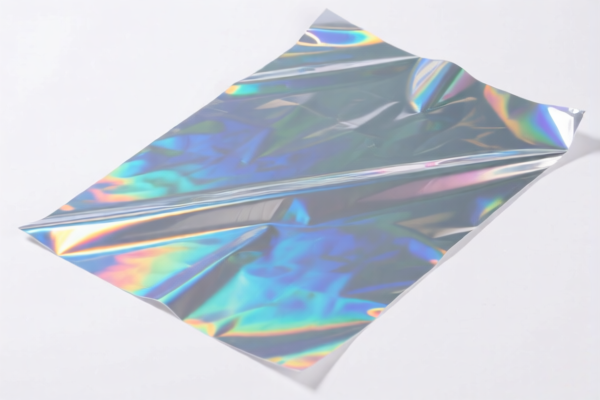
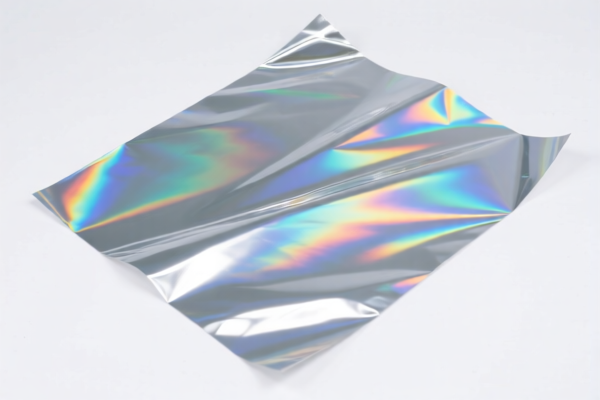
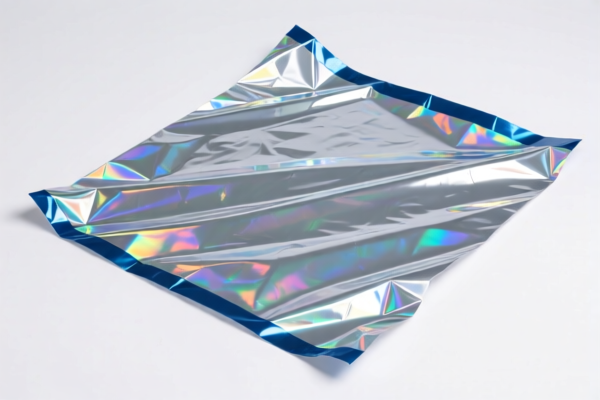
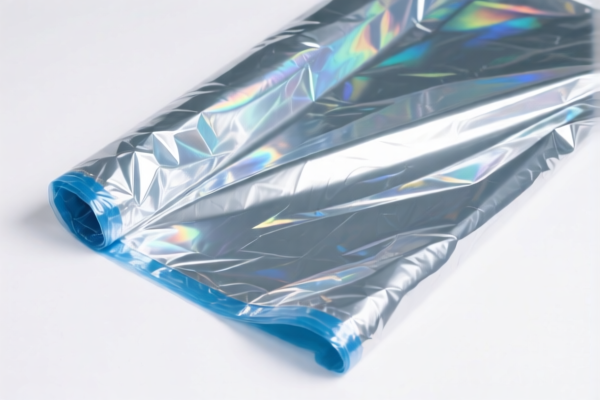
AI Analysis
🚦 Traffic Sign Reflective Plastic Board (塑料反光标牌/车身板)
🌐 HS Code Classification & US Customs Clearance Guide | 2026 Tariff Analysis | Professional Compliance Strategy
📌 I. Product Definition & Classification: Is it a Traffic Sign or a Car Part?
The product "Traffic Sign Reflective Plastic Board" is a generic description that leads to significantly different customs classifications and tax liabilities depending on its intended end-use and physical structure. In US Customs (CBP) practice, this ambiguity is the primary cause of classification disputes.
We distinguish between two main categories based on the provided data:
- General Plastic Articles (Traffic/Utility Signs): If the board is used for road signs, construction markers, or general signage where the plastic itself is the primary function.
- Vehicle Body Parts: If the board is specifically designed to be attached to a vehicle (e.g., as a decorative panel, fender liner, or replacement body part), it falls under motor vehicle parts.
⚠️ Critical Distinction:
- If the item is a standalone sign → It is classified under Chapter 39 (Plastics).
- If the item is a component for a car/truck → It is classified under Chapter 87 (Vehicles).
- Do not guess! Misclassification leads to massive duty differences (from 2.5% to 41%).
📦 II. HS Code Classification Details (2026 Latest Tariff Schedule)
Based on the input data, there are 5 potential HS Codes. The choice depends on specific product attributes.
| HS Code | Product Description & Logic | Total Duty Rate (US/China) | Key Classification Criteria |
|---|---|---|---|
3926.90.99.25 |
Plastic Reflective Sign: General plastic reflective board, not specifically listed elsewhere. | 22.8% | - Material: Plastic - Use: Reflective marking/sign - Not a vehicle part |
3926.90.99.89 |
Plastic Reflective Sign: Other plastic articles (unspecified). | 22.8% | - Material: Plastic - Use: General plastic reflective board - Catch-all for unspecified plastic goods |
3920.99.10.00 |
Plastic Plate/Film/Sheet: Composite plastic board/film with reflective properties. | 41.0% | - Form: Plate, Sheet, or Film - Structure: Composite - Material: Plastic (general) |
3920.59.10.00 |
Acrylic Plastic Board: Reflective board made of acrylic polymer. | 41.0% | - Material: Acrylic (Polymethyl Methacrylate) - Form: Plate/Sheet - Specific to acrylic polymers |
8708.29.51.60 |
Plastic Body Panel: Plastic reflective body part for vehicles. | 87.5% (2.5% Base + 85% Add-on) |
- Use: Vehicle Body Part - Material: Plastic - NOT a standalone sign |
🔍 Key Insight:
- Codes3926and3920are for non-vehicle applications (road signs, safety markers).
- Code8708is for vehicle applications (e.g., reflective decals/panels stuck on a car door).
- Acrylic (3920.59) attracts the highest duty among plastic articles due to specific material classification.
💰 III. 2026 US Tariff Rate Detailed Breakdown (China Origin)
✅ Applicable Country: United States (US)
✅ Country of Origin: China (CN)
✅ Effective Date: Current Trade Policies (Section 301, Section 232, IEEPA)
🎯 1. General Plastic Articles (3926.90.99.25 / 3926.90.99.89)
Scenario: Used for road signs, construction barriers, or general advertising boards.
| Item | Detail |
|---|---|
| Basic MFN Rate | 5.3% |
| Section 301 (25% Tariff) | +7.5% |
| Section 122 / IEEPA | +10% |
| Total Duty Rate | 22.8% |
| Calculation Base | CIF Value (Cost + Insurance + Freight) |
| De Minimis Exemption | ❌ Not Eligible ($800 rule does not apply to Section 301 goods) |
📌 Explanation:
- The 5.3% is the standard Most Favored Nation (MFN) duty for other plastic articles.
- The 7.5% is part of the Section 301 tariffs applied to many plastic products.
- The 10% is the additional IEEPA tariff on Chinese imports.
- Total: 22.8%. This is a moderate-to-high tariff, requiring careful cost planning.
🎯 2. Composite/Acrylic Plastic Sheets (3920.99.10.00 / 3920.59.10.00)
Scenario: Used as raw materials (sheets/films) that will be further processed, or rigid acrylic signs.
| Item | Detail |
|---|---|
| Basic MFN Rate | 6.0% |
| Section 301 (25% Tariff) | +25.0% |
| Section 122 / IEEPA | +10% |
| Total Duty Rate | 41.0% |
| Calculation Base | CIF Value |
| De Minimis Exemption | ❌ Not Eligible |
📌 Explanation:
- Plastic plates/sheets (3920) face a higher base rate (6.0%).
- The Section 301 tariff for this subheading is the full 25% (unlike the 7.5% in3926).
- Total: 41.0%. This is a high-duty category. If your product is a rigid acrylic board, expect nearly half the value in taxes.
🎯 3. Vehicle Body Parts (8708.29.51.60)
Scenario: Plastic boards specifically designed to be installed on cars/trucks (e.g., reflective fender flares, truck bed liners, decorative body panels).
| Item | Detail |
|---|---|
| Basic MFN Rate | 2.5% |
| Section 301 (25% Tariff) | +25.0% |
| Section 232 (Steel/Aluminum/Copper) | +50.0% |
| Total Duty Rate | 87.5% (2.5% + 25% + 50%) |
| Calculation Base | CIF Value |
| De Minimis Exemption | ❌ Not Eligible |
⚠️ CRITICAL WARNING:
- Although the base rate is low (2.5%), the Section 232 tariff of 50% is applied to many auto parts.
- If the panel contains steel, aluminum, or copper components (even as reinforcements), the 50% may apply.
- Total: 87.5%. This is an exorbitant duty.
- Note: The data shows "2.5% +85.0%". This likely refers to the sum of Section 301 (25%) and Section 232 (50%), plus the base. Do not assume 2.5% is the final rate.
🛠️ IV. Customs Clearance Practical Advice (Avoiding Pitfalls)
✅ 1. Preparation Checklist (Mandatory)
| Document | Requirement | Purpose |
|---|---|---|
| Product Specification Sheet | ✔️ Detailed | Must specify: Material (Acrylic/PVC/ABS), Form (Sheet/Part), Use (Road Sign vs. Car Part). |
| Intended Use Statement | ✔️ Critical | Most Important! Clearly state: "For use in road traffic control" OR "For use as replacement body panel for Vehicle Model X". |
| Product Photos | ✔️ Required | Show front (reflective side), back (mounting holes/structure), and label. |
| Bill of Lading / Packing List | ✔️ Required | Ensure description matches HS code precisely. |
| Origin Certificate | ✔️ Recommended | Proof of China origin for Section 301/IEEPA applicability. |
✅ 2. Declaration Strategy (Key Tips)
| Scenario | Correct Declaration | Incorrect Declaration | Risk |
|---|---|---|---|
| Road Sign | "Plastic Reflective Traffic Sign, Non-Vehicle Use" | "Car Body Part" | Overpayment: 41% or 22.8% vs potential misclassification penalties. |
| Car Part | "Plastic Vehicle Body Panel, Replacement Part for [Make/Model]" | "Plastic Sheet" | Underpayment: 87.5% vs 5.3%. High risk of audit & penalty. |
| Acrylic Board | "Acrylic Polymer Reflective Sheet, for Signage" | "Plastic Sheet, Generic" | Misclassification: 41% vs 22.8%. |
🔥 Golden Rule:
"Use Defines Code."
- If it goes on a road → 3926 or 3920.
- If it goes on a car → 8708.
- Do not mix these in one shipment. Separate them clearly.
✅ 3. Special Cases & Exceptions
| Case | Handling Advice |
|---|---|
| Composite Materials | If the sign has a plastic backing + metal frame, classify as Metal Article (Chapter 73/76) unless plastic is essential character. |
| OEM Car Parts | Provide the OEM Part Number and Vehicle Application to justify 8708. |
| Raw Material vs. Finished Good | A "reflective sheet" sold as raw material → 3920. A finished "sign" with text/logo → 3926. |
| Section 232 Exclusion | If 8708 applies, check if the specific auto part has a Section 232 exclusion code. If not, the 50% adds up fast. |
🌍 V. Global Market Comparison (2026)
| Region | Recommended HS Code | Est. Duty Rate (China) | Key Certification | Notes |
|---|---|---|---|---|
| 🇺🇸 USA | 3926.90.99.25 / 8708.29.51.60 |
22.8% ~ 87.5% | DOT (if traffic sign), FMVSS (if car part) | Highest risk zone due to Section 301/232. |
| 🇨🇳 China | 3926.90.99 / 8708.29 |
5% ~ 10% | CCC (if car part) | No Section 301/IEEPA penalties. |
| 🇪🇺 EU | 3926.90 / 8708.29 |
4.5% ~ 5% | CE (if applicable) | No anti-dumping on general plastics. |
| 🇲🇽 Mexico | 3926.90 / 8708.29 |
5% ~ 15% | NOM Standards | USMCA may apply if assembled in NA. |
📌 Conclusion:
- US Market is the most expensive due to layered tariffs.
- Clear documentation of "End-Use" is the single most important factor to avoid 87.5% duties when claiming 22.8%, or vice versa.
📌 VI. Common Errors & Pitfalls (Lessons Learned)
❌ Error 1: Declaring a Car Body Panel as a "Plastic Sheet" (3920)
👉 Consequence: Under-declaration. CBP will assess 87.5% retroactively + penalties.
✅ Fix: Always declare as Vehicle Part if designed for installation on a vehicle.
❌ Error 2: Declaring a Traffic Sign as a "Vehicle Part" (8708)
👉 Consequence: Over-payment. You pay 87.5% instead of 22.8%.
✅ Fix: Prove it is not attached to a vehicle. Use for roadways, construction zones.
❌ Error 3: Ignoring Section 232 for 8708
👉 Consequence: Paying only 2.5% or 27.5%. CBP applies the 50% steel/aluminum surcharge automatically.
✅ Fix: Check for exclusion codes. If none, budget for 87.5%.
❌ Error 4: Vague Description: "Plastic Board"
👉 Consequence: CBP uses "Adverse Facts Available" or highest duty rate.
✅ Fix: Use specific names: "Reflective Acrylic Traffic Sign Panel" or "Plastic Fender Extension for Truck".
🎯 VII. Conclusion: Professional Classification for Cost Optimization
🎯 Remember the Mantra:
🔹 "Use Defines Code: Road = 3926 (22.8%), Car = 8708 (87.5%)."
🔹 "Acrylic Sheets = 3920 (41%). Don't confuse Sheets with Finished Signs."
🔹 "Documentation is Key: Prove the End-Use to Save Thousands!"
📌 Pro Tip:
If you are unsure whether your product is a Sign or a Car Part, provide a diagram showing how it is installed.
- If it bolts to a road/concrete → Sign.
- If it bolts to a chassis/door → Car Part.
📣 Immediate Action Required:
📞 Consult a Customs Broker before shipping.
📝 Submit a Binding Ruling Request to CBP if the value is high.
🚀 Avoid Surprise Duties: A 64% difference (22.8% vs 87.5%) can destroy your profit margin.
✨ Precise Classification, Predictable Costs, Smooth Clearance!
💼 Your Product’s Value Starts with Its HS Code!
Customer Reviews
About HS Code Classification
The Harmonized System (HS) is an internationally standardized nomenclature developed by the World Customs Organization (WCO) to classify traded products. Over 200 countries use the HS system as the basis for customs tariffs, trade statistics, and import/export regulations.
Each HS code follows a hierarchical structure:
- Chapter (2 digits) — Broad category of goods (e.g., Chapter 84: Machinery and Mechanical Appliances)
- Heading (4 digits) — More specific grouping within the chapter
- Subheading (6 digits) — Internationally standardized breakdown, used by all WCO member countries
- National subdivisions (8-10 digits) — Country-specific extensions for further classification, such as US HTSUS 10-digit codes
Correct HS code classification is essential for smooth customs clearance, accurate duty payment, and compliance with trade regulations. Misclassification can lead to customs delays, overpayment of duties, or penalties.
When importing from CN to US, the applicable tariff rates may include:
- Most-Favored-Nation (MFN) rate — The standard duty rate applied to WTO members
- General rate — Applied to countries without trade agreements
- Trade remedy duties — Additional tariffs such as Section 301 (anti-dumping), Section 232 (national security), or countervailing duties
The information provided on this page is for reference purposes only. For official classification, please consult with your local customs authority or a licensed customs broker.