Trailers and Semi trailers
CN → US| HS编码 | 关税税率 | 原产国 | 目的国 | 文档 |
|---|---|---|---|---|
| 8716390090 | 10.0% | CN | US | 官方文档 |
| 8716400000 | 10.0% | CN | US | 官方文档 |
商品图片
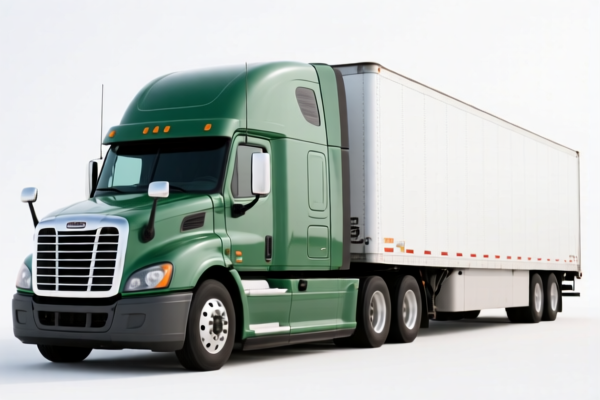
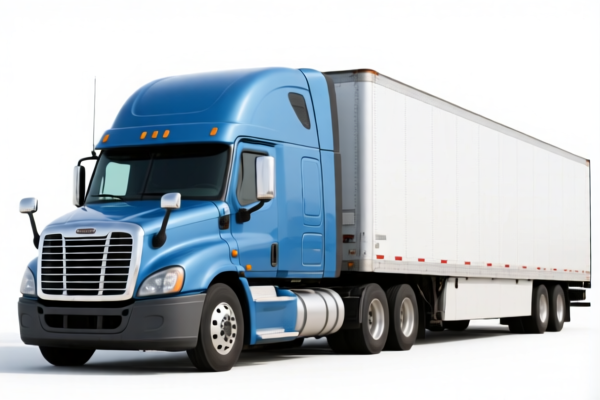
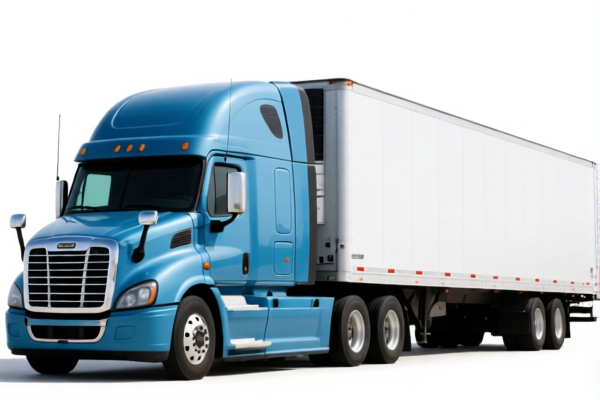
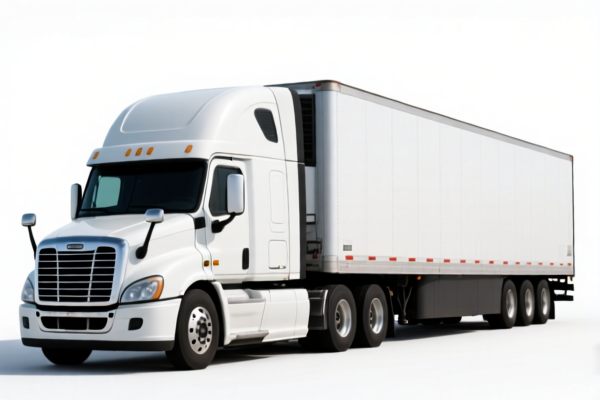
AI分析
🚚 Trailers & Semi-Trailers (Trailers and Semi-trailers for the Transport of Goods)
🌐 HS Code Reference & Customs Clearance Guide | 2026 Latest Tariff Analysis | Professional Transit Strategy
📌 I. Product Definition & Classification: Do You Really Know "Trailers"?
In international trade, Trailers and Semi-trailers are non-mechanically propelled vehicles designed to carry goods. They are distinct from motor vehicles because they lack their own engine and rely on a towing vehicle for propulsion.
Key Distinctions: * Semi-Trailers: Cannot stand on their own; they require a tractor unit (truck) to support the front part. * Trailers: Can stand on their own (supported by legs/stand) but still require a towing vehicle. * Parts: Specific components designed exclusively for these vehicles.
⚠️ Critical Classification Point:
- If the vehicle is mechanically propelled (has an engine), it does NOT belong here (goes to Chapter 87.01–87.04).
- If it is not mechanically propelled (towed), it falls under Chapter 87.16.
- Focus for this guide: Goods Transport. Passenger trailers (caravans) have different codes.
📦 II. HS Code Classification Details (2026 Latest Tariff Authority Comparison)
Based on the provided data, the specific codes for Goods Transport Trailers/Semi-Trailers are as follows:
| HS Code | Product Description | Applicable Scenario | Tax Structure (China Origin → US) |
|---|---|---|---|
8716.39.00.90 |
Other trailers and semi-trailers for the transport of goods: Other: Other | General purpose trailers, specific niche types not explicitly listed in 8716.31/8716.39.10/etc. | 25.0% Total |
8716.40.00.00 |
Other trailers and semi-trailers (General Category) | Broad category for other non-passenger trailers/semi-trailers | 25.0% Total |
🔍 Key Clarification:
- These codes specifically exclude passenger trailers (like caravans/RVs, which are typically under8716.20) and specialized trailers (like tankers or refrigerated units, which may have specific sub-codes like8716.31or8716.39.10).
- The description "Other" implies that if the trailer is a standard cargo trailer (dry van, flatbed, curtain sider) and doesn't fit more specific sub-categories, it may fall into these residual "Other" buckets depending on the exact national tariff schedule interpretation.
💰 III. 2026 Latest Tariff Rate Detailed Analysis (Including Surcharge)
✅ Applicable Country: United States (US)
✅ Origin: China (CN)
✅ Effective Date: Subject to current USITC/IEEPA regulations (Note: Data reflects a 25.0% total tax rate, typically driven by Section 301 tariffs for goods in this category).
🎯 1. 8716.39.00.90 — Other Trailers & Semi-Trailers for Goods
| Item | Content |
|---|---|
| Base Tariff | 0.0% (Ad valorem) |
| Additional Tariff (Section 301) | +25.0% |
| Total Effective Tax Rate | 25.0% |
| Tax Calculation | CIF Value × 25% |
| De Minimis Exemption | ❌ Not Applicable (Usually requires formal entry for commercial trailers) |
| Legal Basis | Section 301 of the Trade Act of 1974; USITC Heading 8716.39.00.90 |
📌 Explanation:
- The 0% base tariff reflects standard MFN (Most Favored Nation) treatment for many non-agricultural goods.
- The 25% surcharge is the critical factor. For many cargo trailers imported from China, Section 301 tariffs apply at 25%.
- No IEEPA 10% surcharge is listed in the provided data for this specific code (unlike electronics or some other categories). The total remains 25%.
🎯 2. 8716.40.00.00 — Other Trailers and Semi-Trailers
| Item | Content |
|---|---|
| Base Tariff | 0.0% (Ad valorem) |
| Additional Tariff (Section 301) | +25.0% |
| Total Effective Tax Rate | 25.0% |
| Tax Calculation | CIF Value × 25% |
| De Minimis Exemption | ❌ Not Applicable |
| Legal Basis | Section 301 of the Trade Act of 1974; USITC Heading 8716.40.00.00 |
📌 Note:
- This code often serves as a residual category for trailers not classified under specific functional sub-headings (e.g., refrigerated, tank, etc.).
- Identical Tax Burden: Like8716.39.00.90, it carries a 25% total tariff.
- Strategic Implication: Since both codes result in the same 25% rate, the primary focus should be on accurate product description to avoid misclassification penalties, rather than seeking a lower rate within these two.
🛠️ IV. Customs Clearance Practical Advice (Battle-Tested Pitfall Guide)
✅ 1. Essential Documentation Checklist
| Document | Required? | Notes |
|---|---|---|
| ✅ Commercial Invoice | ✔️ | Must clearly state "Trailers/Semi-Trailers for Goods Transport." |
| ✅ Packing List | ✔️ | Detail dimensions, weight, and number of units. |
| ✅ Product Photos | ✔️ | Show the entire vehicle, including axles, landing gear (for semi-trailers), and coupling mechanism. |
| ✅ Specification Sheet | ✔️ | Include payload capacity, axle count, tire size, and material (steel/aluminum). |
| ✅ Bill of Lading | ✔️ | Ensure "Freight Prepaid" or "Freight Collect" is clear. |
| ✅ OECD Standard Code | ❓ | If required by the broker, provide the standard trailer type code. |
| ✅ Bond | ✔️ | Continuous bond is recommended for regular imports. |
✅ 2. Declaration Tips (Key Mantras)
🔥 "Identify Function, Specify Type, Avoid Ambiguity!"
| Scenario | Correct Declaration | Incorrect Declaration |
|---|---|---|
| Standard Cargo Semi-Trailers | "Steel Semi-Trailers for Goods Transport, Non-Mechanically Propelled" | "Trucks" or "Vehicles" → High risk of misclassification |
| Caravans/RVs | NOT under 8716.39/40 | Do NOT use 8716.39.00.90 for RVs (use 8716.20) |
| Trailers with Refrigeration Units | May be classified under 8716.31 (Refrigerated) | Using "Other" (8716.39/40) if it has a refrigeration unit → Potential penalty |
| Parts (e.g., Axles, Frames) | Check Chapter 87 Part-specific codes | Do NOT declare parts as "Trailers" |
✅ 3. Special Considerations
| Situation | Handling Advice |
|---|---|
| Modular Trailers | If assembled from kits, ensure proper HS code for "Parts" vs. "Completed Unit" at time of import. |
| Custom-Built Trailers | Provide detailed engineering drawings to prove "non-mechanically propelled" status. |
| Used Trailers | Same HS codes apply, but declaration must state "Used" to avoid duty-free exemptions meant for new goods (if any apply). |
| Low-Bed/Heavy-Haulers | Verify if they fall under "Other" or specific sub-categories based on design. |
🌍 V. Global Market Customs Comparison (2026 Latest)
| Country/Region | Recommended HS Code | Tariff Rate (China Origin) | Certification/Notes |
|---|---|---|---|
| 🇺🇸 USA | 8716.39.00.90 / 8716.40.00.00 |
25.0% (Total) | Section 301 applies. No base tariff. |
| 🇨🇳 China | 8716.30 / 8716.40 |
~10-14% (Import Duty) | Check local FTAs. |
| 🇪🇺 EU | 8716.31 / 8716.39 |
0% - 14% | Depends on specific type (refrigerated vs. other). |
| 🇬🇧 UK | 8716.30 / 8716.40 |
0% - 14% | Post-Brexit tariffs apply. |
| 🇦🇺 Australia | 8716.30 / 8716.40 |
5% | General Tariff Rate. |
📌 Conclusion:
- The USA is the most cost-sensitive market due to the flat 25% additional tariff on Chinese-origin cargo trailers.
- EU and UK tariffs vary significantly based on whether the trailer is refrigerated or not.
- Always confirm if your trailer has special features (refrigeration, tank, livestock) that might shift it to a different 4-digit or 6-digit sub-heading with different rates.
📌 VI. Common Mistakes & Pitfalls (Lessons Learned)
❌ Mistake 1: Classifying RVs/Caravans under 8716.39.00.90.
👉 Consequence: Wrong duty rate (passenger trailers often have different rates) and potential customs hold.
✅ Fix: Use 8716.20 for passenger trailers.
❌ Mistake 2: Declaring Refrigerated Trailers as "Other" (8716.39.00.90).
👉 Consequence: If 8716.31 has a different rate or specific regulatory requirements, misclassification leads to penalties.
✅ Fix: Identify refrigeration units and classify under 8716.31.
❌ Mistake 3: Ignoring Section 301 Exclusions.
👉 Consequence: Paying 25% when an exclusion list might apply (check USTR lists regularly).
✅ Fix: Verify if the specific HS code is on the exclusion list for your product description.
❌ Mistake 4: Poor Product Description ("Trailer").
👉 Consequence: Customs officer has to guess, leading to delays or random inspections.
✅ Fix: Use full description: "Steel Semi-Trailer, 53ft, Dry Van, Non-Mechanically Propelled, for Freight Transport."
🎯 VII. Conclusion: Precision in Classification Saves Money!
🎯 Remember the Mantra:
🔹 "Non-Mechanical = 8716"
🔹 "Goods Transport = 8716.39/40 (Others)"
🔹 "Passenger = 8716.20"
🔹 "US Tariff = 25% on Chinese Origin"🔹 "HS Code Determines Duty, Description Prevents Delays!"
📌 Pro Tip:
If your trailers are high-value specialized units (e.g., container chassis, heavy-duty low-boys), consult a customs broker to see if they fall under a more specific sub-category that might have different duties or exemptions. For standard dry cargo trailers from China, budget for a 25% total tariff.
📣 Immediate Action:
📞 Contact your customs broker
📄 Prepare detailed product specs
🔍 Verify Section 301 Exclusion Lists
🚀 Ensure smooth customs clearance and cost efficiency!
✨ Professional Customs Clearance Starts with Accurate Classification!
💼 Every Percentage Point Counts in Global Trade!
用户评价
关于 HS 编码归类
协调制度(HS)是由世界海关组织(WCO)制定的国际贸易商品分类标准。全球 200 多个国家采用 HS 系统作为海关关税、贸易统计和进出口监管的基础。
每个 HS 编码遵循以下层级结构:
- 章(2 位)——商品大类(例如:第 84 章:机器和机械设备)
- 品目(4 位)——章内的更具体分类
- 子目(6 位)——国际通用细分,所有 WCO 成员国统一使用
- 本国细分(8-10 位)——各国自行扩展的细分编码,如美国 HTSUS 10 位编码
正确的 HS 编码归类对于顺利通关、准确缴纳关税和遵守贸易法规至关重要。错误归类可能导致海关延误、多缴关税或罚款。
从CN进口到US时,适用的关税税率可能包括:
- 最惠国(MFN)税率——适用于 WTO 成员国的标准关税税率
- 普通税率——适用于无贸易协定国家
- 贸易救济关税——附加关税,如 301 条款(反倾销)、232 条款(国家安全)或反补贴税
本页内容仅供参考。如需正式归类,请咨询当地海关或持牌报关代理。