Trailers and Semi trailers
CN → US| HS Code | Tariff Rate | Origin | Destination | Doc |
|---|---|---|---|---|
| 8716390090 | 10.0% | CN | US | Official Doc |
| 8716400000 | 10.0% | CN | US | Official Doc |
Product Images
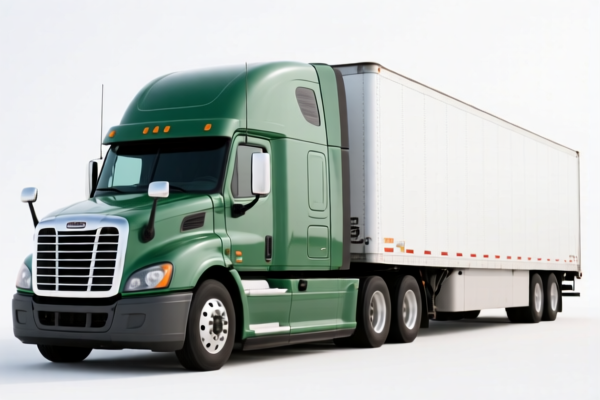
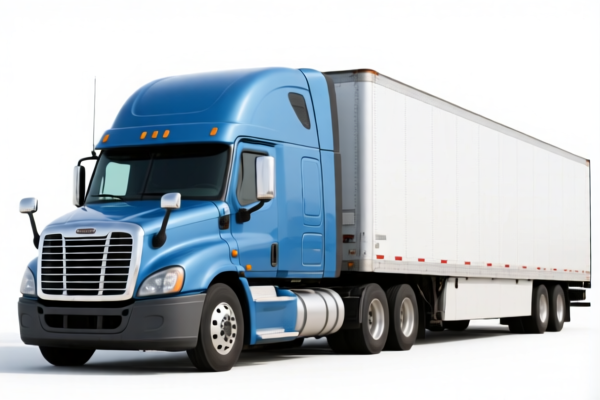
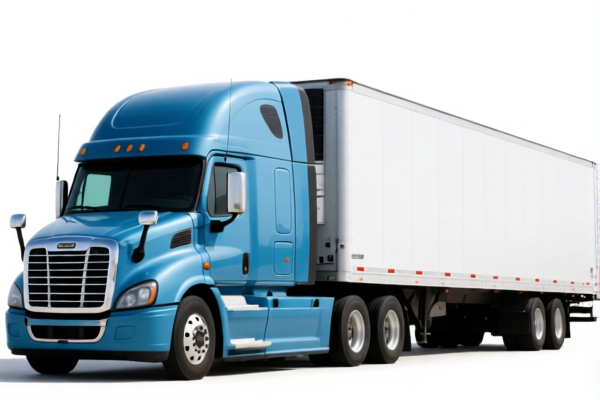
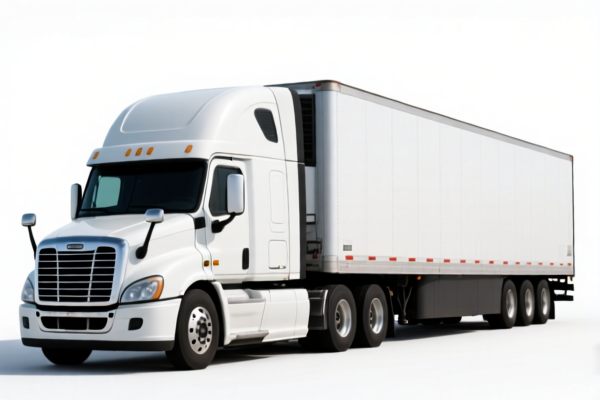
AI Analysis
🚚 Trailers & Semi-Trailers (Trailers and Semi-trailers for the Transport of Goods)
🌐 HS Code Reference & Customs Clearance Guide | 2026 Latest Tariff Analysis | Professional Transit Strategy
📌 I. Product Definition & Classification: Do You Really Know "Trailers"?
In international trade, Trailers and Semi-trailers are non-mechanically propelled vehicles designed to carry goods. They are distinct from motor vehicles because they lack their own engine and rely on a towing vehicle for propulsion.
Key Distinctions: * Semi-Trailers: Cannot stand on their own; they require a tractor unit (truck) to support the front part. * Trailers: Can stand on their own (supported by legs/stand) but still require a towing vehicle. * Parts: Specific components designed exclusively for these vehicles.
⚠️ Critical Classification Point:
- If the vehicle is mechanically propelled (has an engine), it does NOT belong here (goes to Chapter 87.01–87.04).
- If it is not mechanically propelled (towed), it falls under Chapter 87.16.
- Focus for this guide: Goods Transport. Passenger trailers (caravans) have different codes.
📦 II. HS Code Classification Details (2026 Latest Tariff Authority Comparison)
Based on the provided data, the specific codes for Goods Transport Trailers/Semi-Trailers are as follows:
| HS Code | Product Description | Applicable Scenario | Tax Structure (China Origin → US) |
|---|---|---|---|
8716.39.00.90 |
Other trailers and semi-trailers for the transport of goods: Other: Other | General purpose trailers, specific niche types not explicitly listed in 8716.31/8716.39.10/etc. | 25.0% Total |
8716.40.00.00 |
Other trailers and semi-trailers (General Category) | Broad category for other non-passenger trailers/semi-trailers | 25.0% Total |
🔍 Key Clarification:
- These codes specifically exclude passenger trailers (like caravans/RVs, which are typically under8716.20) and specialized trailers (like tankers or refrigerated units, which may have specific sub-codes like8716.31or8716.39.10).
- The description "Other" implies that if the trailer is a standard cargo trailer (dry van, flatbed, curtain sider) and doesn't fit more specific sub-categories, it may fall into these residual "Other" buckets depending on the exact national tariff schedule interpretation.
💰 III. 2026 Latest Tariff Rate Detailed Analysis (Including Surcharge)
✅ Applicable Country: United States (US)
✅ Origin: China (CN)
✅ Effective Date: Subject to current USITC/IEEPA regulations (Note: Data reflects a 25.0% total tax rate, typically driven by Section 301 tariffs for goods in this category).
🎯 1. 8716.39.00.90 — Other Trailers & Semi-Trailers for Goods
| Item | Content |
|---|---|
| Base Tariff | 0.0% (Ad valorem) |
| Additional Tariff (Section 301) | +25.0% |
| Total Effective Tax Rate | 25.0% |
| Tax Calculation | CIF Value × 25% |
| De Minimis Exemption | ❌ Not Applicable (Usually requires formal entry for commercial trailers) |
| Legal Basis | Section 301 of the Trade Act of 1974; USITC Heading 8716.39.00.90 |
📌 Explanation:
- The 0% base tariff reflects standard MFN (Most Favored Nation) treatment for many non-agricultural goods.
- The 25% surcharge is the critical factor. For many cargo trailers imported from China, Section 301 tariffs apply at 25%.
- No IEEPA 10% surcharge is listed in the provided data for this specific code (unlike electronics or some other categories). The total remains 25%.
🎯 2. 8716.40.00.00 — Other Trailers and Semi-Trailers
| Item | Content |
|---|---|
| Base Tariff | 0.0% (Ad valorem) |
| Additional Tariff (Section 301) | +25.0% |
| Total Effective Tax Rate | 25.0% |
| Tax Calculation | CIF Value × 25% |
| De Minimis Exemption | ❌ Not Applicable |
| Legal Basis | Section 301 of the Trade Act of 1974; USITC Heading 8716.40.00.00 |
📌 Note:
- This code often serves as a residual category for trailers not classified under specific functional sub-headings (e.g., refrigerated, tank, etc.).
- Identical Tax Burden: Like8716.39.00.90, it carries a 25% total tariff.
- Strategic Implication: Since both codes result in the same 25% rate, the primary focus should be on accurate product description to avoid misclassification penalties, rather than seeking a lower rate within these two.
🛠️ IV. Customs Clearance Practical Advice (Battle-Tested Pitfall Guide)
✅ 1. Essential Documentation Checklist
| Document | Required? | Notes |
|---|---|---|
| ✅ Commercial Invoice | ✔️ | Must clearly state "Trailers/Semi-Trailers for Goods Transport." |
| ✅ Packing List | ✔️ | Detail dimensions, weight, and number of units. |
| ✅ Product Photos | ✔️ | Show the entire vehicle, including axles, landing gear (for semi-trailers), and coupling mechanism. |
| ✅ Specification Sheet | ✔️ | Include payload capacity, axle count, tire size, and material (steel/aluminum). |
| ✅ Bill of Lading | ✔️ | Ensure "Freight Prepaid" or "Freight Collect" is clear. |
| ✅ OECD Standard Code | ❓ | If required by the broker, provide the standard trailer type code. |
| ✅ Bond | ✔️ | Continuous bond is recommended for regular imports. |
✅ 2. Declaration Tips (Key Mantras)
🔥 "Identify Function, Specify Type, Avoid Ambiguity!"
| Scenario | Correct Declaration | Incorrect Declaration |
|---|---|---|
| Standard Cargo Semi-Trailers | "Steel Semi-Trailers for Goods Transport, Non-Mechanically Propelled" | "Trucks" or "Vehicles" → High risk of misclassification |
| Caravans/RVs | NOT under 8716.39/40 | Do NOT use 8716.39.00.90 for RVs (use 8716.20) |
| Trailers with Refrigeration Units | May be classified under 8716.31 (Refrigerated) | Using "Other" (8716.39/40) if it has a refrigeration unit → Potential penalty |
| Parts (e.g., Axles, Frames) | Check Chapter 87 Part-specific codes | Do NOT declare parts as "Trailers" |
✅ 3. Special Considerations
| Situation | Handling Advice |
|---|---|
| Modular Trailers | If assembled from kits, ensure proper HS code for "Parts" vs. "Completed Unit" at time of import. |
| Custom-Built Trailers | Provide detailed engineering drawings to prove "non-mechanically propelled" status. |
| Used Trailers | Same HS codes apply, but declaration must state "Used" to avoid duty-free exemptions meant for new goods (if any apply). |
| Low-Bed/Heavy-Haulers | Verify if they fall under "Other" or specific sub-categories based on design. |
🌍 V. Global Market Customs Comparison (2026 Latest)
| Country/Region | Recommended HS Code | Tariff Rate (China Origin) | Certification/Notes |
|---|---|---|---|
| 🇺🇸 USA | 8716.39.00.90 / 8716.40.00.00 |
25.0% (Total) | Section 301 applies. No base tariff. |
| 🇨🇳 China | 8716.30 / 8716.40 |
~10-14% (Import Duty) | Check local FTAs. |
| 🇪🇺 EU | 8716.31 / 8716.39 |
0% - 14% | Depends on specific type (refrigerated vs. other). |
| 🇬🇧 UK | 8716.30 / 8716.40 |
0% - 14% | Post-Brexit tariffs apply. |
| 🇦🇺 Australia | 8716.30 / 8716.40 |
5% | General Tariff Rate. |
📌 Conclusion:
- The USA is the most cost-sensitive market due to the flat 25% additional tariff on Chinese-origin cargo trailers.
- EU and UK tariffs vary significantly based on whether the trailer is refrigerated or not.
- Always confirm if your trailer has special features (refrigeration, tank, livestock) that might shift it to a different 4-digit or 6-digit sub-heading with different rates.
📌 VI. Common Mistakes & Pitfalls (Lessons Learned)
❌ Mistake 1: Classifying RVs/Caravans under 8716.39.00.90.
👉 Consequence: Wrong duty rate (passenger trailers often have different rates) and potential customs hold.
✅ Fix: Use 8716.20 for passenger trailers.
❌ Mistake 2: Declaring Refrigerated Trailers as "Other" (8716.39.00.90).
👉 Consequence: If 8716.31 has a different rate or specific regulatory requirements, misclassification leads to penalties.
✅ Fix: Identify refrigeration units and classify under 8716.31.
❌ Mistake 3: Ignoring Section 301 Exclusions.
👉 Consequence: Paying 25% when an exclusion list might apply (check USTR lists regularly).
✅ Fix: Verify if the specific HS code is on the exclusion list for your product description.
❌ Mistake 4: Poor Product Description ("Trailer").
👉 Consequence: Customs officer has to guess, leading to delays or random inspections.
✅ Fix: Use full description: "Steel Semi-Trailer, 53ft, Dry Van, Non-Mechanically Propelled, for Freight Transport."
🎯 VII. Conclusion: Precision in Classification Saves Money!
🎯 Remember the Mantra:
🔹 "Non-Mechanical = 8716"
🔹 "Goods Transport = 8716.39/40 (Others)"
🔹 "Passenger = 8716.20"
🔹 "US Tariff = 25% on Chinese Origin"🔹 "HS Code Determines Duty, Description Prevents Delays!"
📌 Pro Tip:
If your trailers are high-value specialized units (e.g., container chassis, heavy-duty low-boys), consult a customs broker to see if they fall under a more specific sub-category that might have different duties or exemptions. For standard dry cargo trailers from China, budget for a 25% total tariff.
📣 Immediate Action:
📞 Contact your customs broker
📄 Prepare detailed product specs
🔍 Verify Section 301 Exclusion Lists
🚀 Ensure smooth customs clearance and cost efficiency!
✨ Professional Customs Clearance Starts with Accurate Classification!
💼 Every Percentage Point Counts in Global Trade!
Customer Reviews
About HS Code Classification
The Harmonized System (HS) is an internationally standardized nomenclature developed by the World Customs Organization (WCO) to classify traded products. Over 200 countries use the HS system as the basis for customs tariffs, trade statistics, and import/export regulations.
Each HS code follows a hierarchical structure:
- Chapter (2 digits) — Broad category of goods (e.g., Chapter 84: Machinery and Mechanical Appliances)
- Heading (4 digits) — More specific grouping within the chapter
- Subheading (6 digits) — Internationally standardized breakdown, used by all WCO member countries
- National subdivisions (8-10 digits) — Country-specific extensions for further classification, such as US HTSUS 10-digit codes
Correct HS code classification is essential for smooth customs clearance, accurate duty payment, and compliance with trade regulations. Misclassification can lead to customs delays, overpayment of duties, or penalties.
When importing from CN to US, the applicable tariff rates may include:
- Most-Favored-Nation (MFN) rate — The standard duty rate applied to WTO members
- General rate — Applied to countries without trade agreements
- Trade remedy duties — Additional tariffs such as Section 301 (anti-dumping), Section 232 (national security), or countervailing duties
The information provided on this page is for reference purposes only. For official classification, please consult with your local customs authority or a licensed customs broker.