Transparent PP Tape
CN → US| HS编码 | 关税税率 | 原产国 | 目的国 | 文档 |
|---|---|---|---|---|
| 3919102040 | 40.8% | CN | US | 官方文档 |
| 3919905040 | 40.8% | CN | US | 官方文档 |
商品图片
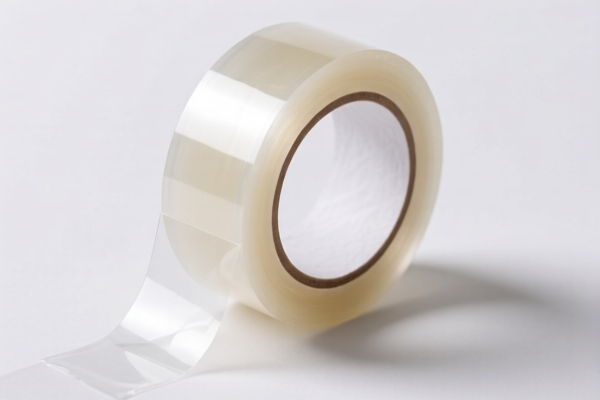
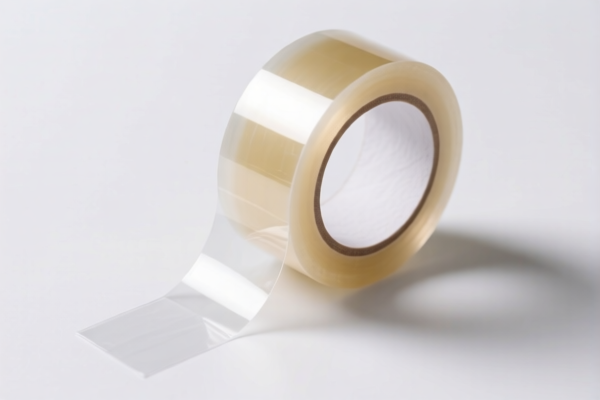
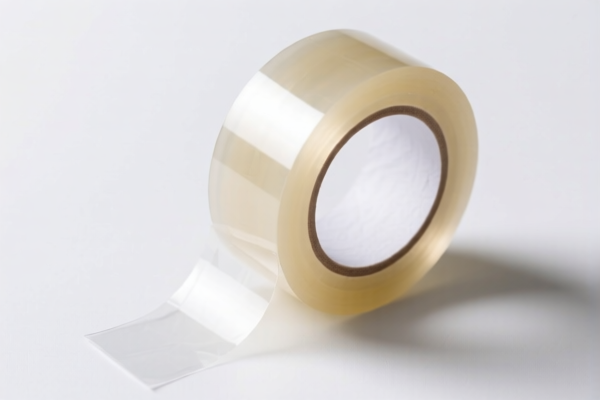
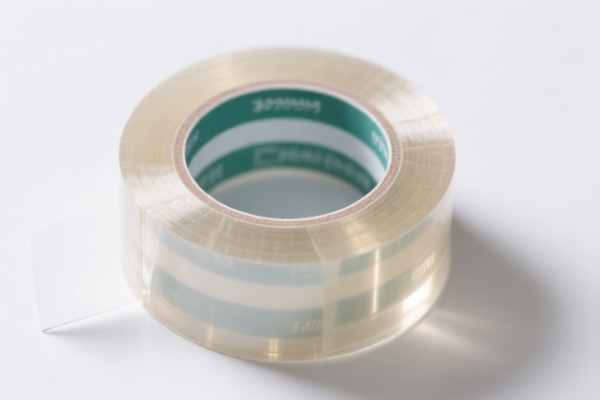
AI分析
🎀 Transparent PP Tape (Polypropylene Packaging Tape)
🌐 HS Code Reference & Customs Clearance Guide | 2026 Latest Tariff Analysis | Professional Clearance Strategy
📌 I. Product Definition & Classification: What Exactly is "PP Tape"?
Transparent PP Tape, commonly known as "packing tape" or "box sealing tape," is a self-adhesive plastic tape primarily used for sealing cardboard boxes during shipping and storage. In international trade, it is classified under Chapter 39: Plastics and Articles Thereof, specifically as Self-Adhesive Plates, Sheets, Film, Foil, Tape, Strip, and Other Shapes.
The critical distinction in classification lies in the sub-category of the self-adhesive plastic material: * Head-coded tapes (3919.10...): Usually refers to tapes specifically designed for labeling or marking (e.g., adhesive labels, identifying tapes). * Other self-adhesive tapes (3919.90...): Refers to general-purpose packaging tapes, including the common transparent polypropylene (BOPP) tapes used for sealing boxes.
⚠️ Key Distinction:
- If the tape is primarily for packaging/sealing (common transparent BOPP tape) → Generally falls under 3919.90.50.40.
- If the tape is specifically for labeling/markings (e.g., price tags, product identification strips) → Generally falls under 3919.10.20.40.
Note: The provided data suggests both codes are matched with identical tax implications for this specific query context, likely due to overlapping interpretations or specific product attributes not fully detailed.
📦 II. HS Code Classification Details (2026 Latest Tariff Authoritative Comparison)
| HS Code | Product Description | Application Scenario | Material/Feature |
|---|---|---|---|
3919.90.50.40 |
Other self-adhesive plates, sheets, film, foil, tape, strip, and other shapes, of plastics | Primary Match: General transparent packaging tape, BOPP tape for box sealing | Plastic-based, self-adhesive, general purpose |
3919.10.20.40 |
Self-adhesive plates, sheets, film, foil, tape, strip, and other shapes, of plastics, put up in rolls of a width not exceeding 20 cm, whether or not in small rolls or cut to shape | Secondary Match: Self-adhesive tapes, often associated with labeling or specific narrow-width applications | Plastic-based, self-adhesive, roll format |
🔍 Key Reminder:
- Both codes fall under Chapter 39 (Plastics).
- The primary differentiator is the specific usage (Packaging vs. Labeling), but in many customs systems, generic "Transparent PP Tape" is often defaulted to 3919.90.50.40 unless specified as "labeling tape."
- Material Assumption: Based on common sense, "Transparent Tape" is assumed to be made of Plastic (Polypropylene/BOPP), which is a flat, self-adhesive product.
💰 III. 2026 Latest Tariff Rate Details (Including Surcharges & Policy Add-ons)
✅ Applicable Country: United States (US)
✅ Origin: China (CN)
✅ Effective Time: 2025/2026 (Current Trade War Context)
🎯 1. 3919.90.50.40 —— General Self-Adhesive Plastic Tape (Packaging)
| Item | Content |
|---|---|
| Base Tariff Rate | 5.8% (Ad Valorem) |
| Section 301 Surtax | +25.0% (Additional Tariff on Chinese Goods) |
| Section 122 Tariff | +10.0% (Specific Tariff on Certain Chinese Products, often related to trade remedies or specific list items) |
| Total Tax Rate | 40.8% |
| Tax Calculation | CIF Value × 40.8% |
| De Minimis Exemption? | ❌ No (Denied) |
| Legal Basis Path | USMCA:3919.90.50.40 → Section301:Footnote9903.88.01 → Section122:SpecificList |
📌 Explanation:
- "Base Tariff 5.8%": The standard Most Favored Nation (MFN) rate for plastic self-adhesive tapes.
- "Section 301 Surtax 25%": Applied due to the "List 3/4" inclusion of plastic products from China under the US-China trade dispute.
- "Section 122 Tariff 10%": An additional layer of surcharge applicable to this specific sub-category under current trade enforcement.
- Total 40.8% is a very high effective rate, significantly impacting profit margins.
🎯 2. 3919.10.20.40 —— Self-Adhesive Tapes (Rolls, ≤20cm width)
| Item | Content |
|---|---|
| Base Tariff Rate | 5.8% (Ad Valorem) |
| Section 301 Surtax | +25.0% (Additional Tariff on Chinese Goods) |
| Section 122 Tariff | +10.0% (Specific Tariff on Certain Chinese Products) |
| Total Tax Rate | 40.8% |
| Tax Calculation | CIF Value × 40.8% |
| De Minimis Exemption? | ❌ No (Denied) |
| Legal Basis Path | USMCA:3919.10.20.40 → Section301:Footnote9903.88.01 → Section122:SpecificList |
📌 Note:
- Despite the different HS code description, the tax structure is identical in this dataset.
- This implies that regardless of whether the tape is classified as "general" or "labeling," it is subject to the same punitive tariffs.
- Material: Still assumed to be Plastic (PP/BOPP).
🛠️ IV. Customs Clearance Practical Advice (Battle-Tested Pitfall Avoidance)
✅ 1. Document Checklist (Non-Negotiable)
| Document | Required | Description |
|---|---|---|
| ✅ Product Specification Sheet | ✔️ | Must specify: Material (PP/BOPP), Width, Length, Thickness, Adhesive Type (Acrylic/Solvent). |
| ✅ Product Photos | ✔️ | Clear images of the tape roll, core, and packaging. Show transparency and adhesion. |
| ✅ Commercial Invoice | ✔️ | Must clearly state: "Transparent PP Tape" or "BOPP Packing Tape." Avoid vague terms like "Plastic Tape." |
| ✅ Packing List | ✔️ | Detail net weight, gross weight, and number of rolls/boxes. |
| ✅ Certificate of Origin (CO) | ✔️ | If applicable, to prove origin (Note: China origin triggers high tariffs). |
| ✅ Declaration of Non-Asbestos/Non-Hazardous | ✔️ | PP tape is non-hazardous, but some customs may request confirmation. |
✅ 2. Declaration Tips (Critical Keywords)
🔥 "Be Specific, Be Accurate: 'PP' or 'BOPP' Saves Time!"
| Scenario | Correct Declaration | Wrong Practice |
|---|---|---|
| Standard Box Sealing Tape | Transparent PP Packing Tape, BOPP, Self-Adhesive |
Just "Tape" or "Plastic Tape" → High risk of reclassification |
| Labeling Tape | Self-Adhesive Labeling Tape, Paper/Plastic, Roll |
Misdeclaring as "Packing Tape" → May trigger different duty checks |
| Raw Rolls | BOPP Tape Rolls, Width: 48mm, Length: 100m |
Undeclared dimensions → Customs may estimate width/length incorrectly |
| Finished Boxes with Tape Applied | Cardboard Boxes, Sealed with PP Tape |
Declaring tape separately if it's incidental → Should be part of the box value |
✅ 3. Special Handling & Strategies
| Situation | Handling Advice |
|---|---|
| De Minimis (Section 321) Risk | ❌ Do NOT rely on $800 de minimis for China-origin PP tape. The data explicitly states deny_de_minimis. Shipments will be fully taxed at 40.8%. |
| Origin Masking | ⚠️ Illegal to misdeclare. If tape is made in China, declare China. Attempting to ship via Vietnam/Thailand without substantial transformation may trigger anti-circumvention investigations. |
| Material Substitution | Consider Paper Tape (Kraft Paper Tape) if applicable. Paper tapes often have lower or zero Section 301 tariffs. Check HS Code 4819 for alternatives. |
| Pre-Ruling | ✅ Highly Recommended. Apply for an Advance Ruling (CBP Ruling) to confirm if your specific tape falls under 3919.90.50.40 or if a duty-exempt category applies. |
🌍 V. Global Market Clearance Comparison (2026 Latest)
| Country/Region | Recommended HS Code | Tariff (China Origin) | Certification | Notes |
|---|---|---|---|---|
| 🇺🇸 United States | 3919.90.50.40 |
40.8% (5.8% Base + 25% Sec 301 + 10% Sec 122) | None (General) | Highest barrier. No de minimis. |
| 🇨🇳 China | 3919.90.50.40 |
5% (Import Tariff) | None | Low entry barrier for domestic production. |
| 🇪🇺 European Union | 3919.90.90 |
0% - 2.7% | CE (if applicable) | No Section 301 equivalent. |
| 🇬🇧 United Kingdom | 3919.90.90 |
0% - 2.7% | UKCA | Post-Brexit rules may vary slightly. |
| 🇯🇵 Japan | 3919.90.90 |
0% - 3.8% | PSE (if applicable) | Generally low tariffs. |
📌 Conclusion:
- The US is the only major market with punitive 40.8% tariffs on Chinese PP tape.
- EU, UK, Japan, and other markets are favorable.
- Strategy: If targeting the US, consider sourcing from Vietnam/Thailand/Mexico (with proper proof of substantial transformation) to avoid Section 301 tariffs, OR restructure supply chain to include non-plastic alternatives (e.g., Paper Tape).
📌 VI. Common Mistakes & Pitfall Guide (Lessons Learned)
❌ Mistake 1: Relying on de minimis for B2B shipments of PP tape from China
👉 Consequence: Denied. Customs will assess full 40.8% duty + penalties.
👉 Solution: Include tariff costs in B2B pricing model.
❌ Mistake 2: Vague Declaration: "Plastic Tape"
👉 Consequence: Customs may classify under a different, higher-dutied code or delay clearance for inspection.
👉 Solution: Use specific terms: "BOPP Tape," "Polypropylene Tape," "Packing Tape."
❌ Mistake 3: Ignoring Section 122 surcharge
👉 Consequence: Underestimating landed cost by 10%.
👉 Solution: Always add 10% to your 301 tariff calculation for this category.
❌ Mistake 4: Mixing Paper Tape and PP Tape in one shipment without separate HS codes
👉 Consequence: Classification confusion. Paper tape may have lower tariffs.
👉 Solution: Declare separately. Use HS Code 4819 for paper tape if applicable.
✅ Correct Practice:
"Transparent BOPP Packing Tape, Polypropylene, Self-Adhesive, Roll Width: 48mm, Made in China"
🎯 VII. Conclusion: Professional Declaration, Cost Optimization
🎯 Remember the Golden Rules:
🔹 "No De Minimis for China PP Tape in US."
🔹 "40.8% is the new normal for Chinese BOPP tape in US."
🔹 "Consider Paper Tape Alternatives to Cut Tariffs."
📌 Tips:
- If your PP tape is not made in China (e.g., sourced from Vietnam), ensure you have a Certificate of Origin and proof of substantial transformation.
- Consult a Customs Broker to explore Section 321 (de minimis) exemptions for non-China origin tape.
- Pre-apply for CBP Rulings if your product has unique features (e.g., printed tape, specific adhesive types).
📣 Immediate Action:
📞 Contact Your Customs Broker Today
📦 Review Your BOM (Bill of Materials) for Non-China Sources
📉 Evaluate Paper Tape Alternatives for US Market
🚀 Optimize Your Landed Cost Calculation for 2026!
✨ Precision Classification, Maximum Profit!
💼 Every Percentage Point of Tariff Matters!
用户评价
关于 HS 编码归类
协调制度(HS)是由世界海关组织(WCO)制定的国际贸易商品分类标准。全球 200 多个国家采用 HS 系统作为海关关税、贸易统计和进出口监管的基础。
每个 HS 编码遵循以下层级结构:
- 章(2 位)——商品大类(例如:第 84 章:机器和机械设备)
- 品目(4 位)——章内的更具体分类
- 子目(6 位)——国际通用细分,所有 WCO 成员国统一使用
- 本国细分(8-10 位)——各国自行扩展的细分编码,如美国 HTSUS 10 位编码
正确的 HS 编码归类对于顺利通关、准确缴纳关税和遵守贸易法规至关重要。错误归类可能导致海关延误、多缴关税或罚款。
从CN进口到US时,适用的关税税率可能包括:
- 最惠国(MFN)税率——适用于 WTO 成员国的标准关税税率
- 普通税率——适用于无贸易协定国家
- 贸易救济关税——附加关税,如 301 条款(反倾销)、232 条款(国家安全)或反补贴税
本页内容仅供参考。如需正式归类,请咨询当地海关或持牌报关代理。