Transparent Plastic Hose
CN → US| HS编码 | 关税税率 | 原产国 | 目的国 | 文档 |
|---|---|---|---|---|
| 3917400095 | 40.3% | CN | US | 官方文档 |
| 3926305000 | 22.8% | CN | US | 官方文档 |
| 3917400060 | 40.3% | CN | US | 官方文档 |
| 3926909987 | 22.8% | CN | US | 官方文档 |
| 3917320010 | 38.1% | CN | US | 官方文档 |
商品图片
AI分析
🚰 Transparent Plastic Hose (Clear PVC/PU Hoses)
🌐 HS Code Reference & Customs Clearance Guide | 2026 Latest Tariff Analysis | Professional Strategy for US Imports
📌 Part 1: Product Definition & Classification: Are You Clear on What You’re Shipping?
"Transparent Plastic Hose" is a generic trade term, but in customs classification, form and function dictate the HS Code. It is broadly divided into two categories:
- Flexible Hoses (Plumbing/Industrial): Coiled or straight, soft tubes used for conveying water, air, or chemicals. These fall under Chapter 39 (Articles of Plastics), specifically headings for tubes and pipes.
- Rigid/semi-rigid Fittings & Accessories: If the item is a connector, valve, or rigid pipe segment made of plastic, it falls under 3917 (Tubes, Pipes and Hoses, and Joints...) or 3926 (Other Articles of Plastics).
⚠️ Key Distinction Point:
- If it is a flexible, coiled, or soft tube (even if transparent) → Look at 3917 or 3926.90 depending on specifics.
- If it is a rigid pipe section or fitting (connector/coupling) → Look at 3917.40 (Plastic Pipes/Fittings) or 3926.30 (Plastic Fittings for Pipes).
- "Transparent" alone does not change the tariff code; material composition (PVC, PE, PU) and shape (hose vs. fitting) do.
📦 Part 2: HS Code Classification Details (2026 Latest Tariff Concordance)
Based on the provided data, here are the specific HS Codes and their logical justifications:
| HS Code | Product Description | Logic & Justification | Tax Rate (Total) |
|---|---|---|---|
3917.40.00.95 |
Plastic Fittings, Transparent Tube Material: Plastic; Form: Fitting/Accessory; Use: Pipe Accessory. |
Classified as a fitting/accessory rather than a hose. The summary explicitly states "Form: Fitting" and "Use: Pipe Accessory," placing it in the "Other Fittings" sub-category of plastic pipes. | 40.3% |
3926.30.50.00 |
Plastic Fittings, Transparent Tube Material: Plastic; Form: Plastic Article; No material conflict. |
Classified as a general plastic article (often used for specific fittings not covered by 3917 or 3926.90). The summary notes "Form: Plastic Article" and "No material conflict," suggesting a catch-all for plastic fittings. | 22.8% |
3917.40.00.60 |
Plastic Fittings, Transparent Tube Material: Plastic; Form: Fitting/Accessory; Fits PVC Pipe Accessory Category. |
Specifically categorized under PVC (Polyvinyl Chloride) Pipe Accessories. If the hose/fitting is PVC and used in plumbing systems, this is the most precise fit for rigid/semi-rigid PVC fittings. | 40.3% |
3926.90.99.87 |
Plastic Fittings, Transparent Tube Material: Plastic; Form: Fitting/Transparent Tube; Fits Tube/Hard Tube Description. |
Classified as a hard tube or rigid pipe rather than a flexible hose. The summary emphasizes "Hard Tube" (硬管), which differentiates it from flexible plumbing hoses. | 22.8% |
3917.32.00.10 |
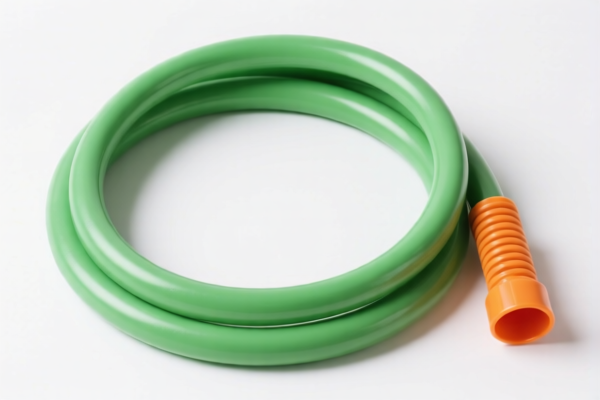
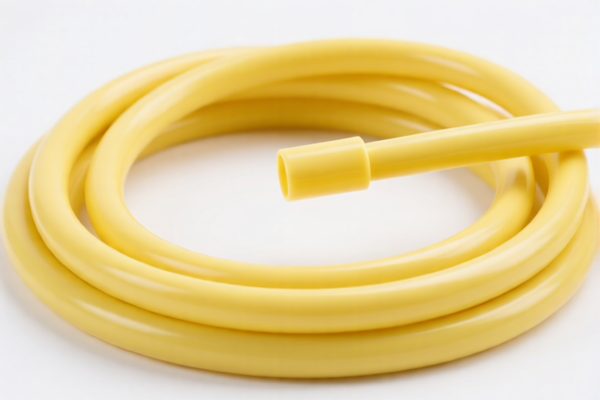
Coiled Plastic Hose Material: Plastic; Form: Hose; Fits Tube/Pipe/Hose Category. |
The most accurate code for flexible, coiled hoses. The summary explicitly states "Coiled Plastic Hose" and "Fits Tube/Pipe/Hose." This is likely the correct code for standard transparent PVC/PU drinking water or air hoses. | 38.1% |
🔍 Critical Note:
- Flexible Hose → Likely3917.32.00.10(38.1%).
- Rigid Fitting/Connector → Likely3917.40.00.95or3917.40.00.60(40.3%) OR3926.30.50.00(22.8%).
- Rigid Pipe/Hard Tube → Likely3926.90.99.87(22.8%).
- Misclassification Risk: Shipping a flexible hose as a "Fitting" (3917.40) could result in a 40.3% tariff instead of 38.1%. Shipping a rigid pipe as a "Hose" might be rejected if the form factor doesn't match "flexible/coiled."
💰 Part 3: 2026 Latest Tariff Rate Breakdown (Including Surcharges & Policy Add-ons)
✅ Applicable Country: United States (US)
✅ Origin: China (CN)
✅ Effective Date: Post-November 2025 (Current 301/IEEPA rules apply)
🎯 1. 3917.32.00.10 — Coiled Plastic Hose (Flexible)
| Item | Content |
|---|---|
| Base Tariff | 3.1% (Ad Valorem) |
| Section 301 Surcharge | +25.0% (USITC Footnote 9903.88.01 / Section 301 List 4) |
| IEEPA Surcharge | +10.0% (122-Clause Tariff, effective for Chinese plastic goods) |
| Total Tariff | 38.1% |
| Calculation Basis | CIF Value × 38.1% |
| De Minimis Exemption? | ❌ NO (Denied. Plastic hoses are subject to high tariffs and do not qualify for $800 de minimis relief if classified under these headings.) |
| Legal Path | IEEPA:9903.01.25 → Section 301 → USITC:3917.32.00.10 → FOOTNOTE:9903.88.01 |
📌 Explanation:
- The 25% is the standard Section 301 tariff on most Chinese plastic articles.
- The 10% is an additional levy under IEEPA (Executive Order 13959/related orders) targeting specific Chinese supply chains.
- Total 38.1% is a significant cost driver for flexible plastic hoses.
🎯 2. 3917.40.00.95 & 3917.40.00.60 — Plastic Fittings (Rigid/Accessory)
| Item | Content |
|---|---|
| Base Tariff | 5.3% (Ad Valorem) |
| Section 301 Surcharge | +25.0% |
| IEEPA Surcharge | +10.0% |
| Total Tariff | 40.3% |
| Calculation Basis | CIF Value × 40.3% |
| De Minimis Exemption? | ❌ NO |
| Legal Path | IEEPA:9903.01.25 → Section 301 → USITC:3917.40.00.xx |
📌 Explanation:
- These fittings attract the highest total tariff (40.3%).
-3917.40.00.60is specific to PVC fittings, while3917.40.00.95is for other plastic fittings. Both face the same punitive rates.
- Warning: If your "transparent plastic hose" is actually a rigid connector (e.g., a clear PVC elbow), it falls here, not on the flexible hose rate.
🎯 3. 3926.30.50.00 & 3926.90.99.87 — Other Plastic Articles / Hard Tubes
| Item | Content |
|---|---|
| Base Tariff | 5.3% (Ad Valorem) |
| Section 301 Surcharge | +7.5% (Lower tier Section 301 or specific exclusion/application) |
| IEEPA Surcharge | +10.0% |
| Total Tariff | 22.8% |
| Calculation Basis | CIF Value × 22.8% |
| De Minimis Exemption? | ❌ NO |
| Legal Path | IEEPA:9903.01.24 → Section 301 (List 4C/4E) → USITC:3926.xx |
📌 Explanation:
- These codes offer a significant savings (22.8% vs 40.3%).
- However, the justification is strict:
-3926.30.50.00must be clearly a "plastic article" with no conflict (often used for specific non-pipe plastic components).
-3926.90.99.87must be a hard tube (rigid), not a flexible hose.
- Risk: Misclassifying a flexible hose as "Hard Tube" (3926.90) to get 22.8% is a high-risk audit trigger. Customs will inspect the physical flexibility.
🛠️ Part 4: Customs Clearance Practical Advice (Battle-Tested Guide)
✅ 1. Documentation Checklist (Mandatory)
| Document | Required? | Details |
|---|---|---|
| ✅ Product Specification Sheet | ✔️ | Must state: Material (PVC/PU/PE), Shape (Flexible Coil vs. Rigid Pipe), Diameter, Wall Thickness. |
| ✅ Product Photos | ✔️ | Must show flexibility (if claiming hose) or rigidity (if claiming pipe/fitting). Close-up of texture. |
| ✅ Commercial Invoice | ✔️ | Use precise descriptions: "Coiled Flexible Transparent PVC Hose" or "Rigid Transparent PVC Pipe Fitting". Avoid generic "Plastic Tube." |
| ✅ Packing List | ✔️ | Detail quantity and weight. Ensure packaging doesn't damage flexibility (for hoses). |
| ✅ Material Safety Data Sheet (MSDS) | ✔️ | If used for food/water/beverage, provide FDA Compliance Statement. If industrial, provide chemical resistance data. |
| ✅ Country of Origin Certificate | ✔️ | Essential for applying correct tariffs and avoiding anti-dumping claims. |
✅ 2. Classification Strategy & Tricks
🔥 Golden Rule:
"Shape Dictates Code: Flexible = 3917.32, Rigid = 3917.40/3926.90. Be Honest, Be Precise!"
| Scenario | Recommended HS Code | Why? |
|---|---|---|
| Standard Clear PVC Water Hose (Flexible, Coiled) | 3917.32.00.10 |
Explicitly matches "Coiled Plastic Hose" in data. Lowest risk for flexible items. |
| Clear Plastic Elbow/Coupling (Rigid, Fitting) | 3917.40.00.95 |
Matches "Plastic Fitting." High tariff (40.3%) but accurate for rigid connectors. |
| Clear PVC Pipe Section (Rigid, Straight) | 3926.90.99.87 |
Matches "Hard Tube." Lower tariff (22.8%) but must prove rigidity. |
| Specialty Plastic Accessory (Not Pipe/Fitting) | 3926.30.50.00 |
Use only if it doesn't fit pipe/hose definitions. Lower tariff (22.8%). |
⚠️ Avoid:
- Calling a rigid pipe a "Hose" to save tariff → Customs will reject it as misdescription.
- Calling a flexible hose a "Hard Tube" → Audit risk if physical inspection shows coiling/flexibility.
✅ 3. Special Considerations
| Situation | Handling Advice |
|---|---|
| Food/Water Grade | Ensure the manufacturer provides FDA 21 CFR 177.1520 (Olefin Plastics) or equivalent compliance. Non-compliant items will be detained and destroyed. |
| Chemical Transfer | If used for acids/solvents, provide Chemical Resistance Chart. Misuse can lead to liability issues. |
| OEM Custom Colors | Even if transparent, if dyed, it’s still "Transparent Plastic Hose" for HS purposes. Label as "Clear" or "Colorless." |
| Bulk Rolls vs. Cut Pieces | Ensure invoice matches physical shipment. Bulk rolls are common for 3917.32. |
🌍 Part 5: Global Market Comparison (2026 Context)
| Market | Recommended HS Code | Approx. Tariff (China Origin) | Notes |
|---|---|---|---|
| 🇺🇸 USA | 3917.32.00.10 |
38.1% | High Section 301 + IEEPA. Strict enforcement on plastic hoses. |
| 🇺🇸 USA | 3917.40.00.95 |
40.3% | For fittings. Highest rate among plastic pipes/fittings. |
| 🇨🇳 China | 3917.32.00.10 |
~5-8% | No US-style surcharges. Focus on domestic standards. |
| 🇪🇺 EU | 3917.21.00 (PVC) |
~6.5% | No Section 301. CE marking required if for industrial use. |
| 🇬🇧 UK | 3917.21.00 |
~6.5% | Post-Brexit rules. Similar to EU. |
📌 Conclusion:
- USA is the most expensive market for Chinese plastic hoses due to layered tariffs.
- Cost Optimization: If possible, source non-China origins (e.g., Vietnam, Thailand) to potentially avoid Section 301 tariffs (subject to current rules).
- Classification Accuracy: The difference between 22.8% and 40.3% is massive. Ensure the product’s physical form (flexible vs. rigid) matches the HS Code.
📌 Part 6: Common Errors & Pitfalls (Learn from Others' Mistakes)
❌ Error 1: Declaring a Flexible Hose as a "Plastic Pipe" (3917.40)
👉 Consequence: Incorrect classification. Customs may assess higher tariffs (40.3%) or demand reclassification + penalties.
👉 Fix: Use 3917.32 for flexible coils.
❌ Error 2: Declaring a Rigid Fitting as a "Plastic Hose" (3917.32)
👉 Consequence: Customs inspection reveals rigid structure. Goods held for misclassification. Delays of 2-4 weeks.
👉 Fix: Use 3917.40 for rigid fittings.
❌ Error 3: Ignoring FDA Compliance for Water/Food Hoses
👉 Consequence: Border Detention. The FDA may block entry if no proof of food-grade material is provided.
👉 Fix: Include FDA compliance certificate with every shipment.
❌ Error 4: Vague Descriptions ("Plastic Tube")
👉 Consequence: CBP issues an Informational Notice or asks for extra documentation, delaying clearance.
👉 Fix: Use specific terms: "Coiled Flexible Transparent PVC Hose, 1/2" ID, Food Grade".
✅ Best Practice:
"Flexible Coiled Transparent PVC Hose, 1/2" Inner Diameter, FDA Compliant, Made in China"
vs.
"Plastic Hose" (Too vague)
🎯 Part 7: Conclusion: Precision Saves Money
🎯 Remember These Keys:
🔹 "Flexible Hose = 3917.32 (38.1%) | Rigid Fitting = 3917.40 (40.3%) | Hard Tube = 3926.90 (22.8%)"
🔹 "Tariff Difference is 17.5%! Classification is Critical!"
🔹 "Flexible vs. Rigid is the Single Biggest Risk Factor."
📌 Pro Tip:
If you are importing large volumes, consider applying for an Advance Ruling from CBP to lock in the HS Code classification before shipment. This provides legal certainty and avoids post-clearance audits.
📣 Immediate Action:
📞 Consult a Customs Broker + Provide Product Samples/Photos + Verify FDA Compliance
🚀 Ensure Smooth US Customs Entry, Avoid Delays, and Protect Your Margins!
✨ Professional Classification Starts Here!
💼 Every Decimal in the HS Code Impacts Your Bottom Line!
用户评价
关于 HS 编码归类
协调制度(HS)是由世界海关组织(WCO)制定的国际贸易商品分类标准。全球 200 多个国家采用 HS 系统作为海关关税、贸易统计和进出口监管的基础。
每个 HS 编码遵循以下层级结构:
- 章(2 位)——商品大类(例如:第 84 章:机器和机械设备)
- 品目(4 位)——章内的更具体分类
- 子目(6 位)——国际通用细分,所有 WCO 成员国统一使用
- 本国细分(8-10 位)——各国自行扩展的细分编码,如美国 HTSUS 10 位编码
正确的 HS 编码归类对于顺利通关、准确缴纳关税和遵守贸易法规至关重要。错误归类可能导致海关延误、多缴关税或罚款。
从CN进口到US时,适用的关税税率可能包括:
- 最惠国(MFN)税率——适用于 WTO 成员国的标准关税税率
- 普通税率——适用于无贸易协定国家
- 贸易救济关税——附加关税,如 301 条款(反倾销)、232 条款(国家安全)或反补贴税
本页内容仅供参考。如需正式归类,请咨询当地海关或持牌报关代理。