Transparent Plastic Hose
CN → US| HS Code | Tariff Rate | Origin | Destination | Doc |
|---|---|---|---|---|
| 3917400095 | 40.3% | CN | US | Official Doc |
| 3926305000 | 22.8% | CN | US | Official Doc |
| 3917400060 | 40.3% | CN | US | Official Doc |
| 3926909987 | 22.8% | CN | US | Official Doc |
| 3917320010 | 38.1% | CN | US | Official Doc |
Product Images
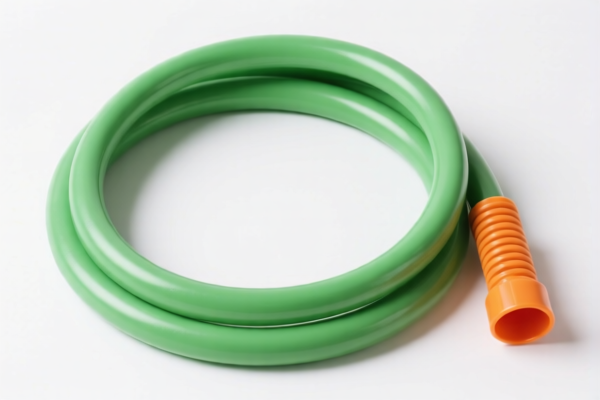
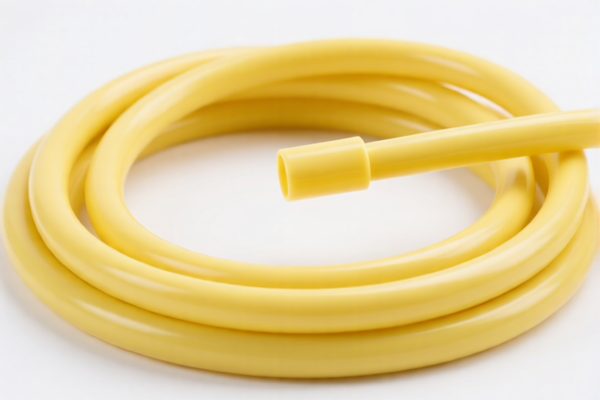
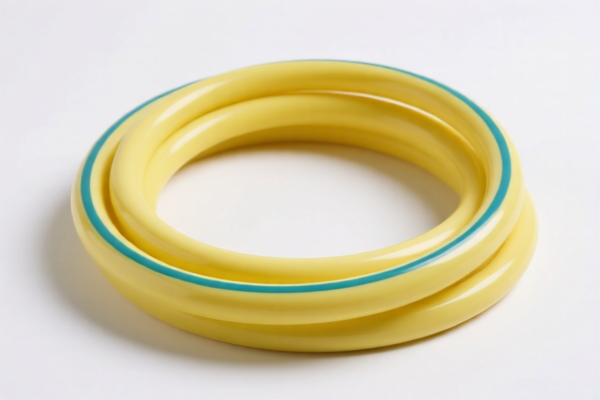
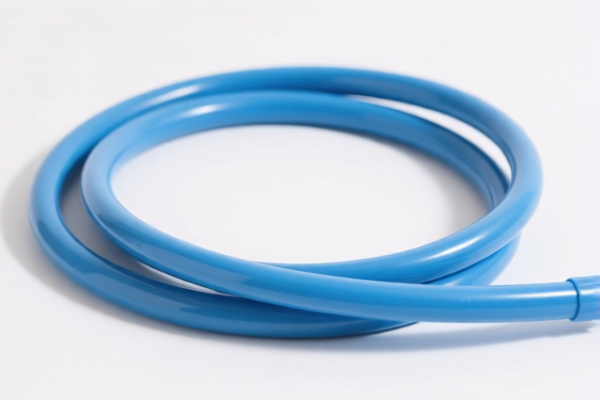
AI Analysis
🚰 Transparent Plastic Hose (Clear PVC/PU Hoses)
🌐 HS Code Reference & Customs Clearance Guide | 2026 Latest Tariff Analysis | Professional Strategy for US Imports
📌 Part 1: Product Definition & Classification: Are You Clear on What You’re Shipping?
"Transparent Plastic Hose" is a generic trade term, but in customs classification, form and function dictate the HS Code. It is broadly divided into two categories:
- Flexible Hoses (Plumbing/Industrial): Coiled or straight, soft tubes used for conveying water, air, or chemicals. These fall under Chapter 39 (Articles of Plastics), specifically headings for tubes and pipes.
- Rigid/semi-rigid Fittings & Accessories: If the item is a connector, valve, or rigid pipe segment made of plastic, it falls under 3917 (Tubes, Pipes and Hoses, and Joints...) or 3926 (Other Articles of Plastics).
⚠️ Key Distinction Point:
- If it is a flexible, coiled, or soft tube (even if transparent) → Look at 3917 or 3926.90 depending on specifics.
- If it is a rigid pipe section or fitting (connector/coupling) → Look at 3917.40 (Plastic Pipes/Fittings) or 3926.30 (Plastic Fittings for Pipes).
- "Transparent" alone does not change the tariff code; material composition (PVC, PE, PU) and shape (hose vs. fitting) do.
📦 Part 2: HS Code Classification Details (2026 Latest Tariff Concordance)
Based on the provided data, here are the specific HS Codes and their logical justifications:
| HS Code | Product Description | Logic & Justification | Tax Rate (Total) |
|---|---|---|---|
3917.40.00.95 |
Plastic Fittings, Transparent Tube Material: Plastic; Form: Fitting/Accessory; Use: Pipe Accessory. |
Classified as a fitting/accessory rather than a hose. The summary explicitly states "Form: Fitting" and "Use: Pipe Accessory," placing it in the "Other Fittings" sub-category of plastic pipes. | 40.3% |
3926.30.50.00 |
Plastic Fittings, Transparent Tube Material: Plastic; Form: Plastic Article; No material conflict. |
Classified as a general plastic article (often used for specific fittings not covered by 3917 or 3926.90). The summary notes "Form: Plastic Article" and "No material conflict," suggesting a catch-all for plastic fittings. | 22.8% |
3917.40.00.60 |
Plastic Fittings, Transparent Tube Material: Plastic; Form: Fitting/Accessory; Fits PVC Pipe Accessory Category. |
Specifically categorized under PVC (Polyvinyl Chloride) Pipe Accessories. If the hose/fitting is PVC and used in plumbing systems, this is the most precise fit for rigid/semi-rigid PVC fittings. | 40.3% |
3926.90.99.87 |
Plastic Fittings, Transparent Tube Material: Plastic; Form: Fitting/Transparent Tube; Fits Tube/Hard Tube Description. |
Classified as a hard tube or rigid pipe rather than a flexible hose. The summary emphasizes "Hard Tube" (硬管), which differentiates it from flexible plumbing hoses. | 22.8% |
3917.32.00.10 |
Coiled Plastic Hose Material: Plastic; Form: Hose; Fits Tube/Pipe/Hose Category. |
The most accurate code for flexible, coiled hoses. The summary explicitly states "Coiled Plastic Hose" and "Fits Tube/Pipe/Hose." This is likely the correct code for standard transparent PVC/PU drinking water or air hoses. | 38.1% |
🔍 Critical Note:
- Flexible Hose → Likely3917.32.00.10(38.1%).
- Rigid Fitting/Connector → Likely3917.40.00.95or3917.40.00.60(40.3%) OR3926.30.50.00(22.8%).
- Rigid Pipe/Hard Tube → Likely3926.90.99.87(22.8%).
- Misclassification Risk: Shipping a flexible hose as a "Fitting" (3917.40) could result in a 40.3% tariff instead of 38.1%. Shipping a rigid pipe as a "Hose" might be rejected if the form factor doesn't match "flexible/coiled."
💰 Part 3: 2026 Latest Tariff Rate Breakdown (Including Surcharges & Policy Add-ons)
✅ Applicable Country: United States (US)
✅ Origin: China (CN)
✅ Effective Date: Post-November 2025 (Current 301/IEEPA rules apply)
🎯 1. 3917.32.00.10 — Coiled Plastic Hose (Flexible)
| Item | Content |
|---|---|
| Base Tariff | 3.1% (Ad Valorem) |
| Section 301 Surcharge | +25.0% (USITC Footnote 9903.88.01 / Section 301 List 4) |
| IEEPA Surcharge | +10.0% (122-Clause Tariff, effective for Chinese plastic goods) |
| Total Tariff | 38.1% |
| Calculation Basis | CIF Value × 38.1% |
| De Minimis Exemption? | ❌ NO (Denied. Plastic hoses are subject to high tariffs and do not qualify for $800 de minimis relief if classified under these headings.) |
| Legal Path | IEEPA:9903.01.25 → Section 301 → USITC:3917.32.00.10 → FOOTNOTE:9903.88.01 |
📌 Explanation:
- The 25% is the standard Section 301 tariff on most Chinese plastic articles.
- The 10% is an additional levy under IEEPA (Executive Order 13959/related orders) targeting specific Chinese supply chains.
- Total 38.1% is a significant cost driver for flexible plastic hoses.
🎯 2. 3917.40.00.95 & 3917.40.00.60 — Plastic Fittings (Rigid/Accessory)
| Item | Content |
|---|---|
| Base Tariff | 5.3% (Ad Valorem) |
| Section 301 Surcharge | +25.0% |
| IEEPA Surcharge | +10.0% |
| Total Tariff | 40.3% |
| Calculation Basis | CIF Value × 40.3% |
| De Minimis Exemption? | ❌ NO |
| Legal Path | IEEPA:9903.01.25 → Section 301 → USITC:3917.40.00.xx |
📌 Explanation:
- These fittings attract the highest total tariff (40.3%).
-3917.40.00.60is specific to PVC fittings, while3917.40.00.95is for other plastic fittings. Both face the same punitive rates.
- Warning: If your "transparent plastic hose" is actually a rigid connector (e.g., a clear PVC elbow), it falls here, not on the flexible hose rate.
🎯 3. 3926.30.50.00 & 3926.90.99.87 — Other Plastic Articles / Hard Tubes
| Item | Content |
|---|---|
| Base Tariff | 5.3% (Ad Valorem) |
| Section 301 Surcharge | +7.5% (Lower tier Section 301 or specific exclusion/application) |
| IEEPA Surcharge | +10.0% |
| Total Tariff | 22.8% |
| Calculation Basis | CIF Value × 22.8% |
| De Minimis Exemption? | ❌ NO |
| Legal Path | IEEPA:9903.01.24 → Section 301 (List 4C/4E) → USITC:3926.xx |
📌 Explanation:
- These codes offer a significant savings (22.8% vs 40.3%).
- However, the justification is strict:
-3926.30.50.00must be clearly a "plastic article" with no conflict (often used for specific non-pipe plastic components).
-3926.90.99.87must be a hard tube (rigid), not a flexible hose.
- Risk: Misclassifying a flexible hose as "Hard Tube" (3926.90) to get 22.8% is a high-risk audit trigger. Customs will inspect the physical flexibility.
🛠️ Part 4: Customs Clearance Practical Advice (Battle-Tested Guide)
✅ 1. Documentation Checklist (Mandatory)
| Document | Required? | Details |
|---|---|---|
| ✅ Product Specification Sheet | ✔️ | Must state: Material (PVC/PU/PE), Shape (Flexible Coil vs. Rigid Pipe), Diameter, Wall Thickness. |
| ✅ Product Photos | ✔️ | Must show flexibility (if claiming hose) or rigidity (if claiming pipe/fitting). Close-up of texture. |
| ✅ Commercial Invoice | ✔️ | Use precise descriptions: "Coiled Flexible Transparent PVC Hose" or "Rigid Transparent PVC Pipe Fitting". Avoid generic "Plastic Tube." |
| ✅ Packing List | ✔️ | Detail quantity and weight. Ensure packaging doesn't damage flexibility (for hoses). |
| ✅ Material Safety Data Sheet (MSDS) | ✔️ | If used for food/water/beverage, provide FDA Compliance Statement. If industrial, provide chemical resistance data. |
| ✅ Country of Origin Certificate | ✔️ | Essential for applying correct tariffs and avoiding anti-dumping claims. |
✅ 2. Classification Strategy & Tricks
🔥 Golden Rule:
"Shape Dictates Code: Flexible = 3917.32, Rigid = 3917.40/3926.90. Be Honest, Be Precise!"
| Scenario | Recommended HS Code | Why? |
|---|---|---|
| Standard Clear PVC Water Hose (Flexible, Coiled) | 3917.32.00.10 |
Explicitly matches "Coiled Plastic Hose" in data. Lowest risk for flexible items. |
| Clear Plastic Elbow/Coupling (Rigid, Fitting) | 3917.40.00.95 |
Matches "Plastic Fitting." High tariff (40.3%) but accurate for rigid connectors. |
| Clear PVC Pipe Section (Rigid, Straight) | 3926.90.99.87 |
Matches "Hard Tube." Lower tariff (22.8%) but must prove rigidity. |
| Specialty Plastic Accessory (Not Pipe/Fitting) | 3926.30.50.00 |
Use only if it doesn't fit pipe/hose definitions. Lower tariff (22.8%). |
⚠️ Avoid:
- Calling a rigid pipe a "Hose" to save tariff → Customs will reject it as misdescription.
- Calling a flexible hose a "Hard Tube" → Audit risk if physical inspection shows coiling/flexibility.
✅ 3. Special Considerations
| Situation | Handling Advice |
|---|---|
| Food/Water Grade | Ensure the manufacturer provides FDA 21 CFR 177.1520 (Olefin Plastics) or equivalent compliance. Non-compliant items will be detained and destroyed. |
| Chemical Transfer | If used for acids/solvents, provide Chemical Resistance Chart. Misuse can lead to liability issues. |
| OEM Custom Colors | Even if transparent, if dyed, it’s still "Transparent Plastic Hose" for HS purposes. Label as "Clear" or "Colorless." |
| Bulk Rolls vs. Cut Pieces | Ensure invoice matches physical shipment. Bulk rolls are common for 3917.32. |
🌍 Part 5: Global Market Comparison (2026 Context)
| Market | Recommended HS Code | Approx. Tariff (China Origin) | Notes |
|---|---|---|---|
| 🇺🇸 USA | 3917.32.00.10 |
38.1% | High Section 301 + IEEPA. Strict enforcement on plastic hoses. |
| 🇺🇸 USA | 3917.40.00.95 |
40.3% | For fittings. Highest rate among plastic pipes/fittings. |
| 🇨🇳 China | 3917.32.00.10 |
~5-8% | No US-style surcharges. Focus on domestic standards. |
| 🇪🇺 EU | 3917.21.00 (PVC) |
~6.5% | No Section 301. CE marking required if for industrial use. |
| 🇬🇧 UK | 3917.21.00 |
~6.5% | Post-Brexit rules. Similar to EU. |
📌 Conclusion:
- USA is the most expensive market for Chinese plastic hoses due to layered tariffs.
- Cost Optimization: If possible, source non-China origins (e.g., Vietnam, Thailand) to potentially avoid Section 301 tariffs (subject to current rules).
- Classification Accuracy: The difference between 22.8% and 40.3% is massive. Ensure the product’s physical form (flexible vs. rigid) matches the HS Code.
📌 Part 6: Common Errors & Pitfalls (Learn from Others' Mistakes)
❌ Error 1: Declaring a Flexible Hose as a "Plastic Pipe" (3917.40)
👉 Consequence: Incorrect classification. Customs may assess higher tariffs (40.3%) or demand reclassification + penalties.
👉 Fix: Use 3917.32 for flexible coils.
❌ Error 2: Declaring a Rigid Fitting as a "Plastic Hose" (3917.32)
👉 Consequence: Customs inspection reveals rigid structure. Goods held for misclassification. Delays of 2-4 weeks.
👉 Fix: Use 3917.40 for rigid fittings.
❌ Error 3: Ignoring FDA Compliance for Water/Food Hoses
👉 Consequence: Border Detention. The FDA may block entry if no proof of food-grade material is provided.
👉 Fix: Include FDA compliance certificate with every shipment.
❌ Error 4: Vague Descriptions ("Plastic Tube")
👉 Consequence: CBP issues an Informational Notice or asks for extra documentation, delaying clearance.
👉 Fix: Use specific terms: "Coiled Flexible Transparent PVC Hose, 1/2" ID, Food Grade".
✅ Best Practice:
"Flexible Coiled Transparent PVC Hose, 1/2" Inner Diameter, FDA Compliant, Made in China"
vs.
"Plastic Hose" (Too vague)
🎯 Part 7: Conclusion: Precision Saves Money
🎯 Remember These Keys:
🔹 "Flexible Hose = 3917.32 (38.1%) | Rigid Fitting = 3917.40 (40.3%) | Hard Tube = 3926.90 (22.8%)"
🔹 "Tariff Difference is 17.5%! Classification is Critical!"
🔹 "Flexible vs. Rigid is the Single Biggest Risk Factor."
📌 Pro Tip:
If you are importing large volumes, consider applying for an Advance Ruling from CBP to lock in the HS Code classification before shipment. This provides legal certainty and avoids post-clearance audits.
📣 Immediate Action:
📞 Consult a Customs Broker + Provide Product Samples/Photos + Verify FDA Compliance
🚀 Ensure Smooth US Customs Entry, Avoid Delays, and Protect Your Margins!
✨ Professional Classification Starts Here!
💼 Every Decimal in the HS Code Impacts Your Bottom Line!
Customer Reviews
About HS Code Classification
The Harmonized System (HS) is an internationally standardized nomenclature developed by the World Customs Organization (WCO) to classify traded products. Over 200 countries use the HS system as the basis for customs tariffs, trade statistics, and import/export regulations.
Each HS code follows a hierarchical structure:
- Chapter (2 digits) — Broad category of goods (e.g., Chapter 84: Machinery and Mechanical Appliances)
- Heading (4 digits) — More specific grouping within the chapter
- Subheading (6 digits) — Internationally standardized breakdown, used by all WCO member countries
- National subdivisions (8-10 digits) — Country-specific extensions for further classification, such as US HTSUS 10-digit codes
Correct HS code classification is essential for smooth customs clearance, accurate duty payment, and compliance with trade regulations. Misclassification can lead to customs delays, overpayment of duties, or penalties.
When importing from CN to US, the applicable tariff rates may include:
- Most-Favored-Nation (MFN) rate — The standard duty rate applied to WTO members
- General rate — Applied to countries without trade agreements
- Trade remedy duties — Additional tariffs such as Section 301 (anti-dumping), Section 232 (national security), or countervailing duties
The information provided on this page is for reference purposes only. For official classification, please consult with your local customs authority or a licensed customs broker.