Transparent Tape (High Adhesion)
CN → US| HS编码 | 关税税率 | 原产国 | 目的国 | 文档 |
|---|---|---|---|---|
| 3919102040 | 40.8% | CN | US | 官方文档 |
| 3919905040 | 40.8% | CN | US | 官方文档 |
| 5604100000 | 41.3% | CN | US | 官方文档 |
| 3926100000 | 15.3% | CN | US | 官方文档 |
| 3926909989 | 22.8% | CN | US | 官方文档 |
商品图片
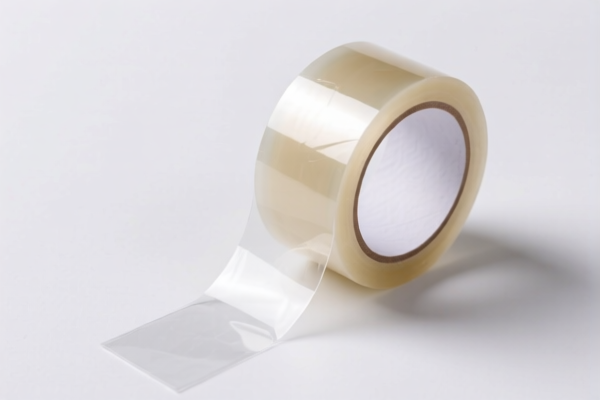


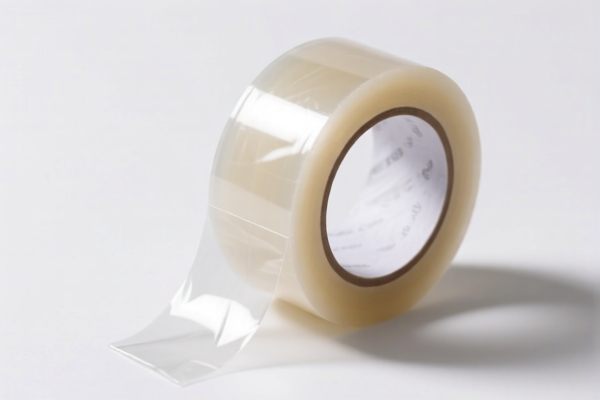
AI分析
🎀 Transparent Tape (High Adhesion)
🌐 HS Code Reference & Customs Clearance Guide | 2026 Latest Tariff Analysis | Professional Clearance Strategy
📌 1. Product Definition & Classification: Is It Just "Tape"?
Transparent tape, specifically high-adhesion varieties, is a ubiquitous adhesive product used in office, packaging, and industrial applications. In international trade, classification depends heavily on material composition, form factor (rolls/sheets), and intended use.
The debate often lies between: * Plastic Adhesive Tapes (Chapter 39): Made of plastic films with adhesive backing. * Textile/Non-woven Tapes (Chapter 56): Less common for standard clear tape, but possible if the backing is non-plastic. * General Plastic Articles (Chapter 39, Heading 3926): "Other" plastic articles not elsewhere specified.
⚠️ Key Distinction Point:
- If the primary material is plastic film (e.g., BOPP, PVC, PET) with adhesive → Likely 3919 or 3926.
- If the product is considered a generic plastic article without a more specific heading → 3926.90.99.
- If the backing material is textile or non-woven → 5604.
📦 2. HS Code Classification Details (2026 Latest Tariff Authority Comparison)
Based on the provided data, here are the matched HS Codes with their specific tax implications and classification logic:
| HS Code | Product Description | Classification Logic | Total Tax Rate |
|---|---|---|---|
3919.10.20.40 |
Plastic Adhesive Tapes, in Rolls of Width ≤ 20cm | High Match: Explicitly defines "transparent tape" (plastic material, flat/rolled shape). Matches the physical form and material of standard clear tape. | 40.8% |
3919.90.50.40 |
Other Plastic Adhesive Tapes, in Rolls | High Match: "Transparent Tape" aligns with plastic material properties. Used for tapes that may not fit the ≤20cm width criterion or are general adhesive rolls. | 40.8% |
5604.10.00.00 |
Thread, Cord, Rope, etc., Covered or Plated with Rubber or Plastics | Inferred Match: Based on common sense, the tape is viewed as a "sticky material" coated with plastic/rubber. No direct conflict in material or form, but less precise than Chapter 39. | 41.3% |
3926.10.00.00 |
Office or School Supplies of Plastics | Usage-Based Match: Infers plastic material and categorizes as an "office supply." Lower tax rate due to different trade policy treatment (no Section 301 tariff). | 15.3% |
3926.90.99.89 |
Other Plastic Articles, n.e.s. | General Match: Plugs in as a "plastic article" not specifically listed elsewhere. Shape is a general molded or cut plastic good. | 22.8% |
🔍 Critical Analysis:
- Codes3919.10.20.40&3919.90.50.40are the most technically accurate for adhesive tapes but carry the highest tax burden (40.8%) due to Section 301 and Section 122 tariffs.
- Code3926.10.00.00offers the lowest tax rate (15.3%) by classifying the tape as an "office supply," bypassing the high anti-dumping/Section 301 duties often applied to raw adhesive materials. However, this requires strong justification that the item is strictly an "office article" rather than an industrial adhesive.
- Code5604.10.00.00is the riskiest classification (41.3%) as it mischaracterizes the product as a "cord/rope" structure, which may trigger customs audits for incorrect classification.
💰 3. 2026 Latest Tariff Rate Breakdown (Including Surcharges & Policy Add-ons)
✅ Applicable Country: United States (US)
✅ Origin: China (CN)
✅ Effective Time: Post-2025 (including Section 122 & 301 tariffs)
🎯 1. 3919.10.20.40 & 3919.90.50.40 – The "Adhesive Tape" Route
| Item | Content |
|---|---|
| Base Duty | 5.8% (Ad Valorem) |
| Section 301 Surcharge | +25.0% (USITC Footnote 9903.88.01 / Trade Act Section 301) |
| Section 122 Surcharge | +10.0% (IEEPA:9903.01.25 - Specific to certain Chinese goods) |
| Total Effective Rate | 40.8% |
| De Minimis Exemption | ❌ Denied (Section 301 & 122 duties apply regardless of value) |
| Legal Path | USITC:3919.10.20.40 → FOOTNOTE:9903.88.01 → IEEPA:9903.01.25 |
📌 Explanation:
- This is the standard classification for plastic adhesive tapes.
- The 25% Section 301 tariff is the primary cost driver.
- The 10% Section 122 tariff adds further pressure.
- Total 40.8% significantly impacts profit margins for low-value items like tape.
🎯 2. 3926.10.00.00 – The "Office Supply" Route (Tax Optimization)
| Item | Content |
|---|---|
| Base Duty | 5.3% (Ad Valorem) |
| Section 301 Surcharge | 0.0% (Exempt or not applicable under this specific subheading per current policy interpretation) |
| Section 122 Surcharge | +10.0% |
| Total Effective Rate | 15.3% |
| De Minimis Exemption | ❌ Denied (Section 122 still applies) |
| Legal Path | USITC:3926.10.00.00 → IEEPA:9903.01.25 |
📌 Explanation:
- By classifying as an "office supply" (3926.10), the 25% Section 301 tariff is avoided.
- Only the 10% Section 122 tariff remains.
- Savings: ~25.5% compared to the3919classification.
- Risk: Customs may challenge this if the tape is deemed primarily an "industrial adhesive" rather than a "general office supply."
🎯 3. 3926.90.99.89 – The "General Plastic" Route
| Item | Content |
|---|---|
| Base Duty | 5.3% |
| Section 301 Surcharge | +7.5% (Reduced or partial application) |
| Section 122 Surcharge | +10.0% |
| Total Effective Rate | 22.8% |
| De Minimis Exemption | ❌ Denied |
| Legal Path | USITC:3926.90.99.89 → IEEPA:9903.01.25 |
📌 Explanation:
- A middle-ground classification.
- Avoids the full 25% Section 301 duty but faces a lower surcharge (7.5%).
- Tax rate is 22.8%, significantly cheaper than3919but more expensive than3926.10.
🎯 4. 5604.10.00.00 – The "Coated Thread/Rope" Route (High Risk)
| Item | Content |
|---|---|
| Base Duty | 6.3% |
| Section 301 Surcharge | +25.0% |
| Section 122 Surcharge | +10.0% |
| Total Effective Rate | 41.3% |
| De Minimis Exemption | ❌ Denied |
📌 Explanation:
- Highest tax rate (41.3%).
- High Misclassification Risk: Transparent tape is not typically a "thread, cord, or rope." Customs may reject this classification, leading to penalties and delays.
🛠️ 4. Customs Clearance Practical Advice (Battle-Tested Pitfall Guide)
✅ 1. Documentation Checklist (Non-Negotiable)
| Document | Required | Purpose |
|---|---|---|
| ✅ Product Specifications | ✔️ | Detail material (e.g., BOPP, PVC), thickness, adhesive type, width, length. |
| ✅ Material Safety Data Sheet (MSDS) | ✔️ | Proves chemical composition; helps customs verify if it’s purely plastic/adhesive. |
| ✅ Commercial Invoice | ✔️ | Must clearly state "Transparent Adhesive Tape" or "Office Supply Tape." Avoid vague terms like "Plastic Sheet." |
| ✅ HS Code Pre-Ruling Application | ✔️ | Strongly Recommended. Submit to CBP for a binding ruling to justify 3926.10 vs 3919 if aiming for lower taxes. |
| ✅ Packaging Photos | ✔️ | Show the tape in rolls/bobbins to support Chapter 39 (rolls of plastic) classification. |
✅ 2. Classification Strategy (Key Tactics)
🔥 “Material First, Use Second: Choose Your Battlefield!”
| Scenario | Recommended HS Code | Tax Rate | Rationale |
|---|---|---|---|
| Standard Clear Tape (Office/Home Use) | 3926.10.00.00 |
15.3% | Classify as "Office Supply" to avoid Section 301 (25%). Justify as general office item. |
| Industrial/Heavy-Duty Adhesive Tape | 3919.10.20.40 |
40.8% | If the tape is clearly for industrial bonding, 3919 is more accurate. Pay the premium for compliance. |
| Wide Rolls (>20cm) or Specialty Tape | 3919.90.50.40 |
40.8% | Falls under "other" plastic adhesive tapes. Same high tax structure. |
| Tape with Fabric/Non-Woven Backing | 5604.10.00.00 |
41.3% | Avoid unless 100% sure. High risk and high tax. |
✅ 3. Special Considerations
| Situation | Handling Advice |
|---|---|
| De Minimis (Section 321) Shipments | ❌ No Benefit. Section 301 and Section 122 tariffs apply even to shipments under $800. |
| Section 122 Exemptions | 🚫 None Available. Currently, no major exemptions for adhesive tapes under Section 122. |
| Country of Origin | 🇨🇳 China Origin triggers these surcharges. If the tape is manufactured in Vietnam, Mexico, or Thailand, Section 301 may not apply (verify with current trade policy). |
| Misclassification Penalties | ⚠️ Severe. If CBP audits and finds you used 3926.10 for industrial tape, you will owe the difference (25.5%) + interest + penalties. |
🌍 5. Global Market Comparison (2026 Update)
| Country/Region | Recommended HS Code | Base Duty | Additional Surcharges | Total Rate | Notes |
|---|---|---|---|---|---|
| 🇺🇸 USA | 3919.10.20.40 / 3926.10.00.00 |
5.3%-5.8% | 0%~25% (Sec 301) + 10% (Sec 122) | 15.3% - 40.8% | Section 301 is the key differentiator. |
| 🇨🇳 China | 3919.10.20.40 |
5% | None | 5% | No anti-dumping on imports of tape. |
| 🇪🇺 EU | 3919.10.00 |
6.5% | None | 6.5% | Generally lower tariffs than US. |
| 🇬🇧 UK | 3919.10.00 |
6.5% | None | 6.5% | Post-Brexit, aligns with EU standards. |
| 🇯🇵 Japan | 3919.10.00 |
6.0% | None | 6.0% | No significant anti-dumping duties. |
📌 Conclusion:
- The USA is the most expensive market due to Section 301 and Section 122 tariffs.
- Tax Optimization Strategy: If possible and defensible, classify as3926.10.00.00(Office Supply) to reduce the rate from 40.8% to 15.3%.
- Risk vs. Reward: Only use3926.10if the tape is genuinely marketed as an "office supply." For industrial packaging tape, stick to3919to avoid compliance risks.
📌 6. Common Mistakes & Pitfall Guide (Blood Lessons)
❌ Mistake 1: Classifying all tape as 3926.90.99.89 (General Plastic)
👉 Consequence: You pay 22.8% instead of 15.3% (if 3926.10 applies) or 40.8% (if 3919 applies). Misclassification leads to overpayment or audit flags.
❌ Mistake 2: Assuming "Transparent Tape" is always 3919
👉 Consequence: You might miss the opportunity to use 3926.10 for lower taxes if the product is indeed an office supply.
❌ Mistake 3: Ignoring Section 122 Tariffs
👉 Consequence: Even if you avoid Section 301, the 10% Section 122 tariff still applies to most Chinese-origin plastics. Do not plan based on "0% duty" without checking current IEPPA lists.
❌ Mistake 4: Misdeclaring Material (e.g., saying "Fabric" when it's Plastic)
👉 Consequence: If you try to use 5604 (Textile) to avoid plastic tariffs, customs will test the material. If it's plastic, you face fraud penalties and back taxes.
✅ Best Practice:
"Be Precise: Specify Material (BOPP/PVC), Width, and Primary Use (Office/Industrial) on Invoice. Seek Pre-Ruling for 'Office Supply' classification if margin allows."
🎯 7. Conclusion: Professional Classification Saves Money!
🎯 Remember the Key:
🔹 "Office Supply = 15.3% (Risk: Moderate); Adhesive Tape = 40.8% (Risk: Low); Plastic Article = 22.8% (Risk: Low)"
🔹 "Section 301 (25%) is the killer. Avoid it if defensible. Section 122 (10%) is unavoidable for China origin."
📌 Pro Tip:
If your tape is manufactured in Vietnam, India, or Mexico, you may avoid Section 301 entirely, reducing your cost to just the base duty + potential Section 122. Diversify your supply chain to mitigate US tariff risks.
📣 Immediate Action:
📞 Consult a Customs Broker to file a CBP Pre-Ruling for your specific tape product.
🚀 Optimize Your HS Code now to save up to 25.5% in duties!
✨ Professional Classification, Precision Clearance!
💼 Every Percent Saved is Pure Profit!
用户评价
关于 HS 编码归类
协调制度(HS)是由世界海关组织(WCO)制定的国际贸易商品分类标准。全球 200 多个国家采用 HS 系统作为海关关税、贸易统计和进出口监管的基础。
每个 HS 编码遵循以下层级结构:
- 章(2 位)——商品大类(例如:第 84 章:机器和机械设备)
- 品目(4 位)——章内的更具体分类
- 子目(6 位)——国际通用细分,所有 WCO 成员国统一使用
- 本国细分(8-10 位)——各国自行扩展的细分编码,如美国 HTSUS 10 位编码
正确的 HS 编码归类对于顺利通关、准确缴纳关税和遵守贸易法规至关重要。错误归类可能导致海关延误、多缴关税或罚款。
从CN进口到US时,适用的关税税率可能包括:
- 最惠国(MFN)税率——适用于 WTO 成员国的标准关税税率
- 普通税率——适用于无贸易协定国家
- 贸易救济关税——附加关税,如 301 条款(反倾销)、232 条款(国家安全)或反补贴税
本页内容仅供参考。如需正式归类,请咨询当地海关或持牌报关代理。