Transparent Tape (High Adhesion)
CN → US| HS Code | Tariff Rate | Origin | Destination | Doc |
|---|---|---|---|---|
| 3919102040 | 40.8% | CN | US | Official Doc |
| 3919905040 | 40.8% | CN | US | Official Doc |
| 5604100000 | 41.3% | CN | US | Official Doc |
| 3926100000 | 15.3% | CN | US | Official Doc |
| 3926909989 | 22.8% | CN | US | Official Doc |
Product Images
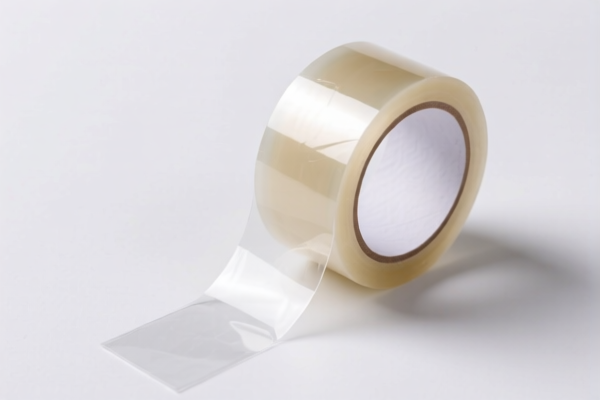


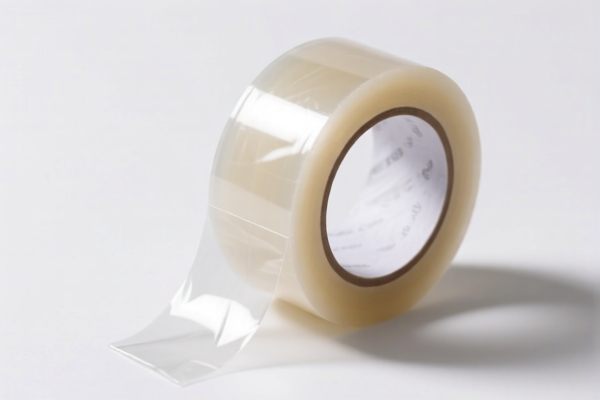
AI Analysis
🎀 Transparent Tape (High Adhesion)
🌐 HS Code Reference & Customs Clearance Guide | 2026 Latest Tariff Analysis | Professional Clearance Strategy
📌 1. Product Definition & Classification: Is It Just "Tape"?
Transparent tape, specifically high-adhesion varieties, is a ubiquitous adhesive product used in office, packaging, and industrial applications. In international trade, classification depends heavily on material composition, form factor (rolls/sheets), and intended use.
The debate often lies between: * Plastic Adhesive Tapes (Chapter 39): Made of plastic films with adhesive backing. * Textile/Non-woven Tapes (Chapter 56): Less common for standard clear tape, but possible if the backing is non-plastic. * General Plastic Articles (Chapter 39, Heading 3926): "Other" plastic articles not elsewhere specified.
⚠️ Key Distinction Point:
- If the primary material is plastic film (e.g., BOPP, PVC, PET) with adhesive → Likely 3919 or 3926.
- If the product is considered a generic plastic article without a more specific heading → 3926.90.99.
- If the backing material is textile or non-woven → 5604.
📦 2. HS Code Classification Details (2026 Latest Tariff Authority Comparison)
Based on the provided data, here are the matched HS Codes with their specific tax implications and classification logic:
| HS Code | Product Description | Classification Logic | Total Tax Rate |
|---|---|---|---|
3919.10.20.40 |
Plastic Adhesive Tapes, in Rolls of Width ≤ 20cm | High Match: Explicitly defines "transparent tape" (plastic material, flat/rolled shape). Matches the physical form and material of standard clear tape. | 40.8% |
3919.90.50.40 |
Other Plastic Adhesive Tapes, in Rolls | High Match: "Transparent Tape" aligns with plastic material properties. Used for tapes that may not fit the ≤20cm width criterion or are general adhesive rolls. | 40.8% |
5604.10.00.00 |
Thread, Cord, Rope, etc., Covered or Plated with Rubber or Plastics | Inferred Match: Based on common sense, the tape is viewed as a "sticky material" coated with plastic/rubber. No direct conflict in material or form, but less precise than Chapter 39. | 41.3% |
3926.10.00.00 |
Office or School Supplies of Plastics | Usage-Based Match: Infers plastic material and categorizes as an "office supply." Lower tax rate due to different trade policy treatment (no Section 301 tariff). | 15.3% |
3926.90.99.89 |
Other Plastic Articles, n.e.s. | General Match: Plugs in as a "plastic article" not specifically listed elsewhere. Shape is a general molded or cut plastic good. | 22.8% |
🔍 Critical Analysis:
- Codes3919.10.20.40&3919.90.50.40are the most technically accurate for adhesive tapes but carry the highest tax burden (40.8%) due to Section 301 and Section 122 tariffs.
- Code3926.10.00.00offers the lowest tax rate (15.3%) by classifying the tape as an "office supply," bypassing the high anti-dumping/Section 301 duties often applied to raw adhesive materials. However, this requires strong justification that the item is strictly an "office article" rather than an industrial adhesive.
- Code5604.10.00.00is the riskiest classification (41.3%) as it mischaracterizes the product as a "cord/rope" structure, which may trigger customs audits for incorrect classification.
💰 3. 2026 Latest Tariff Rate Breakdown (Including Surcharges & Policy Add-ons)
✅ Applicable Country: United States (US)
✅ Origin: China (CN)
✅ Effective Time: Post-2025 (including Section 122 & 301 tariffs)
🎯 1. 3919.10.20.40 & 3919.90.50.40 – The "Adhesive Tape" Route
| Item | Content |
|---|---|
| Base Duty | 5.8% (Ad Valorem) |
| Section 301 Surcharge | +25.0% (USITC Footnote 9903.88.01 / Trade Act Section 301) |
| Section 122 Surcharge | +10.0% (IEEPA:9903.01.25 - Specific to certain Chinese goods) |
| Total Effective Rate | 40.8% |
| De Minimis Exemption | ❌ Denied (Section 301 & 122 duties apply regardless of value) |
| Legal Path | USITC:3919.10.20.40 → FOOTNOTE:9903.88.01 → IEEPA:9903.01.25 |
📌 Explanation:
- This is the standard classification for plastic adhesive tapes.
- The 25% Section 301 tariff is the primary cost driver.
- The 10% Section 122 tariff adds further pressure.
- Total 40.8% significantly impacts profit margins for low-value items like tape.
🎯 2. 3926.10.00.00 – The "Office Supply" Route (Tax Optimization)
| Item | Content |
|---|---|
| Base Duty | 5.3% (Ad Valorem) |
| Section 301 Surcharge | 0.0% (Exempt or not applicable under this specific subheading per current policy interpretation) |
| Section 122 Surcharge | +10.0% |
| Total Effective Rate | 15.3% |
| De Minimis Exemption | ❌ Denied (Section 122 still applies) |
| Legal Path | USITC:3926.10.00.00 → IEEPA:9903.01.25 |
📌 Explanation:
- By classifying as an "office supply" (3926.10), the 25% Section 301 tariff is avoided.
- Only the 10% Section 122 tariff remains.
- Savings: ~25.5% compared to the3919classification.
- Risk: Customs may challenge this if the tape is deemed primarily an "industrial adhesive" rather than a "general office supply."
🎯 3. 3926.90.99.89 – The "General Plastic" Route
| Item | Content |
|---|---|
| Base Duty | 5.3% |
| Section 301 Surcharge | +7.5% (Reduced or partial application) |
| Section 122 Surcharge | +10.0% |
| Total Effective Rate | 22.8% |
| De Minimis Exemption | ❌ Denied |
| Legal Path | USITC:3926.90.99.89 → IEEPA:9903.01.25 |
📌 Explanation:
- A middle-ground classification.
- Avoids the full 25% Section 301 duty but faces a lower surcharge (7.5%).
- Tax rate is 22.8%, significantly cheaper than3919but more expensive than3926.10.
🎯 4. 5604.10.00.00 – The "Coated Thread/Rope" Route (High Risk)
| Item | Content |
|---|---|
| Base Duty | 6.3% |
| Section 301 Surcharge | +25.0% |
| Section 122 Surcharge | +10.0% |
| Total Effective Rate | 41.3% |
| De Minimis Exemption | ❌ Denied |
📌 Explanation:
- Highest tax rate (41.3%).
- High Misclassification Risk: Transparent tape is not typically a "thread, cord, or rope." Customs may reject this classification, leading to penalties and delays.
🛠️ 4. Customs Clearance Practical Advice (Battle-Tested Pitfall Guide)
✅ 1. Documentation Checklist (Non-Negotiable)
| Document | Required | Purpose |
|---|---|---|
| ✅ Product Specifications | ✔️ | Detail material (e.g., BOPP, PVC), thickness, adhesive type, width, length. |
| ✅ Material Safety Data Sheet (MSDS) | ✔️ | Proves chemical composition; helps customs verify if it’s purely plastic/adhesive. |
| ✅ Commercial Invoice | ✔️ | Must clearly state "Transparent Adhesive Tape" or "Office Supply Tape." Avoid vague terms like "Plastic Sheet." |
| ✅ HS Code Pre-Ruling Application | ✔️ | Strongly Recommended. Submit to CBP for a binding ruling to justify 3926.10 vs 3919 if aiming for lower taxes. |
| ✅ Packaging Photos | ✔️ | Show the tape in rolls/bobbins to support Chapter 39 (rolls of plastic) classification. |
✅ 2. Classification Strategy (Key Tactics)
🔥 “Material First, Use Second: Choose Your Battlefield!”
| Scenario | Recommended HS Code | Tax Rate | Rationale |
|---|---|---|---|
| Standard Clear Tape (Office/Home Use) | 3926.10.00.00 |
15.3% | Classify as "Office Supply" to avoid Section 301 (25%). Justify as general office item. |
| Industrial/Heavy-Duty Adhesive Tape | 3919.10.20.40 |
40.8% | If the tape is clearly for industrial bonding, 3919 is more accurate. Pay the premium for compliance. |
| Wide Rolls (>20cm) or Specialty Tape | 3919.90.50.40 |
40.8% | Falls under "other" plastic adhesive tapes. Same high tax structure. |
| Tape with Fabric/Non-Woven Backing | 5604.10.00.00 |
41.3% | Avoid unless 100% sure. High risk and high tax. |
✅ 3. Special Considerations
| Situation | Handling Advice |
|---|---|
| De Minimis (Section 321) Shipments | ❌ No Benefit. Section 301 and Section 122 tariffs apply even to shipments under $800. |
| Section 122 Exemptions | 🚫 None Available. Currently, no major exemptions for adhesive tapes under Section 122. |
| Country of Origin | 🇨🇳 China Origin triggers these surcharges. If the tape is manufactured in Vietnam, Mexico, or Thailand, Section 301 may not apply (verify with current trade policy). |
| Misclassification Penalties | ⚠️ Severe. If CBP audits and finds you used 3926.10 for industrial tape, you will owe the difference (25.5%) + interest + penalties. |
🌍 5. Global Market Comparison (2026 Update)
| Country/Region | Recommended HS Code | Base Duty | Additional Surcharges | Total Rate | Notes |
|---|---|---|---|---|---|
| 🇺🇸 USA | 3919.10.20.40 / 3926.10.00.00 |
5.3%-5.8% | 0%~25% (Sec 301) + 10% (Sec 122) | 15.3% - 40.8% | Section 301 is the key differentiator. |
| 🇨🇳 China | 3919.10.20.40 |
5% | None | 5% | No anti-dumping on imports of tape. |
| 🇪🇺 EU | 3919.10.00 |
6.5% | None | 6.5% | Generally lower tariffs than US. |
| 🇬🇧 UK | 3919.10.00 |
6.5% | None | 6.5% | Post-Brexit, aligns with EU standards. |
| 🇯🇵 Japan | 3919.10.00 |
6.0% | None | 6.0% | No significant anti-dumping duties. |
📌 Conclusion:
- The USA is the most expensive market due to Section 301 and Section 122 tariffs.
- Tax Optimization Strategy: If possible and defensible, classify as3926.10.00.00(Office Supply) to reduce the rate from 40.8% to 15.3%.
- Risk vs. Reward: Only use3926.10if the tape is genuinely marketed as an "office supply." For industrial packaging tape, stick to3919to avoid compliance risks.
📌 6. Common Mistakes & Pitfall Guide (Blood Lessons)
❌ Mistake 1: Classifying all tape as 3926.90.99.89 (General Plastic)
👉 Consequence: You pay 22.8% instead of 15.3% (if 3926.10 applies) or 40.8% (if 3919 applies). Misclassification leads to overpayment or audit flags.
❌ Mistake 2: Assuming "Transparent Tape" is always 3919
👉 Consequence: You might miss the opportunity to use 3926.10 for lower taxes if the product is indeed an office supply.
❌ Mistake 3: Ignoring Section 122 Tariffs
👉 Consequence: Even if you avoid Section 301, the 10% Section 122 tariff still applies to most Chinese-origin plastics. Do not plan based on "0% duty" without checking current IEPPA lists.
❌ Mistake 4: Misdeclaring Material (e.g., saying "Fabric" when it's Plastic)
👉 Consequence: If you try to use 5604 (Textile) to avoid plastic tariffs, customs will test the material. If it's plastic, you face fraud penalties and back taxes.
✅ Best Practice:
"Be Precise: Specify Material (BOPP/PVC), Width, and Primary Use (Office/Industrial) on Invoice. Seek Pre-Ruling for 'Office Supply' classification if margin allows."
🎯 7. Conclusion: Professional Classification Saves Money!
🎯 Remember the Key:
🔹 "Office Supply = 15.3% (Risk: Moderate); Adhesive Tape = 40.8% (Risk: Low); Plastic Article = 22.8% (Risk: Low)"
🔹 "Section 301 (25%) is the killer. Avoid it if defensible. Section 122 (10%) is unavoidable for China origin."
📌 Pro Tip:
If your tape is manufactured in Vietnam, India, or Mexico, you may avoid Section 301 entirely, reducing your cost to just the base duty + potential Section 122. Diversify your supply chain to mitigate US tariff risks.
📣 Immediate Action:
📞 Consult a Customs Broker to file a CBP Pre-Ruling for your specific tape product.
🚀 Optimize Your HS Code now to save up to 25.5% in duties!
✨ Professional Classification, Precision Clearance!
💼 Every Percent Saved is Pure Profit!
Customer Reviews
About HS Code Classification
The Harmonized System (HS) is an internationally standardized nomenclature developed by the World Customs Organization (WCO) to classify traded products. Over 200 countries use the HS system as the basis for customs tariffs, trade statistics, and import/export regulations.
Each HS code follows a hierarchical structure:
- Chapter (2 digits) — Broad category of goods (e.g., Chapter 84: Machinery and Mechanical Appliances)
- Heading (4 digits) — More specific grouping within the chapter
- Subheading (6 digits) — Internationally standardized breakdown, used by all WCO member countries
- National subdivisions (8-10 digits) — Country-specific extensions for further classification, such as US HTSUS 10-digit codes
Correct HS code classification is essential for smooth customs clearance, accurate duty payment, and compliance with trade regulations. Misclassification can lead to customs delays, overpayment of duties, or penalties.
When importing from CN to US, the applicable tariff rates may include:
- Most-Favored-Nation (MFN) rate — The standard duty rate applied to WTO members
- General rate — Applied to countries without trade agreements
- Trade remedy duties — Additional tariffs such as Section 301 (anti-dumping), Section 232 (national security), or countervailing duties
The information provided on this page is for reference purposes only. For official classification, please consult with your local customs authority or a licensed customs broker.