Transparent Tape (Roll, under 5cm)
CN → US| HS编码 | 关税税率 | 原产国 | 目的国 | 文档 |
|---|---|---|---|---|
| 4823908680 | 35.0% | CN | US | 官方文档 |
| 3920791000 | 41.2% | CN | US | 官方文档 |
| 4823908620 | 35.0% | CN | US | 官方文档 |
| 3921190010 | 41.5% | CN | US | 官方文档 |
| 3921190010 | 41.5% | CN | US | 官方文档 |
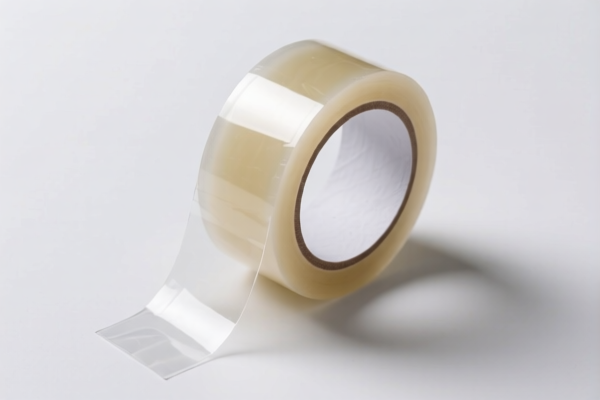
商品图片


AI分析
📦 Transparent Tape (Roll, <5cm) - HS Code & Tax Analysis
🌐 HS Code Reference & Customs Clearance Guide | 2026 Latest Tariff Breakdown | Professional Clearance Strategy
Transparent adhesive tape, a ubiquitous commodity in logistics, packaging, and office supplies, is heavily scrutinized under US customs regulations. The classification hinges critically on its material composition (Plastic vs. Paper/Cellulose) and form.
⚠️ Key Distinction:
- If made of Plastic (e.g., PVC, PP, PE, BOPP) → Classified under Chapter 39 (Plastics);
- If made of Paper or Cellulose Film → Classified under Chapter 48 (Paper Products).
- Note: Even "transparent" tapes made of paper-based cellulose are often misclassified as plastics. The material dictates the tax!
📊 Two HS Code Categories Based on Content
Based on the provided data, there are two primary material pathways for Transparent Tape (Roll, <5cm):
Path A: Plastic-Based Tapes (Chapter 39)
| HS Code | Summary Description | Material | Form | Total Tax Rate |
|---|---|---|---|---|
3920.79.10.00 |
Transparent protective film/tape (<5cm) | Plastic or cellulose derivative | Film, strip, sheet | 41.2% |
3921.19.00.10 |
Transparent protective tape (<5cm) OR Transparent adhesive tape (roll, <5cm) | Polyethylene, Polypropylene, or other plastics | Film | 41.5% |
Path B: Paper/Cellulose-Based Tapes (Chapter 48)
| HS Code | Summary Description | Material | Form | Total Tax Rate |
|---|---|---|---|---|
4823.90.86.80 |
Transparent protective film (<5cm) | Cellulose or plastic (Note: Classified as other paper products) | Film | 35.0% |
4823.90.86.20 |
Transparent protective film (<5cm) | Plastic or gelatinous substance (Note: Classified as other paper products) | Film | 35.0% |
🔍 Critical Insight from Data:
- The data explicitly lists4823.90.86.80and4823.90.86.20under "Other paper products" despite mentioning "plastic" in the material summary. This suggests that cellulose-based transparent films (often used as eco-friendly alternatives) fall here.
- Plastic tapes (3920,3921) face slightly higher or equal tax rates depending on the specific polymer, but the key differentiator is the material declaration.
💰 Detailed Tariff Breakdown & Policy Basis (2026)
✅ Applicable Country: United States (US)
✅ Origin: China (CN)
✅ Effective Date: Post-2025 Policies (Section 301 + IEEPA)
All HS Codes in the provided data share the same tax structure, differing only in base rates due to the sub-heading.
🎯 Common Tax Structure for All Listed HS Codes
| Component | Rate | Legal Basis | Explanation |
|---|---|---|---|
| Base Tariff | 0.0% - 6.5% | HTSUS General Rate | - 4823: 0% (Paper) - 3920/3921: 6.2% - 6.5% (Plastics) |
| Section 301 Tariff (Additional) | +25.0% | USITC Footnote 9903.88.01 | Retaliatory tariff on Chinese goods under Trade Act of 1974, Section 301. |
| 122 Clause / IEEPA Tariff | +10.0% | IEEPA (International Emergency Economic Powers Act) | Additional surcharge on specific Chinese imports, effective from Nov 2025. |
| TOTAL TAX RATE | 35.0% - 41.5% | — | High-cost item for clearance. |
📌 Explanation:
- Base Tariff: Varies by chapter. Paper (Ch 48) is 0%, Plastics (Ch 39) is ~6.5%.
- Section 301 (25%): Applies to almost all plastic and many paper goods from China.
- IEEPA (10%): A newer layer of tariff, bringing the total to 35% for paper-based and ~41.5% for plastic-based tapes.
- No De Minimis Exemption: These tariffs are NOT waived under Section 321 (De Minimis). Imports must pay duties at entry.
🛠️ Customs Clearance Operational Advice
✅ 1. Required Documentation (Mandatory)
| Document | Requirement | Why It Matters |
|---|---|---|
| ✅ Product Specifications | ✔️ Must specify: Material (PP, PVC, Cellulose), Width (<5cm), Roll Diameter, Adhesive Type. | Determines Chapter 39 vs. 48. |
| ✅ Material Safety Data Sheet (MSDS) | ✔️ For adhesive components. | Customs may request for chemical compliance. |
| ✅ Commercial Invoice | ✔️ Must clearly state: "Transparent Tape, Plastic/Cellulose, Roll, Width <5cm". | Vague descriptions ("Tape") lead to audits. |
| ✅ Packing List | ✔️ Net/Gross weight, number of rolls. | Verifies quantity for duty calculation. |
| ✅ Certificate of Origin (CO) | ✔️ Confirm China origin. | Triggers the 25% + 10% tariffs. |
| ✅ Test Reports | ✔️ If claiming "Non-Plastic", provide material composition test. | To justify 4823 classification if applicable. |
✅ 2. Classification Strategy (Critical)
| Scenario | Correct HS Code | Tax Rate | Risk |
|---|---|---|---|
| Standard Clear Tape (PP/BOPP) | 3921.19.00.10 |
41.5% | Low risk if declared as plastic. |
| Transparent Protective Film (Plastic) | 3920.79.10.00 |
41.2% | Low risk. |
| Cellulose-Based Tape (Eco-Friendly) | 4823.90.86.80 |
35.0% | High Scrutiny – Must prove non-plastic content. |
| Gel/Plastic Blend (Paper-Backed) | 4823.90.86.20 |
35.0% | Requires detailed material breakdown. |
🚫 Avoid This Mistake:
Declaring Plastic Tape as4823(Paper) to save 6.5% tax.
Consequence: Customs will reject the declaration, demand reclassification, apply back-taxes + penalties, and delay shipment.
✅ 3. Clearance Tips
- Be Specific in Description:
- ❌ Bad: "Transparent Tape"
-
✅ Good: "Transparent Adhesive Tape, BOPP Plastic, 4.8mm Width, 66m Length, Roll Form, Not on Core"
-
Weight vs. Value Declaration:
-
Ensure CIF Value (Cost + Insurance + Freight) is accurately reported. Duties are calculated on CIF.
-
Pre-Arrival Review:
-
If you are a high-volume importer, apply for an Advance Ruling from CBP to lock in the HS Code and tariff rate.
-
Supply Chain Consideration:
- Given the 35-41.5% total tax, consider:
- Cost-Benefit Analysis: Can you absorb the tax?
- Origin Shift: If possible, source from non-China countries (e.g., Vietnam, Thailand) to potentially avoid Section 301 + IEEPA tariffs (subject to US rules of origin).
- Product Redesign: Can you use paper-based cellulose tape (
4823) to save 6.5%? (Only if performance allows).
🌍 Global Market Comparison (2026)
| Market | HS Code | Base Tariff | Additional Tariffs | Total Est. | Notes |
|---|---|---|---|---|---|
| 🇺🇸 USA | 3921.19.00.10 |
6.5% | +25% (301) +10% (IEEPA) | 41.5% | High barrier. |
| 🇺🇸 USA | 4823.90.86.80 |
0.0% | +25% (301) +10% (IEEPA) | 35.0% | Lower, but hard to prove cellulose. |
| 🇨🇳 China | 3919.10.00.00 |
10.0% | None | 10.0% | Export hub, but high US tariffs. |
| 🇪🇺 EU | 3919.10.00 |
0% - 3% | None | ~3% | FTA friendly, no China tariffs. |
📌 Conclusion:
- USA is the most expensive market for Chinese-made transparent tape due to layered tariffs.
- Paper-based tapes offer a 6.5% saving but require strict material proof.
- Plastic tapes are the standard but bear the highest tax burden.
📌 Common Errors & Pitfalls
❌ Error 1: Declaring "Tape" without material specification.
👉 Result: CBP assigns worst-case tariff or demands detailed breakdown.
❌ Error 2: Misclassifying Plastic Tape as Paper (4823) to save tax.
👉 Result: Audit, back-taxes, and potential fraud penalties.
❌ Error 3: Ignoring the <5cm Width constraint.
👉 Result: Tapes >5cm may fall under different sub-headings with different rates.
❌ Error 4: Assuming De Minimis ($800) applies.
👉 Result: It does not. Section 301 and IEEPA tariffs apply to all shipments, regardless of value.
🎯 Final Recommendation
- Identify Material: Confirm if your tape is Plastic (PP/PVC) or Cellulose.
- Choose HS Code:
- Plastic →
3921.19.00.10(41.5%) - Cellulose/Paper →
4823.90.86.80(35.0%) - Prepare Docs: Ensure invoice, specs, and CO are precise.
- Calculate Landed Cost: Factor in 35-41.5% tax + customs brokerage fees.
- Consider Alternatives: If volume is high, explore sourcing from non-China origins to mitigate tariff risk.
📣 Immediate Action:
📞 Consult a Licensed Customs Broker to validate your HS Code based on actual material composition.
📄 Request a CBP Advance Ruling if importing >$10k annually.
💡 Pro Tip: Keep material test reports on hand to prove cellulose content if claiming4823.
✨ Precision in Classification = Savings in Cost!
💼 Every Percent of Tax Matters in 2026!
用户评价
关于 HS 编码归类
协调制度(HS)是由世界海关组织(WCO)制定的国际贸易商品分类标准。全球 200 多个国家采用 HS 系统作为海关关税、贸易统计和进出口监管的基础。
每个 HS 编码遵循以下层级结构:
- 章(2 位)——商品大类(例如:第 84 章:机器和机械设备)
- 品目(4 位)——章内的更具体分类
- 子目(6 位)——国际通用细分,所有 WCO 成员国统一使用
- 本国细分(8-10 位)——各国自行扩展的细分编码,如美国 HTSUS 10 位编码
正确的 HS 编码归类对于顺利通关、准确缴纳关税和遵守贸易法规至关重要。错误归类可能导致海关延误、多缴关税或罚款。
从CN进口到US时,适用的关税税率可能包括:
- 最惠国(MFN)税率——适用于 WTO 成员国的标准关税税率
- 普通税率——适用于无贸易协定国家
- 贸易救济关税——附加关税,如 301 条款(反倾销)、232 条款(国家安全)或反补贴税
本页内容仅供参考。如需正式归类,请咨询当地海关或持牌报关代理。