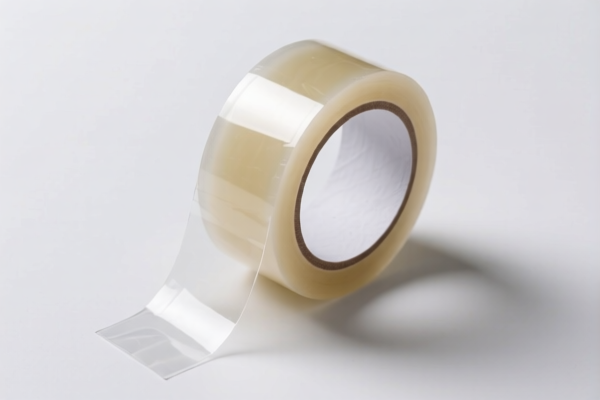
Transparent Tape (Roll, under 5cm)
CN → US| HS Code | Tariff Rate | Origin | Destination | Doc |
|---|---|---|---|---|
| 4823908680 | 35.0% | CN | US | Official Doc |
| 3920791000 | 41.2% | CN | US | Official Doc |
| 4823908620 | 35.0% | CN | US | Official Doc |
| 3921190010 | 41.5% | CN | US | Official Doc |
| 3921190010 | 41.5% | CN | US | Official Doc |
Product Images


AI Analysis
📦 Transparent Tape (Roll, <5cm) - HS Code & Tax Analysis
🌐 HS Code Reference & Customs Clearance Guide | 2026 Latest Tariff Breakdown | Professional Clearance Strategy
Transparent adhesive tape, a ubiquitous commodity in logistics, packaging, and office supplies, is heavily scrutinized under US customs regulations. The classification hinges critically on its material composition (Plastic vs. Paper/Cellulose) and form.
⚠️ Key Distinction:
- If made of Plastic (e.g., PVC, PP, PE, BOPP) → Classified under Chapter 39 (Plastics);
- If made of Paper or Cellulose Film → Classified under Chapter 48 (Paper Products).
- Note: Even "transparent" tapes made of paper-based cellulose are often misclassified as plastics. The material dictates the tax!
📊 Two HS Code Categories Based on Content
Based on the provided data, there are two primary material pathways for Transparent Tape (Roll, <5cm):
Path A: Plastic-Based Tapes (Chapter 39)
| HS Code | Summary Description | Material | Form | Total Tax Rate |
|---|---|---|---|---|
3920.79.10.00 |
Transparent protective film/tape (<5cm) | Plastic or cellulose derivative | Film, strip, sheet | 41.2% |
3921.19.00.10 |
Transparent protective tape (<5cm) OR Transparent adhesive tape (roll, <5cm) | Polyethylene, Polypropylene, or other plastics | Film | 41.5% |
Path B: Paper/Cellulose-Based Tapes (Chapter 48)
| HS Code | Summary Description | Material | Form | Total Tax Rate |
|---|---|---|---|---|
4823.90.86.80 |
Transparent protective film (<5cm) | Cellulose or plastic (Note: Classified as other paper products) | Film | 35.0% |
4823.90.86.20 |
Transparent protective film (<5cm) | Plastic or gelatinous substance (Note: Classified as other paper products) | Film | 35.0% |
🔍 Critical Insight from Data:
- The data explicitly lists4823.90.86.80and4823.90.86.20under "Other paper products" despite mentioning "plastic" in the material summary. This suggests that cellulose-based transparent films (often used as eco-friendly alternatives) fall here.
- Plastic tapes (3920,3921) face slightly higher or equal tax rates depending on the specific polymer, but the key differentiator is the material declaration.
💰 Detailed Tariff Breakdown & Policy Basis (2026)
✅ Applicable Country: United States (US)
✅ Origin: China (CN)
✅ Effective Date: Post-2025 Policies (Section 301 + IEEPA)
All HS Codes in the provided data share the same tax structure, differing only in base rates due to the sub-heading.
🎯 Common Tax Structure for All Listed HS Codes
| Component | Rate | Legal Basis | Explanation |
|---|---|---|---|
| Base Tariff | 0.0% - 6.5% | HTSUS General Rate | - 4823: 0% (Paper) - 3920/3921: 6.2% - 6.5% (Plastics) |
| Section 301 Tariff (Additional) | +25.0% | USITC Footnote 9903.88.01 | Retaliatory tariff on Chinese goods under Trade Act of 1974, Section 301. |
| 122 Clause / IEEPA Tariff | +10.0% | IEEPA (International Emergency Economic Powers Act) | Additional surcharge on specific Chinese imports, effective from Nov 2025. |
| TOTAL TAX RATE | 35.0% - 41.5% | — | High-cost item for clearance. |
📌 Explanation:
- Base Tariff: Varies by chapter. Paper (Ch 48) is 0%, Plastics (Ch 39) is ~6.5%.
- Section 301 (25%): Applies to almost all plastic and many paper goods from China.
- IEEPA (10%): A newer layer of tariff, bringing the total to 35% for paper-based and ~41.5% for plastic-based tapes.
- No De Minimis Exemption: These tariffs are NOT waived under Section 321 (De Minimis). Imports must pay duties at entry.
🛠️ Customs Clearance Operational Advice
✅ 1. Required Documentation (Mandatory)
| Document | Requirement | Why It Matters |
|---|---|---|
| ✅ Product Specifications | ✔️ Must specify: Material (PP, PVC, Cellulose), Width (<5cm), Roll Diameter, Adhesive Type. | Determines Chapter 39 vs. 48. |
| ✅ Material Safety Data Sheet (MSDS) | ✔️ For adhesive components. | Customs may request for chemical compliance. |
| ✅ Commercial Invoice | ✔️ Must clearly state: "Transparent Tape, Plastic/Cellulose, Roll, Width <5cm". | Vague descriptions ("Tape") lead to audits. |
| ✅ Packing List | ✔️ Net/Gross weight, number of rolls. | Verifies quantity for duty calculation. |
| ✅ Certificate of Origin (CO) | ✔️ Confirm China origin. | Triggers the 25% + 10% tariffs. |
| ✅ Test Reports | ✔️ If claiming "Non-Plastic", provide material composition test. | To justify 4823 classification if applicable. |
✅ 2. Classification Strategy (Critical)
| Scenario | Correct HS Code | Tax Rate | Risk |
|---|---|---|---|
| Standard Clear Tape (PP/BOPP) | 3921.19.00.10 |
41.5% | Low risk if declared as plastic. |
| Transparent Protective Film (Plastic) | 3920.79.10.00 |
41.2% | Low risk. |
| Cellulose-Based Tape (Eco-Friendly) | 4823.90.86.80 |
35.0% | High Scrutiny – Must prove non-plastic content. |
| Gel/Plastic Blend (Paper-Backed) | 4823.90.86.20 |
35.0% | Requires detailed material breakdown. |
🚫 Avoid This Mistake:
Declaring Plastic Tape as4823(Paper) to save 6.5% tax.
Consequence: Customs will reject the declaration, demand reclassification, apply back-taxes + penalties, and delay shipment.
✅ 3. Clearance Tips
- Be Specific in Description:
- ❌ Bad: "Transparent Tape"
-
✅ Good: "Transparent Adhesive Tape, BOPP Plastic, 4.8mm Width, 66m Length, Roll Form, Not on Core"
-
Weight vs. Value Declaration:
-
Ensure CIF Value (Cost + Insurance + Freight) is accurately reported. Duties are calculated on CIF.
-
Pre-Arrival Review:
-
If you are a high-volume importer, apply for an Advance Ruling from CBP to lock in the HS Code and tariff rate.
-
Supply Chain Consideration:
- Given the 35-41.5% total tax, consider:
- Cost-Benefit Analysis: Can you absorb the tax?
- Origin Shift: If possible, source from non-China countries (e.g., Vietnam, Thailand) to potentially avoid Section 301 + IEEPA tariffs (subject to US rules of origin).
- Product Redesign: Can you use paper-based cellulose tape (
4823) to save 6.5%? (Only if performance allows).
🌍 Global Market Comparison (2026)
| Market | HS Code | Base Tariff | Additional Tariffs | Total Est. | Notes |
|---|---|---|---|---|---|
| 🇺🇸 USA | 3921.19.00.10 |
6.5% | +25% (301) +10% (IEEPA) | 41.5% | High barrier. |
| 🇺🇸 USA | 4823.90.86.80 |
0.0% | +25% (301) +10% (IEEPA) | 35.0% | Lower, but hard to prove cellulose. |
| 🇨🇳 China | 3919.10.00.00 |
10.0% | None | 10.0% | Export hub, but high US tariffs. |
| 🇪🇺 EU | 3919.10.00 |
0% - 3% | None | ~3% | FTA friendly, no China tariffs. |
📌 Conclusion:
- USA is the most expensive market for Chinese-made transparent tape due to layered tariffs.
- Paper-based tapes offer a 6.5% saving but require strict material proof.
- Plastic tapes are the standard but bear the highest tax burden.
📌 Common Errors & Pitfalls
❌ Error 1: Declaring "Tape" without material specification.
👉 Result: CBP assigns worst-case tariff or demands detailed breakdown.
❌ Error 2: Misclassifying Plastic Tape as Paper (4823) to save tax.
👉 Result: Audit, back-taxes, and potential fraud penalties.
❌ Error 3: Ignoring the <5cm Width constraint.
👉 Result: Tapes >5cm may fall under different sub-headings with different rates.
❌ Error 4: Assuming De Minimis ($800) applies.
👉 Result: It does not. Section 301 and IEEPA tariffs apply to all shipments, regardless of value.
🎯 Final Recommendation
- Identify Material: Confirm if your tape is Plastic (PP/PVC) or Cellulose.
- Choose HS Code:
- Plastic →
3921.19.00.10(41.5%) - Cellulose/Paper →
4823.90.86.80(35.0%) - Prepare Docs: Ensure invoice, specs, and CO are precise.
- Calculate Landed Cost: Factor in 35-41.5% tax + customs brokerage fees.
- Consider Alternatives: If volume is high, explore sourcing from non-China origins to mitigate tariff risk.
📣 Immediate Action:
📞 Consult a Licensed Customs Broker to validate your HS Code based on actual material composition.
📄 Request a CBP Advance Ruling if importing >$10k annually.
💡 Pro Tip: Keep material test reports on hand to prove cellulose content if claiming4823.
✨ Precision in Classification = Savings in Cost!
💼 Every Percent of Tax Matters in 2026!
Customer Reviews
About HS Code Classification
The Harmonized System (HS) is an internationally standardized nomenclature developed by the World Customs Organization (WCO) to classify traded products. Over 200 countries use the HS system as the basis for customs tariffs, trade statistics, and import/export regulations.
Each HS code follows a hierarchical structure:
- Chapter (2 digits) — Broad category of goods (e.g., Chapter 84: Machinery and Mechanical Appliances)
- Heading (4 digits) — More specific grouping within the chapter
- Subheading (6 digits) — Internationally standardized breakdown, used by all WCO member countries
- National subdivisions (8-10 digits) — Country-specific extensions for further classification, such as US HTSUS 10-digit codes
Correct HS code classification is essential for smooth customs clearance, accurate duty payment, and compliance with trade regulations. Misclassification can lead to customs delays, overpayment of duties, or penalties.
When importing from CN to US, the applicable tariff rates may include:
- Most-Favored-Nation (MFN) rate — The standard duty rate applied to WTO members
- General rate — Applied to countries without trade agreements
- Trade remedy duties — Additional tariffs such as Section 301 (anti-dumping), Section 232 (national security), or countervailing duties
The information provided on this page is for reference purposes only. For official classification, please consult with your local customs authority or a licensed customs broker.