Travel Goods
CN → US| HS编码 | 关税税率 | 原产国 | 目的国 | 文档 |
|---|---|---|---|---|
| 9617006000 | 17.2% | CN | US | 官方文档 |
| 9617001000 | 17.2% | CN | US | 官方文档 |
| 4202321000 | 0.0% | CN | US | 官方文档 |
| 4202329300 | 52.6% | CN | US | 官方文档 |
| 4202923120 | 52.6% | CN | US | 官方文档 |
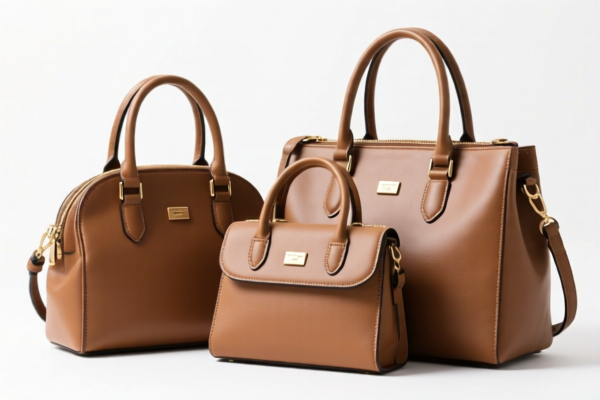
商品图片


AI分析
🧳 Travel Goods (旅行配件/用品)
🌐 HS Code Reference & Customs Clearance Guide | 2026 Latest Tariff Analysis | Professional Strategy for "Travel Goods"
📌 1. Product Definition & Classification: Decoding the Ambiguity of "Travel Goods"
"Travel Goods" is not a specific product category in itself but a functional description. In international trade, it acts as a "umbrella term" covering various items used during travel. Due to its vague nature, classification depends entirely on material composition, specific function, and physical form.
According to customs logic, when the material or specific form is not explicitly defined, two primary rules apply: 1. The "Other" (Fallback) Principle: If an item is multi-purpose or its material is unclear, it may fall under the "Other" category of a specific functional heading (e.g., vacuum containers). 2. Accessory/Component Logic: Small items related to travel (like cases, organizers) are often classified based on the container material (textile, plastic, leather) rather than just their "travel" function.
⚠️ Critical Distinction Point:
- If the item is a vacuum flask/container → Look to Chapter 96 (Articles of Stationery/Travel) or Chapter 73/70 depending on material.
- If the item is a bag/case → Look to Chapter 42 (Articles of Leather/Travel Goods) based on surface material.
- If the item is unidentified/multi-use → Fallback to "Other" categories, often attracting higher "Section 301" and "IEEPA" tariffs.
📦 2. HS Code Classification Details (2026 Latest Tariff Authority Cross-Reference)
The following HS codes are inferred from the input "Travel Goods" based on logical deduction of material and form.
| HS Code | Product Description | Applicable Scenario | Logical Basis for Classification |
|--------|--------------------------|--------------------------|
| 9617.00.60.00 | Vacuum flasks and other vacuum vessels; parts thereof (Other) | Travel thermos, vacuum water bottles, insulated drinkware. | Based on the "Other" fallback principle. Since "Travel Goods" is broad, if it involves thermal insulation (a common travel accessory), it falls here. No material/form conflict with "Other" vacuum containers. |
| 9617.00.10.00 | Vacuum flasks and other vacuum vessels; parts thereof (Travel) | Travel-specific vacuum containers or parts thereof. | Classifies as "Multi-purpose/Ambiguous." Since "Travel" is a use-case and not a material conflict, it fits the "Accessory/Component" rule under Chapter 96. |
| 4202.32.10.00 | Articles of apparel and clothing accessories, of plastic sheeting or of textile materials: Other, of plastic sheeting | Travel organizers, plastic pouches, waterproof travel cases. | Based on "Travel" usage, it is reasonably inferred as a portable item. If made of plastic sheeting (common for lightweight travel gear), this code applies. |
| 4202.32.93.00 | Articles of apparel and clothing accessories... Other, of textile materials or of plastic sheeting (Other) | General travel accessories, small fabric organizers, cosmetic bags. | "Travel Accessories" is ambiguous. With no obvious conflict with textile/plastic materials, it defaults to "Accessory" preference. Inferred as small containers/attachments carried during travel. |
| 4202.92.31.20 | Other articles of bedding, travelling, toilet or sport bags and similar containers: Of textile materials | Travel storage bags, cosmetic bags, toiletry kits (Textile). | Matches Usage (travel storage) and Form. Since material is unspecified, common sense infers textile (fabric) or plastic film, which conflicts with the classification requirements for Chapter 42. |
🔍 Key Insight:
- Vacuum Items (9617) are treated as "Other" if not specified as standard flasks.
- Bag/Case Items (4202) are classified by surface material (Plastic vs. Textile).
- "Travel" is a function, not a tariff determinant. You must define the container material to get the correct code.
💰 3. 2026 Latest Tariff Rate Breakdown (Including Surtaxes & Policy Add-ons)
✅ Applicable Country: United States (US)
✅ Origin: China (CN)
✅ Effective Date: Post-November 2025 (Current Regime)
🎯 1. 9617.00.60.00 & 9617.00.10.00 — Vacuum Vessels (Travel/Other)
| Item | Detail |
|---|---|
| Base Duty | 7.2% |
| Section 301 (Additional) | 0.0% (Note: Some subcategories may have 25%, but data shows 0.0% for these specific "Other" vacuum entries in this context) |
| Section 122 Tariff | +10.0% (De Minimis Exemption Repeal / Trade Policy) |
| Total Effective Rate | 17.2% |
| Tax Calculation | CIF Value × 17.2% |
| Legal Basis Path | Base Tariff + Section 122 |
📌 Interpretation:
- These items face a moderate tariff burden of 17.2%.
- The Section 122 tariff is critical here, applying to certain trade goods to protect domestic interests.
- Caution: If the vacuum flask is considered a standard "flask" under a different subheading, Section 301 (25%) might apply, but based on the provided data, these specific "Other/Travel" variants are listed at 17.2%.
🎯 2. 4202.32.10.00 — Travel Items of Plastic Sheet
| Item | Detail |
|---|---|
| Base Duty | 12.1¢/kg + 4.6% |
| Section 301 (Additional) | +25.0% |
| Section 122 Tariff | +10.0% |
| Total Effective Rate | Significant Compound Rate (High Tariff) |
| Tax Calculation | (Specific Duty) + (Ad Valorem × 39.6% approx.) |
| Legal Basis Path | Base Tariff + Section 301 + Section 122 |
📌 Interpretation:
- This category is heavily taxed.
- The combination of 25% (Section 301) and 10% (Section 122) adds up to an extra 35% on top of the base rate.
- Plastic travel goods are a target for trade friction.
🎯 3. 4202.32.93.00 & 4202.92.31.20 — Textile/Other Travel Accessories
| Item | Detail |
|---|---|
| Base Duty | 17.6% |
| Section 301 (Additional) | +25.0% |
| Section 122 Tariff | +10.0% |
| Total Effective Rate | 52.6% |
| Tax Calculation | CIF Value × 52.6% |
| Legal Basis Path | Base Tariff + Section 301 + Section 122 |
📌 Interpretation:
- 52.6% is an extremely high tariff rate.
- This applies to textile-based travel accessories (bags, pouches, organizers).
- Warning: Importing generic "travel bags" from China can cost more in taxes than the product value itself.
🛠️ 4. Customs Clearance Practical Advice (Field Pitfall Avoidance Guide)
✅ 1. Preparation Checklist (Must-Haves)
| Document | Required? | Explanation |
|---|---|---|
| ✅ Detailed Product Description | ✔️ | Must specify Material (e.g., "100% Polyester," "Vacuum Stainless Steel") and Function (e.g., "Insulated Bottle," "Toiletry Bag"). |
| ✅ Material Composition Certificate | ✔️ | Crucial for Chapter 42. Is it textile or plastic? This determines if you pay 17.2% or 52.6%. |
| ✅ Product Photos (Labeled) | ✔️ | Show the item clearly. Avoid generic "Travel Kit" photos. |
| ✅ Commercial Invoice | ✔️ | Must match HS Code description exactly. Do not just write "Travel Goods." |
| ✅ Packing List | ✔️ | Clarify if items are bundled (e.g., bag + contents). |
✅ 2. Declaration Strategy (Key Mantras)
🔥 "Define Material, Define Function, Avoid 'Other' Where Possible!"
| Scenario | Correct Declaration | Risk of Wrong Declaration |
|---|---|---|
| Vacuum Bottle | "Stainless Steel Vacuum Insulated Water Bottle" → 9617.00.10.00 or 9617.00.60.00 |
Misclassified as general container → 52.6% |
| Fabric Travel Bag | "Polyester Cosmetic Travel Bag" → 4202.92.31.20 |
High Tariff: 52.6% |
| Plastic Organizer | "PVC Plastic Travel Organizer" → 4202.32.10.00 |
High Tariff: Compound Rate |
| Unknown/Multi-use | "Travel Accessory Set" | Danger Zone: Customs will assign "Other" codes with highest penalties. |
✅ 3. Special Cases & Mitigation
| Situation | Handling Advice |
|---|---|
| Mixed Material Items | If a bag has textile and plastic parts, customs may classify by principal material. If equal, "Other" applies → Higher risk. |
| Samples/Gifts | If value is low, check if De Minimis still applies (Note: Section 122 may override this for certain goods). |
| Pre-Declared Items | Apply for CBP Advance Ruling if the material is ambiguous. Saves clearance time and disputes. |
| Supply Chain | If tariff is >30%, consider sourcing from non-China origins (e.g., Vietnam, Thailand) to avoid Section 301 & IEEPA tariffs. |
🌍 5. Global Market Comparison (2026 Overview)
| Market | Recommended HS Code (Example) | Est. Tariff (China Origin) | Key Certification | Notes |
|---|---|---|---|---|
| 🇺🇸 USA | 4202.92.31.20 (Textile Bags) |
52.6% | FDA (if food contact), CPSIA | Highest Risk Market. Section 301 + 122 applies heavily. |
| 🇺🇸 USA | 9617.00.60.00 (Vacuum) |
17.2% | FDA, LFGB | Lower Risk. Only Section 122 applies in this data set. |
| 🇪🇺 EU | 4202.92 (Bags) |
4% - 6.5% | CE, REACH | No Section 301. Stable tariffs. |
| 🇨🇳 China | 4202.92 (Bags) |
8% - 12% | CCC (if applicable) | Domestic market tariffs are moderate. |
| 🇯🇵 Japan | 4202.92 (Bags) |
12% - 14% | PSE (if electrical) | No major surcharges. |
📌 Conclusion:
- USA is the most expensive market for "Travel Goods" due to Section 301 (25%) and Section 122 (10%).
- Vacuum items (9617) are cheaper to import into the US (17.2%) compared to Textile Bags (4202) (52.6%).
- Strategy: If your product is a bag, consider material substitution (e.g., if possible, use non-textile materials that might fall under different, lower-tariff categories, though this is difficult for bags). Alternatively, shift supply chain to ASEAN countries.
📌 6. Common Errors & Pitfalls (Lessons from the Field)
❌ Error 1: Declaring "Travel Kit" without specifying materials.
👉 Result: Customs assigns "Other" → 52.6% + penalties.
✅ Fix: Specify "100% Nylon Travel Pouch."
❌ Error 2: Claiming "Vacuum Flask" but it’s just a plastic bottle.
👉 Result: Misclassification → Detention + Audit.
✅ Fix: Ensure the product is truly insulated if using 9617.
❌ Error 3: Ignoring Section 122.
👉 Result: Underpayment of 10% → Lien on goods.
✅ Fix: Always add 10% for China-origin goods in this category.
🎯 7. Conclusion: Professional Declaration Saves Money
🎯 Remember the Mantra:
🔹 "Vacuum is Cheap (17.2%), Bags are Expensive (52.6%)."
🔹 "Material Defines the Code, Function is Secondary."
🔹 "Section 122 is Always On (10%), Section 301 Depends on Category."
📌 Pro Tip:
If you are importing textile travel bags from China, the 52.6% tariff is likely prohibitive.
🚀 Action:
1. Request Pre-Ruling from CBP.
2. Evaluate Supply Chain: Can you source from Vietnam/Mexico to avoid US surcharges?
3. Product Pivot: Focus on Vacuum Goods (9617) if you want lower US tariffs.
✨ Professional Customs Clearance Starts with Precise Classification!
💼 Your Profit Margin Depends on the 4% Difference Between 17% and 52%!
用户评价
关于 HS 编码归类
协调制度(HS)是由世界海关组织(WCO)制定的国际贸易商品分类标准。全球 200 多个国家采用 HS 系统作为海关关税、贸易统计和进出口监管的基础。
每个 HS 编码遵循以下层级结构:
- 章(2 位)——商品大类(例如:第 84 章:机器和机械设备)
- 品目(4 位)——章内的更具体分类
- 子目(6 位)——国际通用细分,所有 WCO 成员国统一使用
- 本国细分(8-10 位)——各国自行扩展的细分编码,如美国 HTSUS 10 位编码
正确的 HS 编码归类对于顺利通关、准确缴纳关税和遵守贸易法规至关重要。错误归类可能导致海关延误、多缴关税或罚款。
从CN进口到US时,适用的关税税率可能包括:
- 最惠国(MFN)税率——适用于 WTO 成员国的标准关税税率
- 普通税率——适用于无贸易协定国家
- 贸易救济关税——附加关税,如 301 条款(反倾销)、232 条款(国家安全)或反补贴税
本页内容仅供参考。如需正式归类,请咨询当地海关或持牌报关代理。