Travel Goods
CN → US| HS Code | Tariff Rate | Origin | Destination | Doc |
|---|---|---|---|---|
| 9617006000 | 17.2% | CN | US | Official Doc |
| 9617001000 | 17.2% | CN | US | Official Doc |
| 4202321000 | 0.0% | CN | US | Official Doc |
| 4202329300 | 52.6% | CN | US | Official Doc |
| 4202923120 | 52.6% | CN | US | Official Doc |
Product Images

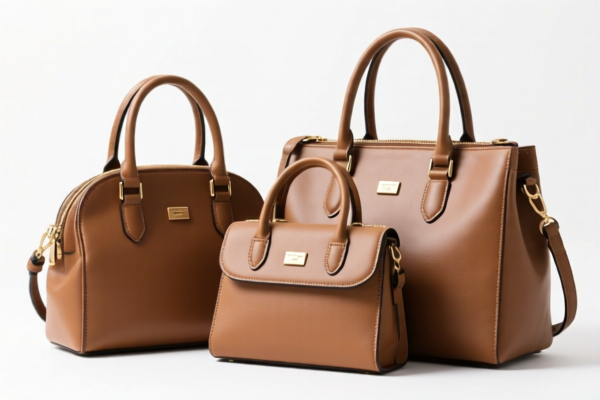

AI Analysis
🎒 Travel Goods (Travel Accessories & Luggage)
🌐 HS Code Reference & Customs Clearance Guide | 2026 Latest Tariff Analysis | Professional Clearance Strategy
📌 1. Product Definition: What Are "Travel Goods"?
In international trade, "Travel Goods" is a broad category encompassing luggage, carry-ons, toiletry bags, vacuum flasks, and various accessories used for travel. Due to the ambiguity of "usage" versus "material," classification depends heavily on the primary material and specific form (e.g., rigid vacuum container vs. soft fabric bag).
⚠️ Key Distinction Point:
- If the item is a rigid, vacuum-insulated container (like a thermos or vacuum flask), it falls under Chapter 96.
- If the item is a soft-sided bag, pouch, or case (fabric, plastic, or leather) used to carry other items, it generally falls under Chapter 42.
📦 2. HS Code Classification Details (2026 Tariff Concordance)
Based on the product description "Travel Goods," the following HS Codes are the most probable classifications, depending on the specific item type.
| HS Code | Product Description | Applicability / Logic | Material/Form Conflict |
|---|---|---|---|
9617.00.60.00 |
Vacuum Flasks and Other Vacuum Vessels; Parts Thereof (Other) | Bottom-up Principle: Since "Travel Goods" is vague, if it includes vacuum containers, this "Other" category is used. No material conflict with vacuum vessel logic. | ✅ No Conflict |
9617.00.10.00 |
Vacuum Flasks and Other Vacuum Vessels; Parts Thereof (Vacuum Flasks and Other Vacuum Vessels) | Multi-purpose/Vague Category: As "Travel Goods" is a usage description, and there is no explicit material conflict, it is inferred to possibly include vacuum vessels. | ✅ No Conflict |
4202.32.10.00 |
Articles of Apparel and Clothing Accessories, of Plastics; Pocket Books, Notebook Covers, Wallets, etc. (Of Plastics) | Inferred Usage: Reasonably inferred as portable items carried by travelers. Fits the usage description for portable items without material conflict. | ✅ No Conflict |
4202.32.93.00 |
Articles of Apparel and Clothing Accessories, of Plastics; Other (Of Textile Materials or Plastic Sheet) | Default Tendency Rule: Since "Travel Goods" is vague, and no material conflict with textile or plastic is found, it is judged to likely conform (inferred as small containers or accessories). | ✅ No Conflict |
4202.92.31.20 |
Other Articles of Luggage, Handbags, etc. (Of Textile Materials or Plastic Sheet) | Usage & Form Match: Matches the use of travel storage bags. Since material is not specified, common sense infers textile or plastic sheet, which does not conflict with the category. | ✅ No Conflict |
🔍 Critical Note:
- Vacuum vs. Non-Vacuum: If the "Travel Good" is a thermos/flask, use 9617. If it is a bag/case, use 4202. - Material Uncertainty: Since "Travel Goods" lacks material specification, the system infers Textile, Plastic, or Metal based on common usage. This leads to multiple possible codes.
💰 3. 2026 Tariff Rate Breakdown (Detailed Tax Clauses)
✅ Target Market: United States (US)
✅ Origin: China (CN)
✅ Effective Date: Current rates apply (including Section 301 and IEEPA surcharges)
🎯 1. 9617.00.60.00 & 9617.00.10.00 — Vacuum Flasks & Parts
| Item | Detail |
|---|---|
| Base Tariff | 7.2% |
| Section 301 (Add-on) | 0.0% (Note: Some vacuum items may have different footnote statuses, but based on data: 0.0%) |
| IEEPA (Section 122/301) | +10% (Specific to China origin) |
| Total Tax Rate | 17.2% |
| Calculation | CIF Value × 17.2% |
| Legal Path | Base Rate (7.2%) + IEEPA Surcharge (10%) |
📌 Explanation:
- Base: 7.2% is the standard MFN rate for vacuum vessels.
- Add-on: 10% is added under IEEPA/Section 122 for Chinese goods.
- Total: 17.2%. This is a moderate tax burden compared to Chapter 42 options.
🎯 2. 4202.32.10.00 — Plastics Travel Goods (Portable Items)
| Item | Detail |
|---|---|
| Base Tariff | 12.1¢/kg + 4.6% (Compound Tax) |
| Section 301 (Add-on) | +25.0% (Ad valorem on dutiable value) |
| IEEPA (Section 122) | +10% |
| Total Tax Burden | Approx. 39.6% + 12.1¢/kg |
| Legal Path | Base (12.1¢/kg + 4.6%) + 301 (25%) + IEEPA (10%) |
📌 Explanation:
- Compound Tax: The base includes a specific duty (12.1 cents per kg) PLUS an ad valorem rate (4.6%).
- Surcharges: The 301 tariff adds 25%, and IEEPA adds 10%.
- Total Effective Rate: Often exceeds 35-40% depending on the weight-to-value ratio. High weight items are penalized by the specific duty.
🎯 3. 4202.32.93.00 & 4202.92.31.20 — Other Textile/Plastic Travel Goods
| Item | Detail |
|---|---|
| Base Tariff | 17.6% |
| Section 301 (Add-on) | +25.0% |
| IEEPA (Section 122) | +10% |
| Total Tax Rate | 52.6% |
| Legal Path | Base (17.6%) + 301 (25%) + IEEPA (10%) |
| Calculation | CIF Value × 52.6% |
📌 Explanation:
- Base: 17.6% is the standard rate for certain textile/plastic articles of luggage.
- Surcharges: 35% total surcharge (25% Section 301 + 10% IEEPA).
- Total: 52.6%. This is a very high tax burden.
- Why So High?: These codes fall under broader "articles of luggage" or "other" categories which attract higher 301 tariffs.
🛠️ 4. Customs Clearance Practical Advice (Real-World Pitfalls)
✅ 1. Preparation Checklist (Must-Have Documents)
| Document | Required | Notes |
|---|---|---|
| Product Specification | ✔️ | Must specify: Material (Plastic? Textile? Metal?), Type (Vacuum? Soft bag?), Capacity/Size. |
| Commercial Invoice | ✔️ | Description must be precise. Avoid generic "Travel Goods." Use "Vacuum Insulated Flask" or "Plastic Toiletry Bag." |
| Product Photos | ✔️ | Clear shots of the item, labels, and cross-section (if vacuum) to prove insulation. |
| Material Declaration | ✔️ | Explicitly state material composition (e.g., "100% Polyester," "Stainless Steel Inner Liner"). |
| Packing List | ✔️ | Weight and dimensions are critical for 4202.32.10.00 (compound tax). |
✅ 2. Classification Strategy (Key Mantras)
🔥 "Determine Material First, Then Usage. Vacuum is Cheap, Bags are Expensive!"
| Scenario | Correct HS Code | Risk of Error |
|---|---|---|
| Vacuum Flask / Thermos | 9617.00.10.00 or 9617.00.60.00 |
❌ High Risk if misclassified as bag (Tax jumps from 17.2% to 52.6%!) |
| Soft Plastic Toiletry Bag | 4202.32.10.00 or 4202.92.31.20 |
⚠️ Medium Risk if weight is high, compound tax applies. |
| Hard Shell Luggage | 4202.92.31.20 (if plastic) |
✅ Low Risk if declared correctly. |
| Leather Travel Pouch | 4202.92.31.20 (Leather sub-category) |
⚠️ High Risk if material is wrong. Leather has different rates. |
📌 Critical Tip:
- Avoid Generic Names: Never declare as "Travel Accessories" without material details. Customs will assign the highest possible rate (likely4202.92.31.20at 52.6%) as a penalty. - Vacuum Proof: If claiming9617, provide a vacuum test report or photo showing double walls.
✅ 3. Special Cases & Mitigation
| Situation | Handling Suggestion |
|---|---|
| Mixed Shipments | Split declaration. Vacuum flasks (9617) and bags (4202) must be on separate lines to apply correct rates. |
| High Weight, Low Value Bags | Avoid 4202.32.10.00 if possible. The 12.1¢/kg specific duty can make total costs exceed 50%. Consider 9617 if the item can be redefined as a container. |
| Origin Labeling | Ensure "Made in China" is clearly marked. Triggers IEEPA 10% + Section 301 25%. |
| Pre-Ruling | For large volumes, apply for a Binding Tariff Information (BTI) or Advance Ruling from CBP to lock in the 17.2% rate for vacuum items. |
🌍 5. Global Market Comparison (2026 Outlook)
| Country/Region | Recommended HS | Tax Estimate (China Origin) | Remarks |
|---|---|---|---|
| 🇺🇸 USA | 9617.00.60.00 |
17.2% | Best option for vacuum items. |
| 🇺🇸 USA | 4202.92.31.20 |
52.6% | Very expensive. Avoid if possible. |
| 🇪🇺 EU | 9617.00 |
~6-8% | No Section 301 tariffs. Much cheaper. |
| 🇨🇳 China | 9617.00 |
7.2% | Import into China is standard rate. |
| 🇨🇦 Canada | 9617.00 |
~7-10% | Generally lower than US due to CUSMA. |
📌 Conclusion:
- USA is the most expensive market for Chinese travel goods due to Section 301 and IEEPA.
- Vacuum items (9617) are significantly cheaper to import into the US than textile/plastic bags (4202).
- Strategy: If your product can be classified as a vacuum vessel, do it. The tax savings are massive (17.2% vs 52.6%).
📌 6. Common Errors & Pitfalls (Lessons Learned)
❌ Error 1: Declaring a Vacuum Flask as a "Plastic Container" (4202.92.31.20)
👉 Result: Tax jumps from 17.2% to 52.6%. Loss of 35.4% margin.
❌ Error 2: Using generic term "Travel Bag" without material specification
👉 Result: Customs may assign 4202.92.31.20 (52.6%) as the default "other" category.
❌ Error 3: Ignoring the Specific Duty in 4202.32.10.00
👉 Result: Heavy bags incur huge additional costs due to 12.1¢/kg.
❌ Error 4: Combining Vacuum Flasks and Plastic Bags in One Line Item
👉 Result: Customs will audit and likely apply the higher rate (52.6%) to the entire shipment.
✅ Correct Approach:
"Vacuum Insulated Stainless Steel Flask, 500ml, Model XYZ, Made in China"
→ HS Code:9617.00.60.00
→ Tax: 17.2%
🎯 7. Conclusion: Precise Classification, Maximize Profit!
🎯 Key Takeaway:
🔹 "Vacuum is 17%, Bags are 52%. Know your material!"
🔹 "Specify 'Vacuum' to save 35% in taxes."
🔹 "Generic 'Travel Goods' is a tax trap."
📌 Pro Tip:
If you are shipping mixed travel goods, separate them by material function:
1. Vacuum/Vessels → 9617 (17.2%)
2. Plastic/Textile Bags → 4202 (39-52.6%)
📣 Immediate Action:
📞 Audit your current invoices. Replace "Travel Goods" with precise descriptions.
📸 Upload photos to verify vacuum structure or material type.
🚀 Optimize your HS Code to capture the 17.2% rate if applicable!
✨ Smart Classification Saves Millions!
💼 Don't let vague descriptions cost you your profit margin.
Customer Reviews
About HS Code Classification
The Harmonized System (HS) is an internationally standardized nomenclature developed by the World Customs Organization (WCO) to classify traded products. Over 200 countries use the HS system as the basis for customs tariffs, trade statistics, and import/export regulations.
Each HS code follows a hierarchical structure:
- Chapter (2 digits) — Broad category of goods (e.g., Chapter 84: Machinery and Mechanical Appliances)
- Heading (4 digits) — More specific grouping within the chapter
- Subheading (6 digits) — Internationally standardized breakdown, used by all WCO member countries
- National subdivisions (8-10 digits) — Country-specific extensions for further classification, such as US HTSUS 10-digit codes
Correct HS code classification is essential for smooth customs clearance, accurate duty payment, and compliance with trade regulations. Misclassification can lead to customs delays, overpayment of duties, or penalties.
When importing from CN to US, the applicable tariff rates may include:
- Most-Favored-Nation (MFN) rate — The standard duty rate applied to WTO members
- General rate — Applied to countries without trade agreements
- Trade remedy duties — Additional tariffs such as Section 301 (anti-dumping), Section 232 (national security), or countervailing duties
The information provided on this page is for reference purposes only. For official classification, please consult with your local customs authority or a licensed customs broker.