Traveling Bag
CN → US| HS编码 | 关税税率 | 原产国 | 目的国 | 文档 |
|---|---|---|---|---|
| 6307909891 | 24.5% | CN | US | 官方文档 |
| 4202923131 | 52.6% | CN | US | 官方文档 |
| 6307909875 | 24.5% | CN | US | 官方文档 |
| 3923290000 | 38.0% | CN | US | 官方文档 |
| 3923900080 | 38.0% | CN | US | 官方文档 |
商品图片
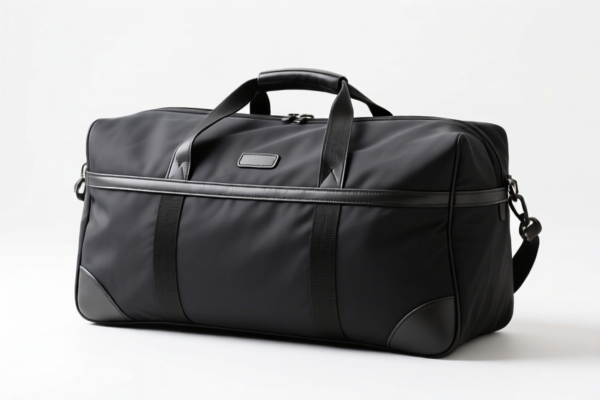
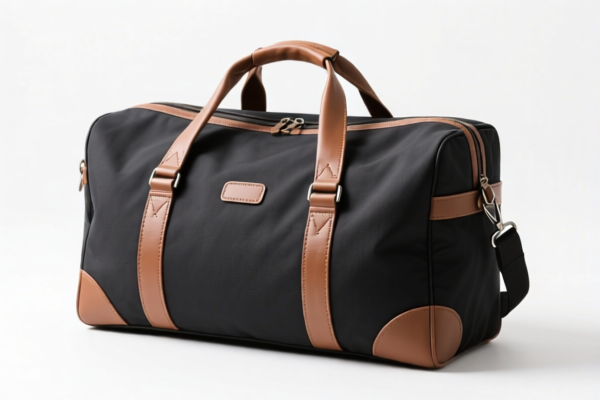
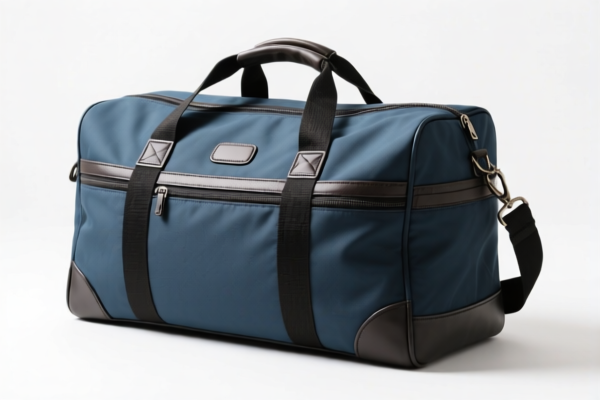
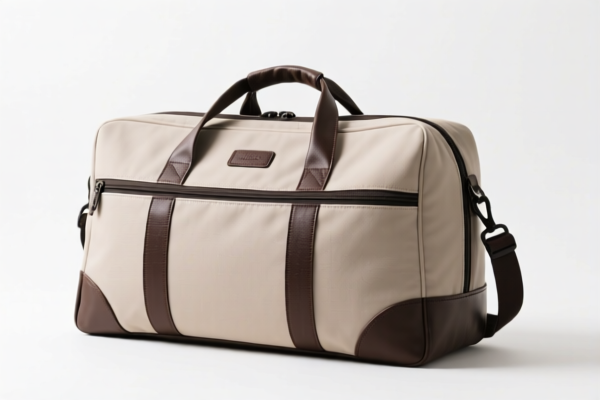
AI分析
🎒 Traveling Bags (Luggage & Cosmetic Cases)
🌐 HS Code Reference & Customs Clearance Guide | 2026 Latest Tariff Analysis | Professional Clearance Strategy
📌 I. Product Definition & Classification: What Exactly Is a "Traveling Bag"?
In international trade, "Traveling Bag" is a broad term that encompasses a wide variety of items, from sturdy hard-shell suitcases to soft fabric toiletry kits. The critical factor for classification is material composition and primary function.
- Textile Bags: Made from nylon, polyester, canvas, or fabric. These are typically classified under Chapter 63 (Other Made-Up Textile Articles) or Chapter 42 (Articles of Leather).
- Plastic Bags: Made from PVC, PE, or other plastics. These fall under Chapter 39 (Plastics and Articles Thereof).
⚠️ Key Distinction:
- If the bag is primarily textile/fabric (e.g., packing cubes, soft cosmetic bags) → Often 6307 or 4202.
- If the bag is primarily plastic (e.g., rigid plastic organizers, shower caddies) → Often 3923.
📦 II. HS Code Classification Details (2026 Latest Tariff Authority Comparison)
Based on the data provided, here are the five possible HS codes, their logical derivation, and tax implications.
| HS Code | Product Description & Logic | Material Inference | Total Tax Rate |
|---|---|---|---|
6307.90.98.91 |
Other Made-Up Textile Articles ✅ Matches finished consumer goods not elsewhere specified. |
Textile/Fabric (Inferred: Nylon, Polyester, Cotton) |
24.5% |
4202.92.31.31 |
Bags of Textile Materials ✅ Matches travel-specific shapes/forms (packing cubes, toiletry kits). |
Textile/Fabric (Inferred: Outer surface is textile) |
52.6% |
6307.90.98.75 |
Other Made-Up Textile Articles ✅ "Catch-all" for finished textile consumables. |
Textile/Fabric (Inferred: Textile material) |
24.5% |
3923.29.00.00 |
Plastic Sacs, Pouches & Envelopes ✅ Matches "pouch/sac" morphology. |
Plastic/Synthetic Fiber (Inferred: Plastic construction) |
38.0% |
3923.90.00.80 |
Other Articles of Plastics ✅ Matches packaging/container category. |
Plastic/Synthetic Fiber (Inferred: Plastic construction) |
38.0% |
🔍 Critical Note:
- Textile vs. Plastic: The difference in tax rate between4202(52.6%) and6307(24.5%) is massive. Proper identification of the outer surface material is crucial.
- 122 Clause Impact: All codes above include a 10% Section 301/122 Clause Tariff on top of base and additional taxes.
💰 III. 2026 Latest Tariff Rate Breakdown (Including Surcharges)
✅ Applicable Country: United States (US)
✅ Origin: China (CN)
✅ Effective Date: November 10, 2025 (and subsequent imports)
🎯 1. Textile Categories: 6307.90.98.91 & 6307.90.98.75
| Item | Content |
|---|---|
| Base Tariff | 7.0% |
| Section 301 Surtax | 7.5% |
| Clause 122 Surtax | 10.0% |
| Total Rate | 24.5% |
| Calculation | CIF Value × 24.5% |
| De Minimis Exemption | ❌ Not Applicable (High duty rates prevent de minimis clearance) |
| Legal Path | Base Tariff → Section 301 → Clause 122 |
📌 Explanation:
- These codes are for non-standard textile goods (e.g., packing organizers, soft cases).
- While cheaper than luggage bags (4202), they are still subject to significant US import taxes.
🎯 2. Luggage/Travel Bags: 4202.92.31.31
| Item | Content |
|---|---|
| Base Tariff | 17.6% |
| Section 301 Surtax | 25.0% |
| Clause 122 Surtax | 10.0% |
| Total Rate | 52.6% |
| Calculation | CIF Value × 52.6% |
| De Minimis Exemption | ❌ Not Applicable |
| Legal Path | Base Tariff → Section 301 → Clause 122 |
📌 Warning:
- This is the highest tax bracket in the dataset.
- It applies to finished travel bags (suitcases, large totes, structured cosmetic bags).
- Cost Impact: For every $10,000 of goods, you pay $5,260 in duties. This severely impacts margin.
🎯 3. Plastic/Pouch Categories: 3923.29.00.00 & 3923.90.00.80
| Item | Content |
|---|---|
| Base Tariff | 3.0% |
| Section 301 Surtax | 25.0% |
| Clause 122 Surtax | 10.0% |
| Total Rate | 38.0% |
| Calculation | CIF Value × 38.0% |
| De Minimis Exemption | ❌ Not Applicable |
| Legal Path | Base Tariff → Section 301 → Clause 122 |
📌 Explanation:
- These codes apply to plastic bags, pouches, or containers (e.g., rigid plastic toiletry bottles, plastic travel organizers).
- Although the base tariff is low (3%), the 25% Section 301 surcharge makes the total rate (38%) higher than the cheaper textile options (24.5%).
🛠️ IV. Customs Clearance Practical Advice (Real-World Pitfall Guide)
✅ 1. Documentation Checklist (Essential)
| Document | Required? | Description |
|---|---|---|
| ✅ Product Specification Sheet | ✔️ | Must clearly state material composition (e.g., "100% Polyester Outer, PVC Inner"). |
| ✅ Material Declaration | ✔️ | Crucial for distinguishing between 6307 (Textile) and 3923 (Plastic). |
| ✅ Product Photos | ✔️ | Show the bag in use, including zippers, handles, and lining. |
| ✅ Commercial Invoice | ✔️ | Must use precise descriptions: "Packing Cube, Polyester" vs. "Travel Cosmetic Bag, Plastic". |
| ✅ Packing List | ✔️ | Confirm quantity and weight. |
✅ 2. Classification Strategy (Key Mnemonics)
🔥 "Material is King, Shape is Queen!"
| Scenario | Correct HS Code | Incorrect Code | Consequence |
|---|---|---|---|
| Soft Fabric Packing Cube | 6307.90.98.91 or 6307.90.98.75 (24.5%) |
4202 (52.6%) |
Saves ~28% in taxes |
| Structured Toiletry Bag (Fabric) | 4202.92.31.31 (52.6%) |
6307 (24.5%) |
Overpaid taxes if misclassified as simple textile |
| Plastic Shower Caddy | 3923.29.00.00 (38.0%) |
6307 (24.5%) |
Under-declared, risk of penalty |
| Hard Shell Suitcase | 4202.92.31.31 (52.6%) |
6307 (24.5%) |
High Risk of Audit if misclassified as textile |
📌 Important:
- Do not use "Travel Bag" as a generic description.
- Use "Packing Cube, Polyester" for6307.
- Use "Toiletry Bag, PVC" for3923.
- Use "Luggage, Leather/Textile" for4202.
✅ 3. Special Cases
| Situation | Handling Advice |
|---|---|
| Mixed Material Bags | If the bag is >50% textile by value/weight, classify under Textile (6307/4202). If >50% plastic, classify under Plastic (3923). |
| OEM Custom Bags | Provide design blueprints. If the design resembles a suitcase but is made of fabric, it may still be 4202. |
| Small Sample Bags | If total value is under $800, de minimis may apply, but with rates >24%, it's often not worth the risk for bulk shipments. |
🌍 V. Global Market Comparison (2026 Latest)
| Country/Region | Recommended HS Code | Duty Rate | Certification | Remarks |
|---|---|---|---|---|
| 🇺🇸 USA | 6307.90.98.91 / 4202.92.31.31 / 3923.29.00.00 |
24.5% – 52.6% | No specific cert needed | High tariffs due to Section 301 & Clause 122 |
| 🇨🇳 China | 6307 / 4202 / 3923 |
5% - 10% | CCC (if electronic components) | Lower base tariffs |
| 🇪🇺 EU | 6307 / 4202 |
0% - 4% | CE (if applicable) | No Section 301 |
| 🇦🇺 Australia | 6307 / 4202 |
5% | RCM | Standard GST applies |
📌 Conclusion:
- The USA imposes the heaviest burden on Chinese-origin travel bags due to Section 301 and Clause 122.
- Textile-based packing cubes (6307) are the most tariff-efficient option (24.5%).
- Finished luggage (4202) is the most expensive to import into the US (52.6%).
📌 VI. Common Mistakes & Pitfalls (Lessons Learned)
❌ Mistake 1: Classifying a fabric packing cube as a plastic bag (3923).
👉 Consequence: You pay 38% instead of 24.5%. You lose money.
❌ Mistake 2: Classifying a structured toiletry bag as a general textile article (6307).
👉 Consequence: Customs may reclassify it as luggage (4202) and charge 52.6% + penalties. You pay more + fines.
❌ Mistake 3: Using vague descriptions like "Travel Accessories."
👉 Consequence: Customs delays, additional scrutiny, and potential seizure.
✅ Correct Approach:
"Packing Cube, 100% Polyester, Soft Side, No Zipper Lock, Model XYZ" →
6307.90.98.91
"Toiletry Bag, PVC Material, Clear Plastic, Hangers Included" →3923.29.00.00
"Luggage Organizer, Leather Outer, Textile Inner" →4202.92.31.31
🎯 VII. Conclusion: Smart Classification Saves Money!
🎯 Remember the Golden Rules:
🔹 "Textile Packing Cubes = Cheapest (24.5%)"
🔹 "Plastic Pouches = Middle (38.0%)"
🔹 "Finished Luggage = Most Expensive (52.6%)"
🔹 "Never Guess Material! Specify It!"
📌 Pro Tip:
If you are importing large volumes of fabric travel organizers, insist on the 6307 classification to save nearly 30% compared to 4202. Always provide material test reports to prove the textile content.
📣 Immediate Action:
📞 Consult a licensed customs broker before shipping.
📄 Prepare material declarations for every SKU.
🚀 Optimize your HS Code to minimize duty costs and accelerate clearance.
✨ Professional Clearance Starts with Accurate Classification!
💼 Every percent of duty saved is pure profit!
用户评价
关于 HS 编码归类
协调制度(HS)是由世界海关组织(WCO)制定的国际贸易商品分类标准。全球 200 多个国家采用 HS 系统作为海关关税、贸易统计和进出口监管的基础。
每个 HS 编码遵循以下层级结构:
- 章(2 位)——商品大类(例如:第 84 章:机器和机械设备)
- 品目(4 位)——章内的更具体分类
- 子目(6 位)——国际通用细分,所有 WCO 成员国统一使用
- 本国细分(8-10 位)——各国自行扩展的细分编码,如美国 HTSUS 10 位编码
正确的 HS 编码归类对于顺利通关、准确缴纳关税和遵守贸易法规至关重要。错误归类可能导致海关延误、多缴关税或罚款。
从CN进口到US时,适用的关税税率可能包括:
- 最惠国(MFN)税率——适用于 WTO 成员国的标准关税税率
- 普通税率——适用于无贸易协定国家
- 贸易救济关税——附加关税,如 301 条款(反倾销)、232 条款(国家安全)或反补贴税
本页内容仅供参考。如需正式归类,请咨询当地海关或持牌报关代理。