Traveling Bag
CN → US| HS Code | Tariff Rate | Origin | Destination | Doc |
|---|---|---|---|---|
| 6307909891 | 24.5% | CN | US | Official Doc |
| 4202923131 | 52.6% | CN | US | Official Doc |
| 6307909875 | 24.5% | CN | US | Official Doc |
| 3923290000 | 38.0% | CN | US | Official Doc |
| 3923900080 | 38.0% | CN | US | Official Doc |
Product Images
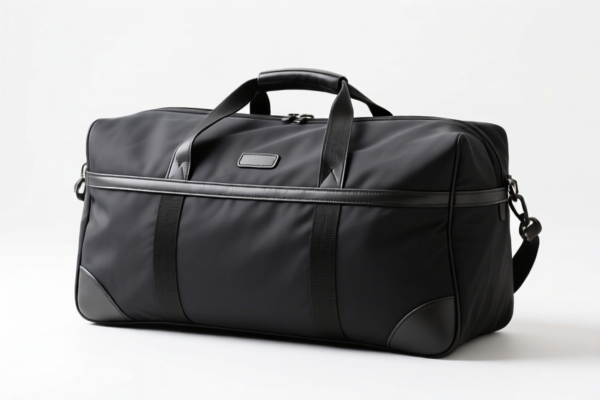
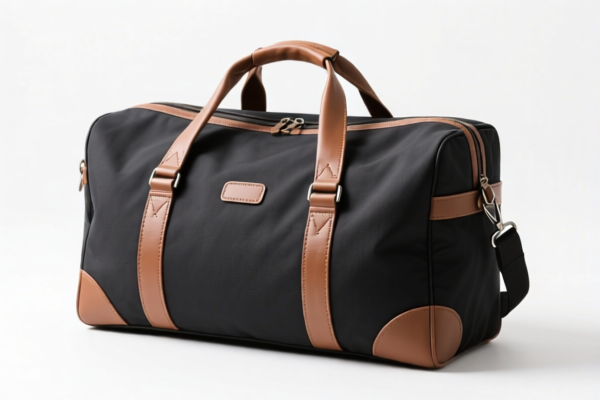
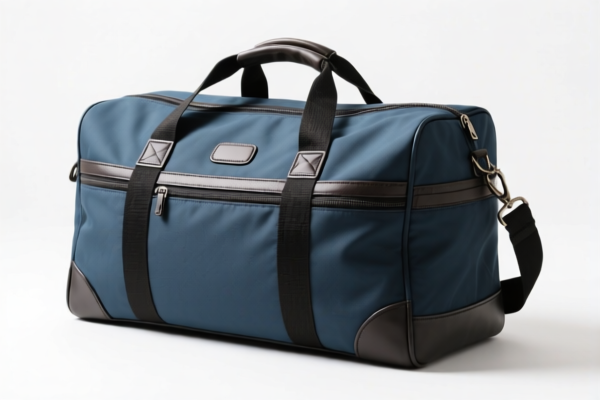
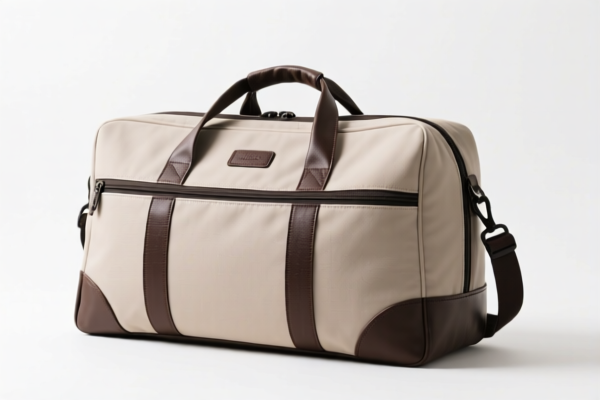
AI Analysis
🎒 Traveling Bags (Luggage & Cosmetic Cases)
🌐 HS Code Reference & Customs Clearance Guide | 2026 Latest Tariff Analysis | Professional Clearance Strategy
📌 I. Product Definition & Classification: What Exactly Is a "Traveling Bag"?
In international trade, "Traveling Bag" is a broad term that encompasses a wide variety of items, from sturdy hard-shell suitcases to soft fabric toiletry kits. The critical factor for classification is material composition and primary function.
- Textile Bags: Made from nylon, polyester, canvas, or fabric. These are typically classified under Chapter 63 (Other Made-Up Textile Articles) or Chapter 42 (Articles of Leather).
- Plastic Bags: Made from PVC, PE, or other plastics. These fall under Chapter 39 (Plastics and Articles Thereof).
⚠️ Key Distinction:
- If the bag is primarily textile/fabric (e.g., packing cubes, soft cosmetic bags) → Often 6307 or 4202.
- If the bag is primarily plastic (e.g., rigid plastic organizers, shower caddies) → Often 3923.
📦 II. HS Code Classification Details (2026 Latest Tariff Authority Comparison)
Based on the data provided, here are the five possible HS codes, their logical derivation, and tax implications.
| HS Code | Product Description & Logic | Material Inference | Total Tax Rate |
|---|---|---|---|
6307.90.98.91 |
Other Made-Up Textile Articles ✅ Matches finished consumer goods not elsewhere specified. |
Textile/Fabric (Inferred: Nylon, Polyester, Cotton) |
24.5% |
4202.92.31.31 |
Bags of Textile Materials ✅ Matches travel-specific shapes/forms (packing cubes, toiletry kits). |
Textile/Fabric (Inferred: Outer surface is textile) |
52.6% |
6307.90.98.75 |
Other Made-Up Textile Articles ✅ "Catch-all" for finished textile consumables. |
Textile/Fabric (Inferred: Textile material) |
24.5% |
3923.29.00.00 |
Plastic Sacs, Pouches & Envelopes ✅ Matches "pouch/sac" morphology. |
Plastic/Synthetic Fiber (Inferred: Plastic construction) |
38.0% |
3923.90.00.80 |
Other Articles of Plastics ✅ Matches packaging/container category. |
Plastic/Synthetic Fiber (Inferred: Plastic construction) |
38.0% |
🔍 Critical Note:
- Textile vs. Plastic: The difference in tax rate between4202(52.6%) and6307(24.5%) is massive. Proper identification of the outer surface material is crucial.
- 122 Clause Impact: All codes above include a 10% Section 301/122 Clause Tariff on top of base and additional taxes.
💰 III. 2026 Latest Tariff Rate Breakdown (Including Surcharges)
✅ Applicable Country: United States (US)
✅ Origin: China (CN)
✅ Effective Date: November 10, 2025 (and subsequent imports)
🎯 1. Textile Categories: 6307.90.98.91 & 6307.90.98.75
| Item | Content |
|---|---|
| Base Tariff | 7.0% |
| Section 301 Surtax | 7.5% |
| Clause 122 Surtax | 10.0% |
| Total Rate | 24.5% |
| Calculation | CIF Value × 24.5% |
| De Minimis Exemption | ❌ Not Applicable (High duty rates prevent de minimis clearance) |
| Legal Path | Base Tariff → Section 301 → Clause 122 |
📌 Explanation:
- These codes are for non-standard textile goods (e.g., packing organizers, soft cases).
- While cheaper than luggage bags (4202), they are still subject to significant US import taxes.
🎯 2. Luggage/Travel Bags: 4202.92.31.31
| Item | Content |
|---|---|
| Base Tariff | 17.6% |
| Section 301 Surtax | 25.0% |
| Clause 122 Surtax | 10.0% |
| Total Rate | 52.6% |
| Calculation | CIF Value × 52.6% |
| De Minimis Exemption | ❌ Not Applicable |
| Legal Path | Base Tariff → Section 301 → Clause 122 |
📌 Warning:
- This is the highest tax bracket in the dataset.
- It applies to finished travel bags (suitcases, large totes, structured cosmetic bags).
- Cost Impact: For every $10,000 of goods, you pay $5,260 in duties. This severely impacts margin.
🎯 3. Plastic/Pouch Categories: 3923.29.00.00 & 3923.90.00.80
| Item | Content |
|---|---|
| Base Tariff | 3.0% |
| Section 301 Surtax | 25.0% |
| Clause 122 Surtax | 10.0% |
| Total Rate | 38.0% |
| Calculation | CIF Value × 38.0% |
| De Minimis Exemption | ❌ Not Applicable |
| Legal Path | Base Tariff → Section 301 → Clause 122 |
📌 Explanation:
- These codes apply to plastic bags, pouches, or containers (e.g., rigid plastic toiletry bottles, plastic travel organizers).
- Although the base tariff is low (3%), the 25% Section 301 surcharge makes the total rate (38%) higher than the cheaper textile options (24.5%).
🛠️ IV. Customs Clearance Practical Advice (Real-World Pitfall Guide)
✅ 1. Documentation Checklist (Essential)
| Document | Required? | Description |
|---|---|---|
| ✅ Product Specification Sheet | ✔️ | Must clearly state material composition (e.g., "100% Polyester Outer, PVC Inner"). |
| ✅ Material Declaration | ✔️ | Crucial for distinguishing between 6307 (Textile) and 3923 (Plastic). |
| ✅ Product Photos | ✔️ | Show the bag in use, including zippers, handles, and lining. |
| ✅ Commercial Invoice | ✔️ | Must use precise descriptions: "Packing Cube, Polyester" vs. "Travel Cosmetic Bag, Plastic". |
| ✅ Packing List | ✔️ | Confirm quantity and weight. |
✅ 2. Classification Strategy (Key Mnemonics)
🔥 "Material is King, Shape is Queen!"
| Scenario | Correct HS Code | Incorrect Code | Consequence |
|---|---|---|---|
| Soft Fabric Packing Cube | 6307.90.98.91 or 6307.90.98.75 (24.5%) |
4202 (52.6%) |
Saves ~28% in taxes |
| Structured Toiletry Bag (Fabric) | 4202.92.31.31 (52.6%) |
6307 (24.5%) |
Overpaid taxes if misclassified as simple textile |
| Plastic Shower Caddy | 3923.29.00.00 (38.0%) |
6307 (24.5%) |
Under-declared, risk of penalty |
| Hard Shell Suitcase | 4202.92.31.31 (52.6%) |
6307 (24.5%) |
High Risk of Audit if misclassified as textile |
📌 Important:
- Do not use "Travel Bag" as a generic description.
- Use "Packing Cube, Polyester" for6307.
- Use "Toiletry Bag, PVC" for3923.
- Use "Luggage, Leather/Textile" for4202.
✅ 3. Special Cases
| Situation | Handling Advice |
|---|---|
| Mixed Material Bags | If the bag is >50% textile by value/weight, classify under Textile (6307/4202). If >50% plastic, classify under Plastic (3923). |
| OEM Custom Bags | Provide design blueprints. If the design resembles a suitcase but is made of fabric, it may still be 4202. |
| Small Sample Bags | If total value is under $800, de minimis may apply, but with rates >24%, it's often not worth the risk for bulk shipments. |
🌍 V. Global Market Comparison (2026 Latest)
| Country/Region | Recommended HS Code | Duty Rate | Certification | Remarks |
|---|---|---|---|---|
| 🇺🇸 USA | 6307.90.98.91 / 4202.92.31.31 / 3923.29.00.00 |
24.5% – 52.6% | No specific cert needed | High tariffs due to Section 301 & Clause 122 |
| 🇨🇳 China | 6307 / 4202 / 3923 |
5% - 10% | CCC (if electronic components) | Lower base tariffs |
| 🇪🇺 EU | 6307 / 4202 |
0% - 4% | CE (if applicable) | No Section 301 |
| 🇦🇺 Australia | 6307 / 4202 |
5% | RCM | Standard GST applies |
📌 Conclusion:
- The USA imposes the heaviest burden on Chinese-origin travel bags due to Section 301 and Clause 122.
- Textile-based packing cubes (6307) are the most tariff-efficient option (24.5%).
- Finished luggage (4202) is the most expensive to import into the US (52.6%).
📌 VI. Common Mistakes & Pitfalls (Lessons Learned)
❌ Mistake 1: Classifying a fabric packing cube as a plastic bag (3923).
👉 Consequence: You pay 38% instead of 24.5%. You lose money.
❌ Mistake 2: Classifying a structured toiletry bag as a general textile article (6307).
👉 Consequence: Customs may reclassify it as luggage (4202) and charge 52.6% + penalties. You pay more + fines.
❌ Mistake 3: Using vague descriptions like "Travel Accessories."
👉 Consequence: Customs delays, additional scrutiny, and potential seizure.
✅ Correct Approach:
"Packing Cube, 100% Polyester, Soft Side, No Zipper Lock, Model XYZ" →
6307.90.98.91
"Toiletry Bag, PVC Material, Clear Plastic, Hangers Included" →3923.29.00.00
"Luggage Organizer, Leather Outer, Textile Inner" →4202.92.31.31
🎯 VII. Conclusion: Smart Classification Saves Money!
🎯 Remember the Golden Rules:
🔹 "Textile Packing Cubes = Cheapest (24.5%)"
🔹 "Plastic Pouches = Middle (38.0%)"
🔹 "Finished Luggage = Most Expensive (52.6%)"
🔹 "Never Guess Material! Specify It!"
📌 Pro Tip:
If you are importing large volumes of fabric travel organizers, insist on the 6307 classification to save nearly 30% compared to 4202. Always provide material test reports to prove the textile content.
📣 Immediate Action:
📞 Consult a licensed customs broker before shipping.
📄 Prepare material declarations for every SKU.
🚀 Optimize your HS Code to minimize duty costs and accelerate clearance.
✨ Professional Clearance Starts with Accurate Classification!
💼 Every percent of duty saved is pure profit!
Customer Reviews
About HS Code Classification
The Harmonized System (HS) is an internationally standardized nomenclature developed by the World Customs Organization (WCO) to classify traded products. Over 200 countries use the HS system as the basis for customs tariffs, trade statistics, and import/export regulations.
Each HS code follows a hierarchical structure:
- Chapter (2 digits) — Broad category of goods (e.g., Chapter 84: Machinery and Mechanical Appliances)
- Heading (4 digits) — More specific grouping within the chapter
- Subheading (6 digits) — Internationally standardized breakdown, used by all WCO member countries
- National subdivisions (8-10 digits) — Country-specific extensions for further classification, such as US HTSUS 10-digit codes
Correct HS code classification is essential for smooth customs clearance, accurate duty payment, and compliance with trade regulations. Misclassification can lead to customs delays, overpayment of duties, or penalties.
When importing from CN to US, the applicable tariff rates may include:
- Most-Favored-Nation (MFN) rate — The standard duty rate applied to WTO members
- General rate — Applied to countries without trade agreements
- Trade remedy duties — Additional tariffs such as Section 301 (anti-dumping), Section 232 (national security), or countervailing duties
The information provided on this page is for reference purposes only. For official classification, please consult with your local customs authority or a licensed customs broker.