Tungsten and Tungsten Products
CN → US| HS编码 | 关税税率 | 原产国 | 目的国 | 文档 |
|---|---|---|---|---|
| 8101100000 | 42.0% | CN | US | 官方文档 |
| 8101991000 | 41.5% | CN | US | 官方文档 |
商品图片
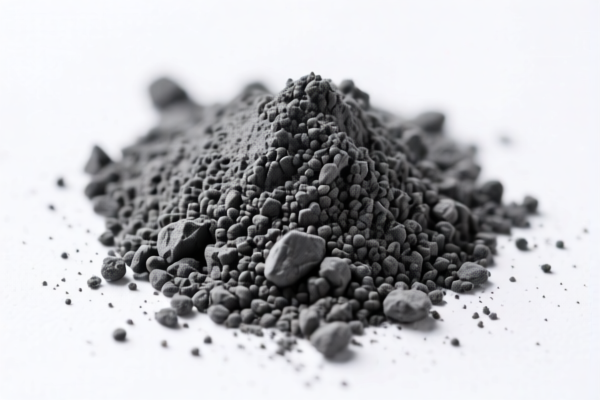
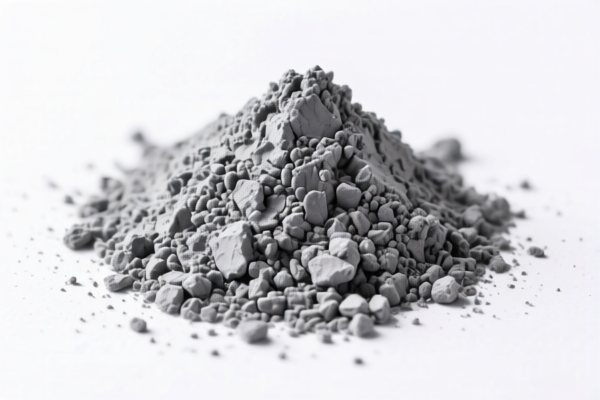
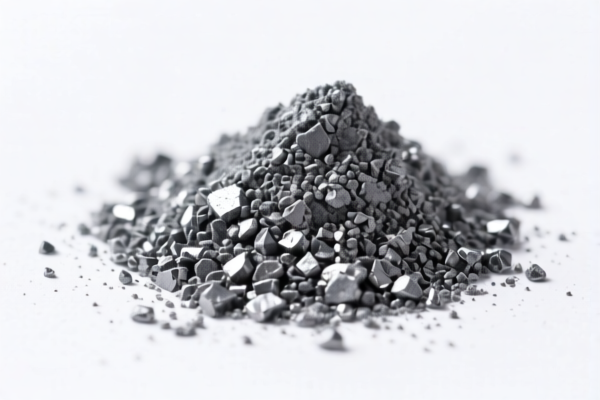
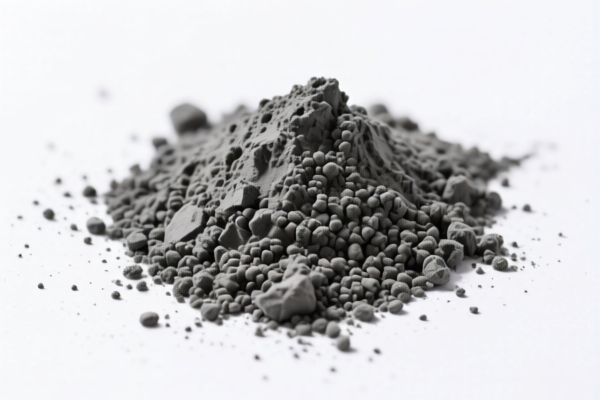
AI分析
🏭 Tungsten & Tungsten Products (Wolfram)
🌐 HS Code Reference & Clearance Guide | 2026 Latest Tariff Analysis | Professional Customs Strategy
📌 1. Product Definition and Classification: Do You Truly Understand "Tungsten"?
Tungsten (Wolfram), known for its extremely high melting point, density, and hardness, is a critical strategic metal in aerospace, electronics, and defense industries. In international trade, it is primarily categorized by its physical state and processing level.
Key Distinction:
- Raw Material/Intermediate Forms: Powders, waste, scrap, or basic unprocessed shapes (bars/roods not simply sintered).
- Advanced Articles: Complex components, tools, or finished goods (not covered in the provided data snippet, which focuses on raw/intermediate forms).
⚠️ Critical Classification Point:
- Powders, Waste, Scrap: Classify under 8101.10.
- Bars, Rods, Plates, Strip, Foil (excluding those obtained simply by sintering): Classify under 8101.99.
- Note: "Simply by sintering" refers to powder metallurgy processes. If the product is a sintered item, it may fall under different subheadings (e.g., 8101.97/98), but based on the provided , we focus on the explicit descriptions given.
📦 2. HS Code Classification Details (Based on Provided Data)
| HS Code | Product Description | Application Scenario | Processing State |
|---|---|---|---|
8101.10.00.00 |
Tungsten Powders | Additive manufacturing (3D printing), metallurgical additives, carbide production | Powder form |
8101.99.10.00 |
Bars, Rods, Plates, Sheets, Strip, Foil (Other than simply sintered) | Structural components, heat sinks, radiation shielding, electrical contacts, machining blanks | Solid/Processed forms (not simple sintering) |
🔍 Important Note:
- The description for8101.99.10.00explicitly excludes items obtained simply by sintering. If your product is a sintered tungsten component, it does NOT fall under this code.
- Waste and scrap are included in the chapter header for 8101, but the specific codes provided focus on Powders (8101.10) and Other Articles (8101.99). Ensure waste/scrap is declared correctly if applicable, though the specific tax rate in the data is tied to the main product types.
💰 3. 2026 Latest Tariff Rate Breakdown (Including Supplementary Taxes)
✅ Applicable Country: United States (US)
✅ Origin: China (CN) (Implied by the high total tax rate typical of US-China trade data in this context)
✅ Effective Date: Current (2026)
🎯 1. 8101.10.00.00 —— Tungsten Powders
| Item | Content |
|---|---|
| Base Tariff | 7.0% |
| Supplementary Tariff (Section 301) | 25.0% |
| Total Tax Rate | 32.0% |
| Tax Calculation | CIF Value × 32.0% |
| De Minimis Exemption | ❌ Not Applicable (De Minimis does not apply to goods subject to Section 301 tariffs) |
| Legal Basis Path | HTSUS 8101.10.00.00 → Section 301 Footnote |
📌 Explanation:
- Base Tariff (7.0%): The standard Most-Favored-Nation (MFN) rate for tungsten powders.
- Supplementary Tariff (25.0%): Imposed under Section 301 of the Trade Act of 1974 against Chinese imports.
- Total (32.0%): A significant cost factor. Importers must account for this in pricing models.
- No De Minimis: Unlike low-value packages, high-value industrial materials like tungsten powder are subject to full duty assessment regardless of value thresholds.
🎯 2. 8101.99.10.00 —— Tungsten Bars, Rods, Plates, etc. (Non-Sintered)
| Item | Content |
|---|---|
| Base Tariff | 6.5% |
| Supplementary Tariff (Section 301) | 25.0% |
| Total Tax Rate | 31.5% |
| Tax Calculation | CIF Value × 31.5% |
| De Minimis Exemption | ❌ Not Applicable |
| Legal Basis Path | HTSUS 8101.99.10.00 → Section 301 Footnote |
📌 Explanation:
- Base Tariff (6.5%): Slightly lower than powders due to higher processing value.
- Supplementary Tariff (25.0%): Same Section 301 penalty as powders.
- Total (31.5%): Marginally cheaper than powders but still a high-cost import.
- Crucial Distinction: If the product is sintered, it might fall under a different 8-digit code (e.g., 8101.97 or 8101.98), which may have different rates or exclusions. Verify if your product is "simply sintered" to avoid misclassification.
🛠️ 4. Customs Clearance Practical Advice (Avoiding Pitfalls)
✅ 1. Required Documentation Checklist
| Document | Mandatory? | Notes |
|---|---|---|
| ✅ Commercial Invoice | ✔️ | Must clearly state "Tungsten" or "Wolfram" and specific form (Powder/Bar). |
| ✅ Packing List | ✔️ | Detail weight, volume, and packaging type. |
| ✅ Certificate of Origin | ✔️ | Critical to determine if origin is China (subject to 25% tariff) or another country. |
| ✅ Product Specification Sheet | ✔️ | Must define particle size (for powders) or dimensions/grade (for bars). |
| ✅ Material Safety Data Sheet (MSDS) | ✔️ | Tungsten powder may be hazardous due to flammability or toxicity. Required for shipping and customs. |
| ✅ Proof of Non-Sintering | ✔️ | For 8101.99.10.00, if challenged, provide evidence that products are not "simply sintered" (e.g., manufacturing process description). |
✅ 2. Declaration Tips (Key Phrases)
🔥 "Be Specific: Declare 'Tungsten Powder' or 'Tungsten Bars', NOT just 'Metal'."
| Scenario | Correct Declaration | Incorrect Declaration |
|---|---|---|
| Tungsten Powder | "Tungsten Powder, CAS No. 7440-33-7" | "Metal Powder" |
| Tungsten Bar (Non-Sintered) | "Tungsten Bars, Solid, Non-Sintered" | "Tungsten Articles" |
| Tungsten Waste/Scrap | "Tungsten Waste and Scrap" (Check specific subheading if not covered in 8101.10/99) | "Recycled Metal" |
✅ 3. Special Considerations
| Situation | Handling Advice |
|---|---|
| Mixed Shipments | Declare each HS Code separately. Do not lump powders and bars together. |
| Sintered Products | If your product is sintered, DO NOT use 8101.99.10.00. Research subheadings like 8101.97.00 or 8101.98.00. Misclassification leads to penalties. |
| Origin Verification | If the tungsten originates from Vietnam, Thailand, or Mexico, you may be eligible for lower or zero Section 301 tariffs. Provide proof of substantial transformation. |
| Dual-Use Items | Tungsten is used in military applications. Ensure compliance with BIS (Bureau of Industry and Security) regulations if end-use is sensitive. |
🌍 5. Global Market Comparison (2026)
| Country/Region | Recommended HS Code | Tariff (China Origin) | Notes |
|---|---|---|---|
| 🇺🇸 USA | 8101.10.00.00 / 8101.99.10.00 |
32.0% / 31.5% | High tariffs due to Section 301. |
| 🇨🇳 China | 8101.10.00 / 8101.99.10 |
~1%-5% | Low import duty for raw materials. |
| 🇪🇺 EU | 8101.97.00 / 8101.99 |
~2-6% | No Section 301 equivalent, but anti-dumping may apply in some cases. |
| 🇯🇵 Japan | 8101.97.00 / 8101.99 |
~0-5% | Generally low tariffs. |
📌 Conclusion:
- USA is the most expensive market for Chinese-origin tungsten due to the 25% supplementary tariff.
- Supply Chain Diversification: Consider sourcing from non-China origins if targeting the US market to reduce costs.
📌 6. Common Errors & Pitfalls (Lessons Learned)
❌ Error 1: Declaring "Tungsten" without specifying form (Powder vs. Bar).
👉 Consequence: Customs may classify under the highest duty rate or request further documentation, causing delays.
❌ Error 2: Misclassifying sintered products as 8101.99.10.00.
👉 Consequence: Incorrect classification. Sintered items have different codes and potentially different tax treatments.
❌ Error 3: Ignoring the "Simply by Sintering" exclusion.
👉 Consequence: If your product is sintered, using 8101.99.10.00 is a violation. You must use the correct subheading for sintered items.
✅ Correct Approach:
"Tungsten Powder, Grade 1, Mesh 325, 100kg"
"Tungsten Rods, Diameter 10mm, Length 1m, Non-Sintered"
🎯 7. Conclusion: Precision in Classification Saves Money
🎯 Remember the Formula:
🔹 "Powder = 32% | Bars (Non-Sintered) = 31.5% | Sintered = Check Other Codes!"
🔹 "Specify Form, Declare Origin, Avoid Section 301 Pain!"
📌 Pro Tip:
If your tungsten products are not of Chinese origin, you may qualify for lower tariffs. Ensure your Certificate of Origin accurately reflects the country of manufacture to benefit from Free Trade Agreements (FTAs) or reduced duties.
📣 Immediate Action:
📞 Verify your product's processing state (Sintered vs. Non-Sintered)
📦 Prepare accurate MSDS and Specifications
🚀 Consult a licensed customs broker to confirm HS Code before shipment
✨ Accurate Classification is the First Step to Cost Efficiency!
💼 Don't let misclassification cost you 30%+ in unexpected tariffs!
用户评价
关于 HS 编码归类
协调制度(HS)是由世界海关组织(WCO)制定的国际贸易商品分类标准。全球 200 多个国家采用 HS 系统作为海关关税、贸易统计和进出口监管的基础。
每个 HS 编码遵循以下层级结构:
- 章(2 位)——商品大类(例如:第 84 章:机器和机械设备)
- 品目(4 位)——章内的更具体分类
- 子目(6 位)——国际通用细分,所有 WCO 成员国统一使用
- 本国细分(8-10 位)——各国自行扩展的细分编码,如美国 HTSUS 10 位编码
正确的 HS 编码归类对于顺利通关、准确缴纳关税和遵守贸易法规至关重要。错误归类可能导致海关延误、多缴关税或罚款。
从CN进口到US时,适用的关税税率可能包括:
- 最惠国(MFN)税率——适用于 WTO 成员国的标准关税税率
- 普通税率——适用于无贸易协定国家
- 贸易救济关税——附加关税,如 301 条款(反倾销)、232 条款(国家安全)或反补贴税
本页内容仅供参考。如需正式归类,请咨询当地海关或持牌报关代理。