Tungsten and Tungsten Products
CN → US| HS Code | Tariff Rate | Origin | Destination | Doc |
|---|---|---|---|---|
| 8101100000 | 42.0% | CN | US | Official Doc |
| 8101991000 | 41.5% | CN | US | Official Doc |
Product Images
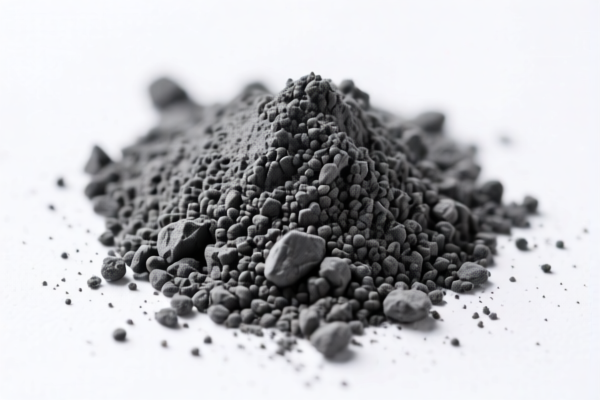
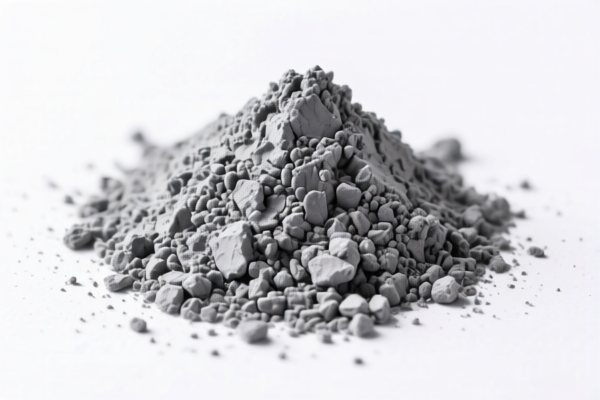
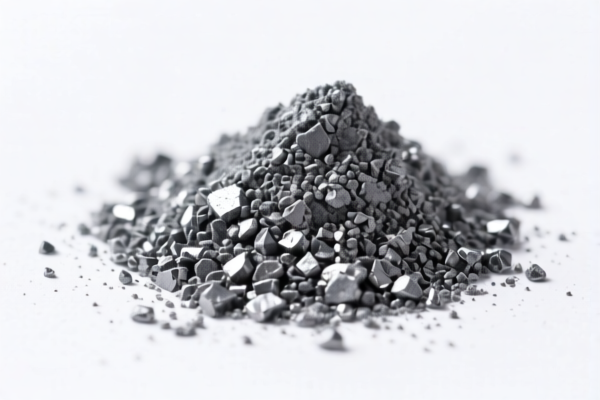
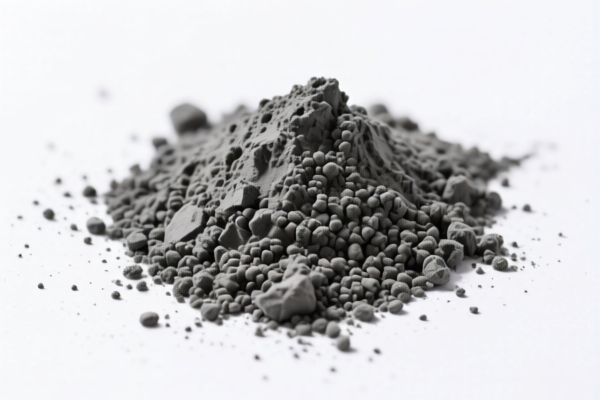
AI Analysis
🏭 Tungsten & Tungsten Products (Wolfram)
🌐 HS Code Reference & Clearance Guide | 2026 Latest Tariff Analysis | Professional Customs Strategy
📌 1. Product Definition and Classification: Do You Truly Understand "Tungsten"?
Tungsten (Wolfram), known for its extremely high melting point, density, and hardness, is a critical strategic metal in aerospace, electronics, and defense industries. In international trade, it is primarily categorized by its physical state and processing level.
Key Distinction:
- Raw Material/Intermediate Forms: Powders, waste, scrap, or basic unprocessed shapes (bars/roods not simply sintered).
- Advanced Articles: Complex components, tools, or finished goods (not covered in the provided data snippet, which focuses on raw/intermediate forms).
⚠️ Critical Classification Point:
- Powders, Waste, Scrap: Classify under 8101.10.
- Bars, Rods, Plates, Strip, Foil (excluding those obtained simply by sintering): Classify under 8101.99.
- Note: "Simply by sintering" refers to powder metallurgy processes. If the product is a sintered item, it may fall under different subheadings (e.g., 8101.97/98), but based on the provided , we focus on the explicit descriptions given.
📦 2. HS Code Classification Details (Based on Provided Data)
| HS Code | Product Description | Application Scenario | Processing State |
|---|---|---|---|
8101.10.00.00 |
Tungsten Powders | Additive manufacturing (3D printing), metallurgical additives, carbide production | Powder form |
8101.99.10.00 |
Bars, Rods, Plates, Sheets, Strip, Foil (Other than simply sintered) | Structural components, heat sinks, radiation shielding, electrical contacts, machining blanks | Solid/Processed forms (not simple sintering) |
🔍 Important Note:
- The description for8101.99.10.00explicitly excludes items obtained simply by sintering. If your product is a sintered tungsten component, it does NOT fall under this code.
- Waste and scrap are included in the chapter header for 8101, but the specific codes provided focus on Powders (8101.10) and Other Articles (8101.99). Ensure waste/scrap is declared correctly if applicable, though the specific tax rate in the data is tied to the main product types.
💰 3. 2026 Latest Tariff Rate Breakdown (Including Supplementary Taxes)
✅ Applicable Country: United States (US)
✅ Origin: China (CN) (Implied by the high total tax rate typical of US-China trade data in this context)
✅ Effective Date: Current (2026)
🎯 1. 8101.10.00.00 —— Tungsten Powders
| Item | Content |
|---|---|
| Base Tariff | 7.0% |
| Supplementary Tariff (Section 301) | 25.0% |
| Total Tax Rate | 32.0% |
| Tax Calculation | CIF Value × 32.0% |
| De Minimis Exemption | ❌ Not Applicable (De Minimis does not apply to goods subject to Section 301 tariffs) |
| Legal Basis Path | HTSUS 8101.10.00.00 → Section 301 Footnote |
📌 Explanation:
- Base Tariff (7.0%): The standard Most-Favored-Nation (MFN) rate for tungsten powders.
- Supplementary Tariff (25.0%): Imposed under Section 301 of the Trade Act of 1974 against Chinese imports.
- Total (32.0%): A significant cost factor. Importers must account for this in pricing models.
- No De Minimis: Unlike low-value packages, high-value industrial materials like tungsten powder are subject to full duty assessment regardless of value thresholds.
🎯 2. 8101.99.10.00 —— Tungsten Bars, Rods, Plates, etc. (Non-Sintered)
| Item | Content |
|---|---|
| Base Tariff | 6.5% |
| Supplementary Tariff (Section 301) | 25.0% |
| Total Tax Rate | 31.5% |
| Tax Calculation | CIF Value × 31.5% |
| De Minimis Exemption | ❌ Not Applicable |
| Legal Basis Path | HTSUS 8101.99.10.00 → Section 301 Footnote |
📌 Explanation:
- Base Tariff (6.5%): Slightly lower than powders due to higher processing value.
- Supplementary Tariff (25.0%): Same Section 301 penalty as powders.
- Total (31.5%): Marginally cheaper than powders but still a high-cost import.
- Crucial Distinction: If the product is sintered, it might fall under a different 8-digit code (e.g., 8101.97 or 8101.98), which may have different rates or exclusions. Verify if your product is "simply sintered" to avoid misclassification.
🛠️ 4. Customs Clearance Practical Advice (Avoiding Pitfalls)
✅ 1. Required Documentation Checklist
| Document | Mandatory? | Notes |
|---|---|---|
| ✅ Commercial Invoice | ✔️ | Must clearly state "Tungsten" or "Wolfram" and specific form (Powder/Bar). |
| ✅ Packing List | ✔️ | Detail weight, volume, and packaging type. |
| ✅ Certificate of Origin | ✔️ | Critical to determine if origin is China (subject to 25% tariff) or another country. |
| ✅ Product Specification Sheet | ✔️ | Must define particle size (for powders) or dimensions/grade (for bars). |
| ✅ Material Safety Data Sheet (MSDS) | ✔️ | Tungsten powder may be hazardous due to flammability or toxicity. Required for shipping and customs. |
| ✅ Proof of Non-Sintering | ✔️ | For 8101.99.10.00, if challenged, provide evidence that products are not "simply sintered" (e.g., manufacturing process description). |
✅ 2. Declaration Tips (Key Phrases)
🔥 "Be Specific: Declare 'Tungsten Powder' or 'Tungsten Bars', NOT just 'Metal'."
| Scenario | Correct Declaration | Incorrect Declaration |
|---|---|---|
| Tungsten Powder | "Tungsten Powder, CAS No. 7440-33-7" | "Metal Powder" |
| Tungsten Bar (Non-Sintered) | "Tungsten Bars, Solid, Non-Sintered" | "Tungsten Articles" |
| Tungsten Waste/Scrap | "Tungsten Waste and Scrap" (Check specific subheading if not covered in 8101.10/99) | "Recycled Metal" |
✅ 3. Special Considerations
| Situation | Handling Advice |
|---|---|
| Mixed Shipments | Declare each HS Code separately. Do not lump powders and bars together. |
| Sintered Products | If your product is sintered, DO NOT use 8101.99.10.00. Research subheadings like 8101.97.00 or 8101.98.00. Misclassification leads to penalties. |
| Origin Verification | If the tungsten originates from Vietnam, Thailand, or Mexico, you may be eligible for lower or zero Section 301 tariffs. Provide proof of substantial transformation. |
| Dual-Use Items | Tungsten is used in military applications. Ensure compliance with BIS (Bureau of Industry and Security) regulations if end-use is sensitive. |
🌍 5. Global Market Comparison (2026)
| Country/Region | Recommended HS Code | Tariff (China Origin) | Notes |
|---|---|---|---|
| 🇺🇸 USA | 8101.10.00.00 / 8101.99.10.00 |
32.0% / 31.5% | High tariffs due to Section 301. |
| 🇨🇳 China | 8101.10.00 / 8101.99.10 |
~1%-5% | Low import duty for raw materials. |
| 🇪🇺 EU | 8101.97.00 / 8101.99 |
~2-6% | No Section 301 equivalent, but anti-dumping may apply in some cases. |
| 🇯🇵 Japan | 8101.97.00 / 8101.99 |
~0-5% | Generally low tariffs. |
📌 Conclusion:
- USA is the most expensive market for Chinese-origin tungsten due to the 25% supplementary tariff.
- Supply Chain Diversification: Consider sourcing from non-China origins if targeting the US market to reduce costs.
📌 6. Common Errors & Pitfalls (Lessons Learned)
❌ Error 1: Declaring "Tungsten" without specifying form (Powder vs. Bar).
👉 Consequence: Customs may classify under the highest duty rate or request further documentation, causing delays.
❌ Error 2: Misclassifying sintered products as 8101.99.10.00.
👉 Consequence: Incorrect classification. Sintered items have different codes and potentially different tax treatments.
❌ Error 3: Ignoring the "Simply by Sintering" exclusion.
👉 Consequence: If your product is sintered, using 8101.99.10.00 is a violation. You must use the correct subheading for sintered items.
✅ Correct Approach:
"Tungsten Powder, Grade 1, Mesh 325, 100kg"
"Tungsten Rods, Diameter 10mm, Length 1m, Non-Sintered"
🎯 7. Conclusion: Precision in Classification Saves Money
🎯 Remember the Formula:
🔹 "Powder = 32% | Bars (Non-Sintered) = 31.5% | Sintered = Check Other Codes!"
🔹 "Specify Form, Declare Origin, Avoid Section 301 Pain!"
📌 Pro Tip:
If your tungsten products are not of Chinese origin, you may qualify for lower tariffs. Ensure your Certificate of Origin accurately reflects the country of manufacture to benefit from Free Trade Agreements (FTAs) or reduced duties.
📣 Immediate Action:
📞 Verify your product's processing state (Sintered vs. Non-Sintered)
📦 Prepare accurate MSDS and Specifications
🚀 Consult a licensed customs broker to confirm HS Code before shipment
✨ Accurate Classification is the First Step to Cost Efficiency!
💼 Don't let misclassification cost you 30%+ in unexpected tariffs!
Customer Reviews
About HS Code Classification
The Harmonized System (HS) is an internationally standardized nomenclature developed by the World Customs Organization (WCO) to classify traded products. Over 200 countries use the HS system as the basis for customs tariffs, trade statistics, and import/export regulations.
Each HS code follows a hierarchical structure:
- Chapter (2 digits) — Broad category of goods (e.g., Chapter 84: Machinery and Mechanical Appliances)
- Heading (4 digits) — More specific grouping within the chapter
- Subheading (6 digits) — Internationally standardized breakdown, used by all WCO member countries
- National subdivisions (8-10 digits) — Country-specific extensions for further classification, such as US HTSUS 10-digit codes
Correct HS code classification is essential for smooth customs clearance, accurate duty payment, and compliance with trade regulations. Misclassification can lead to customs delays, overpayment of duties, or penalties.
When importing from CN to US, the applicable tariff rates may include:
- Most-Favored-Nation (MFN) rate — The standard duty rate applied to WTO members
- General rate — Applied to countries without trade agreements
- Trade remedy duties — Additional tariffs such as Section 301 (anti-dumping), Section 232 (national security), or countervailing duties
The information provided on this page is for reference purposes only. For official classification, please consult with your local customs authority or a licensed customs broker.