Turbine Fan
CN → US| HS编码 | 关税税率 | 原产国 | 目的国 | 文档 |
|---|---|---|---|---|
| 8509805080 | 14.2% | CN | US | 官方文档 |
| 8509805095 | 14.2% | CN | US | 官方文档 |
| 8414519060 | 14.7% | CN | US | 官方文档 |
商品图片
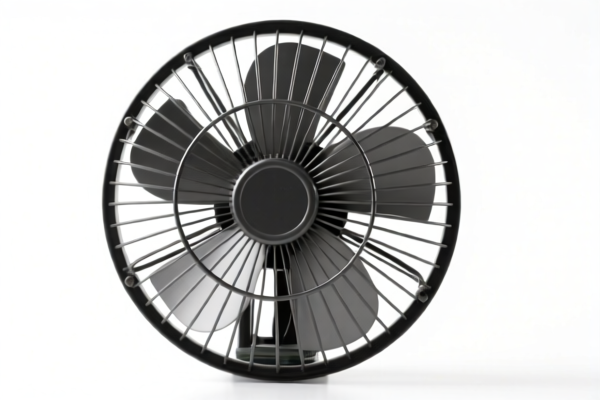
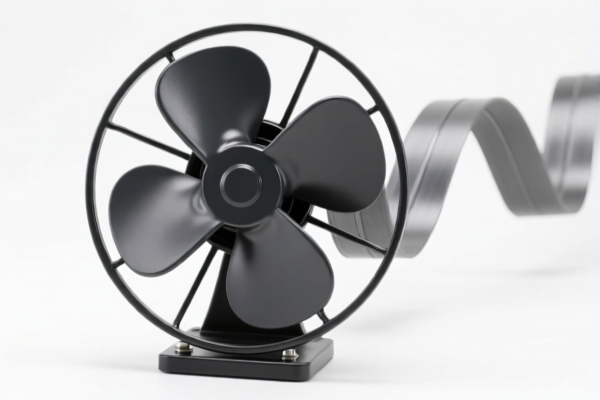
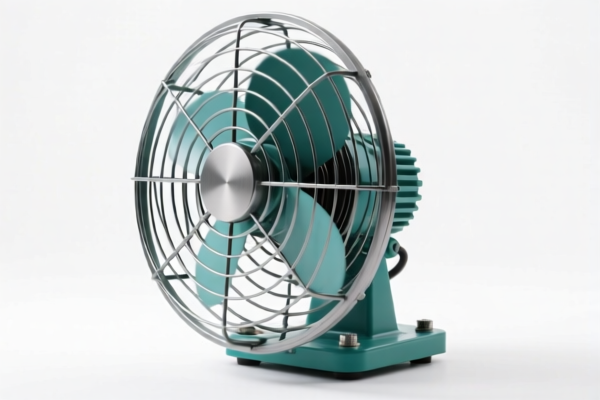
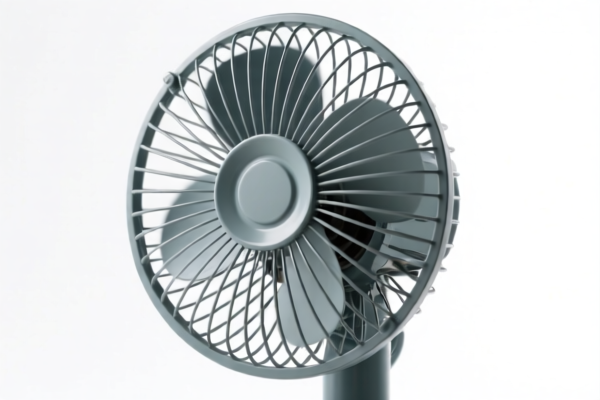
AI分析
🌀 Turbine Fan (Industrial/Commercial Fans)
🌐 HS Code Reference & Clearance Guide | 2026 Latest Tariff Analysis | Professional Customs Strategy
📌 Part 1: Product Definition & Classification: What Exactly is a "Turbine Fan"?
A Turbine Fan is a mechanical device that converts rotational energy into fluid flow. In international trade, classification depends heavily on the driving mechanism and application.
There is a critical distinction in the provided data between Home Appliances (Section 85) and Industrial/Mechanical Fans (Section 84).
Key Classification Logic from Data:
* Home Appliance Type (HS 8509.80): If the fan contains a self-contained electric motor intended for household use, it falls under electrical machinery. The data suggests two sub-categories under "Other":
* 8509.80.50.80: Broad "Other" category for household electrical appliances.
* 8509.80.50.95: Specifically "Other electrical appliances" (excluding specific items like toothbrushes or humidifiers).
* Mechanical/Industrial Type (HS 8414.51): If the device is primarily a fan (air mover) driven by an external motor or is a general ventilation fan not classified as a "household electrical appliance" in the same sense, it falls under Chapter 84.
* 8414.51.90.60: Classified explicitly as "Fans," with the summary noting perfect alignment with the core purpose of "fan."
⚠️ Critical Distinction:
- If it is a plug-in household fan (desk, pedestal, ceiling) → Likely HS 8509.
- If it is an industrial ventilation fan or a fan unit where the motor is not integrated as a simple "household appliance" → Likely HS 8414.
📦 Part 2: HS Code Classification Details (Based on Provided Data)
| HS Code | Product Description | Source Summary (Data Logic) | Applicable Scenario |
|---|---|---|---|
8509.80.50.80 |
Other Electro-domestic Appliances | "Matches 'fan' name, inferred as electro-mechanical household appliance. Fits 'Other' category under no material conflict." | General household fans (plug-in), excluding specific listed exclusions. |
8509.80.50.95 |
Other Electrical Appliances | "Judged as other electrical appliance. Fan has self-contained motor, not excluded (e.g., not toothbrush/opening can/humidifier)." | Household fans that don't fit more specific 8509 subcodes. |
8414.51.90.60 |
Fans | "Name 'Turbine Fan' perfectly matches classification explanation for 'Fan'. No material or form conflict." | Industrial fans, ventilation fans, or fans classified primarily by function (Chapter 84) rather than as a household appliance. |
🔍 Key Insight from Data:
- The data highlights that HS 8509 codes are used when the fan is viewed as an electrical household appliance.
- The data highlights that HS 8414 is used when the fan is viewed strictly as a mechanical fan, with the summary noting "perfect match" with the term "Fan."
💰 Part 3: 2026 Latest Tariff Rate Breakdown (Including Surcharges)
✅ Applicable Country: United States (US)
✅ Origin: China (CN)
✅ Effective Date: November 10, 2025 (and subsequent imports)
🎯 1. Household Electrical Fan Categories (8509.80.50.80 & 8509.80.50.95)
| Item | Content |
|---|---|
| Base Tariff | 4.2% (Ad Valorem) |
| Section 301 / Additional Tariff | 0.0% (As per data provided) |
| Section 122 Tariff | +10% (Specific surcharge for Chinese origin products) |
| Total Tax Rate | 14.2% |
| Tax Calculation | CIF Value × 14.2% |
| De Minimis Eligibility | ❌ Not Eligible (High total rate typically triggers scrutiny or excludes de minimis benefits depending on specific CBP interpretations, though not explicitly denied in data, high rates often complicate). |
📌 Explanation:
- Base 4.2%: Standard MFN rate for electrical appliances under Section 85.
- Section 122 10%: This is a specific additional duty applied to Chinese-origin goods in this category.
- Total 14.2%: This is the effective landing cost increase for household fans classified under HS 8509.
🎯 2. Industrial/Mechanical Fan Category (8414.51.90.60)
| Item | Content |
|---|---|
| Base Tariff | 4.7% (Ad Valorem) |
| Section 301 / Additional Tariff | 0.0% (As per data provided) |
| Section 122 Tariff | +10% (Specific surcharge for Chinese origin products) |
| Total Tax Rate | 14.7% |
| Tax Calculation | CIF Value × 14.7% |
| De Minimis Eligibility | ❌ Not Eligible (Similar to above, high combined rate). |
📌 Explanation:
- Base 4.7%: Standard MFN rate for fans under Section 84.
- Section 122 10%: Same specific surcharge as above.
- Total 14.7%: Slightly higher than household fans (14.2%) due to the higher base tariff (4.7% vs 4.2%).
🛠️ Part 4: Customs Clearance Practical Advice (Real-World Pitfall Guide)
✅ 1. Documentation Checklist (Non-Negotiable)
| Document | Mandatory | Notes |
|---|---|---|
| ✅ Product Specification Sheet | ✔️ | Must clarify: Self-contained motor? Voltage? Wattage? Application (Home vs. Industrial)? |
| ✅ Motor Details | ✔️ | Crucial for distinguishing HS 8509 (electrical appliance) vs. HS 8414 (mechanical fan). |
| ✅ Product Photos (Labeled) | ✔️ | Show power cord, plug, motor housing, and any labels stating "Household Use" or "Industrial Use." |
| ✅ Commercial Invoice | ✔️ | Clearly state: "Turbine Fan, Model XYZ, Voltage 120V, 60Hz." Avoid vague terms like "Ventilation Unit." |
| ✅ Certificate of Origin (CO) | ✔️ | Required to apply any potential preferential treatments (if applicable) or to prove Chinese origin for Section 122. |
✅ 2. Classification Strategy (Critical!)
🔥 Golden Rule: "Define the Motor, Define the Market. Home Appliance = 8509. Industrial Fan = 8414."
| Scenario | Recommended HS Code | Reasoning |
|---|---|---|
| Pluggable Household Fan (Desk, Tower, Ceiling) | 8509.80.50.80 or 8509.80.50.95 |
Classified as an electro-domestic appliance with self-contained motor. |
| Industrial/Ventilation Fan (Duct, Exhaust, Blower) | 8414.51.90.60 |
Classified primarily as a fan. If the motor is not part of a "household appliance" assembly. |
| Fan with External Motor | 8414.51.90.60 |
The fan itself is the primary good; the motor is separate or integrated differently. |
| Smart/AI Fan | 8509.80.50.80 |
If marketed as a smart home appliance, it remains under 8509. |
⚠️ Warning:
- Misclassifying an industrial fan as a household appliance (or vice versa) can lead to underpayment or overpayment of duties.
- The Section 122 10% applies to both categories, so the saving potential is minimal (only 0.5% difference in base rate). Focus on avoiding additional penalties rather than chasing small base rate differences.
✅ 3. Special Considerations
| Situation | Handling Advice |
|---|---|
| "Turbine" Brand vs. Type | If "Turbine" is a brand name (e.g., Turbine Corp), ensure it’s not confused with the functional description. The HS code depends on the function, not the brand. |
| Mixed Shipments | If a shipment contains both household fans and industrial fans, split the declaration. Do not lump them under one HS code. |
| Section 122 Tariff | Ensure the country of origin is correctly declared as China to avoid unexpected audits. If the fan is assembled in Vietnam but uses Chinese components, consult a customs broker on the "substantial transformation" rule. |
🌍 Part 5: Global Market Comparison (2026)
| Country/Region | Recommended HS Code | Est. Total Tariff (CN Origin) | Key Requirements |
|---|---|---|---|
| 🇺🇸 USA | 8509.80.50.80 / 8414.51.90.60 |
14.2% (Home) / 14.7% (Ind.) | FCC (if electrical), UL (if safety-rated). |
| 🇨🇳 China | 8509.41 / 8414.51 |
Varies (0-10%) | CCC Certification (if applicable). |
| 🇪🇺 EU | 8414.51 / 8509.41 |
~3-7% | CE Marking, RoHS, WEEE. |
| 🇬🇧 UK | 8414.51 / 8509.41 |
~3-7% | UKCA Marking, RoHS. |
📌 Conclusion:
- The USA has a distinct Section 122 10% surcharge, making the total cost higher than most other markets.
- Classification accuracy is vital because the base tariff difference (4.2% vs 4.7%) is small, but the risk of misclassification is high.
📌 Part 6: Common Errors & Pitfalls (Lessons Learned)
❌ Error 1: Calling all fans "Household Appliances"
👉 Result: If it’s an industrial fan, it may be subject to different safety standards (e.g., OSHA, UL 507 vs. UL 867) and misclassification penalties.
❌ Error 2: Ignoring the Section 122 Tariff
👉 Result: Underestimating landed cost by 10%. This is a fixed surcharge for Chinese origin in this category.
❌ Error 3: Using Vague Descriptions like "Fan" or "Ventilator"
👉 Result: Customs may request additional documentation, leading to delays and storage fees.
✅ Correct Declaration Example:
"Electrical Household Fan, Model X, 120V/60Hz, Self-Contained Motor, Plastic Housing, Not for Industrial Use."
OR
"Industrial Centrifugal Fan, Model Y, 230V/50Hz, For Ventilation System, Steel Housing."
🎯 Part 7: Conclusion: Precise Classification, Cost Control
🎯 Remember:
🔹 "Household = 8509 (14.2%)". "Industrial = 8414 (14.7%)".
🔹 "Section 122 adds 10% to BOTH."
🔹 "Document the motor and application clearly."
📌 Pro Tip:
If you are exporting to the US, pre-classify your goods with a licensed customs broker. The 0.5% difference between 14.2% and 14.7% is negligible compared to the risk of 10%+ penalties for misclassification.
📣 Immediate Action:
📞 Consult a Customs Broker: Provide product specs.
📄 Prepare Documentation: Specs, Photos, Invoice.
🚀 Ensure Compliance: FCC/UL certifications for electrical safety.
✨ Professional Clearance Starts with Accurate Classification!
💼 Every Cent of Duty Matters!
用户评价
关于 HS 编码归类
协调制度(HS)是由世界海关组织(WCO)制定的国际贸易商品分类标准。全球 200 多个国家采用 HS 系统作为海关关税、贸易统计和进出口监管的基础。
每个 HS 编码遵循以下层级结构:
- 章(2 位)——商品大类(例如:第 84 章:机器和机械设备)
- 品目(4 位)——章内的更具体分类
- 子目(6 位)——国际通用细分,所有 WCO 成员国统一使用
- 本国细分(8-10 位)——各国自行扩展的细分编码,如美国 HTSUS 10 位编码
正确的 HS 编码归类对于顺利通关、准确缴纳关税和遵守贸易法规至关重要。错误归类可能导致海关延误、多缴关税或罚款。
从CN进口到US时,适用的关税税率可能包括:
- 最惠国(MFN)税率——适用于 WTO 成员国的标准关税税率
- 普通税率——适用于无贸易协定国家
- 贸易救济关税——附加关税,如 301 条款(反倾销)、232 条款(国家安全)或反补贴税
本页内容仅供参考。如需正式归类,请咨询当地海关或持牌报关代理。