Turbine Fan
CN → US| HS Code | Tariff Rate | Origin | Destination | Doc |
|---|---|---|---|---|
| 8509805080 | 14.2% | CN | US | Official Doc |
| 8509805095 | 14.2% | CN | US | Official Doc |
| 8414519060 | 14.7% | CN | US | Official Doc |
Product Images
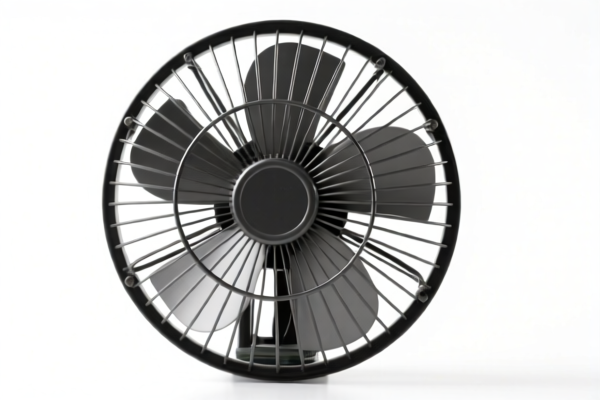
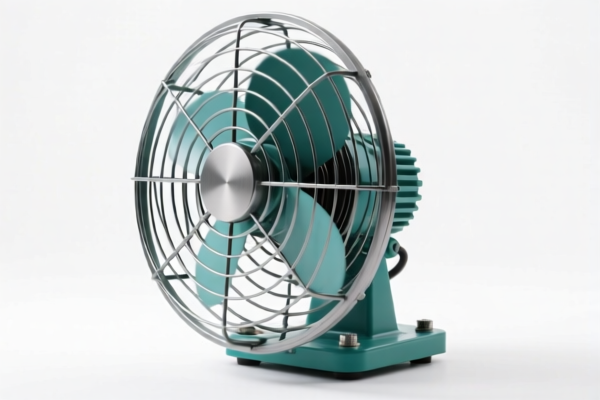
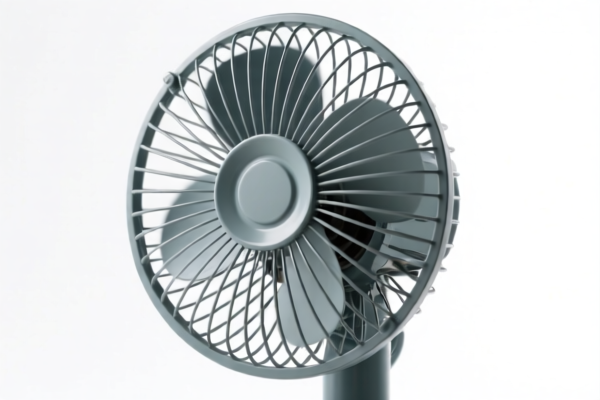
AI Analysis
🌀 Turbine Fan (Household Fans & Electric Motorized Appliances)
🌐 HS Code Reference & Customs Clearance Guide | 2026 Latest Tariff Analysis | Professional Compliance Strategy
📌 I. Product Definition & Classification: What Exactly is a "Turbine Fan"?
In international trade, a "Turbine Fan" (commonly referred to as a household fan, air circulator, or blower) is generally classified based on its driving mechanism and end-use. The key distinction lies in whether it is considered a simple mechanical ventilation device (Chapter 84) or an electrically powered home appliance (Chapter 85).
Electric Motorized Fans (Household Appliances): Fans with self-contained electric motors, designed for household use, air circulation, or cooling. These fall under Chapter 85. Mechanical/Industrial Fans: Fans driven by external belts, chains, or non-electric motors, or specific industrial turbines not meeting the "household appliance" definition. These may fall under Chapter 84.
⚠️ Critical Distinction Point: - If the fan has a built-in electric motor and is intended for household/office use → Typically HS 8509 (Electrical machinery, household appliances). - If the fan is a purely mechanical air blower without an integrated electric motor, or is part of a larger industrial system → Typically HS 8414 (Air or vacuum pumps, fans).
📦 II. HS Code Classification Details (Based on Provided Data)
| HS Code | Product Description | Reason for Classification | Applicable Tax Rate |
|---|---|---|---|
8509.80.50.80 |
Electrical Household Appliances: Other (with self-contained electric motor) | Matches "Fan" as a self-contained motorized home appliance. Falls under "Other" due to lack of specific exclusion (e.g., toothbrush, can opener). | 14.2% |
8509.80.50.95 |
Electrical Household Appliances: Other (Miscellaneous Electric Appliances) | Classifies as "Other" electrical appliances. No conflict with specific excluded categories; fits the general "other" bucket for electric fans. | 14.2% |
8414.51.90.60 |
Fans, Air Circulators, Grille Fans (Non-electric or Industrial Context) | Core purpose matches "Fan." No material or morphological conflict. Often used for fans not strictly defined as "household electrical appliances" or industrial-grade air blowers. | 14.7% |
🔍 Key Insight: - HS 8509.80 is the most common for household electric fans. - HS 8414.51 is often used for industrial fans, air circulators, or fans without integrated electric motors (or where the motor is not considered part of the "appliance" in the same way). - Tax Difference:
8509.80has a 14.2% total tax, while8414.51has a 14.7% total tax.
💰 III. 2026 Latest Tariff Rate Breakdown (Including Surtaxes & Policy Add-ons)
✅ Applicable Country: United States (US)
✅ Origin: China (CN)
✅ Effective Date: From November 10, 2025 (including subsequent imports)
🎯 1. 8509.80.50.80 / 8509.80.50.95 —— Electric Household Fans (Other)
| Item | Content |
|---|---|
| Base Tariff Rate | 4.2% (ad valorem) |
| Section 301 Surtax (Add-on) | 0.0% (No additional Section 301 tariff applied to this specific subheading in the provided data) |
| Section 122 Tariff (122 Clause) | +10.0% (Specific surtax for Chinese-origin products) |
| Total Tariff Rate | 14.2% |
| Tax Calculation | CIF Value × 14.2% |
| De Minimis Exemption | ❌ Not Eligible (Typically, Section 122 tariffs override de minimis for Chinese goods; verify current CBP rules) |
| Legal Basis Path | USITC:8509.80.50.80/95 → FOOTNOTE:122 |
📌 Explanation: - The 4.2% is the standard Most Favored Nation (MFN) base rate. - The 10% is a specific Section 122 tariff, which is distinct from Section 301. This tariff applies to a wide range of Chinese imports. - Total 14.2% is a moderate-to-high tariff, but significantly lower than many consumer electronics (which can face 25%+).
🎯 2. 8414.51.90.60 —— Industrial/Household Fans (Air Circulators)
| Item | Content |
|---|---|
| Base Tariff Rate | 4.7% (ad valorem) |
| Section 301 Surtax (Add-on) | 0.0% (No additional Section 301 tariff applied) |
| Section 122 Tariff (122 Clause) | +10.0% (Specific surtax for Chinese-origin products) |
| Total Tariff Rate | 14.7% |
| Tax Calculation | CIF Value × 14.7% |
| De Minimis Exemption | ❌ Not Eligible |
| Legal Basis Path | USITC:8414.51.90.60 → FOOTNOTE:122 |
📌 Note: - The base rate is 0.5% higher than the 8509 classification. - The 10% Section 122 tariff still applies. - Total 14.7% makes this classification slightly more expensive than the 8509 route.
🛠️ IV. Customs Clearance Practical Advice (Pitfall Avoidance Guide)
✅ 1. Document Preparation Checklist (Essential)
| Document | Required | Notes |
|---|---|---|
| ✅ Product Specifications | ✔️ | Must clearly state: Type (Household/Industrial), Motor Type (Electric/Mechanical), Voltage, Frequency, Wattage. |
| ✅ Product Photos | ✔️ | Clear images showing the motor compartment, blades, and any labels indicating "Electric Motor." |
| ✅ Commercial Invoice | ✔️ | Description must match the HS Code justification. E.g., "Electric Household Fan" vs. "Air Circulator Fan." |
| ✅ Packing List | ✔️ | Detail items included (blades, guard, stand, motor housing). |
| ✅ Origin Certificate | ✔️ | Required to confirm Chinese origin for Section 122 calculation. |
✅ 2. Classification Strategy & Declaration Tips
🔥 "Motor Inside? Go 8509. Motor Outside? Go 8414. 122 Clause Always Hits!"
| Scenario | Recommended HS Code | Reason |
|---|---|---|
| Standard Household Electric Fan (with built-in motor) | 8509.80.50.80 or 8509.80.50.95 |
Fits "Electrical Household Appliance." Lower tax (14.2% vs 14.7%). |
| Industrial Air Blower (no integrated motor or belt-driven) | 8414.51.90.60 |
Not a "household appliance"; falls under "Fans." |
| Fan with External Motor | 8414.51.90.60 |
The fan unit itself is not "electrically powered" in the appliance sense; the motor is external. |
| Small Desk Fan | 8509.80.50.80 |
Clearly a household electrical appliance. |
⚠️ Critical Warning: - Do Not Under-Declare: Misclassifying an electric fan as a mechanical fan (
8414) to avoid duties is risky if the motor is internal. CBP may reclassify and charge penalties. - Section 122 is Key: Regardless of whether you choose 8509 or 8414, the 10% Section 122 tariff applies. Do not assume it can be avoided.
✅ 3. Special Cases
| Situation | Handling Advice |
|---|---|
| Smart Fans (Wi-Fi/Bluetooth) | Still 8509.80.50.80. The smart features do not change the fundamental nature as a household electrical appliance. |
| Ceiling Fans | Typically 8414.51.90.60 (if considered part of the building fixture) or 8509 if portable. Clarify with broker. Note: Data suggests 8414 for fans, so verify if ceiling fans are excluded from "household appliances" in this context. |
| HVAC Blower Fans | 8414.51.90.60. These are industrial components, not household appliances. |
🌍 V. Global Market Comparison (2026 Latest)
| Country/Region | Recommended HS Code | Tariff (China Origin) | Certification | Notes |
|---|---|---|---|---|
| 🇺🇸 USA | 8509.80.50.80 |
14.2% | FCC, UL/ETL | Section 122 applies. |
| 🇪🇺 EU | 8414.51.00 |
4.0% - 5.5% | CE, RoHS | No Section 122. Lower base rates. |
| 🇨🇳 China | 8414.51.90.60 |
10% - 12% | CCC | Export/Import dynamics differ. |
| 🇨🇦 Canada | 8414.51.90.60 |
0% (if CUSMA) | CSA, UL | Preferential rates for North American goods. |
📌 Conclusion: - USA has a complex tariff structure due to Section 122. Always factor in the 10% surcharge. - EU and other markets generally have lower base rates and no Section 122, making them more cost-effective for exporting fans from China.
📌 VI. Common Mistakes & Pitfalls (Lessons Learned)
❌ Mistake 1: Misclassifying an electric fan as a "mechanical device" (8414) when it has a motor.
👉 Consequence: CBP may reclassify to 8509 and assess penalties for incorrect declaration. However, in this specific data, 8414 is more expensive (14.7% vs 14.2%), so this mistake might accidentally increase duties but still risks compliance issues.
❌ Mistake 2: Ignoring the Section 122 Tariff. 👉 Consequence: Underpaying taxes by 10%. CBP will demand back payments + interest + penalties.
❌ Mistake 3: Using vague descriptions like "Fan" without specifying "Electric" or "Motorized." 👉 Consequence: Customs delay for further inquiry. Clear description: "Electric Household Fan, Model XYZ, 50W, 120V."
✅ Correct Approach:
"Electric Household Fan, 12-inch, Oscillating, with Built-in Motor, Model ABC, FCC Certified."
🎯 VII. Conclusion: Professional Classification, Cost Optimization
🎯 Key Takeaway:
🔹 For Electric Household Fans: Use
8509.80.50.80(14.2% total tariff). 🔹 For Industrial/Non-Household Fans: Use8414.51.90.60(14.7% total tariff). 🔹 Always Account for Section 122: The 10% surtax is unavoidable for Chinese-origin goods.🔹 "Classify as Household Electric Appliance to Save 0.5%, but Always Pay the 122 Clause!"
📌 Pro Tip: If your fans are assembled in a third country (e.g., Vietnam, Thailand), you may be able to avoid the Section 122 Tariff and reduce the total duty significantly. Consider supply chain diversification.
📣 Immediate Action:
📞 Consult a licensed customs broker for an Advance Ruling to confirm the exact HS Code for your specific fan model. 🚀 Ensure your commercial invoice accurately reflects the "Electric Household Appliance" nature to support
8509classification.
✨ Professional Customs Clearance Starts with Accurate Classification! 💼 Every 0.5% Counts, But Compliance is Priceless!
Customer Reviews
About HS Code Classification
The Harmonized System (HS) is an internationally standardized nomenclature developed by the World Customs Organization (WCO) to classify traded products. Over 200 countries use the HS system as the basis for customs tariffs, trade statistics, and import/export regulations.
Each HS code follows a hierarchical structure:
- Chapter (2 digits) — Broad category of goods (e.g., Chapter 84: Machinery and Mechanical Appliances)
- Heading (4 digits) — More specific grouping within the chapter
- Subheading (6 digits) — Internationally standardized breakdown, used by all WCO member countries
- National subdivisions (8-10 digits) — Country-specific extensions for further classification, such as US HTSUS 10-digit codes
Correct HS code classification is essential for smooth customs clearance, accurate duty payment, and compliance with trade regulations. Misclassification can lead to customs delays, overpayment of duties, or penalties.
When importing from CN to US, the applicable tariff rates may include:
- Most-Favored-Nation (MFN) rate — The standard duty rate applied to WTO members
- General rate — Applied to countries without trade agreements
- Trade remedy duties — Additional tariffs such as Section 301 (anti-dumping), Section 232 (national security), or countervailing duties
The information provided on this page is for reference purposes only. For official classification, please consult with your local customs authority or a licensed customs broker.