Typewriter Ribbons and Similar Items
CN → US| HS编码 | 关税税率 | 原产国 | 目的国 | 文档 |
|---|---|---|---|---|
| 5901902000 | 42.0% | CN | US | 官方文档 |
| 9612101020 | 17.5% | CN | US | 官方文档 |
| 8473509000 | 35.0% | CN | US | 官方文档 |
| 8473290000 | 35.0% | CN | US | 官方文档 |
| 5901904000 | 39.1% | CN | US | 官方文档 |
商品图片
AI分析
🎞️ Typewriter Ribbons (Typewriter Ribbons and Similar Items)
🌐 HS Code Reference & Customs Clearance Guide | 2026 Latest Tariff Analysis | Professional Clearance Strategy
📌 I. Product Definition & Classification: What Exactly Are "Typewriter Ribbons"?
Typewriter ribbons are essential consumable components for mechanical typewriters, dot-matrix printers, and specific industrial printing devices. In international trade, classification often hinges on two key factors: Material Composition (textile vs. non-textile) and Function (accessory to a machine vs. standalone product).
Since the input "Typewriter Ribbons" does not explicitly specify the substrate material, customs authorities may classify them based on reasonable inference or specific material properties:
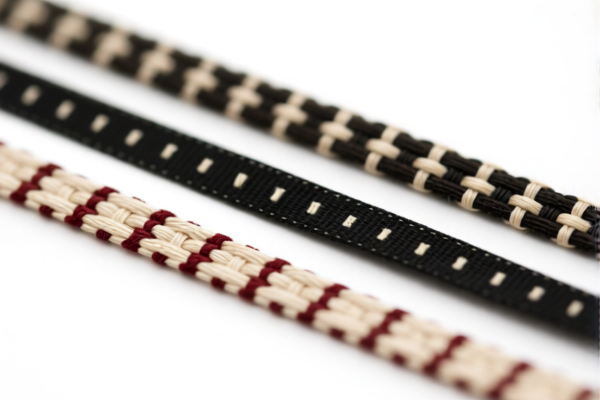
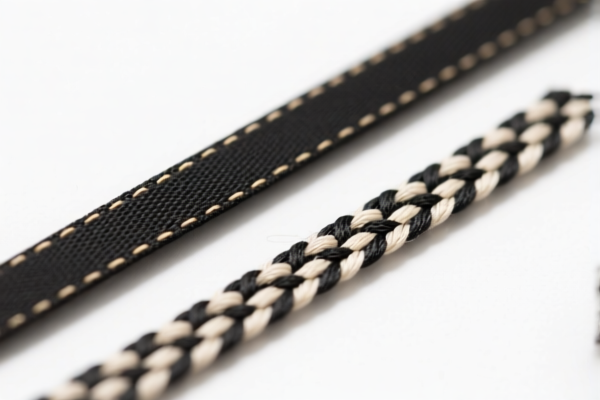
Textile-Based Ribbons: Fabric or artificial fiber bands coated with gum, starch, or ink.
Mechanical Accessories: Specific parts intended for typewriters (HS Chapter 84).
⚠️ Key Distinction Point:
- If the ribbon is a fabric/textile band treated with gums or dyes → Likely classified under Chapter 59 (Imprgnated Textiles) or Chapter 96 (Miscellaneous Manufactured Articles).
- If the ribbon is considered a specific part/attachment for a typewriter machine → Likely classified under Chapter 84 (Machinery).
📦 II. HS Code Classification Details (2026 Latest Tariff Authority Comparison)
Based on the provided data, here are the four most probable HS Codes, ranging from textile-based interpretations to mechanical accessory classifications.
| HS Code | Product Description | Matching Logic | Total Tax Rate |
|---|---|---|---|
5901.90.20.00 |
Impregnated Textiles: Similar bands, coated with gum or starch substances. | Material Logic: Infers the ribbon is a textile base treated with chemicals (gum/starch/dye). Fits the logic of artificial fibers/treated textiles. No material conflict. | 42.0% |
9612.10.10.20 |
Typewriter Ribbons: Other types of ribbons. | Usage Logic: Matches the use (typewriter) and form (band). Classified under "Other" due to unspecified material. Based on common sense, it doesn't conflict with this category. | 17.5% |
8473.50.90.00 |
Parts & Accessories: Parts and accessories of machines of heading 8470 to 8472 (e.g., typewriters). | Usage Logic: Infers the item is a consumable/attachment for office/computing machines. Fits the definition of machine parts/accessories. No material conflict. | 35.0% |
8473.29.00.00 |
Parts & Accessories: Other parts and accessories of typewriters (Heading 8470). | Usage Logic: Specific parts for machines listed in Heading 8470 (Typewriters). Even if material is unspecified, it fits the "catch-all" attribute of consumables/attachments. | 35.0% |
5901.90.40.00 |
Impregnated Textiles: Other impregnated, coated, or covered textile fabrics. | Material Logic: Matches the "band" form. Infers material is a textile strip coated with pigments/chemicals. Fits "Other" catch-all logic for treated textiles. | 39.1% |
🔍 Important Note:
- HS 9612.10.10.20 offers the lowest tax burden (17.5%) but relies on the item being classified broadly as a "ribbon" rather than a specific machine part or treated textile.
- HS 8473 series (35.0%) is strong if the ribbon is explicitly marketed as a "part" for a typewriter.
- HS 5901 series (39.1%-42.0%) is likely if customs focuses on the fabric/chemical composition (gum/starch coating) rather than the mechanical function.
💰 III. Detailed Tariff Rate Breakdown (2026 Latest)
✅ Applicable Country: USA (US)
✅ Origin: China (CN)
✅ Effective Date: From November 10, 2025 (including subsequent imports)
🎯 1. 9612.10.10.20 — Typewriter Ribbons (Lowest Tax)
| Item | Content |
|---|---|
| Base Tariff | 0.0% |
| Section 301 Add-on (USITC) | +7.5% |
| IEEPA Add-on | +10% (For China/HK products) |
| Total Tax Rate | 17.5% |
| Tax Calculation | CIF Value × 17.5% |
| De Minimis Eligibility | ❌ Not Eligible (Likely subject to restrictions or high threshold issues) |
| Legal Basis Path | USITC:9612.10.10.20 → FOOTNOTE:Section 301 → IEEPA:9903.01.24 |
📌 Explanation:
- The base tariff is 0%, making it attractive.
- However, it still incurs a 7.5% Section 301 surcharge and 10% IEEPA surcharge.
- Total: 17.5%. This is the most cost-effective classification if legally defensible.
🎯 2. 5901.90.40.00 — Other Impregnated Textiles
| Item | Content |
|---|---|
| Base Tariff | 4.1% |
| Section 301 Add-on (USITC) | +25.0% |
| IEEPA Add-on | +10% |
| Total Tax Rate | 39.1% |
| Tax Calculation | CIF Value × 39.1% |
| De Minimis Eligibility | ❌ Not Eligible |
| Legal Basis Path | USITC:5901.90.40.00 → FOOTNOTE:9903.88.01 → IEEPA:9903.01.24 |
📌 Explanation:
- Higher base tariff (4.1%) compared to Chapter 96.
- Incurs the full 25% Section 301 surcharge and 10% IEEPA.
- Total: 39.1%. Significant cost increase if classified as "treated textile."
🎯 3. 5901.90.20.00 — Bands Coated with Gum/Starch
| Item | Content |
|---|---|
| Base Tariff | 7.0% |
| Section 301 Add-on (USITC) | +25.0% |
| IEEPA Add-on | +10% |
| Total Tax Rate | 42.0% |
| Tax Calculation | CIF Value × 42.0% |
| De Minimis Eligibility | ❌ Not Eligible |
| Legal Basis Path | USITC:5901.90.20.00 → FOOTNOTE:9903.88.01 → IEEPA:9903.01.24 |
📌 Explanation:
- Highest base tariff (7.0%) among the options.
- Total: 42.0%. This is the least favorable classification financially.
🎯 4. 8473.50.90.00 & 8473.29.00.00 — Machine Parts/Accessories
| Item | Content |
|---|---|
| Base Tariff | 0.0% |
| Section 301 Add-on (USITC) | +25.0% |
| IEEPA Add-on | +10% |
| Total Tax Rate | 35.0% |
| Tax Calculation | CIF Value × 35.0% |
| De Minimis Eligibility | ❌ Not Eligible |
| Legal Basis Path | USITC:8473.xx.xx.xx → FOOTNOTE:9903.88.01 → IEEPA:9903.01.24 |
📌 Explanation:
- Base tariff is 0%, but the 25% Section 301 surcharge applies fully to these machinery parts.
- Total: 35.0%. This is a middle-ground option, better than Chapter 59 but worse than Chapter 96.
🛠️ IV. Customs Clearance Practical Advice (Battle-Tested Pitfall Guide)
✅ 1. Preparation Checklist (Essential Documents)
| Document | Must Provide? | Explanation |
|---|---|---|
| ✅ Product Specification Sheet | ✔️ | Must clearly state: "Typewriter Ribbon," material composition (e.g., polyester fabric, cotton, nylon), and coating type. |
| ✅ Product Photos (Clear & Detailed) | ✔️ | Show the ribbon in the spool/bobbin. Close-up of the fabric texture and ink saturation. |
| ✅ Commercial Invoice | ✔️ | Description must be precise. Avoid vague terms like "Printing Supplies." Use "Typewriter Ribbon for Mechanical Typewriters." |
| ✅ Packing List | ✔️ | Ensure quantity matches invoice. No split shipments unless authorized. |
| ✅ Certificate of Origin (CO) | ✔️ | If applicable, for potential trade agreement benefits (though unlikely for US-China current tariffs). |
✅ 2. Declaration Strategy (Key Mantras)
🔥 "Material Matters, Function Matters, Don't Split!"
| Scenario | Correct Declaration Approach | Wrong Approach |
|---|---|---|
| Fabric-based ribbon | Declare as Textile/Impregnated Fabric (5901.90.xxxx) if explicitly coated with gum/starch. |
Hide material composition → Risk of misclassification penalty. |
| General Typewriter Ribbon | Declare as Accessory/Part (9612.10.10.20 or 8473.xx.xx) if the primary function is typewriter-specific. |
Declare as "Office Supplies" broadly → May trigger scrutiny. |
| Mixed Shipment | Declare individually by HS Code. | Combine different types (e.g., ribbons + paper) into one line item → High risk of audit. |
✅ 3. Special Case Handling
| Scenario | Handling Advice |
|---|---|
| Inkjet Ribbon vs. Typewriter Ribbon | Ensure the description specifies Mechanical Typewriter or Dot-Matrix. Inkjet ribbons may fall under different categories. |
| OEM Custom Ribbons | Provide the customer's specification sheet. If the customer is a typewriter manufacturer, 8473 might be more appropriate. |
| Pre-inked Fabric Ribbons | If heavily coated, customs may lean towards 5901. Clarify the "gum/starch" content. |
| Digital/LED "Ribbons" | These are not typewriter ribbons. They are likely LED displays (8528). Do not misdeclare. |
🌍 V. Global Market Comparison (2026 Latest)
| Country/Region | Recommended HS Code | Estimated Duty (China Origin) | Certification Requirements | Notes |
|---|---|---|---|---|
| 🇺🇸 USA | 9612.10.10.20 |
17.5% | None specific for ribbon | Best option if classified under Ch 96. 8473 is 35%. |
| 🇨🇳 China | 9612.10.10.20 |
~0-5% | N/A | Low duty for domestic trade. |
| 🇪🇺 EU | 9612.10.10 |
0-5% | CE (if electrical, but ribbons aren't) | Generally low duty for office consumables. |
| 🇬🇧 UK | 9612.10.10 |
0-5% | Post-Brexit rules apply | Similar to EU. |
| 🇯🇵 Japan | 9612.10.10 |
~0-5% | PSE (Not applicable for passive ribbons) | Low duty. |
📌 Conclusion:
- The USA imposes significant additional tariffs (301 + IEEPA) on almost all classifications for Chinese-origin goods.
- Chapter 96 (9612.10.10.20) is the most tax-efficient at 17.5%, provided the product can be legally justified as a "ribbon" rather than a "machine part" or "treated textile."
- Chapter 84 (8473) and 59 (5901) are significantly more expensive (35%-42%).
📌 VI. Common Errors & Pitfalls (Blood & Tears Lessons)
❌ Error 1: Misclassifying a fabric ribbon as a plastic part
👉 Consequence: If the ribbon is fabric, customs may reclassify to 5901 (42%) → Underpayment penalty!
❌ Error 2: Declaring as "Office Supplies" (Generic)
👉 Consequence: Customs may assign the highest possible duty rate based on ambiguity → Delays and fines!
❌ Error 3: Ignoring Material Composition
👉 Consequence: If the invoice says "Polyester Ribbon" but HS 8473 is used, customs may reject it. Be specific!
❌ Error 4: Not declaring Section 301 Eligibility correctly
👉 Consequence: Failure to pay the 25% surcharge → Seizure of goods!
✅ Correct Practice:
"Typewriter Ribbon, Polyester Fabric Base, Ink-Coated, For Mechanical Typewriters, Model XYZ, Country of Origin: China"
🎯 VII. Conclusion: Professional Declaration, Cost Savings, Risk Mitigation!
🎯 Remember the Mantra:
🔹 "Textile or Part? Choose wisely. Ch 96 is cheapest (17.5%). Ch 84/59 are costly (35-42%). Don't guess, declare clearly!"
🔹 "HS Code is life. A 25% difference can kill your profit margin!"
📌 Pro Tip:
If your typewriter ribbons are sourced from Vietnam, Malaysia, or Thailand, you may be eligible for IEEPA Exemptions or lower Section 301 rates.
Recommendation: Apply for a Pre-Ruling (Advance Ruling) from CBP if the classification is uncertain. It provides legal certainty and protects against retroactive penalties.
📣 Immediate Action:
📞 Contact a professional customs broker.
📄 Provide Product Specs + Photos.
🚀 Secure your HS Code pre-ruling to ensure smooth clearance and optimal tax rates.
✨ Professional clearance starts with accurate classification!
💼 Every cent of cost should be precisely calculated!
用户评价
关于 HS 编码归类
协调制度(HS)是由世界海关组织(WCO)制定的国际贸易商品分类标准。全球 200 多个国家采用 HS 系统作为海关关税、贸易统计和进出口监管的基础。
每个 HS 编码遵循以下层级结构:
- 章(2 位)——商品大类(例如:第 84 章:机器和机械设备)
- 品目(4 位)——章内的更具体分类
- 子目(6 位)——国际通用细分,所有 WCO 成员国统一使用
- 本国细分(8-10 位)——各国自行扩展的细分编码,如美国 HTSUS 10 位编码
正确的 HS 编码归类对于顺利通关、准确缴纳关税和遵守贸易法规至关重要。错误归类可能导致海关延误、多缴关税或罚款。
从CN进口到US时,适用的关税税率可能包括:
- 最惠国(MFN)税率——适用于 WTO 成员国的标准关税税率
- 普通税率——适用于无贸易协定国家
- 贸易救济关税——附加关税,如 301 条款(反倾销)、232 条款(国家安全)或反补贴税
本页内容仅供参考。如需正式归类,请咨询当地海关或持牌报关代理。