Typewriter Ribbons and Similar Items
CN → US| HS Code | Tariff Rate | Origin | Destination | Doc |
|---|---|---|---|---|
| 5901902000 | 42.0% | CN | US | Official Doc |
| 9612101020 | 17.5% | CN | US | Official Doc |
| 8473509000 | 35.0% | CN | US | Official Doc |
| 8473290000 | 35.0% | CN | US | Official Doc |
| 5901904000 | 39.1% | CN | US | Official Doc |
Product Images
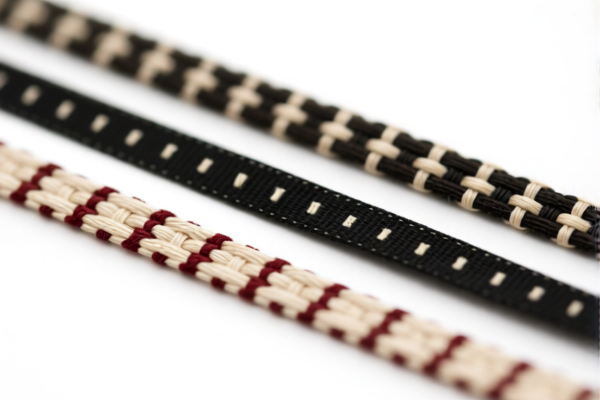
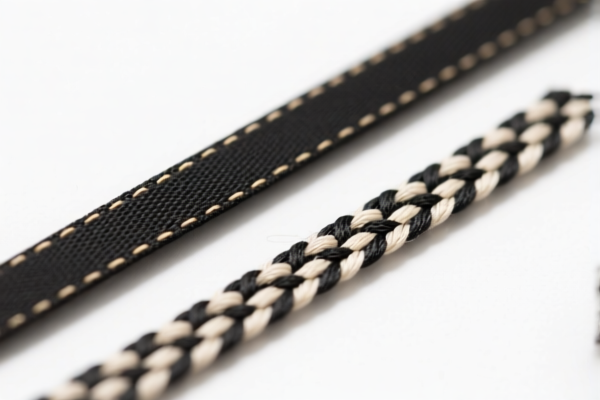
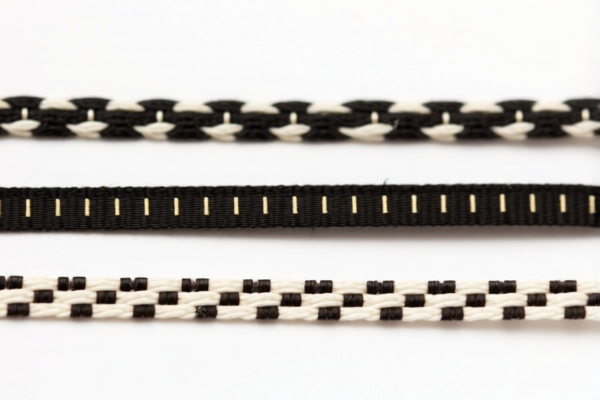
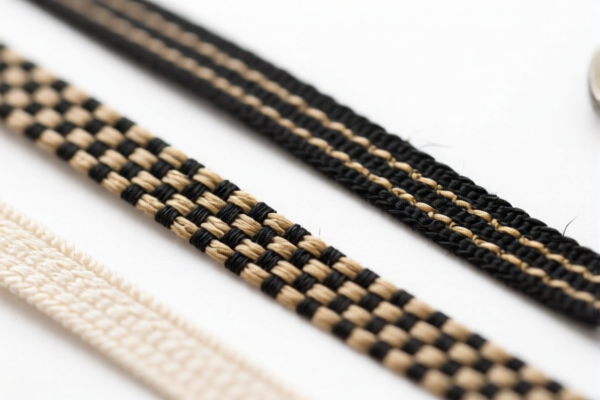
AI Analysis
🎞️ Typewriter Ribbons (Typewriter Ribbons and Similar Items)
🌐 HS Code Reference & Customs Clearance Guide | 2026 Latest Tariff Analysis | Professional Clearance Strategy
📌 I. Product Definition & Classification: What Exactly Are "Typewriter Ribbons"?
Typewriter ribbons are essential consumable components for mechanical typewriters, dot-matrix printers, and specific industrial printing devices. In international trade, classification often hinges on two key factors: Material Composition (textile vs. non-textile) and Function (accessory to a machine vs. standalone product).
Since the input "Typewriter Ribbons" does not explicitly specify the substrate material, customs authorities may classify them based on reasonable inference or specific material properties:
Textile-Based Ribbons: Fabric or artificial fiber bands coated with gum, starch, or ink.
Mechanical Accessories: Specific parts intended for typewriters (HS Chapter 84).
⚠️ Key Distinction Point:
- If the ribbon is a fabric/textile band treated with gums or dyes → Likely classified under Chapter 59 (Imprgnated Textiles) or Chapter 96 (Miscellaneous Manufactured Articles).
- If the ribbon is considered a specific part/attachment for a typewriter machine → Likely classified under Chapter 84 (Machinery).
📦 II. HS Code Classification Details (2026 Latest Tariff Authority Comparison)
Based on the provided data, here are the four most probable HS Codes, ranging from textile-based interpretations to mechanical accessory classifications.
| HS Code | Product Description | Matching Logic | Total Tax Rate |
|---|---|---|---|
5901.90.20.00 |
Impregnated Textiles: Similar bands, coated with gum or starch substances. | Material Logic: Infers the ribbon is a textile base treated with chemicals (gum/starch/dye). Fits the logic of artificial fibers/treated textiles. No material conflict. | 42.0% |
9612.10.10.20 |
Typewriter Ribbons: Other types of ribbons. | Usage Logic: Matches the use (typewriter) and form (band). Classified under "Other" due to unspecified material. Based on common sense, it doesn't conflict with this category. | 17.5% |
8473.50.90.00 |
Parts & Accessories: Parts and accessories of machines of heading 8470 to 8472 (e.g., typewriters). | Usage Logic: Infers the item is a consumable/attachment for office/computing machines. Fits the definition of machine parts/accessories. No material conflict. | 35.0% |
8473.29.00.00 |
Parts & Accessories: Other parts and accessories of typewriters (Heading 8470). | Usage Logic: Specific parts for machines listed in Heading 8470 (Typewriters). Even if material is unspecified, it fits the "catch-all" attribute of consumables/attachments. | 35.0% |
5901.90.40.00 |
Impregnated Textiles: Other impregnated, coated, or covered textile fabrics. | Material Logic: Matches the "band" form. Infers material is a textile strip coated with pigments/chemicals. Fits "Other" catch-all logic for treated textiles. | 39.1% |
🔍 Important Note:
- HS 9612.10.10.20 offers the lowest tax burden (17.5%) but relies on the item being classified broadly as a "ribbon" rather than a specific machine part or treated textile.
- HS 8473 series (35.0%) is strong if the ribbon is explicitly marketed as a "part" for a typewriter.
- HS 5901 series (39.1%-42.0%) is likely if customs focuses on the fabric/chemical composition (gum/starch coating) rather than the mechanical function.
💰 III. Detailed Tariff Rate Breakdown (2026 Latest)
✅ Applicable Country: USA (US)
✅ Origin: China (CN)
✅ Effective Date: From November 10, 2025 (including subsequent imports)
🎯 1. 9612.10.10.20 — Typewriter Ribbons (Lowest Tax)
| Item | Content |
|---|---|
| Base Tariff | 0.0% |
| Section 301 Add-on (USITC) | +7.5% |
| IEEPA Add-on | +10% (For China/HK products) |
| Total Tax Rate | 17.5% |
| Tax Calculation | CIF Value × 17.5% |
| De Minimis Eligibility | ❌ Not Eligible (Likely subject to restrictions or high threshold issues) |
| Legal Basis Path | USITC:9612.10.10.20 → FOOTNOTE:Section 301 → IEEPA:9903.01.24 |
📌 Explanation:
- The base tariff is 0%, making it attractive.
- However, it still incurs a 7.5% Section 301 surcharge and 10% IEEPA surcharge.
- Total: 17.5%. This is the most cost-effective classification if legally defensible.
🎯 2. 5901.90.40.00 — Other Impregnated Textiles
| Item | Content |
|---|---|
| Base Tariff | 4.1% |
| Section 301 Add-on (USITC) | +25.0% |
| IEEPA Add-on | +10% |
| Total Tax Rate | 39.1% |
| Tax Calculation | CIF Value × 39.1% |
| De Minimis Eligibility | ❌ Not Eligible |
| Legal Basis Path | USITC:5901.90.40.00 → FOOTNOTE:9903.88.01 → IEEPA:9903.01.24 |
📌 Explanation:
- Higher base tariff (4.1%) compared to Chapter 96.
- Incurs the full 25% Section 301 surcharge and 10% IEEPA.
- Total: 39.1%. Significant cost increase if classified as "treated textile."
🎯 3. 5901.90.20.00 — Bands Coated with Gum/Starch
| Item | Content |
|---|---|
| Base Tariff | 7.0% |
| Section 301 Add-on (USITC) | +25.0% |
| IEEPA Add-on | +10% |
| Total Tax Rate | 42.0% |
| Tax Calculation | CIF Value × 42.0% |
| De Minimis Eligibility | ❌ Not Eligible |
| Legal Basis Path | USITC:5901.90.20.00 → FOOTNOTE:9903.88.01 → IEEPA:9903.01.24 |
📌 Explanation:
- Highest base tariff (7.0%) among the options.
- Total: 42.0%. This is the least favorable classification financially.
🎯 4. 8473.50.90.00 & 8473.29.00.00 — Machine Parts/Accessories
| Item | Content |
|---|---|
| Base Tariff | 0.0% |
| Section 301 Add-on (USITC) | +25.0% |
| IEEPA Add-on | +10% |
| Total Tax Rate | 35.0% |
| Tax Calculation | CIF Value × 35.0% |
| De Minimis Eligibility | ❌ Not Eligible |
| Legal Basis Path | USITC:8473.xx.xx.xx → FOOTNOTE:9903.88.01 → IEEPA:9903.01.24 |
📌 Explanation:
- Base tariff is 0%, but the 25% Section 301 surcharge applies fully to these machinery parts.
- Total: 35.0%. This is a middle-ground option, better than Chapter 59 but worse than Chapter 96.
🛠️ IV. Customs Clearance Practical Advice (Battle-Tested Pitfall Guide)
✅ 1. Preparation Checklist (Essential Documents)
| Document | Must Provide? | Explanation |
|---|---|---|
| ✅ Product Specification Sheet | ✔️ | Must clearly state: "Typewriter Ribbon," material composition (e.g., polyester fabric, cotton, nylon), and coating type. |
| ✅ Product Photos (Clear & Detailed) | ✔️ | Show the ribbon in the spool/bobbin. Close-up of the fabric texture and ink saturation. |
| ✅ Commercial Invoice | ✔️ | Description must be precise. Avoid vague terms like "Printing Supplies." Use "Typewriter Ribbon for Mechanical Typewriters." |
| ✅ Packing List | ✔️ | Ensure quantity matches invoice. No split shipments unless authorized. |
| ✅ Certificate of Origin (CO) | ✔️ | If applicable, for potential trade agreement benefits (though unlikely for US-China current tariffs). |
✅ 2. Declaration Strategy (Key Mantras)
🔥 "Material Matters, Function Matters, Don't Split!"
| Scenario | Correct Declaration Approach | Wrong Approach |
|---|---|---|
| Fabric-based ribbon | Declare as Textile/Impregnated Fabric (5901.90.xxxx) if explicitly coated with gum/starch. |
Hide material composition → Risk of misclassification penalty. |
| General Typewriter Ribbon | Declare as Accessory/Part (9612.10.10.20 or 8473.xx.xx) if the primary function is typewriter-specific. |
Declare as "Office Supplies" broadly → May trigger scrutiny. |
| Mixed Shipment | Declare individually by HS Code. | Combine different types (e.g., ribbons + paper) into one line item → High risk of audit. |
✅ 3. Special Case Handling
| Scenario | Handling Advice |
|---|---|
| Inkjet Ribbon vs. Typewriter Ribbon | Ensure the description specifies Mechanical Typewriter or Dot-Matrix. Inkjet ribbons may fall under different categories. |
| OEM Custom Ribbons | Provide the customer's specification sheet. If the customer is a typewriter manufacturer, 8473 might be more appropriate. |
| Pre-inked Fabric Ribbons | If heavily coated, customs may lean towards 5901. Clarify the "gum/starch" content. |
| Digital/LED "Ribbons" | These are not typewriter ribbons. They are likely LED displays (8528). Do not misdeclare. |
🌍 V. Global Market Comparison (2026 Latest)
| Country/Region | Recommended HS Code | Estimated Duty (China Origin) | Certification Requirements | Notes |
|---|---|---|---|---|
| 🇺🇸 USA | 9612.10.10.20 |
17.5% | None specific for ribbon | Best option if classified under Ch 96. 8473 is 35%. |
| 🇨🇳 China | 9612.10.10.20 |
~0-5% | N/A | Low duty for domestic trade. |
| 🇪🇺 EU | 9612.10.10 |
0-5% | CE (if electrical, but ribbons aren't) | Generally low duty for office consumables. |
| 🇬🇧 UK | 9612.10.10 |
0-5% | Post-Brexit rules apply | Similar to EU. |
| 🇯🇵 Japan | 9612.10.10 |
~0-5% | PSE (Not applicable for passive ribbons) | Low duty. |
📌 Conclusion:
- The USA imposes significant additional tariffs (301 + IEEPA) on almost all classifications for Chinese-origin goods.
- Chapter 96 (9612.10.10.20) is the most tax-efficient at 17.5%, provided the product can be legally justified as a "ribbon" rather than a "machine part" or "treated textile."
- Chapter 84 (8473) and 59 (5901) are significantly more expensive (35%-42%).
📌 VI. Common Errors & Pitfalls (Blood & Tears Lessons)
❌ Error 1: Misclassifying a fabric ribbon as a plastic part
👉 Consequence: If the ribbon is fabric, customs may reclassify to 5901 (42%) → Underpayment penalty!
❌ Error 2: Declaring as "Office Supplies" (Generic)
👉 Consequence: Customs may assign the highest possible duty rate based on ambiguity → Delays and fines!
❌ Error 3: Ignoring Material Composition
👉 Consequence: If the invoice says "Polyester Ribbon" but HS 8473 is used, customs may reject it. Be specific!
❌ Error 4: Not declaring Section 301 Eligibility correctly
👉 Consequence: Failure to pay the 25% surcharge → Seizure of goods!
✅ Correct Practice:
"Typewriter Ribbon, Polyester Fabric Base, Ink-Coated, For Mechanical Typewriters, Model XYZ, Country of Origin: China"
🎯 VII. Conclusion: Professional Declaration, Cost Savings, Risk Mitigation!
🎯 Remember the Mantra:
🔹 "Textile or Part? Choose wisely. Ch 96 is cheapest (17.5%). Ch 84/59 are costly (35-42%). Don't guess, declare clearly!"
🔹 "HS Code is life. A 25% difference can kill your profit margin!"
📌 Pro Tip:
If your typewriter ribbons are sourced from Vietnam, Malaysia, or Thailand, you may be eligible for IEEPA Exemptions or lower Section 301 rates.
Recommendation: Apply for a Pre-Ruling (Advance Ruling) from CBP if the classification is uncertain. It provides legal certainty and protects against retroactive penalties.
📣 Immediate Action:
📞 Contact a professional customs broker.
📄 Provide Product Specs + Photos.
🚀 Secure your HS Code pre-ruling to ensure smooth clearance and optimal tax rates.
✨ Professional clearance starts with accurate classification!
💼 Every cent of cost should be precisely calculated!
Customer Reviews
About HS Code Classification
The Harmonized System (HS) is an internationally standardized nomenclature developed by the World Customs Organization (WCO) to classify traded products. Over 200 countries use the HS system as the basis for customs tariffs, trade statistics, and import/export regulations.
Each HS code follows a hierarchical structure:
- Chapter (2 digits) — Broad category of goods (e.g., Chapter 84: Machinery and Mechanical Appliances)
- Heading (4 digits) — More specific grouping within the chapter
- Subheading (6 digits) — Internationally standardized breakdown, used by all WCO member countries
- National subdivisions (8-10 digits) — Country-specific extensions for further classification, such as US HTSUS 10-digit codes
Correct HS code classification is essential for smooth customs clearance, accurate duty payment, and compliance with trade regulations. Misclassification can lead to customs delays, overpayment of duties, or penalties.
When importing from CN to US, the applicable tariff rates may include:
- Most-Favored-Nation (MFN) rate — The standard duty rate applied to WTO members
- General rate — Applied to countries without trade agreements
- Trade remedy duties — Additional tariffs such as Section 301 (anti-dumping), Section 232 (national security), or countervailing duties
The information provided on this page is for reference purposes only. For official classification, please consult with your local customs authority or a licensed customs broker.