Ultra fine Grain Photosensitive Emulsion
CN → US| HS编码 | 关税税率 | 原产国 | 目的国 | 文档 |
|---|---|---|---|---|
| 3707100090 | 38.0% | CN | US | 官方文档 |
| 3707100005 | 38.0% | CN | US | 官方文档 |
| 3506911000 | 35.0% | CN | US | 官方文档 |
| 3506915000 | 37.1% | CN | US | 官方文档 |
| 3707100090 | 38.0% | CN | US | 官方文档 |
商品图片
AI分析
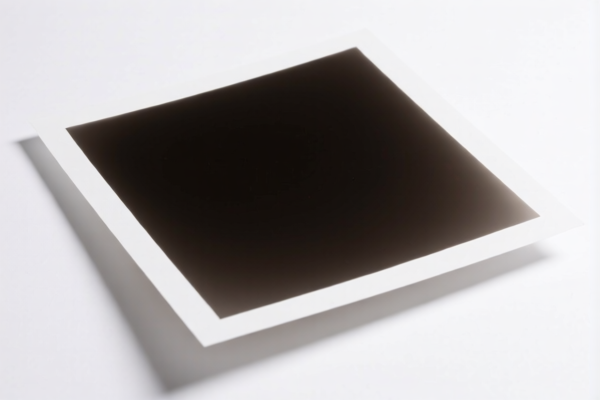
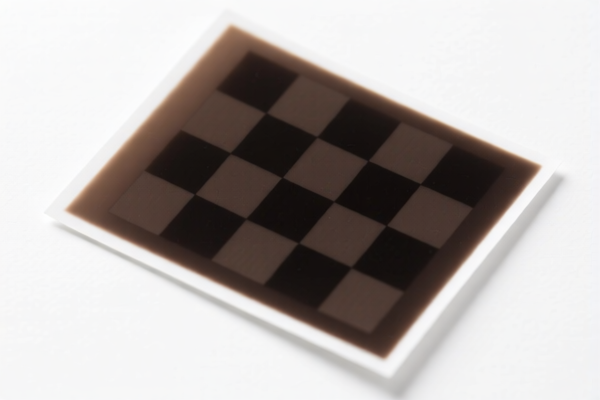
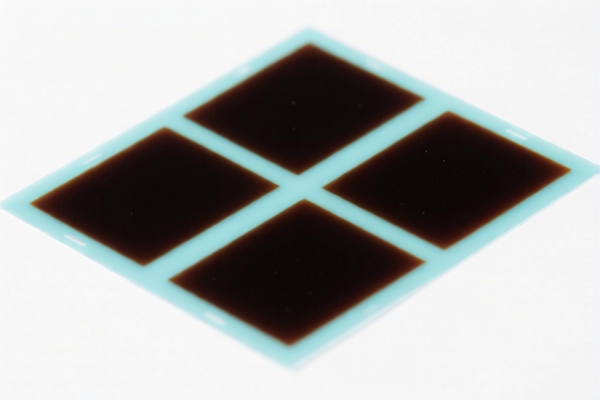
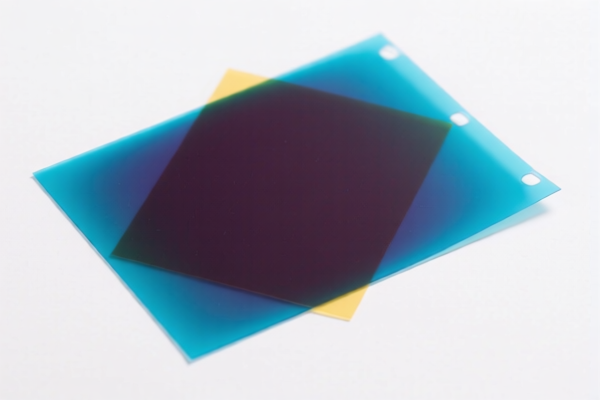
📸 Ultra Fine Grain Photosensitive Emulsion (摄影用感光乳液)
🌐 HS Code Reference & Customs Clearance Guide | 2026 Latest Tariff Analysis | Professional Clearance Strategy
📌 I. Product Definition & Classification: What is "Ultra Fine Grain Photosensitive Emulsion"?
Photosensitive Emulsion is a critical chemical component in photography, specifically used to create light-sensitive layers on film, paper, or plates. "Ultra Fine Grain" indicates a high-resolution formulation designed for detailed image reproduction. In international trade, it is classified based on its chemical nature and functionality.
There are two primary classification paths for this product: 1. Photographic Chemicals (Chapter 37): If the emulsion is specifically prepared for photographic use (sensitized salts/dyes), it falls under Heading 3707. 2. Adhesives/Coatings (Chapter 35): If the product is structurally viewed as an organic polymer-based adhesive or coating agent with photographic properties, it may fall under Heading 3506.
⚠️ Key Distinction Point:
- If the primary function is light sensitivity for imaging (even if in liquid form) → 3707
- If the primary function is binding/coating with minor optical properties → 3506
📦 II. HS Code Classification Details (2026 Latest Tariff Authority Comparison)
| HS Code | Product Description | Application Scenario | Basis for Classification |
|---|---|---|---|
3707.10.00.90 |
Other photographic chem. preparations | Sensitized emulsions for photographic films/papers; "Other" category | Specific to photographic chem. preparations not otherwise specified |
3707.10.00.05 |
Other photographic chem. preparations | Sensitized emulsions; "Other" category (Fallback/General) | Chemical essence matches photographic emulsions |
3506.91.10.00 |
Prepared adhesives, polymeric bases | Chemical adhesive/coating; Organic polymer-based; Optical/Photographic functional coating | Inferred as organic polymer-based adhesive with optical function |
3506.91.50.00 |
Prepared adhesives, other materials | Polymer or rubber-based chemicals; Adhesive from Chapter 39 polymers/rubbers | Based on Chapter 39 polymer/rubber adhesive logic |
🔍 Important Reminder:
- 3707 codes are preferred if the product is explicitly marketed and used as a photographic chemical. - 3506 codes apply if the product is primarily a coating/adhesive with incidental light-sensitive properties. - Misclassification can lead to significant duty differences and customs delays.
💰 III. 2026 Latest Tariff Rate Details (Including Surcharges & Policy Add-ons)
✅ Applicable Country: United States (US)
✅ Origin: China (CN)
✅ Effective Date: From November 10, 2025 (for subsequent imports)
🎯 1. 3707.10.00.90 & 3707.10.00.05 —— Photographic Chemical Preparations
| Item | Content |
|---|---|
| Base Tariff | 3.0% (ad valorem) |
| Section 301 Surcharge | +25% |
| Section 122 Tariff | +10% |
| Total Tariff Rate | 38.0% |
| Tax Calculation | CIF Value × 38% |
| De Minimis Eligibility | ❌ Not Eligible |
| Legal Basis Path | Base: 3707 → Section 301: 25% → Section 122: 10% |
📌 Explanation:
- Base Duty (3%): Standard Most Favored Nation (MFN) rate for photographic chemicals. - Section 301 Surcharge (25%): Added tariffs on Chinese goods under the 301 Trade Act. - Section 122 Tariff (10%): Additional national security/import equity surcharge. - Total (38%): This is a high-duty category. Proper documentation proving it is a "photographic chemical" is crucial to avoid being misclassified as a general chemical with potentially different rates.
🎯 2. 3506.91.10.00 —— Prepared Adhesives (Polymeric Base)
| Item | Content |
|---|---|
| Base Tariff | 0.0% |
| Section 301 Surcharge | +25% |
| Section 122 Tariff | +10% |
| Total Tariff Rate | 35.0% |
| Tax Calculation | CIF Value × 35% |
| De Minimis Eligibility | ❌ Not Eligible |
| Legal Basis Path | Base: 3506.91.10 → Section 301: 25% → Section 122: 10% |
📌 Explanation:
- Base Duty (0%): Some polymer-based adhesives have lower base rates. - Surcharges Apply: Despite the lower base rate, the 35% total is still significant due to surcharges. - Risk: If customs determines the product is primarily a photographic chemical (3707) rather than an adhesive (3506), you may face 3% extra in duty + penalties for under-declaration.
🎯 3. 3506.91.50.00 —— Prepared Adhesives (Other Materials)
| Item | Content |
|---|---|
| Base Tariff | 2.1% |
| Section 301 Surcharge | +25% |
| Section 122 Tariff | +10% |
| Total Tariff Rate | 37.1% |
| Tax Calculation | CIF Value × 37.1% |
| De Minimis Eligibility | ❌ Not Eligible |
| Legal Basis Path | Base: 3506.91.50 → Section 301: 25% → Section 122: 10% |
📌 Explanation:
- This code is a fallback category for adhesives not covered under 3506.91.10. - The 37.1% rate is slightly higher than the 3506.91.10.00 category but lower than the 3707 category (38.0%). - Caution: Only use this if the product is definitively a non-polymeric-based adhesive with photographic properties.
🛠️ IV. Customs Clearance Operational Advice (Practical Pitfall Avoidance Guide)
✅ 1. Required Documentation Checklist (All Items Mandatory)
| Document | Required | Description |
|---|---|---|
| ✅ Product Specification Sheet | ✔️ | Must detail chemical composition, grain size, sensitivity (ISO/ASA), and intended use (e.g., "for photographic film coating"). |
| ✅ Formula/Composition Report | ✔️ | Breakdown of gelatin, silver salts, dyes, and polymers. Critical for distinguishing between 3707 (chemical) and 3506 (adhesive). |
| ✅ Product Photos (Including Label) | ✔️ | Clear label showing "Photosensitive Emulsion," "Keep in Dark," and safety warnings. |
| ✅ Safety Data Sheet (SDS) | ✔️ | Must be provided to show handling precautions, especially for silver salts and volatile chemicals. |
| ✅ Commercial Invoice | ✔️ | Clearly state "Ultra Fine Grain Photosensitive Emulsion for Photographic Use." Avoid vague terms like "Chemical Liquid." |
| ✅ Certificate of Origin (CO) | ✔️ | Essential for verifying Chinese origin to apply accurate surcharges. |
| ✅ Packing List | ✔️ | Detail net/gross weight, volume, and packaging material (must be light-proof). |
✅ 2. Declaration Tips (Key Mantra)
🔥 “Function is King, Chemicals First, Adhesive Last!”
| Scenario | Correct Declaration | Incorrect Approach |
|---|---|---|
| Explicitly for Photographic Film/Paper | 3707.10.00.90 or 3707.10.00.05 |
Declaring as "Adhesive" → Risk of penalty for misclassification |
| Coating Agent with Minor Light Sensitivity | 3506.91.10.00 |
Declaring as "Photographic Chemical" if primarily an adhesive |
| Mixed Shipment (Emulsion + Adhesive) | Separate Lines | Combining → Customs may assess higher duty on entire shipment |
| Unclear Composition | Request Advance Ruling | Guessing code → High risk of audit and back taxes |
✅ 3. Special Situations Handling
| Situation | Handling Advice |
|---|---|
| OEM Custom Emulsion | Provide client order + technical data sheet. Prove specific photographic function to qualify for 3707. |
| Large Volume Commercial Shipments | Consider Bonded Warehouse entry to defer duty payment until final disposition. |
| Sample Shipments (<$800) | NOT Eligible for De Minimis due to Section 301/122 rules for Chinese goods. Pay full 35-38% duty. |
| Recalled/Defective Goods | Notify CBP immediately. Duty drawback may be possible if goods are re-exported or destroyed. |
🌍 V. Global Market Customs Comparison (2026 Latest)
| Country/Region | Recommended HS Code | Tariff Rate | Certification Requirements | Notes |
|---|---|---|---|---|
| 🇺🇸 USA | 3707.10.00.90 |
38.0% | None specific | Highest due to Section 301 + 122 |
| 🇨🇳 China | 3707.10.00.90 |
~6-10% | None | Lower base duty, no surcharges |
| 🇪🇺 EU | 3707.10 |
~6.5% | REACH Compliance | REACH registration required for chemicals |
| 🇬🇧 UK | 3707.10 |
~6.5% | UK REACH | Post-BREXIT regulations apply |
| 🇯🇵 Japan | 3707.10 |
~6.0% | JIS Standards | Lower surcharges, stable trade relations |
📌 Conclusion:
- USA has the highest total duty burden (35-38%) due to multiple surcharges. - EU/UK/Japan have lower duties but require strict chemical compliance (REACH). - Cost Optimization: Consider supply chain diversification if volume is high, as the US surcharges significantly impact margin.
📌 VI. Common Mistakes & Pitfall Guide (Lessons Learned)
❌ Mistake 1: Declaring as "Chemical Solution" without specifying "Photographic"
👉 Consequence: Customs may classify under general chemicals (e.g., 3824) with unpredictable duties and delays.
❌ Mistake 2: Ignoring Section 122 Tariff (10%)
👉 Consequence: Underpayment of duty by 10% → Back taxes + Penalties.
❌ Mistake 3: Mixing "Adhesive" and "Emulsion" in one HS Code
👉 Consequence: Audit trigger. Customs will disallow the lower-rated item.
❌ Mistake 4: Assuming "Ultra Fine Grain" changes the HS Code
👉 Consequence: Grain size is a quality attribute, not a classification criterion. It does not change the HS Code.
✅ Correct Practice:
"Photosensitive Emulsion, Ultra Fine Grain, for Photographic Film Production, Contains Silver Halides and Gelatin, HS Code 3707.10.00.90"
🎯 VII. Conclusion: Professional Declaration, Save Time, Reduce Costs!
🎯 Remember the Mantra:
🔹 “Function defines Code, Chemicals beat Adhesives, Surcharges add 35%!”
🔹 “Documentation is Key, Spec Sheet saves the Day, 3707 is the Way!”
📌 Pro Tip:
If your photosensitive emulsion is critical for medical imaging or high-precision scientific use, consult with a customs broker about special licensing or exemption possibilities (though rare for general commercial imports).
Recommendation: Apply for a CBP Advance Ruling for the first shipment to confirm the HS Code and duty rate.
📣 Immediate Action:
📞 Contact a licensed Customs Broker + Provide Detailed Technical Specs + Request Advance Ruling
🚀 Ensure your photosensitive emulsion clears US Customs smoothly, avoids penalties, and protects your profit margin!
✨ Professional Clearance Starts with Accurate Classification!
💼 Every percent of duty saved is pure profit!
用户评价
关于 HS 编码归类
协调制度(HS)是由世界海关组织(WCO)制定的国际贸易商品分类标准。全球 200 多个国家采用 HS 系统作为海关关税、贸易统计和进出口监管的基础。
每个 HS 编码遵循以下层级结构:
- 章(2 位)——商品大类(例如:第 84 章:机器和机械设备)
- 品目(4 位)——章内的更具体分类
- 子目(6 位)——国际通用细分,所有 WCO 成员国统一使用
- 本国细分(8-10 位)——各国自行扩展的细分编码,如美国 HTSUS 10 位编码
正确的 HS 编码归类对于顺利通关、准确缴纳关税和遵守贸易法规至关重要。错误归类可能导致海关延误、多缴关税或罚款。
从CN进口到US时,适用的关税税率可能包括:
- 最惠国(MFN)税率——适用于 WTO 成员国的标准关税税率
- 普通税率——适用于无贸易协定国家
- 贸易救济关税——附加关税,如 301 条款(反倾销)、232 条款(国家安全)或反补贴税
本页内容仅供参考。如需正式归类,请咨询当地海关或持牌报关代理。