Ultra fine Grain Photosensitive Emulsion
CN → US| HS Code | Tariff Rate | Origin | Destination | Doc |
|---|---|---|---|---|
| 3707100090 | 38.0% | CN | US | Official Doc |
| 3707100005 | 38.0% | CN | US | Official Doc |
| 3506911000 | 35.0% | CN | US | Official Doc |
| 3506915000 | 37.1% | CN | US | Official Doc |
| 3707100090 | 38.0% | CN | US | Official Doc |
Product Images
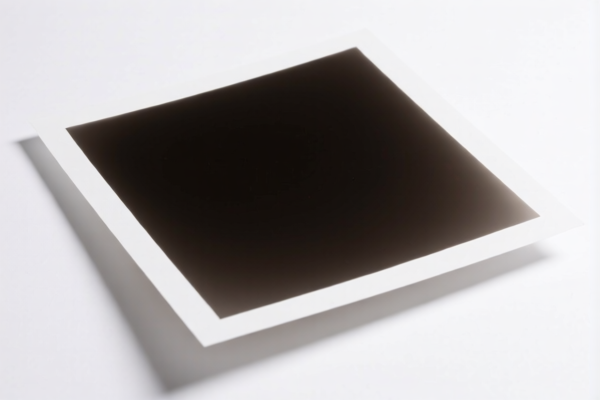
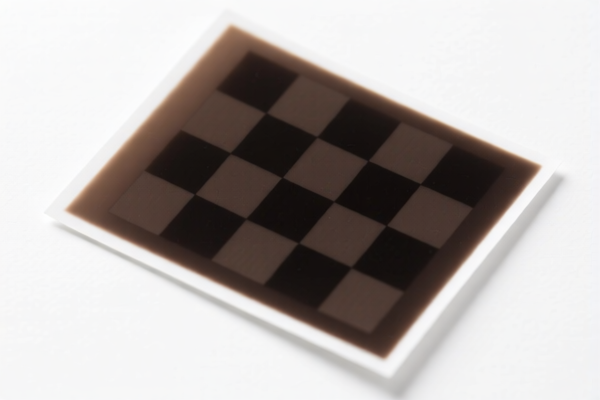
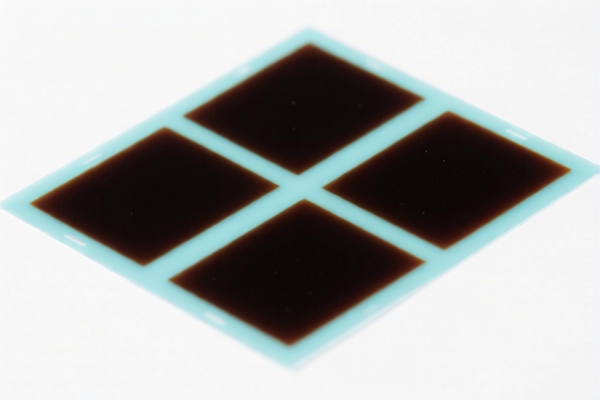
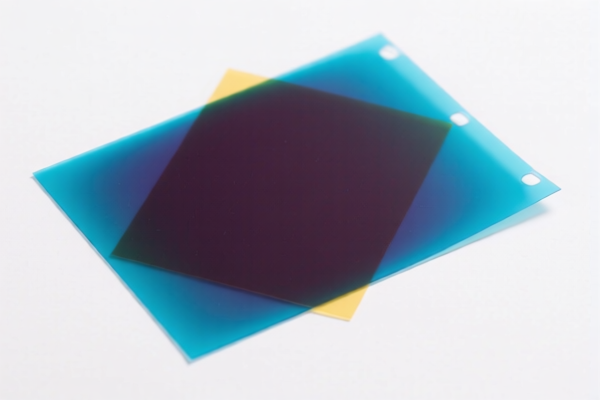
AI Analysis
📸 Ultra Fine Grain Photosensitive Emulsion (摄影用感光乳液)
🌐 HS Code Reference & Customs Clearance Guide | 2026 Latest Tariff Analysis | Professional Clearance Strategy
📌 I. Product Definition & Classification: What is "Ultra Fine Grain Photosensitive Emulsion"?
Photosensitive Emulsion is a critical chemical component in photography, specifically used to create light-sensitive layers on film, paper, or plates. "Ultra Fine Grain" indicates a high-resolution formulation designed for detailed image reproduction. In international trade, it is classified based on its chemical nature and functionality.
There are two primary classification paths for this product: 1. Photographic Chemicals (Chapter 37): If the emulsion is specifically prepared for photographic use (sensitized salts/dyes), it falls under Heading 3707. 2. Adhesives/Coatings (Chapter 35): If the product is structurally viewed as an organic polymer-based adhesive or coating agent with photographic properties, it may fall under Heading 3506.
⚠️ Key Distinction Point:
- If the primary function is light sensitivity for imaging (even if in liquid form) → 3707
- If the primary function is binding/coating with minor optical properties → 3506
📦 II. HS Code Classification Details (2026 Latest Tariff Authority Comparison)
| HS Code | Product Description | Application Scenario | Basis for Classification |
|---|---|---|---|
3707.10.00.90 |
Other photographic chem. preparations | Sensitized emulsions for photographic films/papers; "Other" category | Specific to photographic chem. preparations not otherwise specified |
3707.10.00.05 |
Other photographic chem. preparations | Sensitized emulsions; "Other" category (Fallback/General) | Chemical essence matches photographic emulsions |
3506.91.10.00 |
Prepared adhesives, polymeric bases | Chemical adhesive/coating; Organic polymer-based; Optical/Photographic functional coating | Inferred as organic polymer-based adhesive with optical function |
3506.91.50.00 |
Prepared adhesives, other materials | Polymer or rubber-based chemicals; Adhesive from Chapter 39 polymers/rubbers | Based on Chapter 39 polymer/rubber adhesive logic |
🔍 Important Reminder:
- 3707 codes are preferred if the product is explicitly marketed and used as a photographic chemical. - 3506 codes apply if the product is primarily a coating/adhesive with incidental light-sensitive properties. - Misclassification can lead to significant duty differences and customs delays.
💰 III. 2026 Latest Tariff Rate Details (Including Surcharges & Policy Add-ons)
✅ Applicable Country: United States (US)
✅ Origin: China (CN)
✅ Effective Date: From November 10, 2025 (for subsequent imports)
🎯 1. 3707.10.00.90 & 3707.10.00.05 —— Photographic Chemical Preparations
| Item | Content |
|---|---|
| Base Tariff | 3.0% (ad valorem) |
| Section 301 Surcharge | +25% |
| Section 122 Tariff | +10% |
| Total Tariff Rate | 38.0% |
| Tax Calculation | CIF Value × 38% |
| De Minimis Eligibility | ❌ Not Eligible |
| Legal Basis Path | Base: 3707 → Section 301: 25% → Section 122: 10% |
📌 Explanation:
- Base Duty (3%): Standard Most Favored Nation (MFN) rate for photographic chemicals. - Section 301 Surcharge (25%): Added tariffs on Chinese goods under the 301 Trade Act. - Section 122 Tariff (10%): Additional national security/import equity surcharge. - Total (38%): This is a high-duty category. Proper documentation proving it is a "photographic chemical" is crucial to avoid being misclassified as a general chemical with potentially different rates.
🎯 2. 3506.91.10.00 —— Prepared Adhesives (Polymeric Base)
| Item | Content |
|---|---|
| Base Tariff | 0.0% |
| Section 301 Surcharge | +25% |
| Section 122 Tariff | +10% |
| Total Tariff Rate | 35.0% |
| Tax Calculation | CIF Value × 35% |
| De Minimis Eligibility | ❌ Not Eligible |
| Legal Basis Path | Base: 3506.91.10 → Section 301: 25% → Section 122: 10% |
📌 Explanation:
- Base Duty (0%): Some polymer-based adhesives have lower base rates. - Surcharges Apply: Despite the lower base rate, the 35% total is still significant due to surcharges. - Risk: If customs determines the product is primarily a photographic chemical (3707) rather than an adhesive (3506), you may face 3% extra in duty + penalties for under-declaration.
🎯 3. 3506.91.50.00 —— Prepared Adhesives (Other Materials)
| Item | Content |
|---|---|
| Base Tariff | 2.1% |
| Section 301 Surcharge | +25% |
| Section 122 Tariff | +10% |
| Total Tariff Rate | 37.1% |
| Tax Calculation | CIF Value × 37.1% |
| De Minimis Eligibility | ❌ Not Eligible |
| Legal Basis Path | Base: 3506.91.50 → Section 301: 25% → Section 122: 10% |
📌 Explanation:
- This code is a fallback category for adhesives not covered under 3506.91.10. - The 37.1% rate is slightly higher than the 3506.91.10.00 category but lower than the 3707 category (38.0%). - Caution: Only use this if the product is definitively a non-polymeric-based adhesive with photographic properties.
🛠️ IV. Customs Clearance Operational Advice (Practical Pitfall Avoidance Guide)
✅ 1. Required Documentation Checklist (All Items Mandatory)
| Document | Required | Description |
|---|---|---|
| ✅ Product Specification Sheet | ✔️ | Must detail chemical composition, grain size, sensitivity (ISO/ASA), and intended use (e.g., "for photographic film coating"). |
| ✅ Formula/Composition Report | ✔️ | Breakdown of gelatin, silver salts, dyes, and polymers. Critical for distinguishing between 3707 (chemical) and 3506 (adhesive). |
| ✅ Product Photos (Including Label) | ✔️ | Clear label showing "Photosensitive Emulsion," "Keep in Dark," and safety warnings. |
| ✅ Safety Data Sheet (SDS) | ✔️ | Must be provided to show handling precautions, especially for silver salts and volatile chemicals. |
| ✅ Commercial Invoice | ✔️ | Clearly state "Ultra Fine Grain Photosensitive Emulsion for Photographic Use." Avoid vague terms like "Chemical Liquid." |
| ✅ Certificate of Origin (CO) | ✔️ | Essential for verifying Chinese origin to apply accurate surcharges. |
| ✅ Packing List | ✔️ | Detail net/gross weight, volume, and packaging material (must be light-proof). |
✅ 2. Declaration Tips (Key Mantra)
🔥 “Function is King, Chemicals First, Adhesive Last!”
| Scenario | Correct Declaration | Incorrect Approach |
|---|---|---|
| Explicitly for Photographic Film/Paper | 3707.10.00.90 or 3707.10.00.05 |
Declaring as "Adhesive" → Risk of penalty for misclassification |
| Coating Agent with Minor Light Sensitivity | 3506.91.10.00 |
Declaring as "Photographic Chemical" if primarily an adhesive |
| Mixed Shipment (Emulsion + Adhesive) | Separate Lines | Combining → Customs may assess higher duty on entire shipment |
| Unclear Composition | Request Advance Ruling | Guessing code → High risk of audit and back taxes |
✅ 3. Special Situations Handling
| Situation | Handling Advice |
|---|---|
| OEM Custom Emulsion | Provide client order + technical data sheet. Prove specific photographic function to qualify for 3707. |
| Large Volume Commercial Shipments | Consider Bonded Warehouse entry to defer duty payment until final disposition. |
| Sample Shipments (<$800) | NOT Eligible for De Minimis due to Section 301/122 rules for Chinese goods. Pay full 35-38% duty. |
| Recalled/Defective Goods | Notify CBP immediately. Duty drawback may be possible if goods are re-exported or destroyed. |
🌍 V. Global Market Customs Comparison (2026 Latest)
| Country/Region | Recommended HS Code | Tariff Rate | Certification Requirements | Notes |
|---|---|---|---|---|
| 🇺🇸 USA | 3707.10.00.90 |
38.0% | None specific | Highest due to Section 301 + 122 |
| 🇨🇳 China | 3707.10.00.90 |
~6-10% | None | Lower base duty, no surcharges |
| 🇪🇺 EU | 3707.10 |
~6.5% | REACH Compliance | REACH registration required for chemicals |
| 🇬🇧 UK | 3707.10 |
~6.5% | UK REACH | Post-BREXIT regulations apply |
| 🇯🇵 Japan | 3707.10 |
~6.0% | JIS Standards | Lower surcharges, stable trade relations |
📌 Conclusion:
- USA has the highest total duty burden (35-38%) due to multiple surcharges. - EU/UK/Japan have lower duties but require strict chemical compliance (REACH). - Cost Optimization: Consider supply chain diversification if volume is high, as the US surcharges significantly impact margin.
📌 VI. Common Mistakes & Pitfall Guide (Lessons Learned)
❌ Mistake 1: Declaring as "Chemical Solution" without specifying "Photographic"
👉 Consequence: Customs may classify under general chemicals (e.g., 3824) with unpredictable duties and delays.
❌ Mistake 2: Ignoring Section 122 Tariff (10%)
👉 Consequence: Underpayment of duty by 10% → Back taxes + Penalties.
❌ Mistake 3: Mixing "Adhesive" and "Emulsion" in one HS Code
👉 Consequence: Audit trigger. Customs will disallow the lower-rated item.
❌ Mistake 4: Assuming "Ultra Fine Grain" changes the HS Code
👉 Consequence: Grain size is a quality attribute, not a classification criterion. It does not change the HS Code.
✅ Correct Practice:
"Photosensitive Emulsion, Ultra Fine Grain, for Photographic Film Production, Contains Silver Halides and Gelatin, HS Code 3707.10.00.90"
🎯 VII. Conclusion: Professional Declaration, Save Time, Reduce Costs!
🎯 Remember the Mantra:
🔹 “Function defines Code, Chemicals beat Adhesives, Surcharges add 35%!”
🔹 “Documentation is Key, Spec Sheet saves the Day, 3707 is the Way!”
📌 Pro Tip:
If your photosensitive emulsion is critical for medical imaging or high-precision scientific use, consult with a customs broker about special licensing or exemption possibilities (though rare for general commercial imports).
Recommendation: Apply for a CBP Advance Ruling for the first shipment to confirm the HS Code and duty rate.
📣 Immediate Action:
📞 Contact a licensed Customs Broker + Provide Detailed Technical Specs + Request Advance Ruling
🚀 Ensure your photosensitive emulsion clears US Customs smoothly, avoids penalties, and protects your profit margin!
✨ Professional Clearance Starts with Accurate Classification!
💼 Every percent of duty saved is pure profit!
Customer Reviews
About HS Code Classification
The Harmonized System (HS) is an internationally standardized nomenclature developed by the World Customs Organization (WCO) to classify traded products. Over 200 countries use the HS system as the basis for customs tariffs, trade statistics, and import/export regulations.
Each HS code follows a hierarchical structure:
- Chapter (2 digits) — Broad category of goods (e.g., Chapter 84: Machinery and Mechanical Appliances)
- Heading (4 digits) — More specific grouping within the chapter
- Subheading (6 digits) — Internationally standardized breakdown, used by all WCO member countries
- National subdivisions (8-10 digits) — Country-specific extensions for further classification, such as US HTSUS 10-digit codes
Correct HS code classification is essential for smooth customs clearance, accurate duty payment, and compliance with trade regulations. Misclassification can lead to customs delays, overpayment of duties, or penalties.
When importing from CN to US, the applicable tariff rates may include:
- Most-Favored-Nation (MFN) rate — The standard duty rate applied to WTO members
- General rate — Applied to countries without trade agreements
- Trade remedy duties — Additional tariffs such as Section 301 (anti-dumping), Section 232 (national security), or countervailing duties
The information provided on this page is for reference purposes only. For official classification, please consult with your local customs authority or a licensed customs broker.