Unprocessed Belt
CN → US| HS编码 | 关税税率 | 原产国 | 目的国 | 文档 |
|---|---|---|---|---|
| 5806400000 | 43.0% | CN | US | 官方文档 |
| 5806321020 | 41.0% | CN | US | 官方文档 |
| 4205000500 | 37.9% | CN | US | 官方文档 |
| 4205001000 | 35.0% | CN | US | 官方文档 |
商品图片
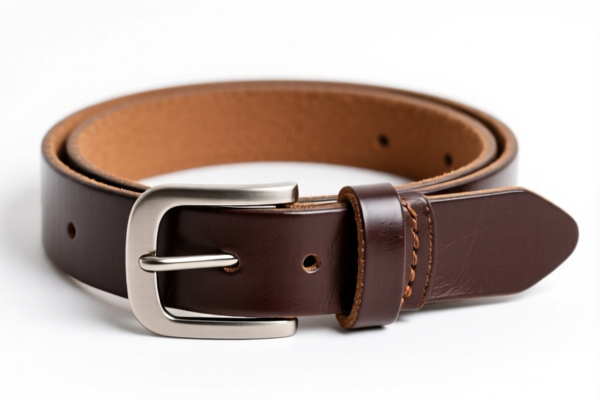
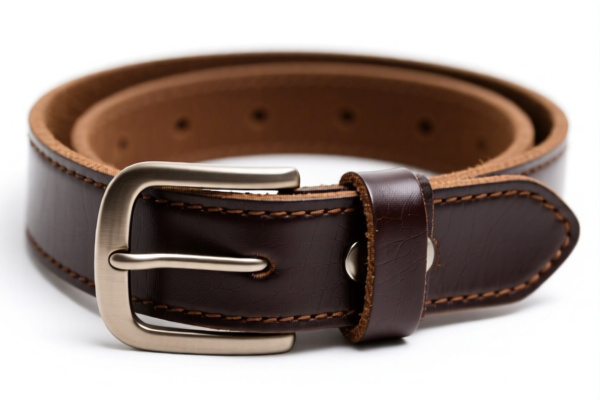
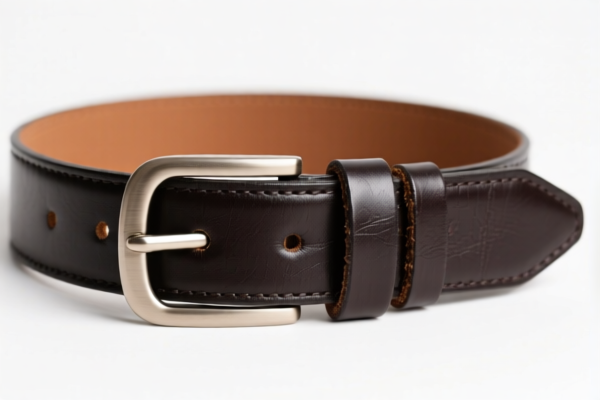
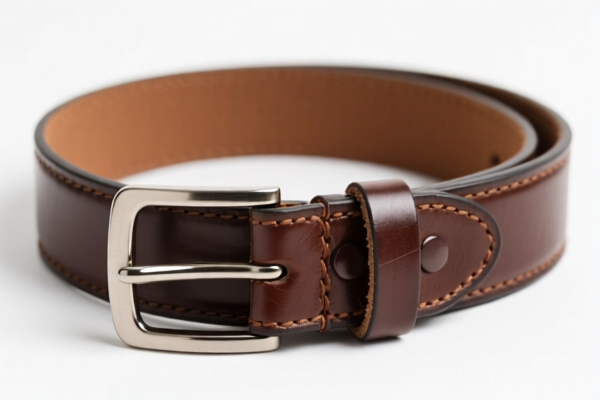
AI分析
🚜 Unprocessed Belt Leather & Narrow Fabrics: The Technical Textile & Leather Gateway
🌐 HS Code Reference & Customs Clearance Guide | 2026 Latest Tariff Analysis | Professional Clearance Strategy
📌 I. Product Definition & Classification: What Exactly is "Unprocessed Belt"?
In international trade, "Unprocessed Belt" is a misnomer if taken literally as a finished conveyor belt. It typically refers to raw materials used for technical applications. The data provided covers two distinct categories often confused in customs declarations:
- Belting Leather (Heading 4205): Pieces of leather (or composition leather) that have been cut or manufactured into forms suitable for conversion into belting. These are not finished belts but semi-finished goods for machinery.
- Narrow Woven Fabics / Bolducs (Heading 5806): Technical narrow fabrics, specifically those assembled without weft (adhesive-bonded) or narrow ribbons with specific technical features (e.g., wire in selvedge), used in mechanical appliances.
⚠️ Key Distinction:
- If the material is leather-based and shaped for industrial belts → It falls under Chapter 42.
- If the material is textile/narrow fabric used for technical binding or reinforcement → It falls under Chapter 58.
- "Unprocessed" implies raw or semi-finished states, not the final assembled mechanical component.
📦 II. HS Code Classification Details (2026 Latest Tariff Authority对照)
Based strictly on the provided , here are the precise HS Codes and their descriptions:
| HS Code | Product Description | Application/Context | Material Type |
|---|---|---|---|
4205.00.05.00 |
Other articles of leather: Belting leather cut or wholly or partly manufactured into forms suitable for conversion into belting | Semi-finished leather strips/blocks for industrial belt manufacturing | Leather / Composition Leather |
4205.00.10.00 |
Other articles of leather: Of a kind used in machinery or mechanical appliances or for other technical uses: Other | Technical leather parts (non-belting) for machinery | Leather / Composition Leather |
5806.40.00.00 |
Narrow woven fabrics; bolducs: Fabrics consisting of warp without weft assembled by means of an adhesive (bolducs) | Technical binding fabrics, adhesive-bonded narrow textiles | Man-made Fibers / Textile |
5806.32.10.20 |
Narrow woven fabrics: Other woven fabrics: Of man-made fibers: Ribbons: Of a width not exceeding 12 cm: Of polyester: With woven selvedge: Containing wire in selvedge (229) | High-tech narrow ribbons with metallic reinforcement for technical use | Polyester (Man-made) |
🔍 Critical Note:
-4205.00.05.00is specifically for belting leather. If your "unprocessed belt" is leather, this is the primary code.
-5806.32.10.20is a highly specific technical ribbon. Do not use this for general fabric unless it matches the exact criteria (polyester, ≤12cm, wire in selvedge).
💰 III. 2026 Latest Tariff Rate Breakdown (Including Surtaxes)
✅ Applicable Country: United States (US)
✅ Origin: China (CN) (Inferred from tax structure typical of US-China trade data)
✅ Effective Time: Current as of 2026
✅ Note: All tariffs below include Base Tariff + Section 301 Additional Tariff (25%).
🎯 1. 4205.00.05.00 —— Belting Leather (Cut/Prepared for Belting)
| Item | Details |
|---|---|
| Base Tariff | 2.9% |
| Additional Tariff (Section 301) | +25.0% |
| Total Effective Tax Rate | 27.9% |
| Tax Calculation | CIF Value × 27.9% |
| De Minimis Exemption | ❌ Not Applicable (High tariff rates usually exclude small packages) |
| Legal Basis | HTSUS 4205.00.05 + USITC Footnote for Section 301 |
📌 Explanation:
- This category faces a moderate base tariff (2.9%) plus the heavy 25% punitive tariff on Chinese goods.
- Cost Impact: For every $1,000 of leather belting, expect $279 in duties.
🎯 2. 4205.00.10.00 —— Other Technical Leather Articles
| Item | Details |
|---|---|
| Base Tariff | 0.0% |
| Additional Tariff (Section 301) | +25.0% |
| Total Effective Tax Rate | 25.0% |
| Tax Calculation | CIF Value × 25.0% |
| De Minimis Exemption | ❌ Not Applicable |
| Legal Basis | HTSUS 4205.00.10 + USITC Footnote for Section 301 |
📌 Explanation:
- While the base tariff is zero, the 25% surtax still applies to Chinese-origin goods.
- Cost Impact: For every $1,000 of technical leather parts, expect $250 in duties.
🎯 3. 5806.40.00.00 —— Adhesive-Bonded Narrow Fabrics (Bolducs)
| Item | Details |
|---|---|
| Base Tariff | 0.0% |
| Additional Tariff (Section 301) | +0.0% |
| Total Effective Tax Rate | 0.0% |
| Tax Calculation | No Duty |
| De Minimis Exemption | ✅ May Apply (Subject to current de minimis rules for $800) |
| Legal Basis | HTSUS 5806.40.00 |
📌 Explanation:
- This is a duty-free entry point for this specific textile type.
- Cost Impact: $0 duty on CIF value. Highly favorable for supply chain cost optimization.
🎯 4. 5806.32.10.20 —— Polyester Ribbons with Wire Selvedge
| Item | Details |
|---|---|
| Base Tariff | 0.0% |
| Additional Tariff (Section 301) | +0.0% |
| Total Effective Tax Rate | 0.0% |
| Tax Calculation | No Duty |
| De Minimis Exemption | ✅ May Apply (Subject to current de minimis rules for $800) |
| Legal Basis | HTSUS 5806.32.10.20 |
📌 Explanation:
- Also duty-free.
- Strict Criteria: Must be polyester, ≤12cm width, with woven selvedge containing wire. Misclassification here leads to severe penalties.
- Cost Impact: $0 duty on CIF value.
🛠️ IV. Customs Clearance Practical Advice (Pitfall Avoidance Guide)
✅ 1. Preparation Checklist (Mandatory Documents)
| Document | Required? | Purpose |
|---|---|---|
| ✅ Product Specifications | ✔️ | Detail material (leather vs. textile), dimensions, and technical use. |
| ✅ Photos of Raw Material | ✔️ | Show cut shapes, weave structure, or selvedge details to prove HS Code accuracy. |
| ✅ Bill of Lading / Commercial Invoice | ✔️ | Must clearly describe goods as "Leather Belting Material" or "Technical Narrow Fabric," NOT "Finished Belt." |
| ✅ Country of Origin Certificate | ✔️ | Crucial for determining if Section 301 tariffs apply (e.g., if from Vietnam, rates may differ). |
| ✅ Material Composition Statement | ✔️ | Explicitly state % of leather vs. synthetic, or polyester content. |
✅ 2. Declaration Tips (Key Mnemonics)
🔥 “Leather for Belting: 27.9% Tax; Textile Bolduc: Zero Tax. Be Precise!”
| Scenario | Correct HS Code | Risk of Wrong Code |
|---|---|---|
| Cut leather strips for conveyor belts | 4205.00.05.00 |
Declaring as "Textile" → Smuggling suspicion |
| Other technical leather parts | 4205.00.10.00 |
Declaring as "Finished Belt" → Different Chapter, higher scrutiny |
| Adhesive-bonded narrow fabric | 5806.40.00.00 |
Declaring as "General Fabric" → Potential audit |
| Polyester ribbon with wire edge | 5806.32.10.20 |
Overly generic description → Delayed release |
✅ 3. Special Handling
| Situation | Recommendation |
|---|---|
| "Unprocessed" Ambiguity | Provide engineering drawings showing how the material converts into a final belt/technical part. |
| Mixed Shipments | Separate leather (4205) and textile (5806) into distinct line items on the invoice. Do not lump them together. |
| Wire-Embedded Ribbons | Ensure the "wire in selvedge" feature is visible in photos and described in the spec sheet to justify 5806.32.10.20. |
| Leather vs. Composition Leather | Both fall under 4205, but ensure the description matches "composition leather" if it’s not natural hide. |
🌍 V. Global Market Clearance Comparison (2026 Latest)
| Country/Region | Recommended HS Code | Tariff Rate (CN Origin) | Certification Required | Notes |
|---|---|---|---|---|
| 🇺🇸 USA | 4205.00.05.00 |
27.9% | None specific | High tariff due to Sec 301. Textiles (5806) are 0%. |
| 🇺🇸 USA | 5806.40.00.00 |
0.0% | None | Duty-free opportunity for technical textiles. |
| 🇪🇺 EU | 4205.00.05.00 |
~10-12% | REACH Compliance | No Section 301 equivalent, but standard EU tariffs apply. |
| 🇨🇳 China (Import) | 4205.00.05.00 |
~6-9% | N/A | Varies by trade agreements. |
📌 Conclusion:
- USA distinguishes sharply between Leather (High Tax) and Technical Textiles (Zero Tax).
- If your "unprocessed belt" material has a textile alternative, consider re-engineering to use5806materials to save ~28% in duties.
- Leather remains expensive due to geopolitical tariffs.
📌 VI. Common Errors & Pitfalls (Lessons Learned)
❌ Error 1: Declaring "Belting Leather" as "Finished Conveyor Belt"
👉 Consequence: Wrong HS Code (e.g., 3917 or 8483), potential fraud allegations, and penalties.
❌ Error 2: Describing 5806.32.10.20 simply as "Polyester Ribbon"
👉 Consequence: Customs may reclassify to a higher-tariff or general category. Must specify "wire in selvedge" and width ≤12cm.
❌ Error 3: Ignoring "Composition Leather" vs. "Natural Leather"
👉 Consequence: While both are 4205, mislabeling can trigger animal product/quarantine checks if natural leather is falsely declared as synthetic.
❌ Error 4: Assuming all narrow fabrics are 0% duty
👉 Consequence: Some narrow fabrics have 25% tariffs. Only 5806.40.00.00 and 5806.32.10.20 in this dataset are 0%. Others may not be.
✅ Correct Approach:
"Belting Leather, Cut to Shape, for Industrial Machinery, Material: Full Grain Leather, HS 4205.00.05.00"
"Narrow Woven Fabric, Adhesive Bonded, Technical Use, HS 5806.40.00.00"
🎯 VII. Conclusion: Strategic Sourcing for Tariff Efficiency
🎯 Key Takeaway:
🔹 Leather belts are tax-heavy (27.9%).
🔹 Technical narrow fabrics can be duty-free (0.0%) if they meet specific5806criteria.
🔹 "Unprocessed" is not a HS Code – you must define the material form.
📌 Pro Tip:
If you have flexibility in material choice, switch from leather to adhesive-bonded narrow fabrics (
5806.40.00.00) for non-critical technical belts to achieve 100% duty savings in the US market.
📣 Immediate Action:
📞 Verify material composition with your supplier.
🚀 Request sample photos for customs broker review.
💼 Precision in classification saves thousands in duties!
✨ Professional Clearance Starts with Accurate Classification!
💼 Every percentage point counts in your supply chain margin!
用户评价
关于 HS 编码归类
协调制度(HS)是由世界海关组织(WCO)制定的国际贸易商品分类标准。全球 200 多个国家采用 HS 系统作为海关关税、贸易统计和进出口监管的基础。
每个 HS 编码遵循以下层级结构:
- 章(2 位)——商品大类(例如:第 84 章:机器和机械设备)
- 品目(4 位)——章内的更具体分类
- 子目(6 位)——国际通用细分,所有 WCO 成员国统一使用
- 本国细分(8-10 位)——各国自行扩展的细分编码,如美国 HTSUS 10 位编码
正确的 HS 编码归类对于顺利通关、准确缴纳关税和遵守贸易法规至关重要。错误归类可能导致海关延误、多缴关税或罚款。
从CN进口到US时,适用的关税税率可能包括:
- 最惠国(MFN)税率——适用于 WTO 成员国的标准关税税率
- 普通税率——适用于无贸易协定国家
- 贸易救济关税——附加关税,如 301 条款(反倾销)、232 条款(国家安全)或反补贴税
本页内容仅供参考。如需正式归类,请咨询当地海关或持牌报关代理。