Unprocessed Belt
CN → US| HS Code | Tariff Rate | Origin | Destination | Doc |
|---|---|---|---|---|
| 5806400000 | 43.0% | CN | US | Official Doc |
| 5806321020 | 41.0% | CN | US | Official Doc |
| 4205000500 | 37.9% | CN | US | Official Doc |
| 4205001000 | 35.0% | CN | US | Official Doc |
Product Images
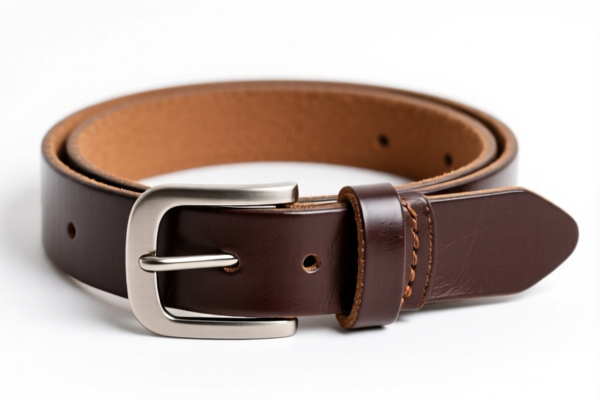
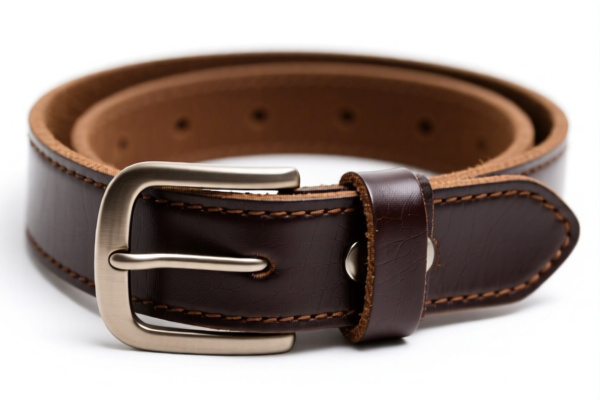
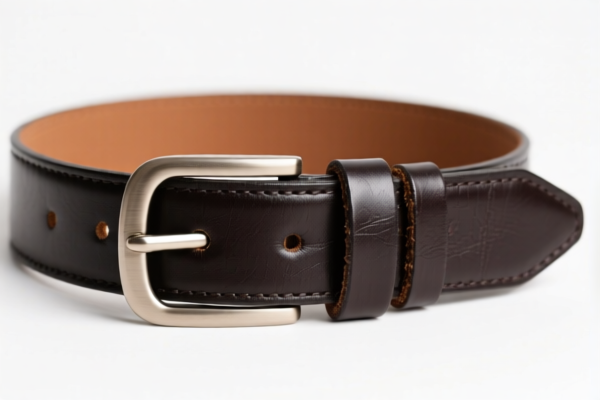
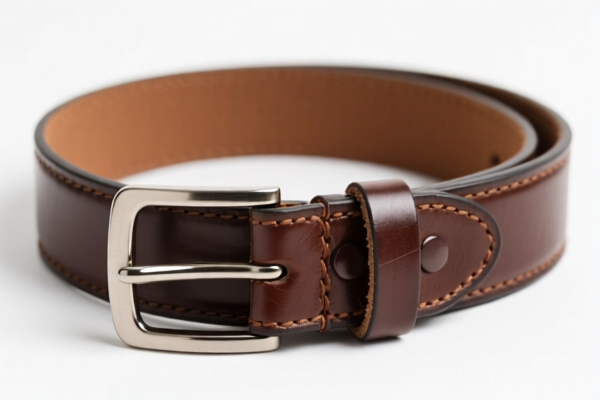
AI Analysis
🚜 Unprocessed Belt Leather & Narrow Fabrics: The Technical Textile & Leather Gateway
🌐 HS Code Reference & Customs Clearance Guide | 2026 Latest Tariff Analysis | Professional Clearance Strategy
📌 I. Product Definition & Classification: What Exactly is "Unprocessed Belt"?
In international trade, "Unprocessed Belt" is a misnomer if taken literally as a finished conveyor belt. It typically refers to raw materials used for technical applications. The data provided covers two distinct categories often confused in customs declarations:
- Belting Leather (Heading 4205): Pieces of leather (or composition leather) that have been cut or manufactured into forms suitable for conversion into belting. These are not finished belts but semi-finished goods for machinery.
- Narrow Woven Fabics / Bolducs (Heading 5806): Technical narrow fabrics, specifically those assembled without weft (adhesive-bonded) or narrow ribbons with specific technical features (e.g., wire in selvedge), used in mechanical appliances.
⚠️ Key Distinction:
- If the material is leather-based and shaped for industrial belts → It falls under Chapter 42.
- If the material is textile/narrow fabric used for technical binding or reinforcement → It falls under Chapter 58.
- "Unprocessed" implies raw or semi-finished states, not the final assembled mechanical component.
📦 II. HS Code Classification Details (2026 Latest Tariff Authority对照)
Based strictly on the provided , here are the precise HS Codes and their descriptions:
| HS Code | Product Description | Application/Context | Material Type |
|---|---|---|---|
4205.00.05.00 |
Other articles of leather: Belting leather cut or wholly or partly manufactured into forms suitable for conversion into belting | Semi-finished leather strips/blocks for industrial belt manufacturing | Leather / Composition Leather |
4205.00.10.00 |
Other articles of leather: Of a kind used in machinery or mechanical appliances or for other technical uses: Other | Technical leather parts (non-belting) for machinery | Leather / Composition Leather |
5806.40.00.00 |
Narrow woven fabrics; bolducs: Fabrics consisting of warp without weft assembled by means of an adhesive (bolducs) | Technical binding fabrics, adhesive-bonded narrow textiles | Man-made Fibers / Textile |
5806.32.10.20 |
Narrow woven fabrics: Other woven fabrics: Of man-made fibers: Ribbons: Of a width not exceeding 12 cm: Of polyester: With woven selvedge: Containing wire in selvedge (229) | High-tech narrow ribbons with metallic reinforcement for technical use | Polyester (Man-made) |
🔍 Critical Note:
-4205.00.05.00is specifically for belting leather. If your "unprocessed belt" is leather, this is the primary code.
-5806.32.10.20is a highly specific technical ribbon. Do not use this for general fabric unless it matches the exact criteria (polyester, ≤12cm, wire in selvedge).
💰 III. 2026 Latest Tariff Rate Breakdown (Including Surtaxes)
✅ Applicable Country: United States (US)
✅ Origin: China (CN) (Inferred from tax structure typical of US-China trade data)
✅ Effective Time: Current as of 2026
✅ Note: All tariffs below include Base Tariff + Section 301 Additional Tariff (25%).
🎯 1. 4205.00.05.00 —— Belting Leather (Cut/Prepared for Belting)
| Item | Details |
|---|---|
| Base Tariff | 2.9% |
| Additional Tariff (Section 301) | +25.0% |
| Total Effective Tax Rate | 27.9% |
| Tax Calculation | CIF Value × 27.9% |
| De Minimis Exemption | ❌ Not Applicable (High tariff rates usually exclude small packages) |
| Legal Basis | HTSUS 4205.00.05 + USITC Footnote for Section 301 |
📌 Explanation:
- This category faces a moderate base tariff (2.9%) plus the heavy 25% punitive tariff on Chinese goods.
- Cost Impact: For every $1,000 of leather belting, expect $279 in duties.
🎯 2. 4205.00.10.00 —— Other Technical Leather Articles
| Item | Details |
|---|---|
| Base Tariff | 0.0% |
| Additional Tariff (Section 301) | +25.0% |
| Total Effective Tax Rate | 25.0% |
| Tax Calculation | CIF Value × 25.0% |
| De Minimis Exemption | ❌ Not Applicable |
| Legal Basis | HTSUS 4205.00.10 + USITC Footnote for Section 301 |
📌 Explanation:
- While the base tariff is zero, the 25% surtax still applies to Chinese-origin goods.
- Cost Impact: For every $1,000 of technical leather parts, expect $250 in duties.
🎯 3. 5806.40.00.00 —— Adhesive-Bonded Narrow Fabrics (Bolducs)
| Item | Details |
|---|---|
| Base Tariff | 0.0% |
| Additional Tariff (Section 301) | +0.0% |
| Total Effective Tax Rate | 0.0% |
| Tax Calculation | No Duty |
| De Minimis Exemption | ✅ May Apply (Subject to current de minimis rules for $800) |
| Legal Basis | HTSUS 5806.40.00 |
📌 Explanation:
- This is a duty-free entry point for this specific textile type.
- Cost Impact: $0 duty on CIF value. Highly favorable for supply chain cost optimization.
🎯 4. 5806.32.10.20 —— Polyester Ribbons with Wire Selvedge
| Item | Details |
|---|---|
| Base Tariff | 0.0% |
| Additional Tariff (Section 301) | +0.0% |
| Total Effective Tax Rate | 0.0% |
| Tax Calculation | No Duty |
| De Minimis Exemption | ✅ May Apply (Subject to current de minimis rules for $800) |
| Legal Basis | HTSUS 5806.32.10.20 |
📌 Explanation:
- Also duty-free.
- Strict Criteria: Must be polyester, ≤12cm width, with woven selvedge containing wire. Misclassification here leads to severe penalties.
- Cost Impact: $0 duty on CIF value.
🛠️ IV. Customs Clearance Practical Advice (Pitfall Avoidance Guide)
✅ 1. Preparation Checklist (Mandatory Documents)
| Document | Required? | Purpose |
|---|---|---|
| ✅ Product Specifications | ✔️ | Detail material (leather vs. textile), dimensions, and technical use. |
| ✅ Photos of Raw Material | ✔️ | Show cut shapes, weave structure, or selvedge details to prove HS Code accuracy. |
| ✅ Bill of Lading / Commercial Invoice | ✔️ | Must clearly describe goods as "Leather Belting Material" or "Technical Narrow Fabric," NOT "Finished Belt." |
| ✅ Country of Origin Certificate | ✔️ | Crucial for determining if Section 301 tariffs apply (e.g., if from Vietnam, rates may differ). |
| ✅ Material Composition Statement | ✔️ | Explicitly state % of leather vs. synthetic, or polyester content. |
✅ 2. Declaration Tips (Key Mnemonics)
🔥 “Leather for Belting: 27.9% Tax; Textile Bolduc: Zero Tax. Be Precise!”
| Scenario | Correct HS Code | Risk of Wrong Code |
|---|---|---|
| Cut leather strips for conveyor belts | 4205.00.05.00 |
Declaring as "Textile" → Smuggling suspicion |
| Other technical leather parts | 4205.00.10.00 |
Declaring as "Finished Belt" → Different Chapter, higher scrutiny |
| Adhesive-bonded narrow fabric | 5806.40.00.00 |
Declaring as "General Fabric" → Potential audit |
| Polyester ribbon with wire edge | 5806.32.10.20 |
Overly generic description → Delayed release |
✅ 3. Special Handling
| Situation | Recommendation |
|---|---|
| "Unprocessed" Ambiguity | Provide engineering drawings showing how the material converts into a final belt/technical part. |
| Mixed Shipments | Separate leather (4205) and textile (5806) into distinct line items on the invoice. Do not lump them together. |
| Wire-Embedded Ribbons | Ensure the "wire in selvedge" feature is visible in photos and described in the spec sheet to justify 5806.32.10.20. |
| Leather vs. Composition Leather | Both fall under 4205, but ensure the description matches "composition leather" if it’s not natural hide. |
🌍 V. Global Market Clearance Comparison (2026 Latest)
| Country/Region | Recommended HS Code | Tariff Rate (CN Origin) | Certification Required | Notes |
|---|---|---|---|---|
| 🇺🇸 USA | 4205.00.05.00 |
27.9% | None specific | High tariff due to Sec 301. Textiles (5806) are 0%. |
| 🇺🇸 USA | 5806.40.00.00 |
0.0% | None | Duty-free opportunity for technical textiles. |
| 🇪🇺 EU | 4205.00.05.00 |
~10-12% | REACH Compliance | No Section 301 equivalent, but standard EU tariffs apply. |
| 🇨🇳 China (Import) | 4205.00.05.00 |
~6-9% | N/A | Varies by trade agreements. |
📌 Conclusion:
- USA distinguishes sharply between Leather (High Tax) and Technical Textiles (Zero Tax).
- If your "unprocessed belt" material has a textile alternative, consider re-engineering to use5806materials to save ~28% in duties.
- Leather remains expensive due to geopolitical tariffs.
📌 VI. Common Errors & Pitfalls (Lessons Learned)
❌ Error 1: Declaring "Belting Leather" as "Finished Conveyor Belt"
👉 Consequence: Wrong HS Code (e.g., 3917 or 8483), potential fraud allegations, and penalties.
❌ Error 2: Describing 5806.32.10.20 simply as "Polyester Ribbon"
👉 Consequence: Customs may reclassify to a higher-tariff or general category. Must specify "wire in selvedge" and width ≤12cm.
❌ Error 3: Ignoring "Composition Leather" vs. "Natural Leather"
👉 Consequence: While both are 4205, mislabeling can trigger animal product/quarantine checks if natural leather is falsely declared as synthetic.
❌ Error 4: Assuming all narrow fabrics are 0% duty
👉 Consequence: Some narrow fabrics have 25% tariffs. Only 5806.40.00.00 and 5806.32.10.20 in this dataset are 0%. Others may not be.
✅ Correct Approach:
"Belting Leather, Cut to Shape, for Industrial Machinery, Material: Full Grain Leather, HS 4205.00.05.00"
"Narrow Woven Fabric, Adhesive Bonded, Technical Use, HS 5806.40.00.00"
🎯 VII. Conclusion: Strategic Sourcing for Tariff Efficiency
🎯 Key Takeaway:
🔹 Leather belts are tax-heavy (27.9%).
🔹 Technical narrow fabrics can be duty-free (0.0%) if they meet specific5806criteria.
🔹 "Unprocessed" is not a HS Code – you must define the material form.
📌 Pro Tip:
If you have flexibility in material choice, switch from leather to adhesive-bonded narrow fabrics (
5806.40.00.00) for non-critical technical belts to achieve 100% duty savings in the US market.
📣 Immediate Action:
📞 Verify material composition with your supplier.
🚀 Request sample photos for customs broker review.
💼 Precision in classification saves thousands in duties!
✨ Professional Clearance Starts with Accurate Classification!
💼 Every percentage point counts in your supply chain margin!
Customer Reviews
About HS Code Classification
The Harmonized System (HS) is an internationally standardized nomenclature developed by the World Customs Organization (WCO) to classify traded products. Over 200 countries use the HS system as the basis for customs tariffs, trade statistics, and import/export regulations.
Each HS code follows a hierarchical structure:
- Chapter (2 digits) — Broad category of goods (e.g., Chapter 84: Machinery and Mechanical Appliances)
- Heading (4 digits) — More specific grouping within the chapter
- Subheading (6 digits) — Internationally standardized breakdown, used by all WCO member countries
- National subdivisions (8-10 digits) — Country-specific extensions for further classification, such as US HTSUS 10-digit codes
Correct HS code classification is essential for smooth customs clearance, accurate duty payment, and compliance with trade regulations. Misclassification can lead to customs delays, overpayment of duties, or penalties.
When importing from CN to US, the applicable tariff rates may include:
- Most-Favored-Nation (MFN) rate — The standard duty rate applied to WTO members
- General rate — Applied to countries without trade agreements
- Trade remedy duties — Additional tariffs such as Section 301 (anti-dumping), Section 232 (national security), or countervailing duties
The information provided on this page is for reference purposes only. For official classification, please consult with your local customs authority or a licensed customs broker.