Unprocessed Birch Wood
CN → US| HS编码 | 关税税率 | 原产国 | 目的国 | 文档 |
|---|---|---|---|---|
| 4403960123 | 35.0% | CN | US | 官方文档 |
| 4403950127 | 35.0% | CN | US | 官方文档 |
商品图片
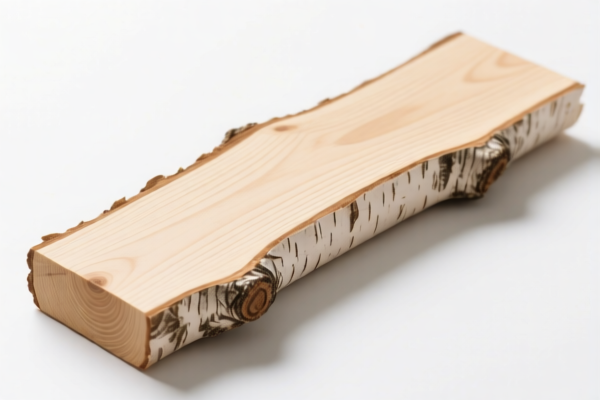
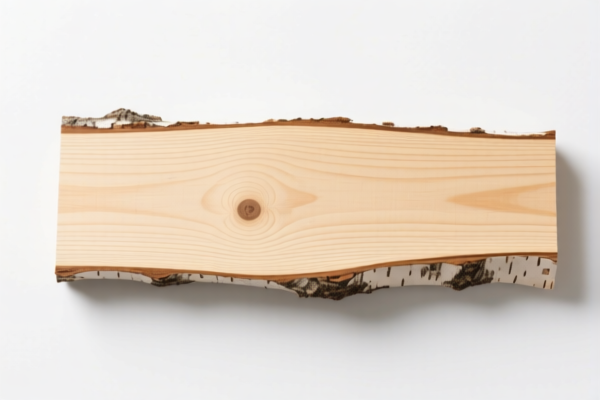
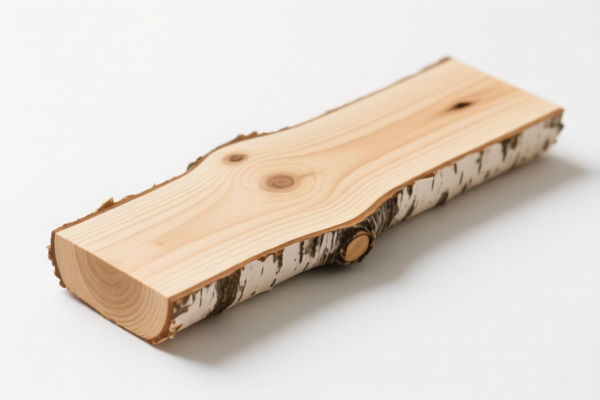
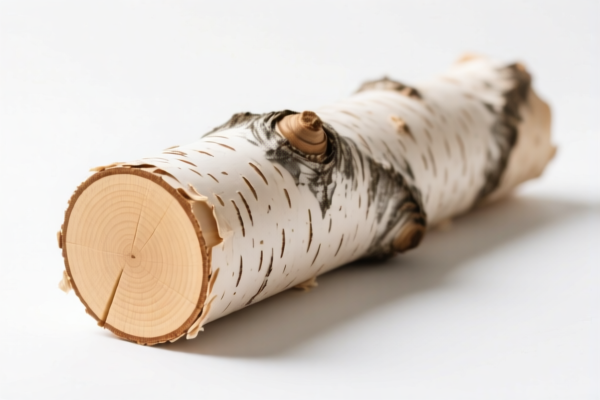
AI分析
🌲 Unprocessed Birch Wood (Raw Timber)
🌐 HS Code Reference & Clearance Guide | 2026 Latest Tariff Analysis | Professional Entry Strategy
📌 I. Product Definition & Classification: What Exactly is "Unprocessed Birch Wood"?
Birch wood (Betula spp.) is a popular hardwood known for its strength, fine texture, and versatility. In international trade, "Wood in the rough" refers to timber that has not undergone significant processing. It may have been: - Stripped of bark or sapwood; - Roughly squared (sawn to some extent); - But NOT planed, tongued, grooved, cross-cut to length, or otherwise finished.
The classification depends entirely on two factors:
1. Cross-sectional dimension (thickness/width);
2. End-use specification (e.g., pulpwood vs. construction poles).
⚠️ Critical Distinction:
- If the smallest cross-sectional dimension is ≥15 cm → Likely classified as poles, piles, or posts (4403.95.01.27);
- If the smallest cross-sectional dimension is <15 cm or intended for pulp → Classified as pulpwood (4403.96.01.23).
📦 II. HS Code Classification Details (2026 Tariff Schedule)
| HS Code | Product Description | Applicable Scenario | Smallest Cross-Section |
|---|---|---|---|
4403.96.01.23 |
Wood in the rough, of birch (Betula spp.), other: Pulpwood | Small-diameter logs, industrial pulp production | <15 cm (or unspecified) |
4403.95.01.27 |
Wood in the rough, of birch (Betula spp.): Poles, piles, posts | Construction, fencing, utility poles | ≥15 cm |
🔍 Key Reminder:
- "Pulpwood" implies raw material for paper/panel manufacturing, typically smaller logs;
- "Poles, piles, posts" implies structural use, requiring larger minimum dimensions (≥15 cm);
- Misclassification can lead to customs delays, penalties, or retroactive tax assessments.
💰 III. 2026 Tariff Rate Breakdown (Including Additional Duties)
✅ Applicable Country: United States (US)
✅ Country of Origin: China (CN)
✅ Effective Date: 2025 onwards (including future imports)
🎯 1. 4403.96.01.23 — Birch Wood, Pulpwood (Smallest Dimension <15 cm or Pulp-Grade)
| Item | Detail |
|---|---|
| Base Tariff | 0.0% (ad valorem) |
| Additional Duty (Section 301) | +25.0% |
| Total Effective Rate | 25.0% |
| Tax Calculation | CIF Value × 25% |
| De Minimis Exemption Eligible? | ❌ No (Denied under USITC rules for this HS code) |
| Legal Basis Path | USITC:4403.96.01.23 → Section301:Footnote9903.44.01 |
📌 Explanation:
- The 0% base rate reflects standard Most-Favored-Nation (MFN) treatment for raw timber;
- The +25% additional duty applies under Section 301 of the Trade Act of 1974, targeting specific Chinese-origin timber products;
- Total cost impact: 25% of the CIF value.
🎯 2. 4403.95.01.27 — Birch Wood, Poles/Piles/Posts (Smallest Dimension ≥15 cm)
| Item | Detail |
|---|---|
| Base Tariff | 0.0% (ad valorem) |
| Additional Duty (Section 301) | +25.0% |
| Total Effective Rate | 25.0% |
| Tax Calculation | CIF Value × 25% |
| De Minimis Exemption Eligible? | ❌ No |
| Legal Basis Path | USITC:4403.95.01.27 → Section301:Footnote9903.44.01 |
📌 Note:
- Despite different physical uses (structural vs. pulp), both HS codes carry the same 25% total tariff;
- The distinction lies in customs verification of dimensions and intended use declaration;
- Accurate measurement documentation is mandatory to avoid misclassification disputes.
🛠️ IV. Practical Clearance Advice (Avoiding Pitfalls)
✅ 1. Required Documentation Checklist
| Document | Mandatory? | Purpose |
|---|---|---|
| ✅ Commercial Invoice | ✔️ | Must specify "Birch Wood, Unprocessed," HS code, country of origin |
| ✅ Packing List | ✔️ | Detail dimensions, weight, number of pieces |
| ✅ Measurements Certificate | ✔️ | Critical: Provide exact smallest cross-sectional dimensions to prove ≥15 cm or <15 cm |
| ✅ Species Identification | ✔️ | Confirm Betula spp. via DNA or expert botanical verification if questioned |
| ✅ Phytosanitary Certificate | ✔️ | Required by US Department of Agriculture (USDA) to prevent invasive pests |
| ✅ Bill of Lading | ✔️ | Standard shipping document |
| ✅ Fumigation Certificate | ✔️ | Mandatory for wood packaging/materials under ISPM 15 |
✅ 2. Declaration Best Practices
🔥 "Measure Twice, Declare Once!"
| Scenario | Correct Declaration | Incorrect Declaration |
|---|---|---|
| Logs ≥15 cm used for construction | 4403.95.01.27 (Poles/Piles/Posts) |
Declare as "Pulpwood" → Risk of audit |
| Small logs <15 cm for pulp | 4403.96.01.23 (Pulpwood) |
Declare as "Poles" → Rejected for lacking size proof |
| Mixed batch (both sizes) | Split shipment or clarify intent | Single vague declaration → Customs holds shipment |
✅ 3. Special Considerations
| Situation | Handling Advice |
|---|---|
| Mixed Species | If non-Birch species are present, declare separately; mislabeling = fraud risk |
| Bark Status | Specify if bark is stripped or intact; affects valuation and inspection |
| Sawing Level | "Roughly squared" is allowed; planed or edged wood falls under different HS codes (e.g., 4407) |
| Pre-Arrival Filing | Submit ISF (Importer Security Filing) 24 hours before loading |
🌍 V. Global Market Comparison (2026)
| Country/Region | Recommended HS Code | Total Tariff (China Origin) | Key Requirements | Notes |
|---|---|---|---|---|
| 🇺🇸 USA | 4403.96.01.23 / 4403.95.01.27 |
25% | Phytosanitary Cert, USDA Inspection | High duty under Section 301 |
| 🇨🇳 China | 4403.96 / 4403.95 |
0%–5% | CITES (if endangered), Phytosanitary | Low import duty, strict biosecurity |
| 🇪🇺 EU | 4403.94 / 4403.95 |
0%–10% | FLEGT License (if applicable), EUTR Compliance | Timber Regulation requires legality proof |
| 🇬🇧 UK | 4403.94 / 4403.95 |
0%–5% | Post-Brexit Timber Regulation | Similar to EU but independent tracking |
📌 Conclusion:
- USA imposes a flat 25% additional tariff on Chinese-origin birch wood regardless of use (pulp vs. poles);
- EU and UK require strict legality verification (FLEGT/EUTR), though tariffs may be lower;
- China’s domestic policy favors raw timber imports for manufacturing, with minimal duties.
📌 VI. Common Mistakes & Pitfalls (Lessons Learned)
❌ Mistake 1: Failing to provide cross-sectional measurements
👉 Consequence: Customs reclassifies to highest duty bracket or detains shipment for verification.
❌ Mistake 2: Ignoring phytosanitary requirements
👉 Consequence: Shipment rejected or destroyed by USDA due to pest risk.
❌ Mistake 3: Misidentifying species (e.g., mixing birch with oak)
👉 Consequence: Tariff mismatch, potential fraud allegations, fines.
❌ Mistake 4: Using vague descriptions like "Wood" instead of "Unprocessed Birch Wood"
👉 Consequence: Increased inspection rate, delays, and higher scrutiny.
✅ Correct Approach:
"Unprocessed Birch Wood (Betula spp.), Roughly Squared, Smallest Dimension 18 cm, Intended for Pile Construction, Fumigated, Phytosanitary Certificate Attached"
🎯 VII. Conclusion: Precision in Classification Saves Costs!
🎯 Remember:
🔹 "Dimension Defines Use, Measurement Defines Duty"
🔹 "25% is the floor for Chinese Birch Wood into the US"
🔹 "Phytosanitary Certs are non-negotiable"
📌 Pro Tip:
- If importing into the US, consider pre-clearance consultations with CBP (Customs and Border Protection);
- Ensure suppliers provide certified measurement reports;
- Keep botanical verification records in case of species disputes.
📣 Take Action Now:
📞 Engage a licensed customs broker;
📄 Prepare full documentation package including measurements;
🚀 Ensure smooth, compliant entry of your birch wood shipments!
✨ Professional classification ensures cost efficiency and regulatory compliance!
💼 Your timber trade deserves precision!
用户评价
关于 HS 编码归类
协调制度(HS)是由世界海关组织(WCO)制定的国际贸易商品分类标准。全球 200 多个国家采用 HS 系统作为海关关税、贸易统计和进出口监管的基础。
每个 HS 编码遵循以下层级结构:
- 章(2 位)——商品大类(例如:第 84 章:机器和机械设备)
- 品目(4 位)——章内的更具体分类
- 子目(6 位)——国际通用细分,所有 WCO 成员国统一使用
- 本国细分(8-10 位)——各国自行扩展的细分编码,如美国 HTSUS 10 位编码
正确的 HS 编码归类对于顺利通关、准确缴纳关税和遵守贸易法规至关重要。错误归类可能导致海关延误、多缴关税或罚款。
从CN进口到US时,适用的关税税率可能包括:
- 最惠国(MFN)税率——适用于 WTO 成员国的标准关税税率
- 普通税率——适用于无贸易协定国家
- 贸易救济关税——附加关税,如 301 条款(反倾销)、232 条款(国家安全)或反补贴税
本页内容仅供参考。如需正式归类,请咨询当地海关或持牌报关代理。