Unprocessed Birch Wood
CN → US| HS Code | Tariff Rate | Origin | Destination | Doc |
|---|---|---|---|---|
| 4403960123 | 35.0% | CN | US | Official Doc |
| 4403950127 | 35.0% | CN | US | Official Doc |
Product Images
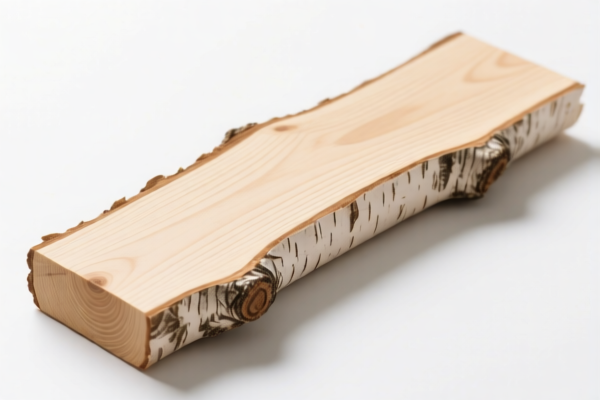
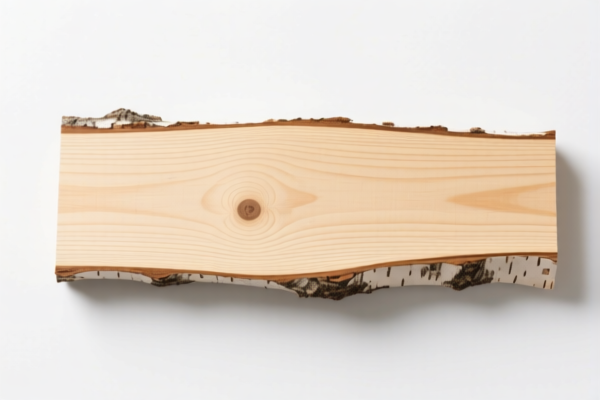
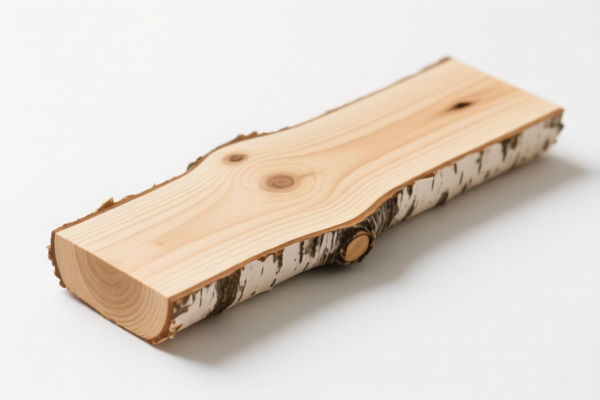
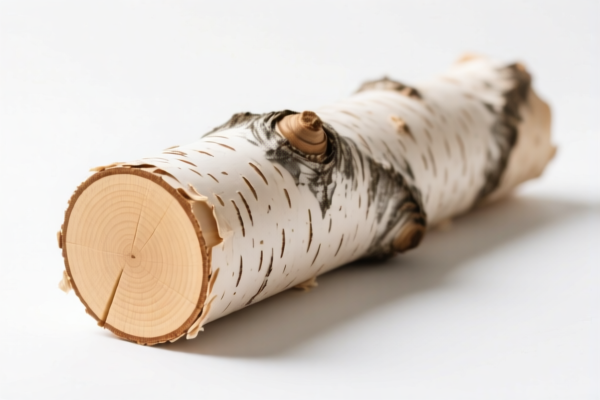
AI Analysis
🌲 Unprocessed Birch Wood (Raw Timber)
🌐 HS Code Reference & Clearance Guide | 2026 Latest Tariff Analysis | Professional Entry Strategy
📌 I. Product Definition & Classification: What Exactly is "Unprocessed Birch Wood"?
Birch wood (Betula spp.) is a popular hardwood known for its strength, fine texture, and versatility. In international trade, "Wood in the rough" refers to timber that has not undergone significant processing. It may have been: - Stripped of bark or sapwood; - Roughly squared (sawn to some extent); - But NOT planed, tongued, grooved, cross-cut to length, or otherwise finished.
The classification depends entirely on two factors:
1. Cross-sectional dimension (thickness/width);
2. End-use specification (e.g., pulpwood vs. construction poles).
⚠️ Critical Distinction:
- If the smallest cross-sectional dimension is ≥15 cm → Likely classified as poles, piles, or posts (4403.95.01.27);
- If the smallest cross-sectional dimension is <15 cm or intended for pulp → Classified as pulpwood (4403.96.01.23).
📦 II. HS Code Classification Details (2026 Tariff Schedule)
| HS Code | Product Description | Applicable Scenario | Smallest Cross-Section |
|---|---|---|---|
4403.96.01.23 |
Wood in the rough, of birch (Betula spp.), other: Pulpwood | Small-diameter logs, industrial pulp production | <15 cm (or unspecified) |
4403.95.01.27 |
Wood in the rough, of birch (Betula spp.): Poles, piles, posts | Construction, fencing, utility poles | ≥15 cm |
🔍 Key Reminder:
- "Pulpwood" implies raw material for paper/panel manufacturing, typically smaller logs;
- "Poles, piles, posts" implies structural use, requiring larger minimum dimensions (≥15 cm);
- Misclassification can lead to customs delays, penalties, or retroactive tax assessments.
💰 III. 2026 Tariff Rate Breakdown (Including Additional Duties)
✅ Applicable Country: United States (US)
✅ Country of Origin: China (CN)
✅ Effective Date: 2025 onwards (including future imports)
🎯 1. 4403.96.01.23 — Birch Wood, Pulpwood (Smallest Dimension <15 cm or Pulp-Grade)
| Item | Detail |
|---|---|
| Base Tariff | 0.0% (ad valorem) |
| Additional Duty (Section 301) | +25.0% |
| Total Effective Rate | 25.0% |
| Tax Calculation | CIF Value × 25% |
| De Minimis Exemption Eligible? | ❌ No (Denied under USITC rules for this HS code) |
| Legal Basis Path | USITC:4403.96.01.23 → Section301:Footnote9903.44.01 |
📌 Explanation:
- The 0% base rate reflects standard Most-Favored-Nation (MFN) treatment for raw timber;
- The +25% additional duty applies under Section 301 of the Trade Act of 1974, targeting specific Chinese-origin timber products;
- Total cost impact: 25% of the CIF value.
🎯 2. 4403.95.01.27 — Birch Wood, Poles/Piles/Posts (Smallest Dimension ≥15 cm)
| Item | Detail |
|---|---|
| Base Tariff | 0.0% (ad valorem) |
| Additional Duty (Section 301) | +25.0% |
| Total Effective Rate | 25.0% |
| Tax Calculation | CIF Value × 25% |
| De Minimis Exemption Eligible? | ❌ No |
| Legal Basis Path | USITC:4403.95.01.27 → Section301:Footnote9903.44.01 |
📌 Note:
- Despite different physical uses (structural vs. pulp), both HS codes carry the same 25% total tariff;
- The distinction lies in customs verification of dimensions and intended use declaration;
- Accurate measurement documentation is mandatory to avoid misclassification disputes.
🛠️ IV. Practical Clearance Advice (Avoiding Pitfalls)
✅ 1. Required Documentation Checklist
| Document | Mandatory? | Purpose |
|---|---|---|
| ✅ Commercial Invoice | ✔️ | Must specify "Birch Wood, Unprocessed," HS code, country of origin |
| ✅ Packing List | ✔️ | Detail dimensions, weight, number of pieces |
| ✅ Measurements Certificate | ✔️ | Critical: Provide exact smallest cross-sectional dimensions to prove ≥15 cm or <15 cm |
| ✅ Species Identification | ✔️ | Confirm Betula spp. via DNA or expert botanical verification if questioned |
| ✅ Phytosanitary Certificate | ✔️ | Required by US Department of Agriculture (USDA) to prevent invasive pests |
| ✅ Bill of Lading | ✔️ | Standard shipping document |
| ✅ Fumigation Certificate | ✔️ | Mandatory for wood packaging/materials under ISPM 15 |
✅ 2. Declaration Best Practices
🔥 "Measure Twice, Declare Once!"
| Scenario | Correct Declaration | Incorrect Declaration |
|---|---|---|
| Logs ≥15 cm used for construction | 4403.95.01.27 (Poles/Piles/Posts) |
Declare as "Pulpwood" → Risk of audit |
| Small logs <15 cm for pulp | 4403.96.01.23 (Pulpwood) |
Declare as "Poles" → Rejected for lacking size proof |
| Mixed batch (both sizes) | Split shipment or clarify intent | Single vague declaration → Customs holds shipment |
✅ 3. Special Considerations
| Situation | Handling Advice |
|---|---|
| Mixed Species | If non-Birch species are present, declare separately; mislabeling = fraud risk |
| Bark Status | Specify if bark is stripped or intact; affects valuation and inspection |
| Sawing Level | "Roughly squared" is allowed; planed or edged wood falls under different HS codes (e.g., 4407) |
| Pre-Arrival Filing | Submit ISF (Importer Security Filing) 24 hours before loading |
🌍 V. Global Market Comparison (2026)
| Country/Region | Recommended HS Code | Total Tariff (China Origin) | Key Requirements | Notes |
|---|---|---|---|---|
| 🇺🇸 USA | 4403.96.01.23 / 4403.95.01.27 |
25% | Phytosanitary Cert, USDA Inspection | High duty under Section 301 |
| 🇨🇳 China | 4403.96 / 4403.95 |
0%–5% | CITES (if endangered), Phytosanitary | Low import duty, strict biosecurity |
| 🇪🇺 EU | 4403.94 / 4403.95 |
0%–10% | FLEGT License (if applicable), EUTR Compliance | Timber Regulation requires legality proof |
| 🇬🇧 UK | 4403.94 / 4403.95 |
0%–5% | Post-Brexit Timber Regulation | Similar to EU but independent tracking |
📌 Conclusion:
- USA imposes a flat 25% additional tariff on Chinese-origin birch wood regardless of use (pulp vs. poles);
- EU and UK require strict legality verification (FLEGT/EUTR), though tariffs may be lower;
- China’s domestic policy favors raw timber imports for manufacturing, with minimal duties.
📌 VI. Common Mistakes & Pitfalls (Lessons Learned)
❌ Mistake 1: Failing to provide cross-sectional measurements
👉 Consequence: Customs reclassifies to highest duty bracket or detains shipment for verification.
❌ Mistake 2: Ignoring phytosanitary requirements
👉 Consequence: Shipment rejected or destroyed by USDA due to pest risk.
❌ Mistake 3: Misidentifying species (e.g., mixing birch with oak)
👉 Consequence: Tariff mismatch, potential fraud allegations, fines.
❌ Mistake 4: Using vague descriptions like "Wood" instead of "Unprocessed Birch Wood"
👉 Consequence: Increased inspection rate, delays, and higher scrutiny.
✅ Correct Approach:
"Unprocessed Birch Wood (Betula spp.), Roughly Squared, Smallest Dimension 18 cm, Intended for Pile Construction, Fumigated, Phytosanitary Certificate Attached"
🎯 VII. Conclusion: Precision in Classification Saves Costs!
🎯 Remember:
🔹 "Dimension Defines Use, Measurement Defines Duty"
🔹 "25% is the floor for Chinese Birch Wood into the US"
🔹 "Phytosanitary Certs are non-negotiable"
📌 Pro Tip:
- If importing into the US, consider pre-clearance consultations with CBP (Customs and Border Protection);
- Ensure suppliers provide certified measurement reports;
- Keep botanical verification records in case of species disputes.
📣 Take Action Now:
📞 Engage a licensed customs broker;
📄 Prepare full documentation package including measurements;
🚀 Ensure smooth, compliant entry of your birch wood shipments!
✨ Professional classification ensures cost efficiency and regulatory compliance!
💼 Your timber trade deserves precision!
Customer Reviews
About HS Code Classification
The Harmonized System (HS) is an internationally standardized nomenclature developed by the World Customs Organization (WCO) to classify traded products. Over 200 countries use the HS system as the basis for customs tariffs, trade statistics, and import/export regulations.
Each HS code follows a hierarchical structure:
- Chapter (2 digits) — Broad category of goods (e.g., Chapter 84: Machinery and Mechanical Appliances)
- Heading (4 digits) — More specific grouping within the chapter
- Subheading (6 digits) — Internationally standardized breakdown, used by all WCO member countries
- National subdivisions (8-10 digits) — Country-specific extensions for further classification, such as US HTSUS 10-digit codes
Correct HS code classification is essential for smooth customs clearance, accurate duty payment, and compliance with trade regulations. Misclassification can lead to customs delays, overpayment of duties, or penalties.
When importing from CN to US, the applicable tariff rates may include:
- Most-Favored-Nation (MFN) rate — The standard duty rate applied to WTO members
- General rate — Applied to countries without trade agreements
- Trade remedy duties — Additional tariffs such as Section 301 (anti-dumping), Section 232 (national security), or countervailing duties
The information provided on this page is for reference purposes only. For official classification, please consult with your local customs authority or a licensed customs broker.