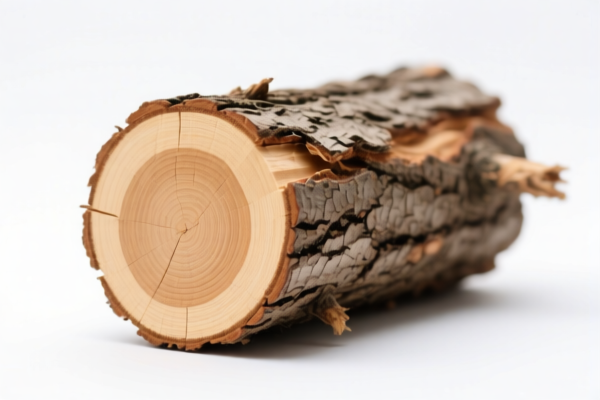
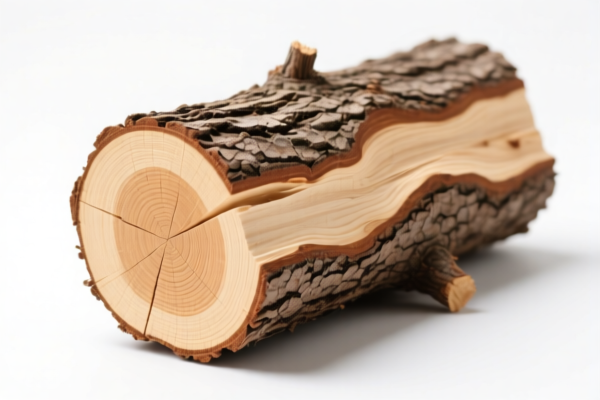
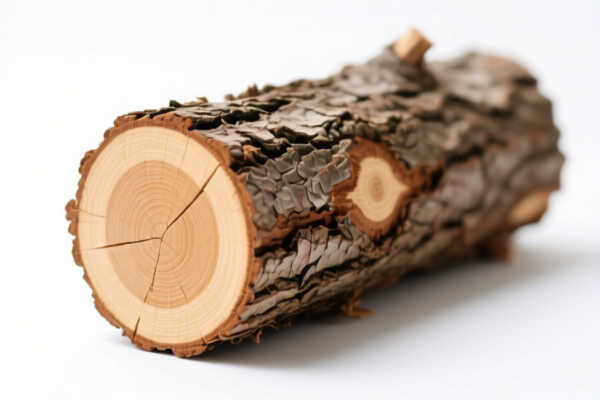
Unprocessed Coniferous Logs (Debarked)
CN → US| HS编码 | 关税税率 | 原产国 | 目的国 | 文档 |
|---|---|---|---|---|
| 4403210130 | 35.0% | CN | US | 官方文档 |
| 4403230135 | 35.0% | CN | US | 官方文档 |
| 4403260165 | 35.0% | CN | US | 官方文档 |
| 4403220165 | 35.0% | CN | US | 官方文档 |
商品图片

AI分析
🌲 Unprocessed Coniferous Logs (Debarked)
🌐 HS Code Reference & Customs Clearance Guide | 2026 Latest Tariff Analysis | Professional Wood Import Strategy
📌 I. Product Definition & Classification: What Are "Unprocessed Coniferous Logs"?
Unprocessed coniferous logs refer to raw timber harvested from coniferous trees (such as Pine, Fir, Spruce, etc.). The key characteristics in this category are: 1. Rough State: Whether stripped of bark or sapwood, or roughly squared. 2. Coniferous Source: Must be from coniferous species (Pinus, Abies, Picea, etc.). 3. Dimensional Threshold: Specifically for logs and timber where the smallest cross-sectional dimension is 15 cm or more.
⚠️ Critical Distinction:
- If the smallest cross-sectional dimension is less than 15 cm, it does not fall under these specific log/timber codes and may be classified differently (e.g., as lumber or sawn wood).
- "Debarked" means the bark has been removed, but the wood remains in its rough, unprocessed state (not sawn into planks or joined).
📦 II. HS Code Classification Details (2026 Latest Tariff Authority Comparison)
Based on the provided data, there are two primary HS Codes for unprocessed coniferous logs, differentiated by tree species.
| HS Code | Product Description | Key Characteristics | Applicable Species |
|---|---|---|---|
4403.21.01.30 |
Wood in the rough, stripped of bark or sapwood, or roughly squared: Other, coniferous: Of pine (Pinus spp.), of which the smallest cross-sectional dimension is 15 cm or more | Logs and timber | Pine (Pinus spp.) |
4403.23.01.35 |
Wood in the rough, stripped of bark or sapwood, or roughly squared: Other, coniferous: Of fir (Abies spp.) and spruce (Picea spp.), of which the smallest cross-sectional dimension is 15 cm or more | Logs and timber | Fir (Abies spp.) and Spruce (Picea spp.) |
🔍 Focus Reminder:
- The critical parameter is the smallest cross-sectional dimension ≥ 15 cm.
- If the wood is not roughly squared and not stripped of bark, it still falls under "Wood in the rough," but the specific sub-category depends on the species and dimension.
- Ensure accurate species identification (Pine vs. Fir/Spruce) to avoid misclassification.
💰 III. 2026 Latest Tariff Rate Detailed Explanation (Including Additional Taxes)
✅ Applicable Country: United States (US)
✅ Origin: China (CN) (Implied by the tax structure provided)
✅ Effective Time: 2025 onwards (Current Trade Policy)
🎯 1. 4403.21.01.30 —— Pine Logs (Smallest Dimension ≥ 15 cm)
| Item | Content |
|---|---|
| Base Tariff Rate | 0.0% |
| Additional Tariff (Section 301/USITC) | +25.0% |
| Total Tariff Rate | 25.0% |
| Tax Calculation | CIF Value × 25% |
| De Minimis Exemption | ❌ Not Applicable (Wood products are typically excluded from de minimis thresholds) |
| Legal Basis Path | USITC:4403.21.01.30 → Footnote: Additional Tariff 25% |
📌 Explanation:
- Although the base tariff is 0%, the 25% additional tariff applies due to current trade measures (Section 301 tariffs on Chinese goods).
- This rate is flat 25% on the declared value. No other hidden taxes are listed in the provided data.
🎯 2. 4403.23.01.35 —— Fir and Spruce Logs (Smallest Dimension ≥ 15 cm)
| Item | Content |
|---|---|
| Base Tariff Rate | 0.0% |
| Additional Tariff (Section 301/USITC) | +25.0% |
| Total Tariff Rate | 25.0% |
| Tax Calculation | CIF Value × 25% |
| De Minimis Exemption | ❌ Not Applicable |
| Legal Basis Path | USITC:4403.23.01.35 → Footnote: Additional Tariff 25% |
📌 Note:
- Same tax structure as Pine logs.
- Whether the wood is Fir (Abies) or Spruce (Picea), it falls under this code and incurs the 25% total tax.
- Do not confuse with non-coniferous woods, which have different base rates.
🛠️ IV. Customs Clearance Practical Advice (Avoid Pitfalls)
✅ 1. Required Documentation Checklist (Mandatory)
| Document | Must Provide | Explanation |
|---|---|---|
| ✅ Species Declaration | ✔️ | Must explicitly state "Pine (Pinus spp.)" or "Fir/Spruce (Abies/Picea spp.)" |
| ✅ Dimension Certificate | ✔️ | Proof that the smallest cross-sectional dimension is ≥ 15 cm |
| ✅ Bark Removal Statement | ✔️ | Confirm if bark/sapwood is stripped or roughly squared |
| ✅ Phytosanitary Certificate | ✔️ | Required for all wood products to prevent pest intrusion |
| ✅ Commercial Invoice | ✔️ | Clearly describe as "Unprocessed Coniferous Logs" |
| ✅ Packing List | ✔️ | Detail quantity, weight, and dimensions of each log |
✅ 2. Declaration Tips (Key Mantra)
🔥 "Species Precise, Dimension Check, ≥15cm Logs, 25% Tax!"
| Situation | Correct Declaration | Incorrect Practice |
|---|---|---|
| Pine Logs (≥15cm) | 4403.21.01.30 |
Mislabel as "Sawn Timber" → Different HS & Tax |
| Fir/Spruce Logs (≥15cm) | 4403.23.01.35 |
General "Wood Logs" → Risk of Audits |
| Logs <15cm Smallest Dimension | Not these codes | Force-fit into 4403.2x → Penalty & Back Taxes |
| Bark-On Logs | Still 4403.21.01.30 or 4403.23.01.35 if "Rough" |
Assume "Stripped" → Incorrect Description |
✅ 3. Special Case Handling
| Situation | Handling Advice |
|---|---|
| Mixed Species Cargo | Declare separately or use the highest applicable tax code if indistinguishable |
| Roughly Squared | Still qualifies as "Wood in the rough" if not further processed into standard lumber sizes |
| Phytosanitary Inspection | Expect delays if documentation is incomplete; ensure certificates are valid |
| Wood Treatment | If treated with chemicals, provide MSDS and treatment certificates |
🌍 V. Global Market Comparison (2026 Latest)
| Country/Region | Recommended HS Code | Tariff Rate | Certification Requirements | Notes |
|---|---|---|---|---|
| 🇺🇸 USA | 4403.21.01.30 / 4403.23.01.35 |
25.0% | Phytosanitary Certificate | Base 0% + 25% Additional |
| 🇨🇳 China | 4403.21 / 4403.23 |
~5-10% | CIQ Certificate | Lower base rates |
| 🇪🇺 EU | 4403.29 |
0% (FLEGT) | FLEGT License / EUTR | Strict wood legality checks |
| 🇦🇺 Australia | 4403.21 |
5% | Biosecurity Permit | High phytosanitary standards |
📌 Conclusion:
- USA imposes a significant 25% additional tariff on Chinese-origin coniferous logs.
- Phytosanitary compliance is critical across all markets.
- Ensure dimensional accuracy to avoid misclassification.
📌 VI. Common Mistakes & Pitfalls Guide (Lessons Learned)
❌ Mistake 1: Declaring logs with smallest dimension <15 cm under these codes
👉 Consequence: Misclassification → Back taxes & penalties
❌ Mistake 2: Failing to specify species (Pine vs. Fir/Spruce)
👉 Consequence: Customs may detain cargo for species verification → Delays
❌ Mistake 3: Ignoring phytosanitary requirements
👉 Consequence: Quarantine or destruction of shipment
❌ Mistake 4: Assuming "roughly squared" means "sawn timber"
👉 Consequence: Wrong HS Code → Incorrect tariff calculation
✅ Correct Practice:
"Unprocessed Coniferous Logs, Pine (Pinus spp.), Debarked, Smallest Cross-Sectional Dimension ≥15cm, Phytosanitary Certified"
🎯 VII. Conclusion: Precise Classification Saves Costs!
🎯 Remember the Mantra:
🔹 "Species Matters, Dimension is Key, ≥15cm Logs, 25% Tax Ready!"
🔹 "HS Code Defines Tax, 25% is the Floor, Get It Wrong, Pay More!"
📌 Pro Tip:
- If logs are treated (e.g., with preservatives), ensure treatment certificates are provided.
- Consider Advance Ruling from US Customs (CBP) if unsure about classification.
- Keep detailed photos of logs (cross-sections) for customs inspection.
📣 Immediate Action:
📞 Consult Customs Broker + Provide Dimension Specs + Apply for Advance Ruling
🚀 Ensure smooth clearance, avoid delays, and manage costs effectively!
✨ Professional Clearance Starts with Accurate Classification!
💼 Your Tariff Cost is Precise and Predictable!
用户评价
关于 HS 编码归类
协调制度(HS)是由世界海关组织(WCO)制定的国际贸易商品分类标准。全球 200 多个国家采用 HS 系统作为海关关税、贸易统计和进出口监管的基础。
每个 HS 编码遵循以下层级结构:
- 章(2 位)——商品大类(例如:第 84 章:机器和机械设备)
- 品目(4 位)——章内的更具体分类
- 子目(6 位)——国际通用细分,所有 WCO 成员国统一使用
- 本国细分(8-10 位)——各国自行扩展的细分编码,如美国 HTSUS 10 位编码
正确的 HS 编码归类对于顺利通关、准确缴纳关税和遵守贸易法规至关重要。错误归类可能导致海关延误、多缴关税或罚款。
从CN进口到US时,适用的关税税率可能包括:
- 最惠国(MFN)税率——适用于 WTO 成员国的标准关税税率
- 普通税率——适用于无贸易协定国家
- 贸易救济关税——附加关税,如 301 条款(反倾销)、232 条款(国家安全)或反补贴税
本页内容仅供参考。如需正式归类,请咨询当地海关或持牌报关代理。