Unprocessed Coniferous Logs (Debarked)
CN → US| HS Code | Tariff Rate | Origin | Destination | Doc |
|---|---|---|---|---|
| 4403210130 | 35.0% | CN | US | Official Doc |
| 4403230135 | 35.0% | CN | US | Official Doc |
| 4403260165 | 35.0% | CN | US | Official Doc |
| 4403220165 | 35.0% | CN | US | Official Doc |
Product Images
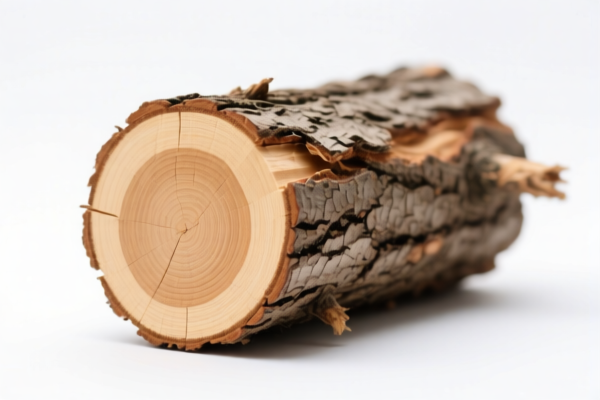
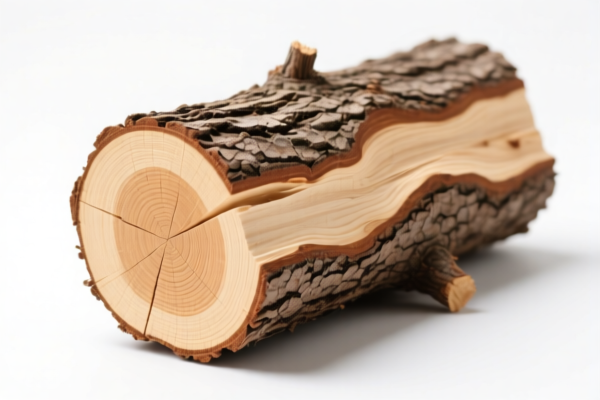

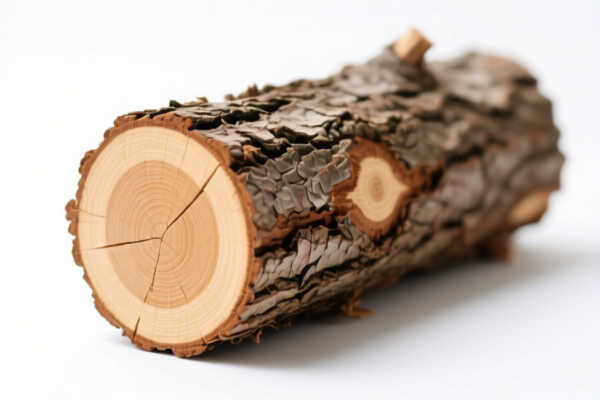
AI Analysis
🌲 Unprocessed Coniferous Logs (Debarked)
🌐 HS Code Reference & Customs Clearance Guide | 2026 Latest Tariff Analysis | Professional Wood Import Strategy
📌 I. Product Definition & Classification: What Are "Unprocessed Coniferous Logs"?
Unprocessed coniferous logs refer to raw timber harvested from coniferous trees (such as Pine, Fir, Spruce, etc.). The key characteristics in this category are: 1. Rough State: Whether stripped of bark or sapwood, or roughly squared. 2. Coniferous Source: Must be from coniferous species (Pinus, Abies, Picea, etc.). 3. Dimensional Threshold: Specifically for logs and timber where the smallest cross-sectional dimension is 15 cm or more.
⚠️ Critical Distinction:
- If the smallest cross-sectional dimension is less than 15 cm, it does not fall under these specific log/timber codes and may be classified differently (e.g., as lumber or sawn wood).
- "Debarked" means the bark has been removed, but the wood remains in its rough, unprocessed state (not sawn into planks or joined).
📦 II. HS Code Classification Details (2026 Latest Tariff Authority Comparison)
Based on the provided data, there are two primary HS Codes for unprocessed coniferous logs, differentiated by tree species.
| HS Code | Product Description | Key Characteristics | Applicable Species |
|---|---|---|---|
4403.21.01.30 |
Wood in the rough, stripped of bark or sapwood, or roughly squared: Other, coniferous: Of pine (Pinus spp.), of which the smallest cross-sectional dimension is 15 cm or more | Logs and timber | Pine (Pinus spp.) |
4403.23.01.35 |
Wood in the rough, stripped of bark or sapwood, or roughly squared: Other, coniferous: Of fir (Abies spp.) and spruce (Picea spp.), of which the smallest cross-sectional dimension is 15 cm or more | Logs and timber | Fir (Abies spp.) and Spruce (Picea spp.) |
🔍 Focus Reminder:
- The critical parameter is the smallest cross-sectional dimension ≥ 15 cm.
- If the wood is not roughly squared and not stripped of bark, it still falls under "Wood in the rough," but the specific sub-category depends on the species and dimension.
- Ensure accurate species identification (Pine vs. Fir/Spruce) to avoid misclassification.
💰 III. 2026 Latest Tariff Rate Detailed Explanation (Including Additional Taxes)
✅ Applicable Country: United States (US)
✅ Origin: China (CN) (Implied by the tax structure provided)
✅ Effective Time: 2025 onwards (Current Trade Policy)
🎯 1. 4403.21.01.30 —— Pine Logs (Smallest Dimension ≥ 15 cm)
| Item | Content |
|---|---|
| Base Tariff Rate | 0.0% |
| Additional Tariff (Section 301/USITC) | +25.0% |
| Total Tariff Rate | 25.0% |
| Tax Calculation | CIF Value × 25% |
| De Minimis Exemption | ❌ Not Applicable (Wood products are typically excluded from de minimis thresholds) |
| Legal Basis Path | USITC:4403.21.01.30 → Footnote: Additional Tariff 25% |
📌 Explanation:
- Although the base tariff is 0%, the 25% additional tariff applies due to current trade measures (Section 301 tariffs on Chinese goods).
- This rate is flat 25% on the declared value. No other hidden taxes are listed in the provided data.
🎯 2. 4403.23.01.35 —— Fir and Spruce Logs (Smallest Dimension ≥ 15 cm)
| Item | Content |
|---|---|
| Base Tariff Rate | 0.0% |
| Additional Tariff (Section 301/USITC) | +25.0% |
| Total Tariff Rate | 25.0% |
| Tax Calculation | CIF Value × 25% |
| De Minimis Exemption | ❌ Not Applicable |
| Legal Basis Path | USITC:4403.23.01.35 → Footnote: Additional Tariff 25% |
📌 Note:
- Same tax structure as Pine logs.
- Whether the wood is Fir (Abies) or Spruce (Picea), it falls under this code and incurs the 25% total tax.
- Do not confuse with non-coniferous woods, which have different base rates.
🛠️ IV. Customs Clearance Practical Advice (Avoid Pitfalls)
✅ 1. Required Documentation Checklist (Mandatory)
| Document | Must Provide | Explanation |
|---|---|---|
| ✅ Species Declaration | ✔️ | Must explicitly state "Pine (Pinus spp.)" or "Fir/Spruce (Abies/Picea spp.)" |
| ✅ Dimension Certificate | ✔️ | Proof that the smallest cross-sectional dimension is ≥ 15 cm |
| ✅ Bark Removal Statement | ✔️ | Confirm if bark/sapwood is stripped or roughly squared |
| ✅ Phytosanitary Certificate | ✔️ | Required for all wood products to prevent pest intrusion |
| ✅ Commercial Invoice | ✔️ | Clearly describe as "Unprocessed Coniferous Logs" |
| ✅ Packing List | ✔️ | Detail quantity, weight, and dimensions of each log |
✅ 2. Declaration Tips (Key Mantra)
🔥 "Species Precise, Dimension Check, ≥15cm Logs, 25% Tax!"
| Situation | Correct Declaration | Incorrect Practice |
|---|---|---|
| Pine Logs (≥15cm) | 4403.21.01.30 |
Mislabel as "Sawn Timber" → Different HS & Tax |
| Fir/Spruce Logs (≥15cm) | 4403.23.01.35 |
General "Wood Logs" → Risk of Audits |
| Logs <15cm Smallest Dimension | Not these codes | Force-fit into 4403.2x → Penalty & Back Taxes |
| Bark-On Logs | Still 4403.21.01.30 or 4403.23.01.35 if "Rough" |
Assume "Stripped" → Incorrect Description |
✅ 3. Special Case Handling
| Situation | Handling Advice |
|---|---|
| Mixed Species Cargo | Declare separately or use the highest applicable tax code if indistinguishable |
| Roughly Squared | Still qualifies as "Wood in the rough" if not further processed into standard lumber sizes |
| Phytosanitary Inspection | Expect delays if documentation is incomplete; ensure certificates are valid |
| Wood Treatment | If treated with chemicals, provide MSDS and treatment certificates |
🌍 V. Global Market Comparison (2026 Latest)
| Country/Region | Recommended HS Code | Tariff Rate | Certification Requirements | Notes |
|---|---|---|---|---|
| 🇺🇸 USA | 4403.21.01.30 / 4403.23.01.35 |
25.0% | Phytosanitary Certificate | Base 0% + 25% Additional |
| 🇨🇳 China | 4403.21 / 4403.23 |
~5-10% | CIQ Certificate | Lower base rates |
| 🇪🇺 EU | 4403.29 |
0% (FLEGT) | FLEGT License / EUTR | Strict wood legality checks |
| 🇦🇺 Australia | 4403.21 |
5% | Biosecurity Permit | High phytosanitary standards |
📌 Conclusion:
- USA imposes a significant 25% additional tariff on Chinese-origin coniferous logs.
- Phytosanitary compliance is critical across all markets.
- Ensure dimensional accuracy to avoid misclassification.
📌 VI. Common Mistakes & Pitfalls Guide (Lessons Learned)
❌ Mistake 1: Declaring logs with smallest dimension <15 cm under these codes
👉 Consequence: Misclassification → Back taxes & penalties
❌ Mistake 2: Failing to specify species (Pine vs. Fir/Spruce)
👉 Consequence: Customs may detain cargo for species verification → Delays
❌ Mistake 3: Ignoring phytosanitary requirements
👉 Consequence: Quarantine or destruction of shipment
❌ Mistake 4: Assuming "roughly squared" means "sawn timber"
👉 Consequence: Wrong HS Code → Incorrect tariff calculation
✅ Correct Practice:
"Unprocessed Coniferous Logs, Pine (Pinus spp.), Debarked, Smallest Cross-Sectional Dimension ≥15cm, Phytosanitary Certified"
🎯 VII. Conclusion: Precise Classification Saves Costs!
🎯 Remember the Mantra:
🔹 "Species Matters, Dimension is Key, ≥15cm Logs, 25% Tax Ready!"
🔹 "HS Code Defines Tax, 25% is the Floor, Get It Wrong, Pay More!"
📌 Pro Tip:
- If logs are treated (e.g., with preservatives), ensure treatment certificates are provided.
- Consider Advance Ruling from US Customs (CBP) if unsure about classification.
- Keep detailed photos of logs (cross-sections) for customs inspection.
📣 Immediate Action:
📞 Consult Customs Broker + Provide Dimension Specs + Apply for Advance Ruling
🚀 Ensure smooth clearance, avoid delays, and manage costs effectively!
✨ Professional Clearance Starts with Accurate Classification!
💼 Your Tariff Cost is Precise and Predictable!
Customer Reviews
About HS Code Classification
The Harmonized System (HS) is an internationally standardized nomenclature developed by the World Customs Organization (WCO) to classify traded products. Over 200 countries use the HS system as the basis for customs tariffs, trade statistics, and import/export regulations.
Each HS code follows a hierarchical structure:
- Chapter (2 digits) — Broad category of goods (e.g., Chapter 84: Machinery and Mechanical Appliances)
- Heading (4 digits) — More specific grouping within the chapter
- Subheading (6 digits) — Internationally standardized breakdown, used by all WCO member countries
- National subdivisions (8-10 digits) — Country-specific extensions for further classification, such as US HTSUS 10-digit codes
Correct HS code classification is essential for smooth customs clearance, accurate duty payment, and compliance with trade regulations. Misclassification can lead to customs delays, overpayment of duties, or penalties.
When importing from CN to US, the applicable tariff rates may include:
- Most-Favored-Nation (MFN) rate — The standard duty rate applied to WTO members
- General rate — Applied to countries without trade agreements
- Trade remedy duties — Additional tariffs such as Section 301 (anti-dumping), Section 232 (national security), or countervailing duties
The information provided on this page is for reference purposes only. For official classification, please consult with your local customs authority or a licensed customs broker.