unprocessed coniferous logs debarked
CN → US| HS Code | Tariff Rate | Origin | Destination | Doc |
|---|---|---|---|---|
| 4407190092 | 35.0% | CN | US | Official Doc |
| 4407190093 | 35.0% | CN | US | Official Doc |
| 4403210130 | 35.0% | CN | US | Official Doc |
| 4403220120 | 35.0% | CN | US | Official Doc |
| 4403260165 | 35.0% | CN | US | Official Doc |
Product Images
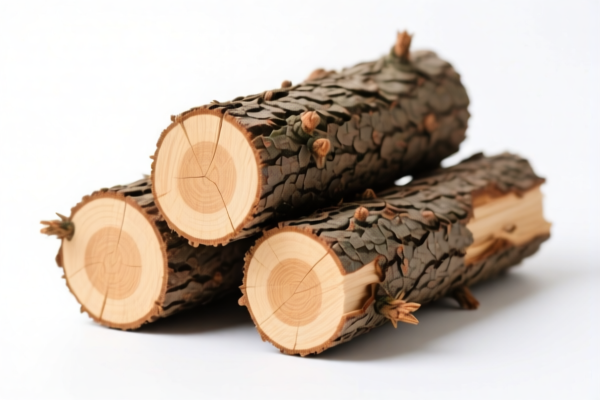
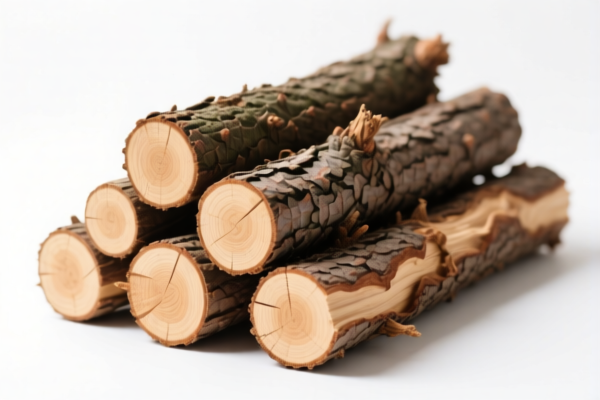
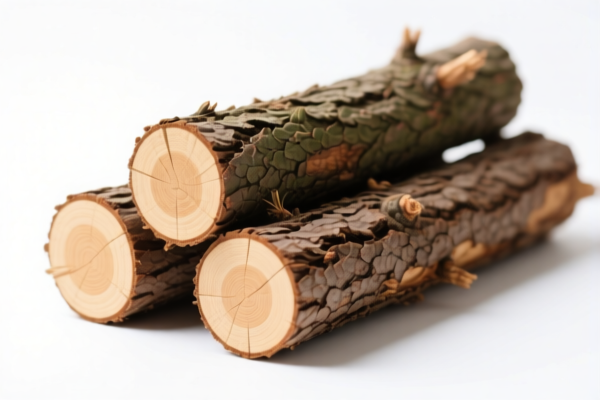
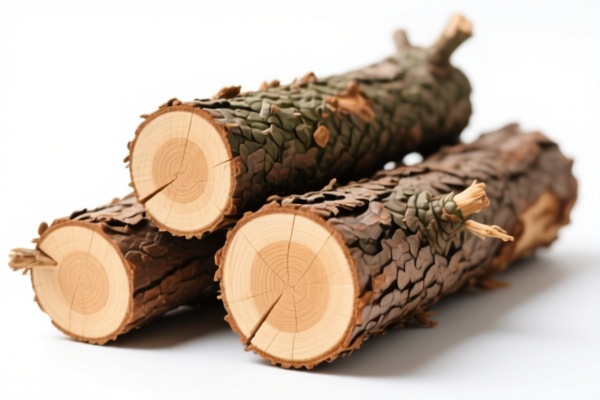
AI Analysis
🌲 Unprocessed Coniferous Logs: Debarked (No Bark)
🌐 HS Code Classification & Customs Clearance Guide | 2026 Latest Tariff Analysis | Professional Compliance Strategy
📌 I. Product Definition & Classification: What are "Debarked Coniferous Logs"?
Unprocessed coniferous logs, debarked, refer to raw timber derived from coniferous trees (such as pine, spruce, fir, cedar, etc.) that have been felled, stripped of their bark (debarked), and have not undergone any further processing such as sawing, planing, or chemical treatment.
⚠️ Key Distinction: - "Unprocessed": The wood is in its natural state after felling and debarking. No sawing, slicing, or peeling has occurred. - "Coniferous": Must be from a conifer tree (softwood). Broadleaf woods (hardwood) are classified differently (e.g., under HS 4403.21+ for specific species like Pine, but general conifer logs often fall under 4403.26 or 4407.19 depending on detail). - "Debarked": The bark has been removed. This is a critical attribute for classification.
📦 II. HS Code Classification Details (2026 Latest Tariff Reference)
Based on the provided data, the following HS Codes apply to unprocessed coniferous logs, debarked. Note that specific sub-categories depend on the exact species (e.g., Pine) and processing state (whether strictly "unprocessed" vs. "sliced/peeled" which might be classified under Chapter 44 if processed).
| HS Code | Product Description | Key Attributes | Total Tax Rate |
|---|---|---|---|
4403.21.01.30 |
Debarked Pine Logs | Material: Pine; Form: Log; State: Unprocessed/Debarked | 35.0% |
4403.22.01.20 |
Other Debarked Pine Logs | Material: Pine; Form: Log; State: Debarked (any coniferous log) | 35.0% |
4407.19.00.92 |
Debarked Coniferous Logs | Material: Conifer; Form: Log; State: Unprocessed | 35.0% |
4407.19.00.93 |
Coniferous Logs (Sliced/Peel) | Material: Conifer; Form: Log; State: Sliced/Peel/Debarked | 35.0% |
4403.26.01.65 |
Other Unprocessed Coniferous Logs | Material: Conifer; Form: Log; State: Unprocessed | 35.0% |
🔍 Critical Clarification: - HS 4403 vs. HS 4407: - HS 4403 covers wood in the rough, whether or not stripped of bark or sapwood, or roughly squared. This is the primary category for logs. - HS 4407 covers wood sawn or chipped lengthwise. If the logs are not sawn but just debarked, they should generally fall under 4403. However, the provided data includes
4407.19.00.92and.93for "unprocessed" logs, which may reflect specific customs interpretations or sub-category nuances where "unprocessed" refers to the absence of further treatment rather than the primary shape. Please verify with local customs if the log is truly "in the rough" (4403) or if it has been cut to dimension (4407). - Species Specificity: - If the conifer is Pine,4403.21or4403.22is more precise. - If it is other conifers (Spruce, Fir, etc.),4403.26or4407.19is appropriate.
💰 III. 2026 Latest Tariff Rate Breakdown (Including Surcharges & Policy Surcharges)
✅ Applicable Country: United States (US)
✅ Origin: China (CN)
✅ Effective Date: From November 10, 2025 (including subsequent imports)
🎯 All Listed HS Codes (4403.21.01.30, 4403.22.01.20, 4407.19.00.92, 4407.19.00.93, 4403.26.01.65)
| Item | Details |
|---|---|
| Base Tariff Rate | 0.0% (Ad Valorem) |
| USITC Additional Tariff | +25.0% (Under USITC Footnote 9903.88.01 / Section 301) |
| IEEPA Additional Tariff | +10.0% (Under IEEPA Section 122, targeting China/HK products) |
| Total Tariff Rate | 35.0% |
| Tax Calculation | CIF Value × 35% |
| De Minimis Exemption | ❌ Not Applicable (Deny de minimis for these items) |
| Legal Basis Path | IEEPA:9903.01.25 → IEEPA:9903.01.24 → USITC:4403.xxxxxxxx / 4407.xxxxxxxx → FOOTNOTE:9903.88.01 |
📌 Explanation: - "Base Tariff 0%": Wood products often have low base MFN rates. - "USITC +25%": This is the standard Section 301 tariff on Chinese wood products. - "IEEPA +10%": This is the Section 122 tariff (or similar IEEPA provision) applied to Chinese-origin goods. - Total 35%: This is a high tariff that must be factored into your cost structure.
🛠️ IV. Customs Clearance Practical Advice (Real-World Pitfall Guide)
✅ 1. Required Documentation Checklist (Non-Negotiable)
| Document | Required | Notes |
|---|---|---|
| ✅ Commercial Invoice | ✔️ | Must clearly state: "Unprocessed Coniferous Logs, Debarked". Include HS Code. |
| ✅ Packing List | ✔️ | Detail weight, volume (CBM), and number of logs per container. |
| ✅ Phytosanitary Certificate | ✔️ | Critical: Issued by the country of origin. Must confirm no pests/diseases. |
| ✅ Fumigation Certificate | ✔️ | If required by US Customs/BPQ (Bureau of Plant Industry). |
| ✅ Bill of Lading | ✔️ | Must match invoice and packing list details. |
| ✅ Country of Origin Certificate | ✔️ | To confirm CN origin (for tariff calculation). |
| ✅ Detailed Product Description | ✔️ | Specify species (e.g., Pine, Spruce), dimensions, and debarking status. |
✅ 2. Declaration Tips (Key Mantras)
🔥 "Logs in Rough, Debarked Clean, Species Clear, Phytosanitary On!"
| Scenario | Correct Declaration | Incorrect Practice |
|---|---|---|
| Logs are debarked | State "Debarked" clearly | Omitting "debarked" → May be classified under bark-included rates or rejected |
| Specific Species | Specify "Pine" or "Spruce" | Saying "Wood" or "Conifer" vaguely → May lead to misclassification |
| Unprocessed State | State "Unprocessed" or "In the Rough" | Saying "Sawn Logs" if not sawn → Wrong HS Code (4407 vs 4403) |
| Fumigation Status | Provide Fumigation Certificate | No certificate → Detention/Return |
✅ 3. Special Case Handling
| Situation | Handling Advice |
|---|---|
| Mixed Species | Declare each species separately if possible. If mixed, use the highest tax rate or the general conifer code. |
| Wood Chips vs. Logs | Wood Chips fall under 4401. Logs fall under 4403/4407. Do not confuse them. |
| Treated Wood | If the logs are chemically treated (e.g., creosote), they may be classified differently and require additional declarations. |
| Pest Risk | Ensure the wood is dry and pest-free. Wet or infested logs will be rejected. |
🌍 V. Global Market Comparison (2026 Latest)
| Country/Region | Recommended HS Code | Tariff (China Origin) | Certification | Notes |
|---|---|---|---|---|
| 🇺🇸 USA | 4403.21.01.30 / 4403.26.01.65 |
35% (25% + 10%) | Phytosanitary Certificate | High tariffs. No de minimis. |
| 🇨🇳 China | 4403.21.01.30 |
0% - 5% | Fumigation Certificate | Low import duty if exporting to China. |
| 🇪🇺 EU | 4403.21.00 |
0% (if compliant) | Fumigation + EUTR | No additional surcharges. |
| 🇯🇵 Japan | 4403.21.00 |
0% - 3% | Fumigation + IPPC Mark | No additional surcharges. |
📌 Conclusion: - USA is the most expensive market due to 35% total tariff. - EU, Japan, China have low or zero tariffs. - Phytosanitary compliance is universal and critical.
📌 VI. Common Mistakes & Pitfalls (Lessons Learned)
❌ Mistake 1: Declaring "Wood" instead of "Coniferous Logs, Debarked"
👉 Consequence: Customs may classify under a higher tax bracket or reject for lack of detail.
❌ Mistake 2: Failing to provide a Phytosanitary Certificate
👉 Consequence: Shipment held at port, potential destruction or return.
❌ Mistake 3: Confusing Logs (4403) with Sawn Wood (4407)
👉 Consequence: Misclassification, leading to penalties or back taxes.
❌ Mistake 4: Assuming De Minimis applies
👉 Consequence: No exemption. All wood products from China are subject to full tariffs.
✅ Correct Practice:
"Unprocessed Coniferous Logs, Debarked, Species: Pine, Country of Origin: China, Fumigated, HS Code: 4403.21.01.30"
🎯 VII. Conclusion: Professional Declaration Saves Costs
🎯 Remember the Mantra:
🔹 "Logs in Rough, Debarked Clean, Species Clear, Phytosanitary On!"
🔹 "HS Code Determines Tax, 35% is the Price, Declaration Must Be Precise!"
📌 Pro Tip:
If your logs are not from China (e.g., from Russia, Canada, or Southeast Asia), the Section 301 and IEEPA tariffs may not apply. Check the Country of Origin carefully to potentially avoid the 35% tariff.
📣 Immediate Action:
📞 Contact a Licensed Customs Broker + Provide Product Photos + Apply for Pre-Ruling if Possible
🚀 Ensure Your Logs Clear Customs Smoothly, Avoid Delays, and Protect Your Margins!
✨ Professional Customs Clearance Starts with Accurate Classification!
💼 Every Dollar Counted, Every Document Verified!
Customer Reviews
About HS Code Classification
The Harmonized System (HS) is an internationally standardized nomenclature developed by the World Customs Organization (WCO) to classify traded products. Over 200 countries use the HS system as the basis for customs tariffs, trade statistics, and import/export regulations.
Each HS code follows a hierarchical structure:
- Chapter (2 digits) — Broad category of goods (e.g., Chapter 84: Machinery and Mechanical Appliances)
- Heading (4 digits) — More specific grouping within the chapter
- Subheading (6 digits) — Internationally standardized breakdown, used by all WCO member countries
- National subdivisions (8-10 digits) — Country-specific extensions for further classification, such as US HTSUS 10-digit codes
Correct HS code classification is essential for smooth customs clearance, accurate duty payment, and compliance with trade regulations. Misclassification can lead to customs delays, overpayment of duties, or penalties.
When importing from CN to US, the applicable tariff rates may include:
- Most-Favored-Nation (MFN) rate — The standard duty rate applied to WTO members
- General rate — Applied to countries without trade agreements
- Trade remedy duties — Additional tariffs such as Section 301 (anti-dumping), Section 232 (national security), or countervailing duties
The information provided on this page is for reference purposes only. For official classification, please consult with your local customs authority or a licensed customs broker.