Unprocessed Poplar Wood Pole
CN → US| HS编码 | 关税税率 | 原产国 | 目的国 | 文档 |
|---|---|---|---|---|
| 4407970079 | 35.0% | CN | US | 官方文档 |
| 4403970022 | 35.0% | CN | US | 官方文档 |
| 4403970067 | 35.0% | CN | US | 官方文档 |
| 4401120000 | 35.0% | CN | US | 官方文档 |
商品图片

AI分析
🌲 Unprocessed Poplar Wood Pole (Poplar Logs & Poles)
🌐 HS Code Reference & Customs Clearance Guide | 2026 Latest Tariff Analysis | Professional Clearance Strategy
📌 I. Product Definition & Classification: What Exactly is "Poplar Wood"?
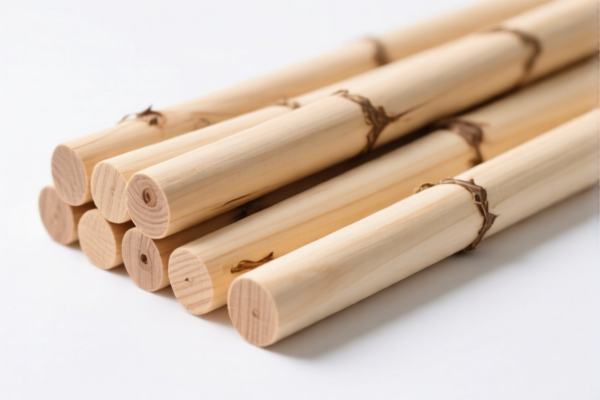
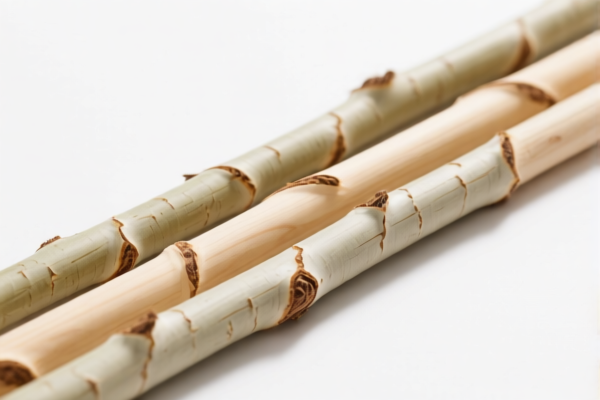
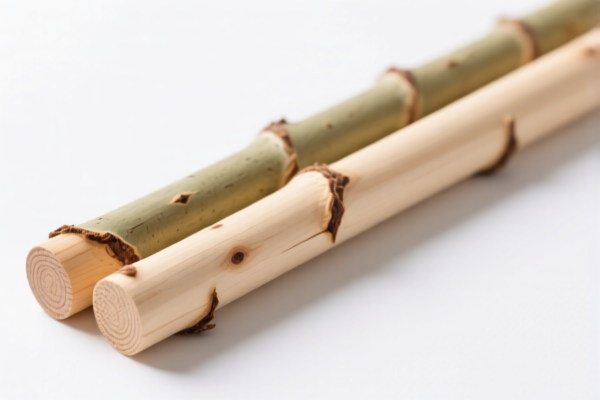
Unprocessed Poplar Wood (commonly referred to as Poplar Logs, Poles, or Rough-Sawn Timber) is a versatile softwood derived from the Populus genus. In international trade, especially involving US-China relations, the specific physical state (log vs. rough-sawn) and the precise species match determine the HS Code and, consequently, the tariff liability.
Key Distinctions in Trade: * Logs/Unworked Wood (HS 4403/4407): Raw timber, stripped of bark, or roughly squared. Often used for construction poles, veneer, or pulping. * Fuel Wood (HS 4401): Chopped or processed specifically for burning.
⚠️ Critical Classification Point:
- If the wood is in its natural log shape (even if debarked) → Falls under 4403 or 4407.
- If the wood is specifically designated as fuel (chips, logs for burning) → Falls under 4401.12.
- Poplar Varieties Matter: "Poplar," "Aspen," and "Trembling Aspen" are often grouped. The specific HS code depends on which subset is declared (e.g., "White Poplar" vs. "Aspen").
📦 II. HS Code Classification Details (2026 Latest Tariff Authority)
Based on the provided data, here are the exact HS Codes, their matching descriptions, and tax structures.
| HS Code | Product Description (Summary) | Physical Form & Species Match | Tax Rate (Total) |
|---|---|---|---|
4407.97.00.79 |
Poplar Log, matching Poplar species and raw log form. | Log/Raw Form: Unprocessed or roughly squared timber. | 35.0% |
4403.97.00.22 |
Poplar Log, matching Poplar & Trembling Aspen species, rough-sawn wood form. | Rough-Sawn: Cut lengthwise but not further worked. | 35.0% |
4403.97.00.67 |
Poplar Log, matching Poplar & White Aspen species, log form. | Log Form: Natural log shape, likely debarked. | 35.0% |
4401.12.00.00 |
Poplar Log, matching non-conifer species, fuel wood form. | Fuel Wood: Specifically intended for combustion/burning. | 35.0% |
🔍 Key Takeaway:
All listed Poplar wood products carry a uniform total tax rate of 35.0% when imported from China to the US. The distinction lies in the physical form (Log vs. Rough-Sawn) and usage intent (General Timber vs. Fuel).
💰 III. 2026 Latest Tariff Rate Breakdown (Including Surtaxes & Policy Add-ons)
✅ Applicable Country: United States (US)
✅ Country of Origin: China (CN)
✅ Effective Date: Current Trade Rules (Including Section 301 & IEEPA)
🎯 1. 4407.97.00.79 —— Poplar Wood (Log Form)
| Item | Detail |
|---|---|
| Base Tariff | 0.0% |
| Additional Tariff (Section 301) | +25.0% |
| 122 Clause Tariff (IEEPA) | +10.0% |
| Total Tax Rate | 35.0% |
| Calculation Basis | CIF Value × 35% |
| De Minimis Exemption | ❌ Not Applicable (Denied) |
| Legal Pathway | Section 301: 4407.97.00.79 → IEEPA: 122 Clause |
📌 Explanation:
- The 0% base tariff reflects the standard Most-Favored-Nation (MFN) rate for wood products.
- The +25% is the standard "Section 301" additional tariff on Chinese goods.
- The +10% is the specific "122 Clause" tariff (often associated with IEEPA powers targeting specific strategic or high-volume imports).
- Total: 35%. This is a high-cost import. Profit margins must account for this fully.
🎯 2. 4403.97.00.22 & 4403.97.00.67 —— Poplar & Aspen Variants (Rough-Sawn & Log)
| Item | Detail |
|---|---|
| Base Tariff | 0.0% |
| Additional Tariff (Section 301) | +25.0% |
| 122 Clause Tariff (IEEPA) | +10.0% |
| Total Tax Rate | 35.0% |
| De Minimis Exemption | ❌ Not Applicable |
📌 Note:
-4403.97.00.22applies to Trembling Aspen and Poplar in rough-sawn form.
-4403.97.00.67applies to White Poplar/Aspen in log form.
- Despite different species sub-descriptions, the tax structure is identical (35%). Do not assume one is cheaper; the surtaxes override base differences.
🎯 3. 4401.12.00.00 —— Poplar Fuel Wood
| Item | Detail |
|---|---|
| Base Tariff | 0.0% |
| Additional Tariff (Section 301) | +25.0% |
| 122 Clause Tariff (IEEPA) | +10.0% |
| Total Tax Rate | 35.0% |
| De Minimis Exemption | ❌ Not Applicable |
📌 Note:
- Even if declared as "Fuel Wood" (which sometimes has lower base tariffs in other contexts), the 35% total remains due to the aggressive surtaxes.
- Ensure the product is genuinely fuel wood (e.g., chips, small logs for burning). If it’s construction timber mislabeled as fuel, customs will reclassify it and impose penalties.
🛠️ IV. Customs Clearance Practical Advice (Pitfall Avoidance Guide)
✅ 1. Required Documentation Checklist (Non-Negotiable)
| Document | Mandatory? | Purpose |
|---|---|---|
| ✅ Phytosanitary Certificate | ✔️ | Crucial. Certifies wood is free from pests/diseases. Issued by Chinese AQSIQ or equivalent. |
| ✅ Commercial Invoice | ✔️ | Must clearly state: "Unprocessed Poplar Wood," species, form (log/rough-sawn), and HS Code. |
| ✅ Packing List | ✔️ | Weight, volume, number of packages. Must match invoice. |
| ✅ Bill of Lading (B/L) | ✔️ | Original or Telex Release. |
| ✅ Wood Packaging Material Declaration | ✔️ | If shipped in wooden pallets/crates, they must comply with ISPM 15 standards. |
| ✅ Certificate of Origin | ✔️ | To confirm Chinese origin (triggers the 35% tax). |
✅ 2. Declaration Tips (Key Mnemonic)
🔥 "Species Match, Form Specify, No Fuel Fraud!"
| Scenario | Correct Declaration | Wrong Practice | Consequence |
|---|---|---|---|
| Raw Logs | 4403.97.00.67 (Poplar/Aspen Log) |
Declaring as "Sawn Timber" | Misclassification → Penalties |
| Rough-Sawn Planks | 4403.97.00.22 |
Declaring as "Logs" | Potential reinspection delay |
| Construction Poles | 4407.97.00.79 |
Declaring as "Fuel Wood" | Severe Penalty. Customs knows Poplar poles are not fuel. |
| Chips/Bark | 4401.12.00.00 (if strictly fuel) |
Declaring as "Timber" | Lower duty? No, still 35%. But if mislabeled, risk of fraud. |
✅ 3. Special Circumstances
| Situation | Handling Advice |
|---|---|
| Pest Control | Poplar is susceptible to borers. Ensure fumigation certificate is attached if required by US CBP. |
| Moisture Content | Declare "Unprocessed." High moisture may trigger additional inspection for pests. |
| Origin Fraud | Do not declare as "Vietnam" or "Thailand" origin to avoid 35% tax. US CBP has robust traceability for wood products. |
| Split Shipments | If a container has both logs and fuel chips, declare separately. Mislabeling mixed cargo can lead to seizure. |
🌍 V. Global Market Comparison (2026 Latest)
| Country/Region | Recommended HS Code | Tariff (China Origin) | Key Certification | Notes |
|---|---|---|---|---|
| 🇺🇸 United States | 4403.97.00.67 etc. |
35.0% | Phytosanitary + ISPM 15 | High Tariff. Budget accordingly. |
| 🇨🇳 China | 4403.97.00.67 etc. |
0% (Export) | Phytosanitary | China exports these heavily. |
| 🇪🇺 European Union | 4403.97 |
Varies (0-10%) | FLEGT License (if applicable) | No Section 301/122 taxes. |
| 🇯🇵 Japan | 4403.97 |
3.2% - 5% | Phytosanitary | Moderate duty. |
📌 Conclusion:
- The 35% tax is unique to US imports from China due to Section 301 and IEEPA 122 Clause.
- If possible, consider transshipment or third-country processing (e.g., semi-processing in Vietnam) only if legitimate value-add occurs. Simple transshipment is risky and illegal.
📌 VI. Common Errors & Pitfall Guide (Lessons Learned)
❌ Error 1: Lumping all "Poplar Wood" under one HS Code.
👉 Result: Customs may reject the declaration if the physical form (log vs. sawn) doesn’t match the code. Penalty + Delay.
❌ Error 2: Declaring Construction Poles as "Fuel Wood."
👉 Result: Customs inspectors will see long, graded poles. Fraud Allegation. Seizure of cargo.
❌ Error 3: Ignoring Phytosanitary Requirements.
👉 Result: Cargo held at port for fumigation or destroyed. Storage fees + Loss of goods.
❌ Error 4: Assuming "Wood Chips" are exempt.
👉 Result: Even fuel wood (4401.12.00.00) is taxed at 35%. No exemption exists for Chinese wood products in the US.
✅ Correct Approach:
"Unprocessed Poplar Logs, Debarked, Species: Populus alba, For Construction, HS Code: 4403.97.00.67, Origin: China."
🎯 VII. Conclusion: Professional Declaration, Cost Control, Compliance!
🎯 Remember the Mantra:
🔹 "Form Matters, Species Must Match, Tax is 35%, Don’t Gamble!"
🔹 "Phytosanitary is King, Origin is Truth, Fraud is Ruin!"
📌 Pro Tip:
- If you are importing large volumes, consider applying for a Section 301 Exclusion (if available for your specific product type) to reduce the 25% component. Check USTR website for current exclusions.
- Work with a licensed customs broker who specializes in wood products. Wood classification is highly scrutinized.
📣 Immediate Action:
📞 Consult your customs broker BEFORE shipment.
📄 Ensure Phytosanitary Certificate is obtained from Chinese authorities.
📦 Label packages clearly with HS Code and Origin.
🚀 Clear customs smoothly, manage costs, and keep your supply chain green!
✨ Professional Clearance Starts with Accurate Classification!
💼 Every percentage point of tariff impacts your bottom line!
用户评价
关于 HS 编码归类
协调制度(HS)是由世界海关组织(WCO)制定的国际贸易商品分类标准。全球 200 多个国家采用 HS 系统作为海关关税、贸易统计和进出口监管的基础。
每个 HS 编码遵循以下层级结构:
- 章(2 位)——商品大类(例如:第 84 章:机器和机械设备)
- 品目(4 位)——章内的更具体分类
- 子目(6 位)——国际通用细分,所有 WCO 成员国统一使用
- 本国细分(8-10 位)——各国自行扩展的细分编码,如美国 HTSUS 10 位编码
正确的 HS 编码归类对于顺利通关、准确缴纳关税和遵守贸易法规至关重要。错误归类可能导致海关延误、多缴关税或罚款。
从CN进口到US时,适用的关税税率可能包括:
- 最惠国(MFN)税率——适用于 WTO 成员国的标准关税税率
- 普通税率——适用于无贸易协定国家
- 贸易救济关税——附加关税,如 301 条款(反倾销)、232 条款(国家安全)或反补贴税
本页内容仅供参考。如需正式归类,请咨询当地海关或持牌报关代理。