Unprocessed Poplar Wood Pole
CN → US| HS Code | Tariff Rate | Origin | Destination | Doc |
|---|---|---|---|---|
| 4407970079 | 35.0% | CN | US | Official Doc |
| 4403970022 | 35.0% | CN | US | Official Doc |
| 4403970067 | 35.0% | CN | US | Official Doc |
| 4401120000 | 35.0% | CN | US | Official Doc |
Product Images
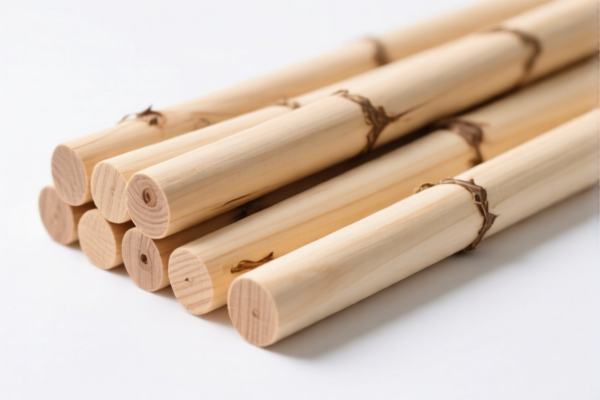
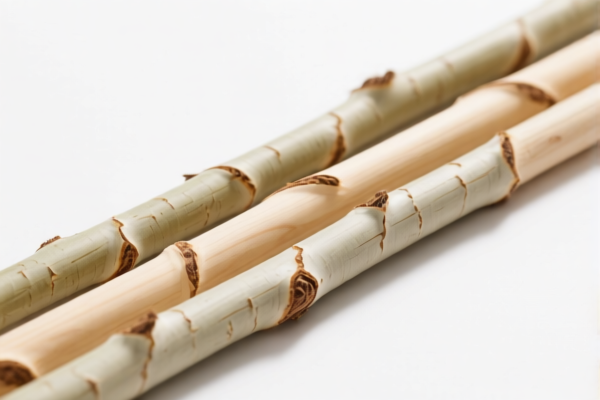
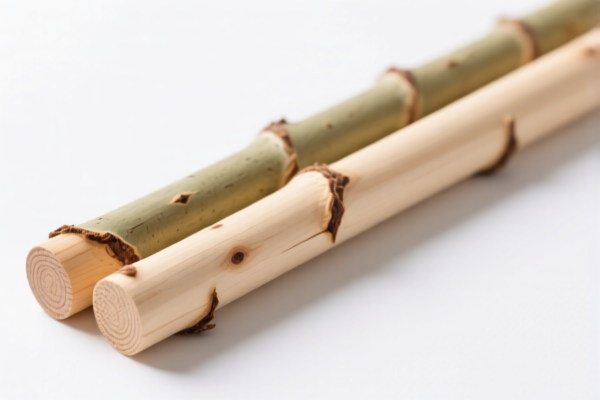

AI Analysis
🌲 Unprocessed Poplar Wood Pole (Poplar Logs & Poles)
🌐 HS Code Reference & Customs Clearance Guide | 2026 Latest Tariff Analysis | Professional Clearance Strategy
📌 I. Product Definition & Classification: What Exactly is "Poplar Wood"?
Unprocessed Poplar Wood (commonly referred to as Poplar Logs, Poles, or Rough-Sawn Timber) is a versatile softwood derived from the Populus genus. In international trade, especially involving US-China relations, the specific physical state (log vs. rough-sawn) and the precise species match determine the HS Code and, consequently, the tariff liability.
Key Distinctions in Trade: * Logs/Unworked Wood (HS 4403/4407): Raw timber, stripped of bark, or roughly squared. Often used for construction poles, veneer, or pulping. * Fuel Wood (HS 4401): Chopped or processed specifically for burning.
⚠️ Critical Classification Point:
- If the wood is in its natural log shape (even if debarked) → Falls under 4403 or 4407.
- If the wood is specifically designated as fuel (chips, logs for burning) → Falls under 4401.12.
- Poplar Varieties Matter: "Poplar," "Aspen," and "Trembling Aspen" are often grouped. The specific HS code depends on which subset is declared (e.g., "White Poplar" vs. "Aspen").
📦 II. HS Code Classification Details (2026 Latest Tariff Authority)
Based on the provided data, here are the exact HS Codes, their matching descriptions, and tax structures.
| HS Code | Product Description (Summary) | Physical Form & Species Match | Tax Rate (Total) |
|---|---|---|---|
4407.97.00.79 |
Poplar Log, matching Poplar species and raw log form. | Log/Raw Form: Unprocessed or roughly squared timber. | 35.0% |
4403.97.00.22 |
Poplar Log, matching Poplar & Trembling Aspen species, rough-sawn wood form. | Rough-Sawn: Cut lengthwise but not further worked. | 35.0% |
4403.97.00.67 |
Poplar Log, matching Poplar & White Aspen species, log form. | Log Form: Natural log shape, likely debarked. | 35.0% |
4401.12.00.00 |
Poplar Log, matching non-conifer species, fuel wood form. | Fuel Wood: Specifically intended for combustion/burning. | 35.0% |
🔍 Key Takeaway:
All listed Poplar wood products carry a uniform total tax rate of 35.0% when imported from China to the US. The distinction lies in the physical form (Log vs. Rough-Sawn) and usage intent (General Timber vs. Fuel).
💰 III. 2026 Latest Tariff Rate Breakdown (Including Surtaxes & Policy Add-ons)
✅ Applicable Country: United States (US)
✅ Country of Origin: China (CN)
✅ Effective Date: Current Trade Rules (Including Section 301 & IEEPA)
🎯 1. 4407.97.00.79 —— Poplar Wood (Log Form)
| Item | Detail |
|---|---|
| Base Tariff | 0.0% |
| Additional Tariff (Section 301) | +25.0% |
| 122 Clause Tariff (IEEPA) | +10.0% |
| Total Tax Rate | 35.0% |
| Calculation Basis | CIF Value × 35% |
| De Minimis Exemption | ❌ Not Applicable (Denied) |
| Legal Pathway | Section 301: 4407.97.00.79 → IEEPA: 122 Clause |
📌 Explanation:
- The 0% base tariff reflects the standard Most-Favored-Nation (MFN) rate for wood products.
- The +25% is the standard "Section 301" additional tariff on Chinese goods.
- The +10% is the specific "122 Clause" tariff (often associated with IEEPA powers targeting specific strategic or high-volume imports).
- Total: 35%. This is a high-cost import. Profit margins must account for this fully.
🎯 2. 4403.97.00.22 & 4403.97.00.67 —— Poplar & Aspen Variants (Rough-Sawn & Log)
| Item | Detail |
|---|---|
| Base Tariff | 0.0% |
| Additional Tariff (Section 301) | +25.0% |
| 122 Clause Tariff (IEEPA) | +10.0% |
| Total Tax Rate | 35.0% |
| De Minimis Exemption | ❌ Not Applicable |
📌 Note:
-4403.97.00.22applies to Trembling Aspen and Poplar in rough-sawn form.
-4403.97.00.67applies to White Poplar/Aspen in log form.
- Despite different species sub-descriptions, the tax structure is identical (35%). Do not assume one is cheaper; the surtaxes override base differences.
🎯 3. 4401.12.00.00 —— Poplar Fuel Wood
| Item | Detail |
|---|---|
| Base Tariff | 0.0% |
| Additional Tariff (Section 301) | +25.0% |
| 122 Clause Tariff (IEEPA) | +10.0% |
| Total Tax Rate | 35.0% |
| De Minimis Exemption | ❌ Not Applicable |
📌 Note:
- Even if declared as "Fuel Wood" (which sometimes has lower base tariffs in other contexts), the 35% total remains due to the aggressive surtaxes.
- Ensure the product is genuinely fuel wood (e.g., chips, small logs for burning). If it’s construction timber mislabeled as fuel, customs will reclassify it and impose penalties.
🛠️ IV. Customs Clearance Practical Advice (Pitfall Avoidance Guide)
✅ 1. Required Documentation Checklist (Non-Negotiable)
| Document | Mandatory? | Purpose |
|---|---|---|
| ✅ Phytosanitary Certificate | ✔️ | Crucial. Certifies wood is free from pests/diseases. Issued by Chinese AQSIQ or equivalent. |
| ✅ Commercial Invoice | ✔️ | Must clearly state: "Unprocessed Poplar Wood," species, form (log/rough-sawn), and HS Code. |
| ✅ Packing List | ✔️ | Weight, volume, number of packages. Must match invoice. |
| ✅ Bill of Lading (B/L) | ✔️ | Original or Telex Release. |
| ✅ Wood Packaging Material Declaration | ✔️ | If shipped in wooden pallets/crates, they must comply with ISPM 15 standards. |
| ✅ Certificate of Origin | ✔️ | To confirm Chinese origin (triggers the 35% tax). |
✅ 2. Declaration Tips (Key Mnemonic)
🔥 "Species Match, Form Specify, No Fuel Fraud!"
| Scenario | Correct Declaration | Wrong Practice | Consequence |
|---|---|---|---|
| Raw Logs | 4403.97.00.67 (Poplar/Aspen Log) |
Declaring as "Sawn Timber" | Misclassification → Penalties |
| Rough-Sawn Planks | 4403.97.00.22 |
Declaring as "Logs" | Potential reinspection delay |
| Construction Poles | 4407.97.00.79 |
Declaring as "Fuel Wood" | Severe Penalty. Customs knows Poplar poles are not fuel. |
| Chips/Bark | 4401.12.00.00 (if strictly fuel) |
Declaring as "Timber" | Lower duty? No, still 35%. But if mislabeled, risk of fraud. |
✅ 3. Special Circumstances
| Situation | Handling Advice |
|---|---|
| Pest Control | Poplar is susceptible to borers. Ensure fumigation certificate is attached if required by US CBP. |
| Moisture Content | Declare "Unprocessed." High moisture may trigger additional inspection for pests. |
| Origin Fraud | Do not declare as "Vietnam" or "Thailand" origin to avoid 35% tax. US CBP has robust traceability for wood products. |
| Split Shipments | If a container has both logs and fuel chips, declare separately. Mislabeling mixed cargo can lead to seizure. |
🌍 V. Global Market Comparison (2026 Latest)
| Country/Region | Recommended HS Code | Tariff (China Origin) | Key Certification | Notes |
|---|---|---|---|---|
| 🇺🇸 United States | 4403.97.00.67 etc. |
35.0% | Phytosanitary + ISPM 15 | High Tariff. Budget accordingly. |
| 🇨🇳 China | 4403.97.00.67 etc. |
0% (Export) | Phytosanitary | China exports these heavily. |
| 🇪🇺 European Union | 4403.97 |
Varies (0-10%) | FLEGT License (if applicable) | No Section 301/122 taxes. |
| 🇯🇵 Japan | 4403.97 |
3.2% - 5% | Phytosanitary | Moderate duty. |
📌 Conclusion:
- The 35% tax is unique to US imports from China due to Section 301 and IEEPA 122 Clause.
- If possible, consider transshipment or third-country processing (e.g., semi-processing in Vietnam) only if legitimate value-add occurs. Simple transshipment is risky and illegal.
📌 VI. Common Errors & Pitfall Guide (Lessons Learned)
❌ Error 1: Lumping all "Poplar Wood" under one HS Code.
👉 Result: Customs may reject the declaration if the physical form (log vs. sawn) doesn’t match the code. Penalty + Delay.
❌ Error 2: Declaring Construction Poles as "Fuel Wood."
👉 Result: Customs inspectors will see long, graded poles. Fraud Allegation. Seizure of cargo.
❌ Error 3: Ignoring Phytosanitary Requirements.
👉 Result: Cargo held at port for fumigation or destroyed. Storage fees + Loss of goods.
❌ Error 4: Assuming "Wood Chips" are exempt.
👉 Result: Even fuel wood (4401.12.00.00) is taxed at 35%. No exemption exists for Chinese wood products in the US.
✅ Correct Approach:
"Unprocessed Poplar Logs, Debarked, Species: Populus alba, For Construction, HS Code: 4403.97.00.67, Origin: China."
🎯 VII. Conclusion: Professional Declaration, Cost Control, Compliance!
🎯 Remember the Mantra:
🔹 "Form Matters, Species Must Match, Tax is 35%, Don’t Gamble!"
🔹 "Phytosanitary is King, Origin is Truth, Fraud is Ruin!"
📌 Pro Tip:
- If you are importing large volumes, consider applying for a Section 301 Exclusion (if available for your specific product type) to reduce the 25% component. Check USTR website for current exclusions.
- Work with a licensed customs broker who specializes in wood products. Wood classification is highly scrutinized.
📣 Immediate Action:
📞 Consult your customs broker BEFORE shipment.
📄 Ensure Phytosanitary Certificate is obtained from Chinese authorities.
📦 Label packages clearly with HS Code and Origin.
🚀 Clear customs smoothly, manage costs, and keep your supply chain green!
✨ Professional Clearance Starts with Accurate Classification!
💼 Every percentage point of tariff impacts your bottom line!
Customer Reviews
About HS Code Classification
The Harmonized System (HS) is an internationally standardized nomenclature developed by the World Customs Organization (WCO) to classify traded products. Over 200 countries use the HS system as the basis for customs tariffs, trade statistics, and import/export regulations.
Each HS code follows a hierarchical structure:
- Chapter (2 digits) — Broad category of goods (e.g., Chapter 84: Machinery and Mechanical Appliances)
- Heading (4 digits) — More specific grouping within the chapter
- Subheading (6 digits) — Internationally standardized breakdown, used by all WCO member countries
- National subdivisions (8-10 digits) — Country-specific extensions for further classification, such as US HTSUS 10-digit codes
Correct HS code classification is essential for smooth customs clearance, accurate duty payment, and compliance with trade regulations. Misclassification can lead to customs delays, overpayment of duties, or penalties.
When importing from CN to US, the applicable tariff rates may include:
- Most-Favored-Nation (MFN) rate — The standard duty rate applied to WTO members
- General rate — Applied to countries without trade agreements
- Trade remedy duties — Additional tariffs such as Section 301 (anti-dumping), Section 232 (national security), or countervailing duties
The information provided on this page is for reference purposes only. For official classification, please consult with your local customs authority or a licensed customs broker.